

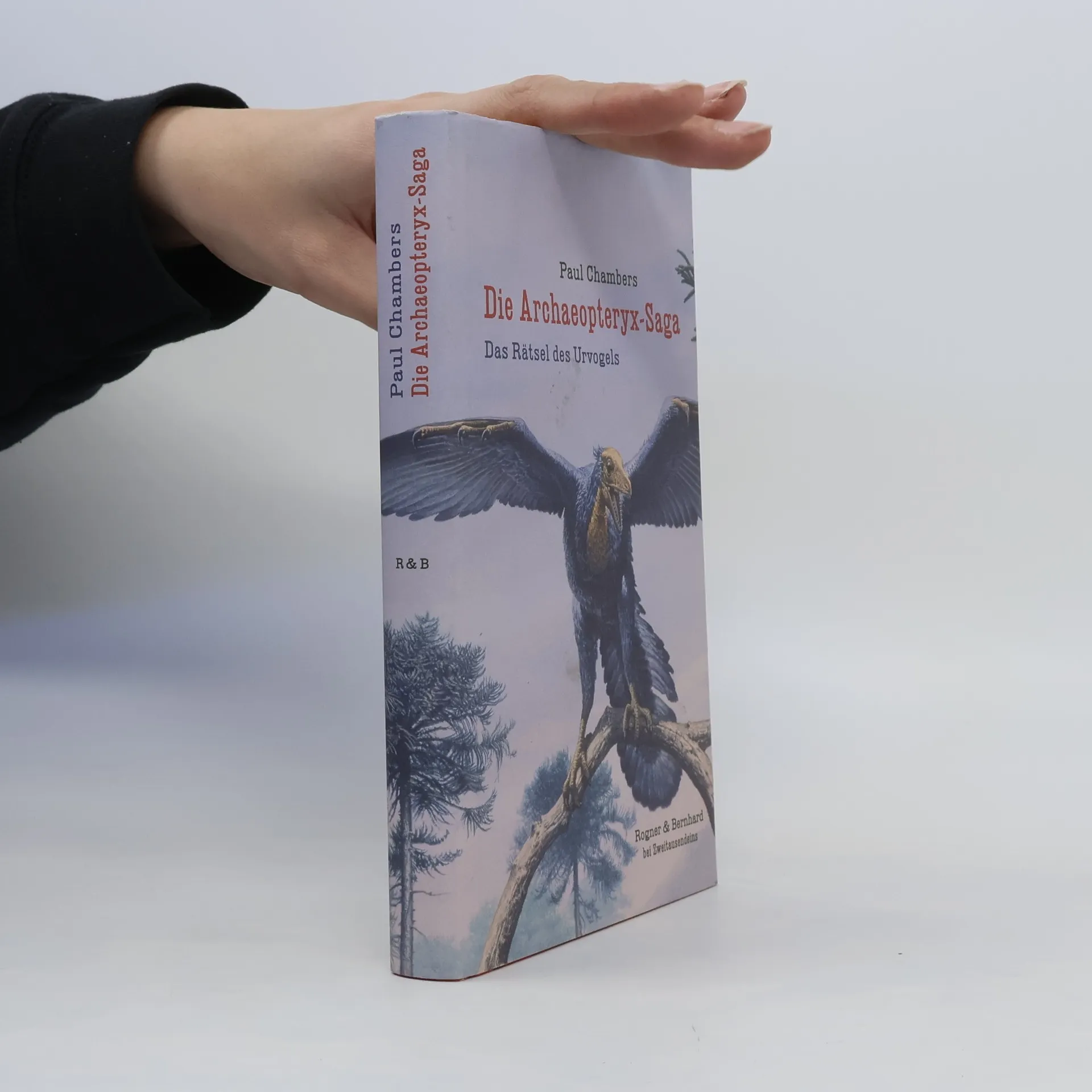
Just as the fuss over Darwin's Origin of Species was getting really heated, an extraordinary fossil was found. It was apparently half bird and half reptile, and was hailed by Darwin's supporters as the missing link which proved that species could change. Opinion was furiously divided and still is, and this fossil, christened Archaeopteryx, has caused more trouble than any other scientific icon.
Paul Chambers Libri



For millennia the mighty giant tortoises lived in isolation on remote oceanic islands such as the Galapagos, Seychelles and Mauritius. Then in the sixteenth century sailors discovered that they were good to eat, and their strategic location led to a wholesale plunder of their population by passing ships.Later, many Victorian scientists became fascinated with these creatures, directly inspiring the first understanding of ecology and biogeography and Darwin's theory of natural selection. The giant tortoise was also the subject of the world's first conservation fight in the 1870s. Indeed many people's lives have been touched by these gentle giants. The French were happy to surrender the island of Mauritius in 1810, but baulked at handing over their mascot tortoise, and the British and American governments were forced to concede the tortoises in a major Cold War incident. The twentieth century saw the establishment of wildlife reserves in the Galapagos and elsewhere, but it has been too late for many species. However, modern genetics has been able to track down members of what were once believed to be extinct populations.A Sheltered Life is a fascinating look at one of the world's strangest and most wondrous animals--whose significance in modern science and culture cannot be underestimated.
Explaining Primary Science
- 448pagine
- 16 ore di lettura
This book covers all the major areas of science subject knowledge relevant for beginning primary schoolteachers, explaining key concepts from the ground up, helping trainees develop into confident science educators.
Ein Arbeiter entdeckte 1861 in einem bayrischen Steinbruch ein versteinertes Skelett, dessen Bedeutung er zunächst nicht erkannte. Er übergab den Fund einem Arzt, der ihn dafür kostenlos behandelte. Bald darauf waren Museen von München bis London an dem Fossil interessiert. Der Archaeopteryx schien Darwins umstrittene Evolutionstheorie zu unterstützen und löste einen erbitterten Streit über die Herkunft der Vögel aus. Der „Urzeitvogel“ zog Kapitalisten und Sensationsjournalisten an und brachte angesehene Wissenschaftler in Schwierigkeiten. 1879 wurde ein weiterer Fund nach England verkauft, was in Deutschland zu patriotischer Empörung führte. Nach einer hitzigen Pressekampagne erwarb der Unternehmer Werner von Siemens das Fossil für das Berliner Humboldt-Museum. Der Streit um die Interpretation des Archaeopteryx blieb jedoch intensiv. Ein sensationeller Fund aus China im Jahr 2002, der Microraptor, verstärkte das ungelöste Rätsel um den „gefiederten Dinosaurier“. Paul Chambers, Paläontologe und Wissenschaftsjournalist, beschreibt packend, wie der Archaeopteryx sowohl Fachwelt als auch Laien bis heute fasziniert und entzweit. Er zeigt, dass der Umgang mit Fossilien von Ehrgeiz, Geldgier und Sensationslust geprägt ist, was die Geschichte zu einer spannenden Lektüre macht.