

Bookbot

George M. Marsden

    25 febbraio 1939

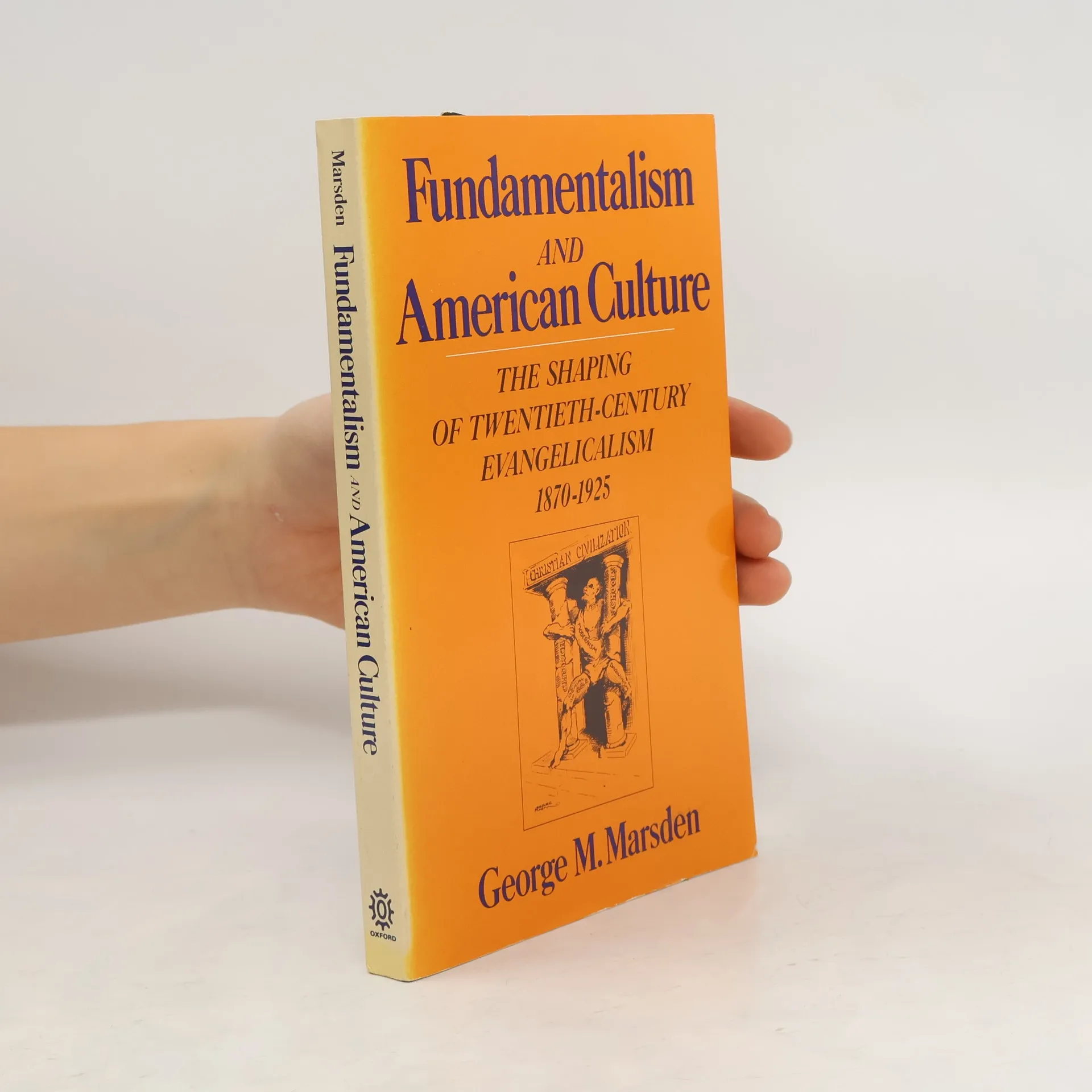
    L'opera di George M. Marsden esplora in profondità l'intricato rapporto tra il cristianesimo e la cultura americana. Esamina meticolosamente come le credenze religiose abbiano plasmato il tessuto della società americana, offrendo profonde intuizioni sulla complessa interazione tra fede e civiltà. Il suo approccio accademico e la sua vasta ricerca illuminano le correnti storiche che hanno definito il panorama culturale della nazione. I lettori apprezzeranno la profondità e l'erudizione dei suoi contributi alla comprensione di questa intersezione vitale.

    The Dominance of Evangelicalism
    Evangelicals
    America's Book
    Turning Points - Decisive Moments in the History of Christianity
    A History of Christianity in the United States and Canada
    Jonathan Edwards
    • Jonathan Edwards

      • 640pagine
      • 23 ore di lettura

      Jonathan Edwards (1703–1758) is a towering figure in American history. A controversial theologian and the author of the famous sermon Sinners in the Hands of an Angry God, he ignited the momentous Great Awakening of the eighteenth century.In this definitive and long-awaited biography, Jonathan Edwards emerges as both a great American and a brilliant Christian. George Marsden evokes the world of colonial New England in which Edwards was reared—a frontier civilization at the center of a conflict between Native Americans, French Catholics, and English Protestants. Drawing on newly available sources, Marsden demonstrates how these cultural and religious battles shaped Edwards’s life and thought. Marsden reveals Edwards as a complex thinker and human being who struggled to reconcile his Puritan heritage with the secular, modern world emerging out of the Enlightenment. In this, Edwards’s life anticipated the deep contradictions of our American culture.Meticulously researched and beautifully composed, this biography offers a compelling portrait of an eminent American.

      Jonathan Edwards
      4,4
    • A best-selling text thoroughly updated, including new chapters on the last 30 years "An excellent study that will help historians appreciate the importance of Christianity in the history of the United States and Canada." - The Journal of American History "Scholars and general readers alike will gain unique insights into the multifaceted character of Christianity in its New World environment. Nothing short of brilliant." - Harry S. Stout, Yale University "A new standard for textbooks on the history of North American Christianity." - James Turner, University of Notre Dame Mark Noll's A History of Christianity in the United States and Canada has been firmly established as the standard text on the Christian experience in North America. Now Noll has thoroughly revised, updated, and expanded his classic text to incorporate new materials and important themes, events, leaders, and changes of the last thirty years. Once again readers will benefit from his insights on the United States and Canada in this superb narrative survey of Christian churches, institutions, and cultural engagements from the colonial period through 2018.

      A History of Christianity in the United States and Canada
      4,2
    • America's Book shows how the Bible decisively shaped American national history even as that history decisively influenced the use of Scripture.

      America's Book
      4,2
    • Evangelicals

      • 288pagine
      • 11 ore di lettura

      An illuminating Look at who evangelicals are, how evangelicalism has changed over time, and How Evangelicalism Continues to Develop in surprising ways Book jacket.

      Evangelicals
      4,1
    • The Dominance of Evangelicalism

      • 284pagine
      • 10 ore di lettura

      A comprehensive history of worldwide evangelicalism in the later 19th century.

      The Dominance of Evangelicalism
      4,0
    • The first in a series of books presenting a connected history of evangelical movements in the English-speaking world spread over nearly three centuries.

      The Rise of Evangelicalism
      3,9
    • C. S. Lewis's Mere Christianity

      • 280pagine
      • 10 ore di lettura

      The life and times of C. S. Lewis's modern spiritual classic Mere Christianity, C. S. Lewis's eloquent defense of the Christian faith, originated as a series of BBC radio talks broadcast during the dark days of World War Two. Here is the story of the extraordinary life and afterlife of this influential and inspiring book. George Marsden describes how Lewis gradually went from being an atheist to a committed Anglican—famously converting to Christianity in 1931 after conversing into the night with his friends J. R. R. Tolkien and Hugh Dyson—and how his plainspoken case for Christianity went on to become one of the most beloved spiritual books of all time.

      C. S. Lewis's Mere Christianity
      3,9
    • The Soul of the American University

      From Protestant Establishment to Established Nonbelief

      • 480pagine
      • 17 ore di lettura

      Only a century ago, compulsory chapel services and Sunday church attendance were common at state universities, with many institutions identifying as "Christian" until the 1950s. Today, the influence of religion in America's leading colleges has nearly vanished. George Marsden examines the reasons behind these significant changes, offering a critique of the era when mainline Protestants dominated American education. He traces the role of Protestantism from Harvard's founding in the 1630s to the decline of the WASP establishment in the 1960s, highlighting pivotal moments in the histories of universities like Harvard, Yale, and Princeton. Marsden recounts the religious conflicts during Yale's evolution into a university and the debates over religion's place in education, including the clash between Harvard's President Charles Eliot and Princeton's President James McCosh. His analysis covers issues such as Darwinism, government influence, changing student attitudes, and even college football's religious aspects. He argues that the values of "liberalism" and "tolerance" used to marginalize Christian fundamentalism ultimately led to religion's exclusion from academia, establishing nonbelief as the dominant perspective. In a compelling conclusion, Marsden advocates for the inclusion of traditional religious viewpoints alongside feminist and multicultural perspectives, asserting that religious insights can enrich scholarly discourse.

      The Soul of the American University