

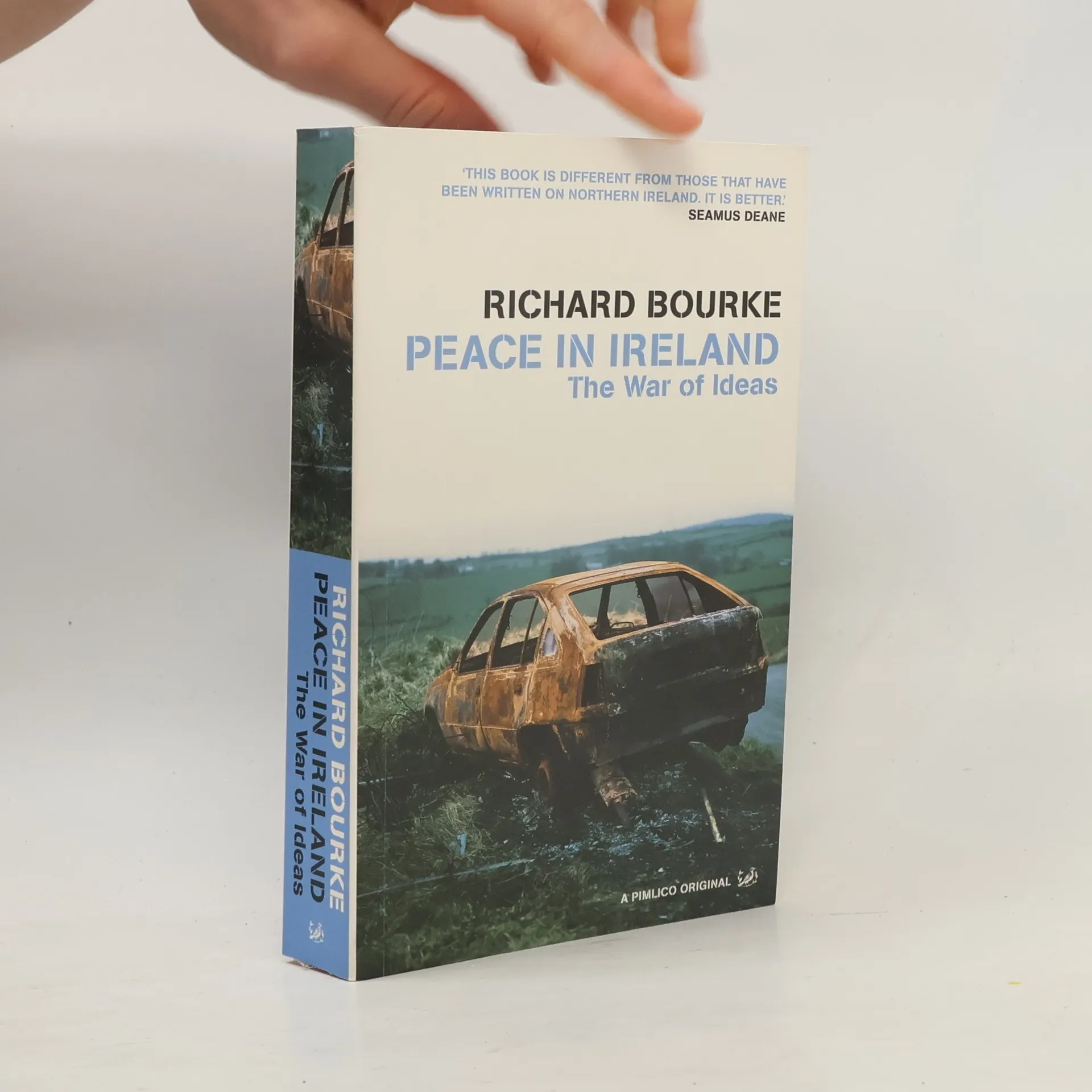
A second edition of Richard Bourke's classic study of the Northern Ireland Troubles, this edition includes a new preface. Peace in Ireland examines the events of 1968–2003 in broad historical perspective, including an exploration of the ideological roots of the conflict in the late nineteenth and early twentieth centuries. It covers the decisive episodes that marked the trajectory of the Troubles, from the Civil Rights Movement, Bloody Sunday, and the Sunningdale Agreement, to the hunger strikes, the paramilitary ceasefires, and the Good Friday Agreement. The book exposes the assumption that the conflict was a product of imperialism, and challenges the idea that the descent into violence was brought about by atavistic regression or ethnic solidarity. Its central argument is that the Northern Ireland debacle was a distinctly modern conflict, fought over rival aspirations to popular sovereignty. Accordingly, the book places opposing conceptions of democratic legitimacy at the center of the dispute. From this angle, it analyzes both Nationalism and Republicanism as well as Unionism and Loyalism, with the aim of providing a sustained investigation of the impact of political ideas on modern Ireland. Interest remains high in the history and context of the Troubles, and Richard Bourke, as a historian of ideas, is perfectly placed to analyze the conflict and its origins.
Richard Bourke Libri
Richard Bourke è Professore di Storia del Pensiero Politico presso il Queen Mary College dell'Università di Londra. Il suo lavoro approfondisce le dimensioni storiche e filosofiche delle idee politiche. Esplora come i concetti di governo, libertà e società abbiano plasmato il mondo nel corso di diverse epoche. L'approccio di Bourke combina una profonda erudizione storica con un'acuta visione filosofica.

Hegel's World Revolutions
- 344pagine
- 13 ore di lettura