E.F. Schumacher Libri
Ernst Friedrich Schumacher è stato un influente pensatore economico, statistico ed economista di fama internazionale, che ha ricoperto la carica di Consulente Economico Capo per il National Coal Board del Regno Unito per due decenni. Il suo lavoro ha influenzato generazioni di studenti e accademici, e il suo impatto si estende a molte aree della teoria e della pratica economica. L'analisi di Schumacher dei sistemi economici e le sue proposte di miglioramento rimangono ancora oggi rilevanti e stimolanti. La sua eredità risiede nella sua capacità di collegare le intuizioni teoriche con soluzioni pratiche e nella sua incrollabile fede nel potenziale umano e nel suo ruolo nello sviluppo economico.



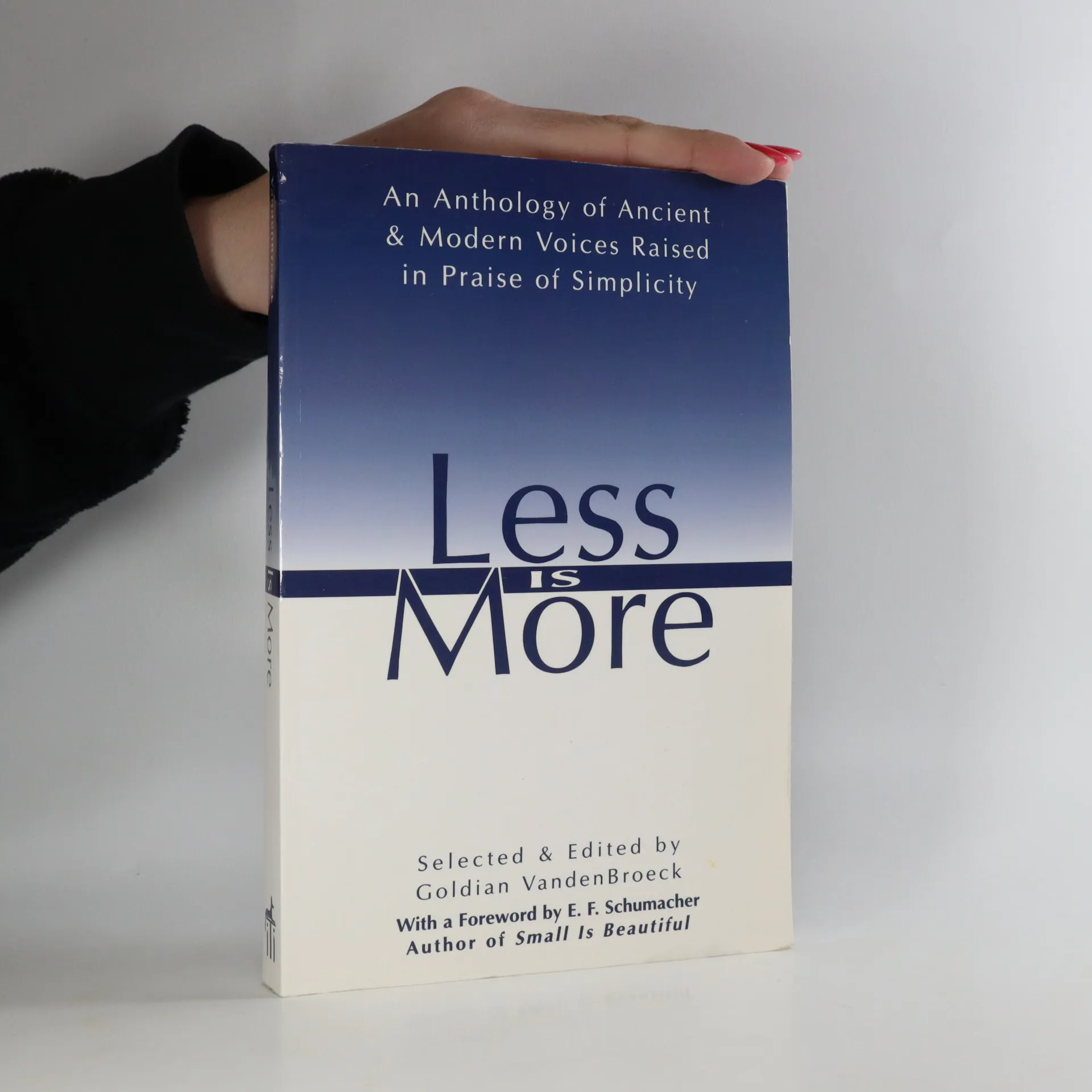
body This engaging anthology offers words of wisdom from the world's greatest thinkers on the virtues of simplicity. Included are writings from Ovid, Patañjali, St. Matthew, Milarepa, Rumi, Eckhart, Basho, Rousseau, Tagore, Suzuki, Illich, and many others.
The 25th anniversary edition of Schumacher's book of essays on humanistic economics expands on his ideas by adding commentaries of contemporary thinkers who have been deeply influenced by his work and thought.
The only book that covers the whole range of Schumacheras thinking - essential reading for all admirers of Schumacher and his work. This I Believe will introduce to a new audience the freshness, clarity and profundity of his thinking, which has inspired a generation.
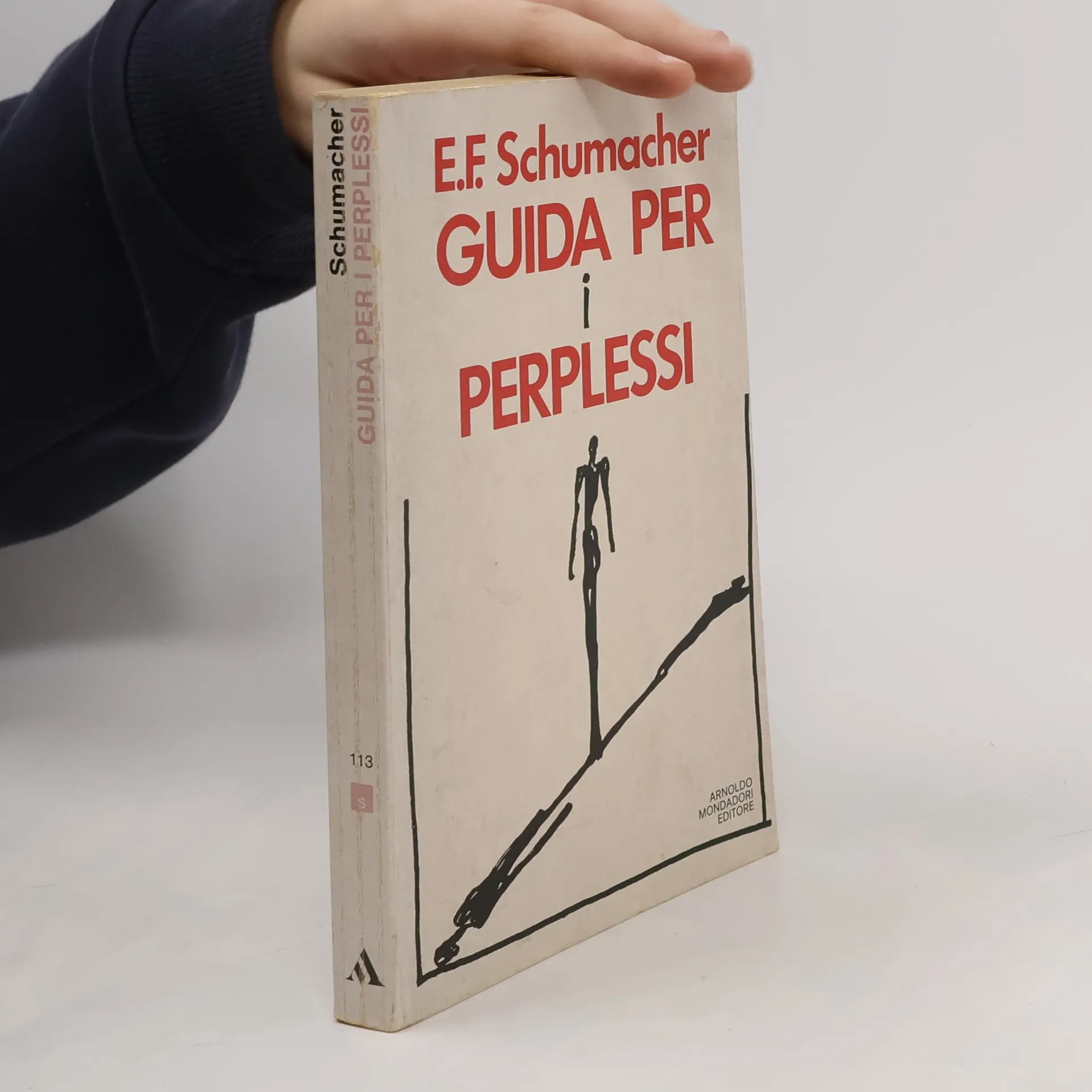
The author of the world wide best-seller, Small Is Beautiful, now tackles the subject of Man, the World, and the Meaning of Living. Schumacher writes about man's relation to the world. Man has obligations—to other men, to the earth, to progress and technology, but most importantly himself. If man can fulfill these obligations, then and only then can he enjoy a real relationship with the world, then and only then can he know the meaning of living.Schumacher says we need maps: a "map of knowledge" and a "map of living." The concern of the mapmaker—in this instance, Schumacher—is to find for everything its proper place. Things out of place tend to get lost; they become invisible and their proper places end to be filled by other things that ought not be there at all and therefore serve to mislead.A Guide for the Perplexed teaches us to be our own map makers. This constantly surprising, always stimulating book will be welcomed by a large audience, including the many new fans who believe strongly in what Schumacher has to say.
SABIDURIA CONVERSACIONES CON PERSONAJES EXCEPCIONALES
Die Rückkehr zum menschlichen Mass
- 314pagine
- 11 ore di lettura
Ernst F. Schumachers Plädoyer für eine Rückkehr zum menschlichen Maß ist ein echter Klassiker der Nachhaltigkeit – mit hoher Aktualität. Denn die Frage nach dem rechten Maß in Wirtschaft und Technologie ist heute aktueller denn je. Größe ist kein Wert an sich: Sie kann vorteilhaft sein, muss es aber nicht. In der Ökonomie führt Größe zu Machtkonzentration, verdrängt Vielfalt und ist häufig nicht nachhaltig. Diesen Drang nach immer mehr hat Schumacher in seinem Weltbestseller bereits 1972 kritisiert. Stattdessen plädiert er für eine »Miniaturisierung der Technik« sowie dafür, »ein Maximum an Glück mit einem Minimum an Konsum zu erreichen«.