
10 libri per 10 euro qui
Bookbot

Lalla Ward

    River Out Of Eden
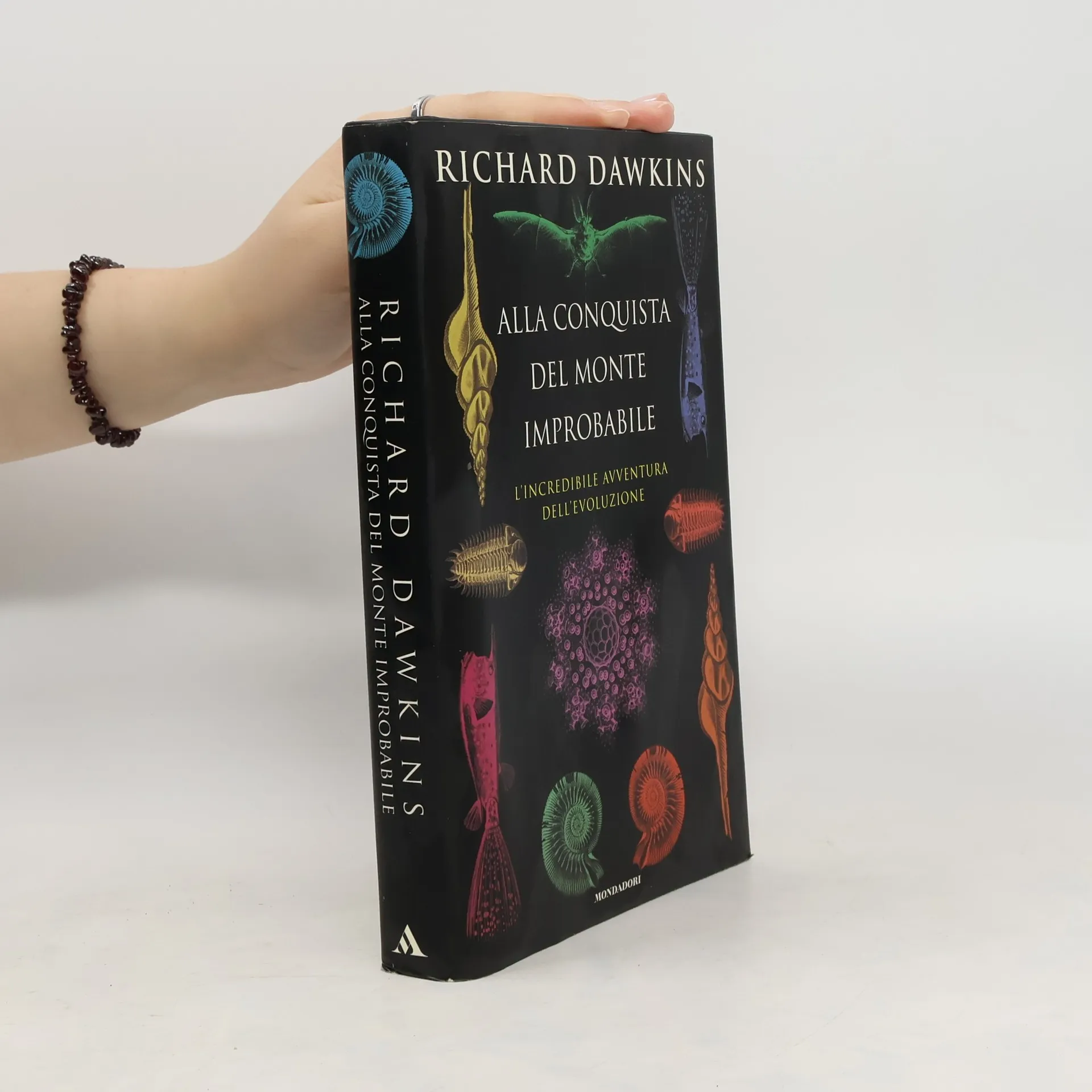
    Alla conquista del monte improbabile. L'incredibile avventura dell'evoluzione
    • The human eye is so complex and works so precisely that surely, one might believe, its current shape and function must be the product of design. How could such an intricate object have come about by chance? Tackling this subject in writing that the New York Times called "a masterpiece" Richard Dawkins builds a carefully reasoned and lovingly illustrated argument for evolutionary adaptation as the mechanism for life on earth.The metaphor of Mount Improbable represents the combination of perfection and improbability that is epitomized in the seemingly "designed" complexity of living things. Dawkins skillfully guides the reader on a breathtaking journey through the mountain's passes and up its many peaks to demonstrate that following the improbable path to perfection takes time. Evocative illustrations accompany Dawkins's eloquent descriptions of extraordinary adaptations such as the teeming populations of figs, the intricate silken world of spiders, and the evolution of wings on the bodies of flightless animals. And through it all runs the thread of DNA, the molecule of life, responsible for its own destiny on an unending pilgrimage through time. Climbing Mount Improbable is a book of great impact and skill, written by the most prominent Darwinian of our age.

      Alla conquista del monte improbabile. L'incredibile avventura dell'evoluzione
    • How did the replication bomb we call "life" begin, and where is it heading in the universe? With characteristic wit and clarity, Richard Dawkins tackles this ancient mystery, being recognized as a leading voice in Darwinian evolution. He posits that all living beings are vehicles of information, primarily designed to propagate their DNA. In this exploration, Dawkins describes evolution as a dynamic river of genes that interact, compete, and sometimes diverge to create new species. Through captivating stories about bees, orchids, and human ancestors, he addresses intriguing questions: Why are forest trees tall when shorter ones might survive better? Why is the sex ratio balanced despite fewer males being needed? Why do we inherit genes for fatal diseases? He proposes that our last universal ancestor was likely more akin to an Adam than an African Eve. By reverse engineering, he examines the purpose of life and emphasizes gradualism in evolution, countering the notion that every part of an organism must function perfectly. The engaging narrative serves a broader purpose, illustrating the nature of scientific reasoning and the challenges scientists face in explaining life, revealing how our assumptions and cultural "isms" can mislead us.

      River Out Of Eden