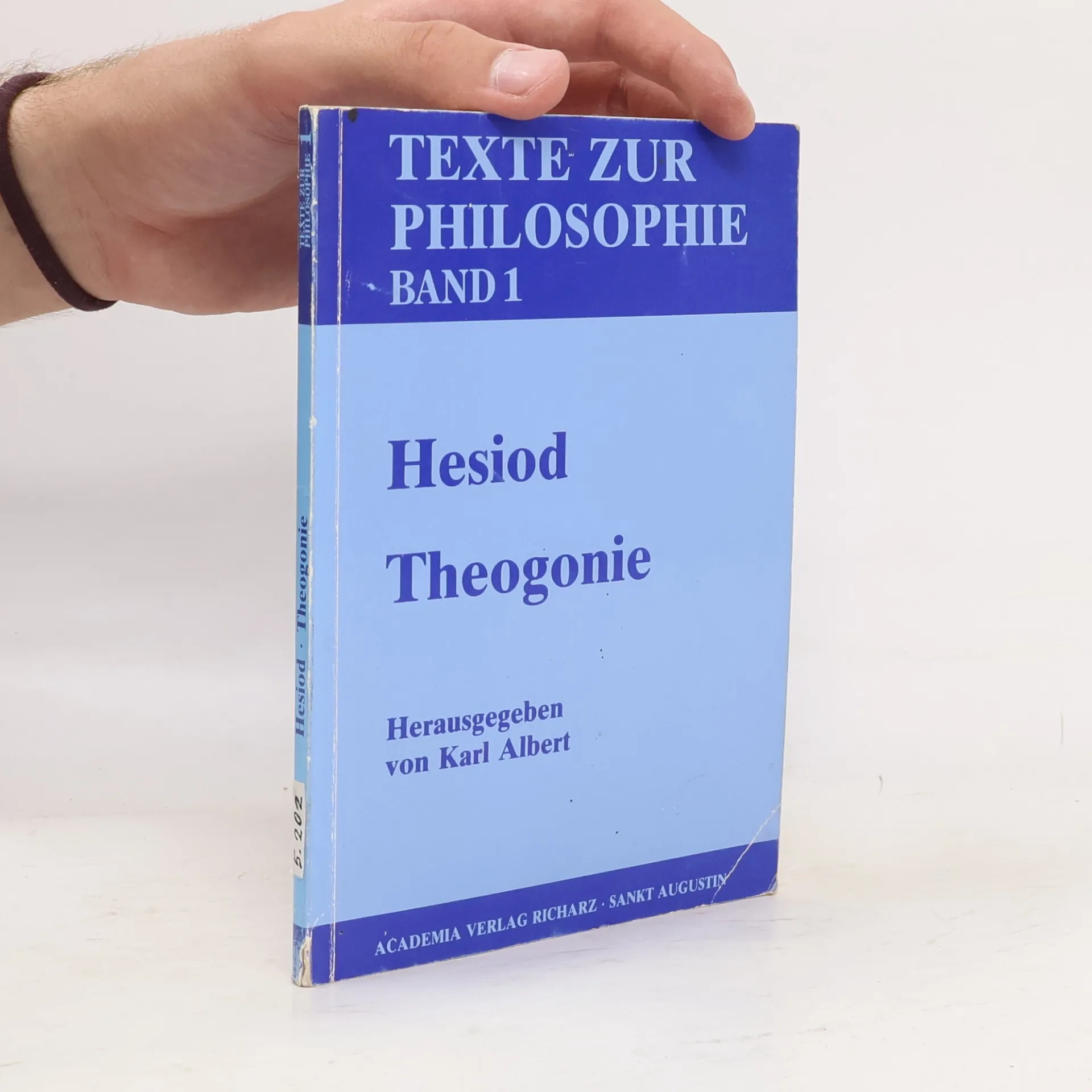
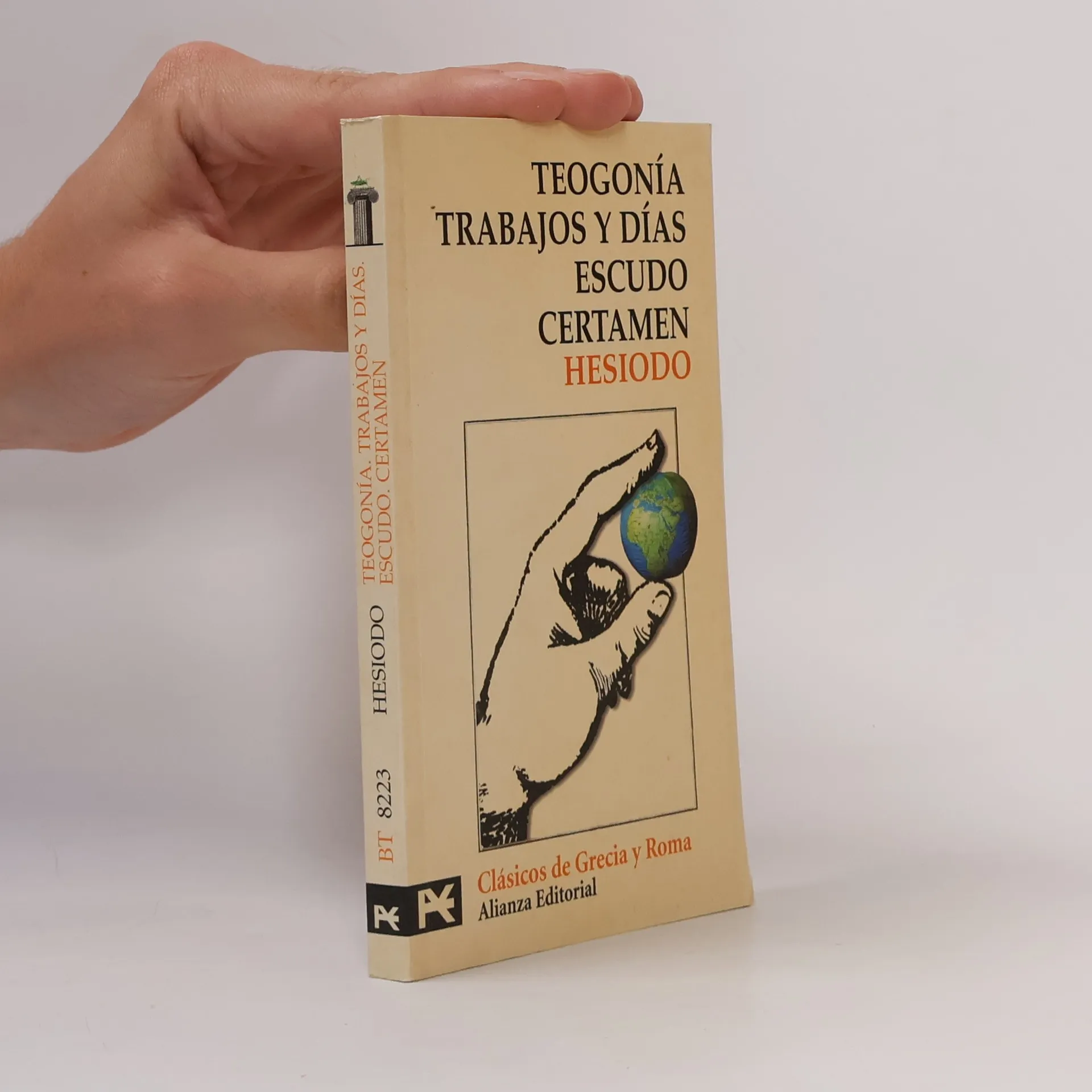
Teogonia
- 118pagine
- 5 ore di lettura


Esiodo, padre della poesia didascalica greca, offre nelle sue opere una profonda connessione tra la vita quotidiana e il cosmo mitologico. Nei suoi poemi, intreccia l'esperienza personale del lavoro agrario con favole e riflessioni, creando un vivido ritratto dell'esistenza pastorale. Inoltre, intraprese l'ambizioso compito di sistematizzare le leggende divine e le genealogie degli dei. Il suo approccio, che fonde il personale con il mitico e il sistematico, è stato fondamentale per la tradizione letteraria occidentale.


This adaptation explores the foundational themes and narratives of Hesiod's two major poems, which significantly influenced the development of Greek philosophy, particularly the works of Plato. By reinterpreting these ancient texts, the book highlights their enduring relevance and the philosophical concepts that emerged from them, showcasing their impact on Western thought.
As a facsimile reprint of an original antiquarian work, this book preserves the cultural significance of its content despite potential imperfections like marks and flawed pages. It reflects a commitment to protecting and promoting literature by providing accessible, high-quality editions that remain true to the original text.
Esiodo, il più antico scrittore greco di cui si abbiano notizie storiche, trascorse la vita nel podere lasciatogli dal padre in Beozia, trovando proprio nel lavoro la principale ispirazione per la sua vocazione di poeta. Opere e giorni, infatti, è un poemetto didascalico che raccoglie norme per l'agricoltura e la navigazione e tratta i problemi della convivenza e della vera giustizia. È dunque una ricca fonte di informazioni sulle condizioni di vita nella Grecia arcaica, ma soprattutto un «poema sul destino dell'uomo», perché attraverso miti, favole e insegnamenti, Esiodo mostra il fondamento etico e religioso del lavoro, unico strumento che riscatta l'uomo dalla condizione ferina e gli permette di vivere dignitosamente in armonia con il cielo.
Offers an introduction to the life and thought of ancient Greece.
Hesiod's interpretation of the world's origins unfolds through a focus on genealogy, starting with primordial entities like Chaos, Gaia, Tartarus, and Eros. The text explores the creation of gods and the universe, revealing a tapestry of variant tales that reflect the diverse myths of ancient times. This work not only serves as a foundational mythological narrative but also highlights the complexity and richness of early Greek cosmology.
"Homère et Hésiode ont donné aux dieux leurs noms." Voilà ce que pensait Hérodote, quelques siècles après la mort des deux poètes. De fait, c'est dans la Théogonie, dans les hymnes homériques que les petits Grecs, pendant des siècles, ont appris ce qu'il fallait savoir des Immortels. Cette poésie religieuse n'est pas une poésie sacrée. Pas de vérité révélée. Pas de dogmes. Des récits qui se développent librement. Les divinités sont d'abord des figures lumineuses qui, soudain, apparaissent. Elles ne sont pas encore entravées par des allégories. Hésiode a rencontré les muses. Il a vu les dieux. Il sait que son art, comme le leur, contribue à l'ordre du monde. "Cosmos" veut dire à la fois "monde" et "ordre". Ordre fragile. Le poète, comme les Olympiens, résiste au chaos qui toujours menace. Il a soin de la justice. Il a soin de la musique.
Contemporáneo de las primeras colonizaciones griegas en la época arcaica y de la consolidación del estado aristocrático, Hesíodo de Ascra (ss. VIII-VII a.C.) se sitúa en la frontera entre dos mundos y dos sistemas de pensamiento. “Teogonía” se ordena en torno a una sucesión de divinidades marcada por la violencia y que acaba con el triunfo de Zeus, garantía de un cierto orden moral. “Trabajos y días” se estructura alrededor de una serie de secuencias o temas diversos, como el mito de Pandora o las edades del mundo, que se van encadenando y desarrollando al hilo de la idea de justicia y exaltación del trabajo, denunciando las imposiciones que sufrían los campesinos de Beocia. Completan esta edición “Escudo” y “Certamen”, obras de redacción posterior, pero atribuidas tradicionalmente a Hesíodo.Traducción e introducción de Adelaida y M.ª Ángeles Martín Sánchez.