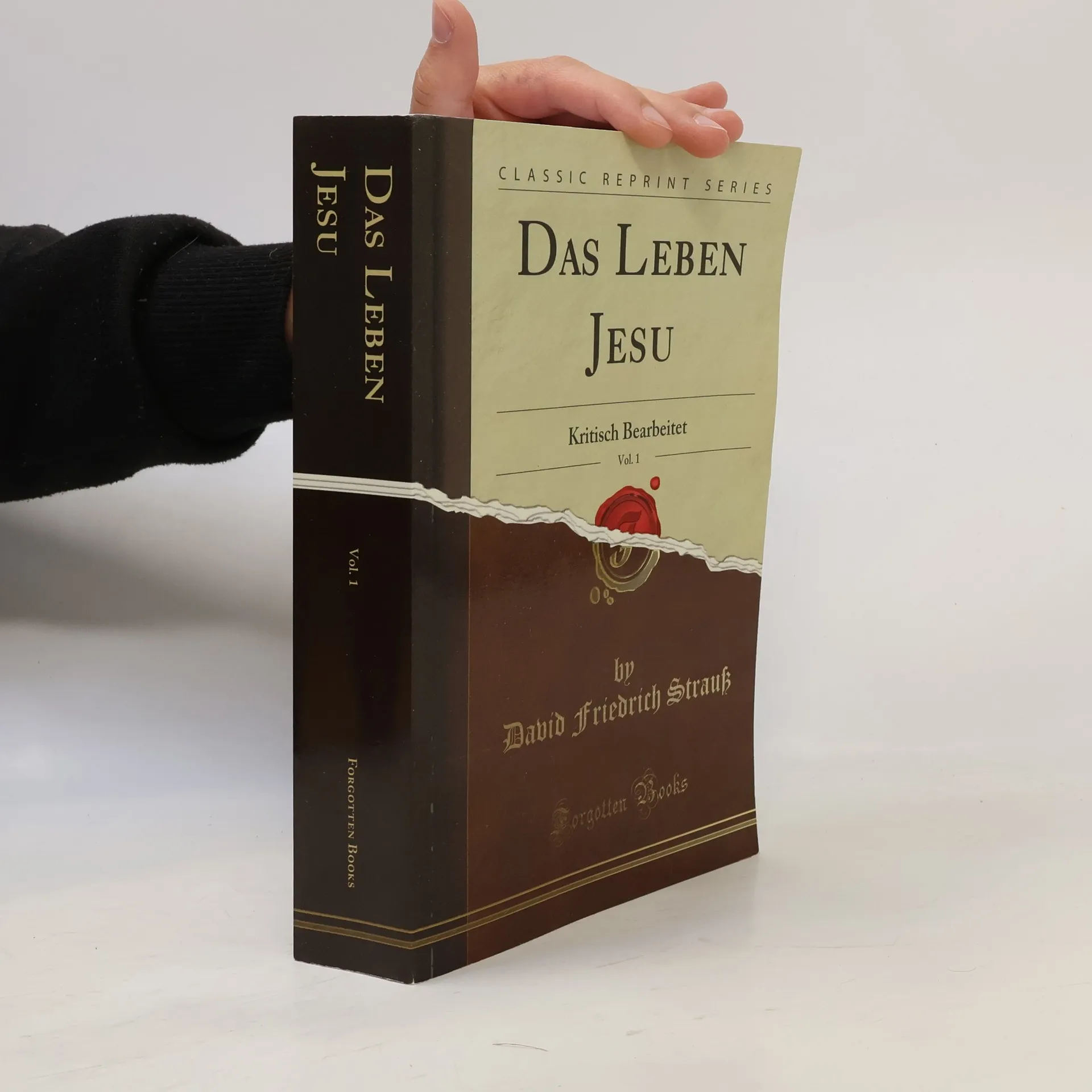
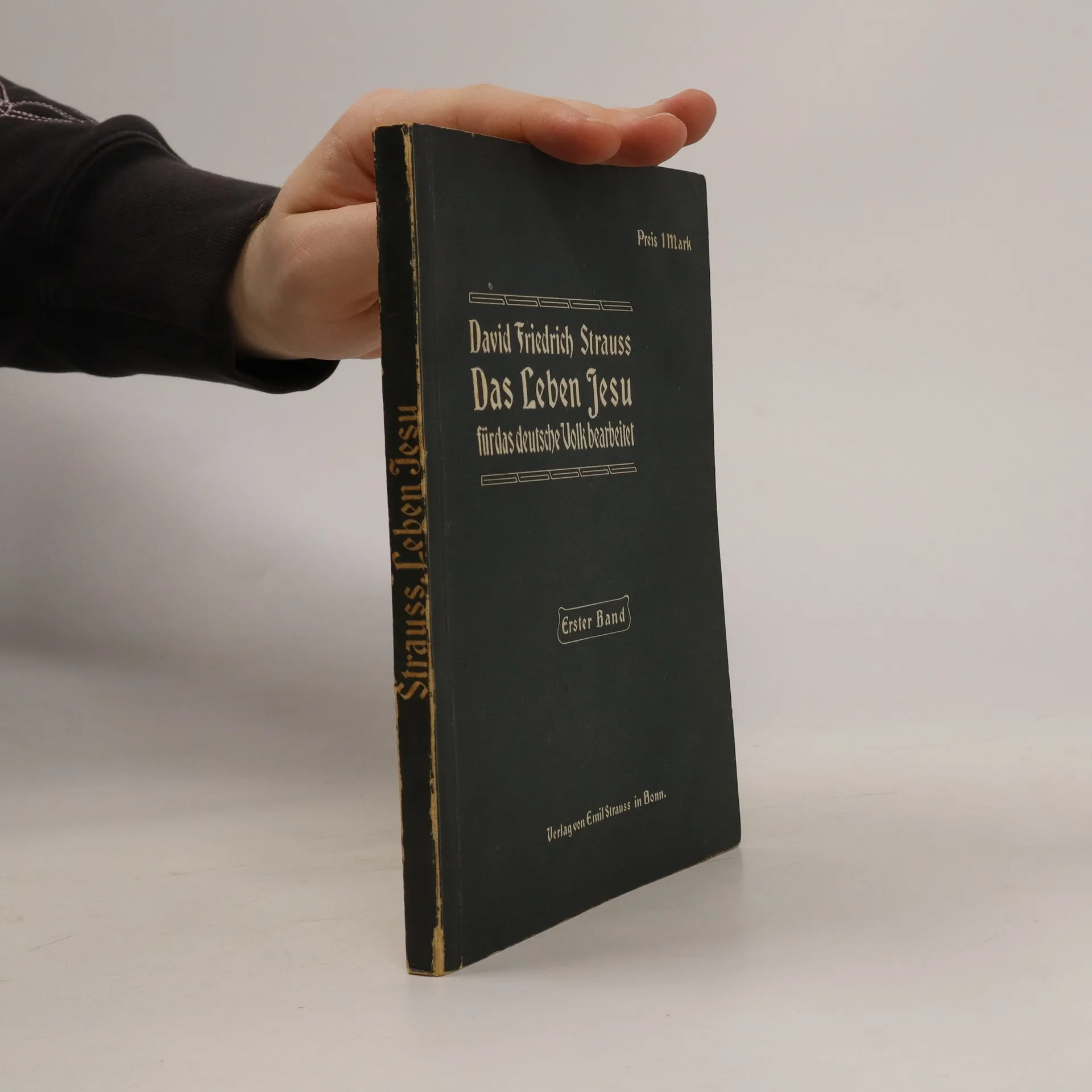
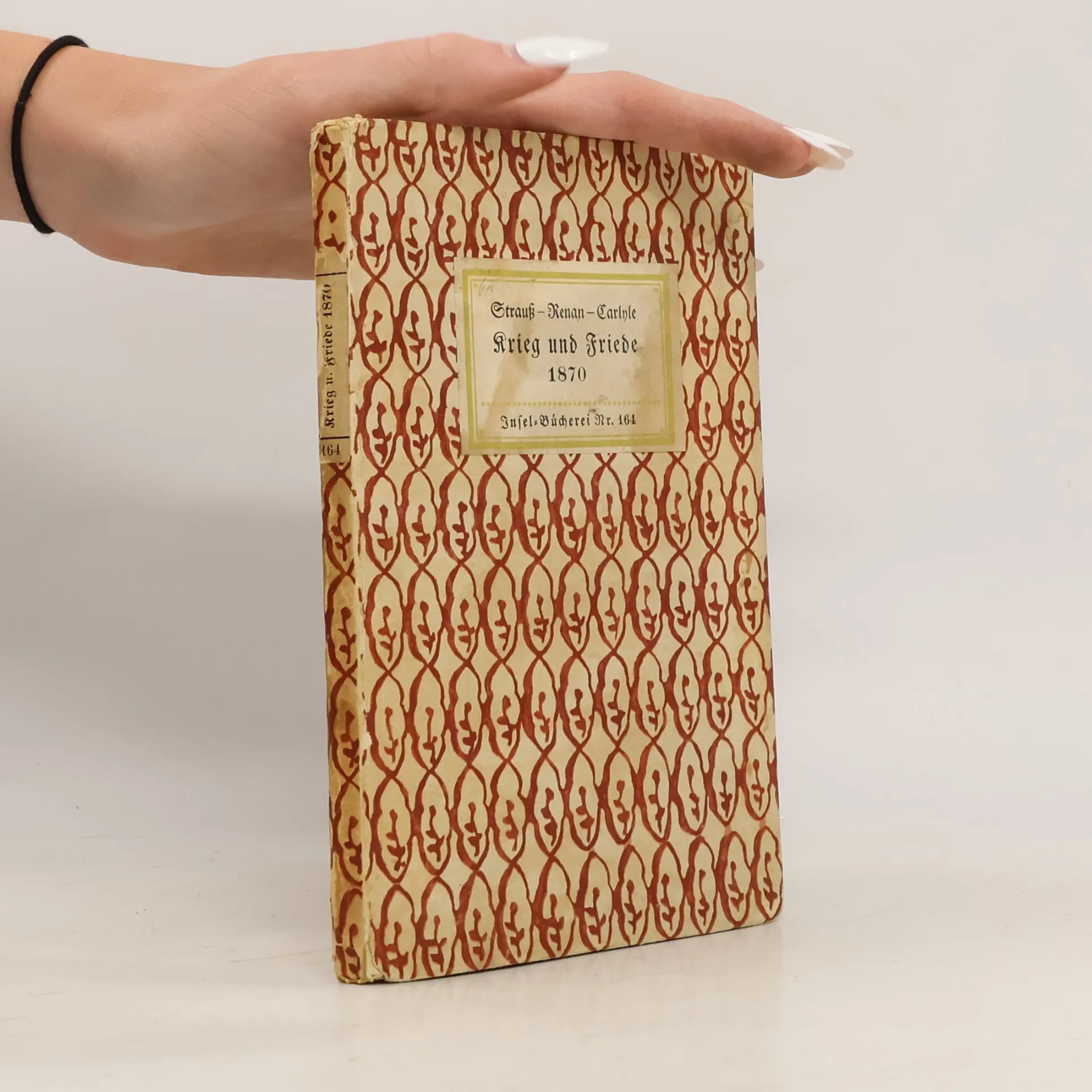
The book, first published in 1856, offers a historical perspective on its subject matter, reflecting the themes and societal values of its time. The reprint allows contemporary readers to explore the original text's insights and stylistic choices, providing a glimpse into the past. This edition preserves the authenticity of the original work, making it a valuable resource for those interested in historical literature and the evolution of ideas over time.
David Friedrich Strauss Ordine dei libri (cronologico)
27 gennaio 1808 – 8 febbraio 1874
David Friedrich Strauss fu un teologo e scrittore tedesco rinomato per la sua innovativa erudizione che mise in discussione l'accuratezza storica dei Vangeli. La sua opera fondamentale analizzò il Nuovo Testamento, postulando che le sue narrazioni fossero in gran parte mitiche anziché resoconti fattuali. Influenzato dalla filosofia hegeliana, Strauss si confrontò con la tensione tra la fede religiosa tradizionale e il nascente razionalismo moderno. Sebbene le sue idee radicali lo portarono all'abbandono della chiesa, il suo lavoro sfidò fondamentalmente le interpretazioni consolidate e aprì la strada agli studi religiosi critici.

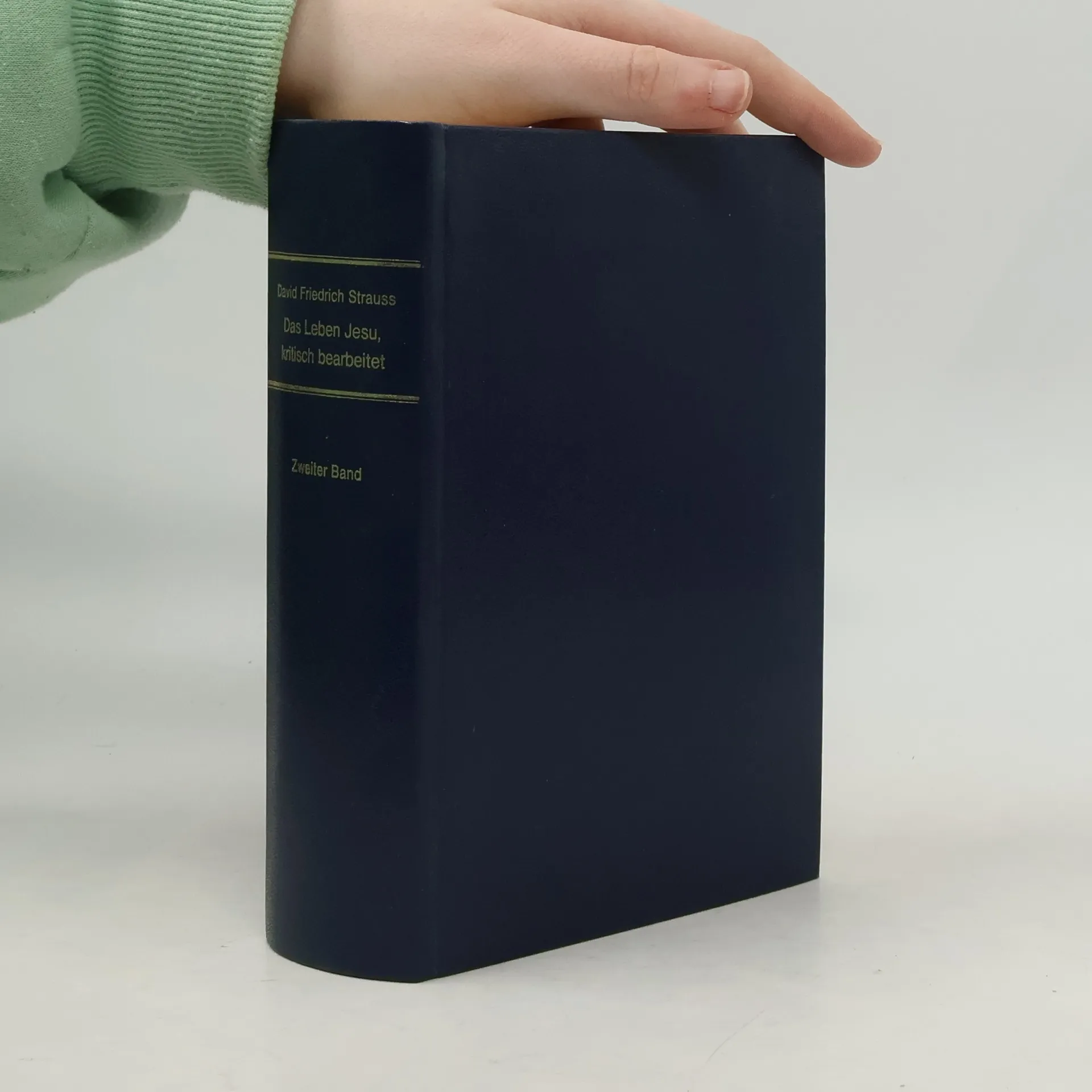


Excerpt from Das Leben Jesu, Vol. 1: Kritisch Bearbeitet Allerbingß ift Die (R)ache noch nicht gehörig norbe= reitet, und Deßwegen Die gegenwärtige @chrift fo ein: gerichtet'worben, Daß wenigftenß Die llngelehrten unter Denfelben halb und oft an metl'en belo'mmen, Die (R)chrift fei nicht für fie bef_timmt, und, laffen fie auß 8ürwie ober 23erle5erungßfu(R)t fich Deffennngearhtet mit Derfel= ben ein, fo tragen fie Dann Doch, 'wie (c)thleiers macher bei ähnlicher (c)elegenheit fagt, Die (c)trafe in ihrem Gewiffen 'mit froh, indem fich ihnen Daß (siefiihl recht aufdringt, Daß fie Daß nicht nrrftehen, worüber fie Doch reben möchten. About the Publisher Forgotten Books publishes hundreds of thousands of rare and classic books. In rare cases, an imperfection in the original, such as a blemish or missing page, may be replicated in our edition. We do, however, repair the vast majority of imperfections successfully; any imperfections that remain are intentionally left to preserve the state of such historical works.
Exploring the contributions of over twenty significant photographers, this work delves into the artistic processes and influences of notable figures such as Susan Sontag, Larry Clark, and Daido Moriyama. Covering a timeline from the 1930s to the present, it highlights the evolution of photography and its impact on culture and society, offering insights into the unique perspectives and techniques of each artist.
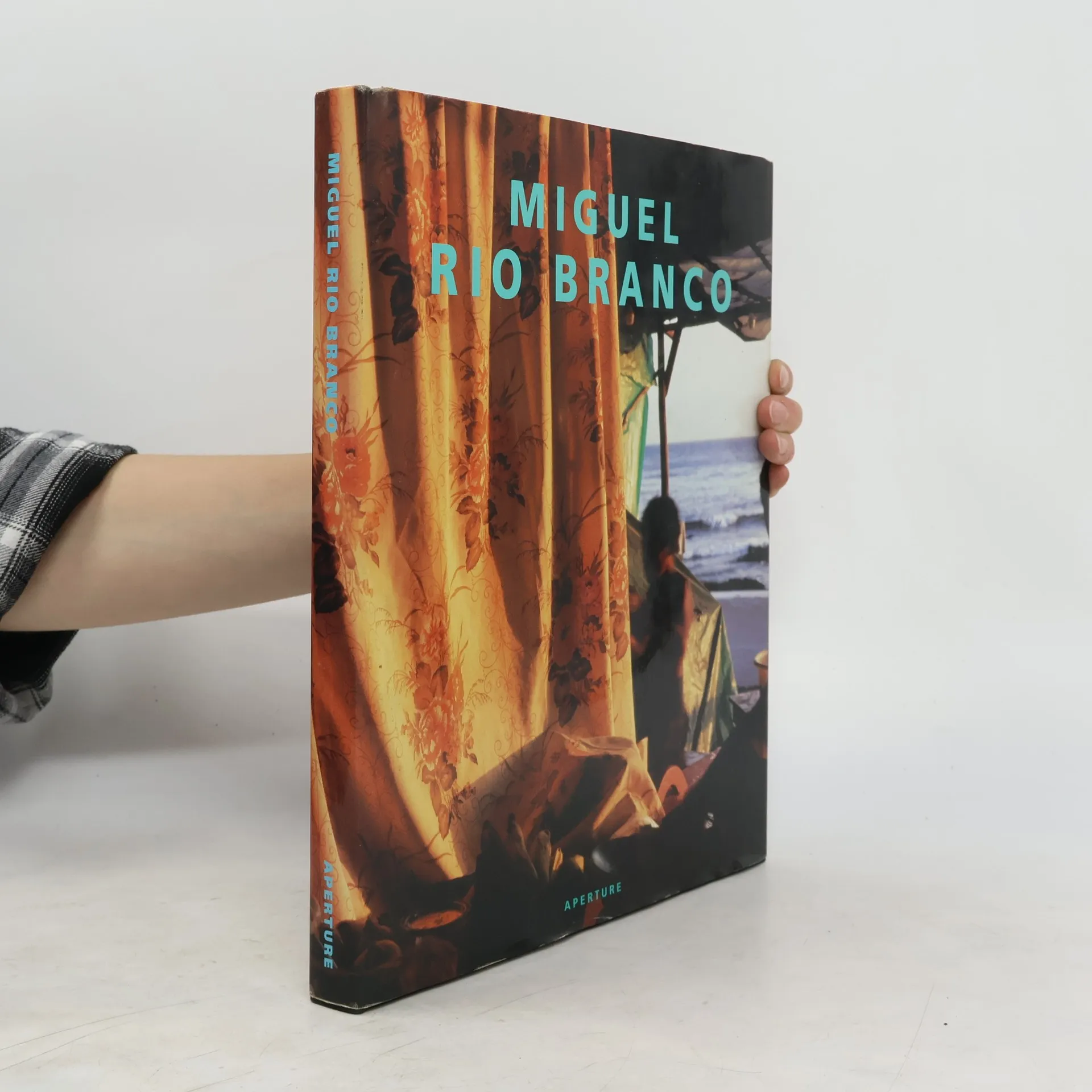
The long-awaited first retrospective of the Brazilian photographer Miguel Rio Branco.The deep, succulent color of Miguel Rio Branco's images reflects the richness and complexities of contemporary Latin America; Rio Branco has received wide acclaim for his projects on boxers, Brazilian children, and Cuba. Through his mastery of layering with both color and light, Rio Branco reveals hidden and forbidden segments of his surroundings, illuminating the unspoken and the instinctual. By focusing on the textures of fur and feathers, the flesh of slaughtered animals, or languid human bodies, he captures the cultural layers around him and provides a provocative vision of Latin America.Drawn from thirty years of work, these photographs display the talent for visual construction that Rio Branco utilized in his direction of more than twenty films. His remarkable conception of installation is a skill attributed to his formal training as a painter. The author, poet, and art commentator David Levi Strauss notes that "Rio Branco's colors seep out of their borders like bodily fluids, staining and contaminating everything around them. Bodies, bindings, wounds, and walls are wet with color. Even his mirrors bleed. Rio Branco's is an art of contamination, contagion, and corrosion, but also of resistance and transcendence."
Krieg und Friede
1870