

Maggiori informazioni sul libro
This historic book may contain numerous typos, missing text, or index issues. Purchasers can download a free scanned copy of the original book (without typos) from the publisher, 1891. Not illustrated. In our opinion, the task of musical aesthetics involves subordinating the supremacy of feelings to the legitimate one of beauty. The organ of pure contemplation, from which true beauty flows, is not our emotional but our imaginative faculty. However, emotions play a significant role in our musical experience, making it impossible to resolve the question solely through this subordination. While an aesthetic analysis should focus on the artwork itself, it is essential to remember that the artwork links two living factors: the composer and the listener. The listener's imagination is rarely as pure as the finished work, as it is closely tied to feelings and sensations. Thus, feelings are crucial both before and after the work's completion, impacting the composer initially and the listener subsequently. During the composing process, the composer experiences an exalted state of mind necessary for extracting beauty from the imagination. This state is influenced by the composer’s idiosyncrasies and is vital for artistic invention. These principles highlight the intricate relationship between emotion, imagination, and the creative process in music.


Acquisto del libro
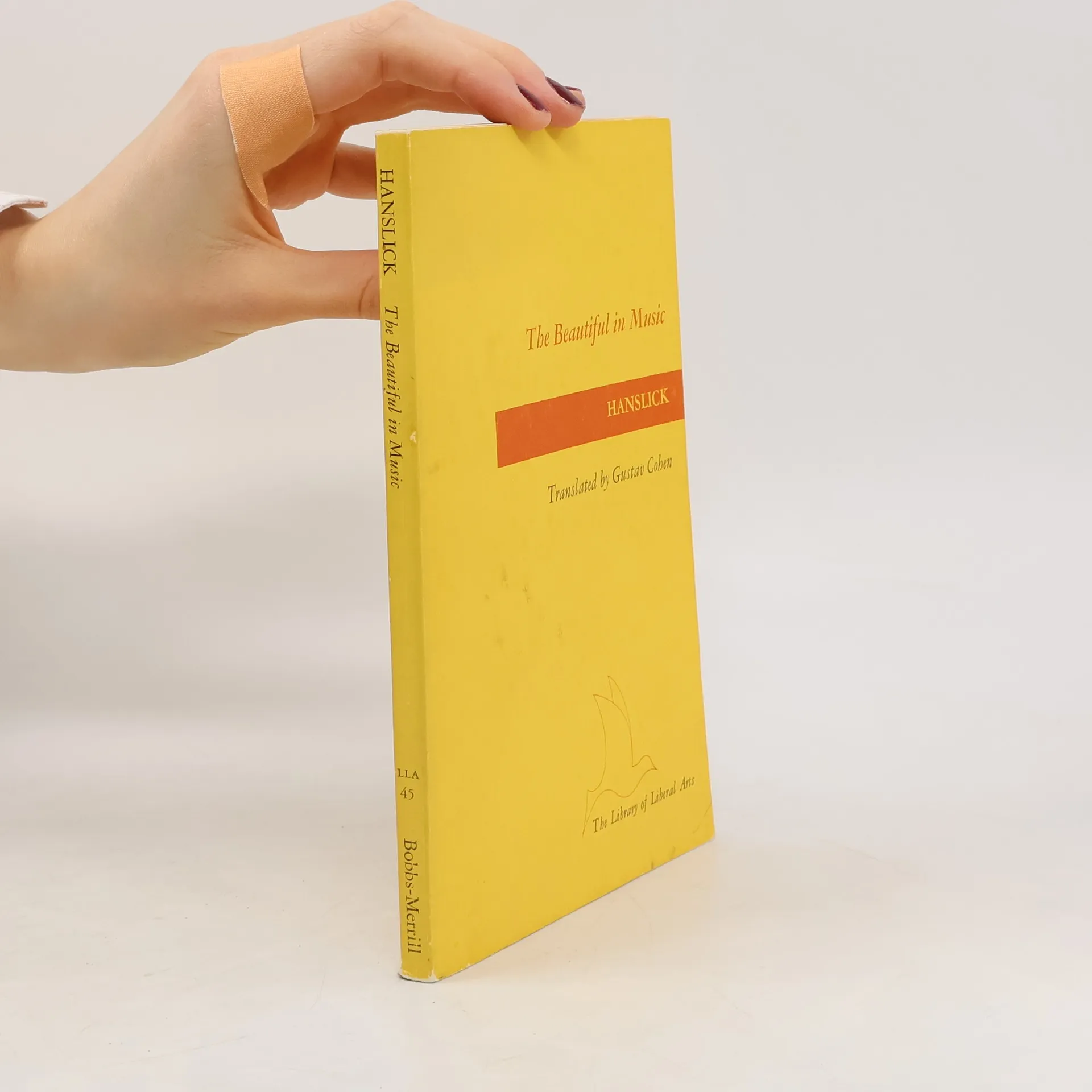
The Beautiful in Music, Eduard Hanslick, Gustave Cohen
- Lingua

- Pubblicato
- 1957
- Rilegatura
- (In brossura)
Metodi di pagamento
Qui potrebbe esserci la tua recensione.
- Titolo
- The Beautiful in Music
- Lingua
- Inglese
- Autori
- Eduard Hanslick, Gustave Cohen
- Editore
- Bobbs-Merrill Co.
- Pubblicato
- 1957
- Formato
- In brossura
- Pagine
- 154
- ISBN10
- 0672602113
- ISBN13
- 9780672602115
- Serie
- Categoria
- Prima pubblicazione
- 1854
- Titolo originale
- Vom Musikalisch-Schönen: Ein Beitrag zur Revision der Ästhetik der Tonkunst
- Valutazione
- 3 su 5
- Descrizione
- This historic book may contain numerous typos, missing text, or index issues. Purchasers can download a free scanned copy of the original book (without typos) from the publisher, 1891. Not illustrated. In our opinion, the task of musical aesthetics involves subordinating the supremacy of feelings to the legitimate one of beauty. The organ of pure contemplation, from which true beauty flows, is not our emotional but our imaginative faculty. However, emotions play a significant role in our musical experience, making it impossible to resolve the question solely through this subordination. While an aesthetic analysis should focus on the artwork itself, it is essential to remember that the artwork links two living factors: the composer and the listener. The listener's imagination is rarely as pure as the finished work, as it is closely tied to feelings and sensations. Thus, feelings are crucial both before and after the work's completion, impacting the composer initially and the listener subsequently. During the composing process, the composer experiences an exalted state of mind necessary for extracting beauty from the imagination. This state is influenced by the composer’s idiosyncrasies and is vital for artistic invention. These principles highlight the intricate relationship between emotion, imagination, and the creative process in music.