

Maggiori informazioni sul libro
Jean Natali The pathophysiology and management of chronic critical limb -ischaemia (CLI) has always been a problematic area, at least partly because it involves doc tors from a wide range of the traditional medical specialities including vascular surgery, angiology, diabetology, haematology and radiology. The treatment of these patients also varies largely with local circumstances and national traditions. CLI therefore seemed a particularly appropriate subject for a new type of European consensus approach. In 1988 a series of small workshops were held by the European Working Group on Critical Limb Ischaemia to discuss the definition, pathophysiology, in vestigation and management of this condition. The process culminated in a meet ing in Berlin in March, 1989 where 120 specialists from sixteen European countries, representing the basic sciences as well as a spectrum of clinical dis ciplines, met to evolve a Consensus Document on the subject with specific recom mendations. The Document, which is reproduced in the first section of this book, does not of course necessarily represent the unanimous view of all those who participated in its compilation; however it is agreed that it does represent a con sensus or majority view. It was also noted that the comments and recommenda tions in the document should be taken as a whole, and are not intended to dictate the only correct approach to individual treatment.
Ci sono attualmente del libroCritical Leg Ischaemia (1990 ) in magazzino.
Acquisto del libro
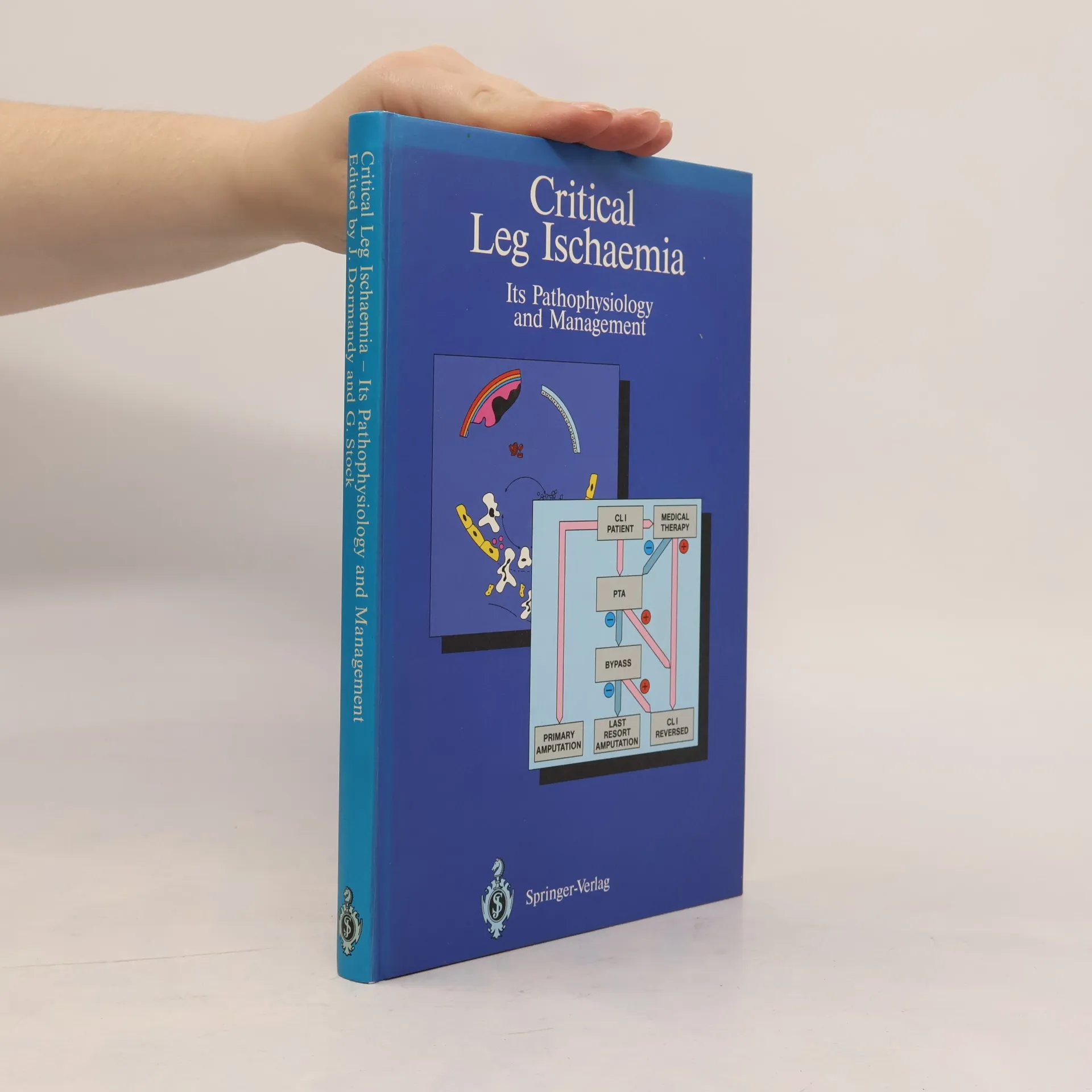
Critical Leg Ischaemia, Günter Stock, John A. Dormandy
- Lingua

- Pubblicato
- 1990
- Rilegatura
- (Copertina rigida),
- Condizioni del libro
- In buone condizioni
- Prezzo
- 4,49 €
Metodi di pagamento
Ancora nessuna valutazione.
- Titolo
- Critical Leg Ischaemia
- Sottotitolo
- Its Pathophysiology and Management
- Lingua
- Inglese
- Autori
- Günter Stock, John A. Dormandy
- Pubblicato
- 1990
- Formato
- Copertina rigida
- Pagine
- 172
- ISBN10
- 3540524622
- ISBN13
- 9783540524625
- Serie
- Tag
- Commercio, Medicina, Chirurgia, Fisiologia, Patologie, Cardiologia, Ematologia, Patofisiologia, Chirurgia Cardiaca
- Descrizione
- Jean Natali The pathophysiology and management of chronic critical limb -ischaemia (CLI) has always been a problematic area, at least partly because it involves doc tors from a wide range of the traditional medical specialities including vascular surgery, angiology, diabetology, haematology and radiology. The treatment of these patients also varies largely with local circumstances and national traditions. CLI therefore seemed a particularly appropriate subject for a new type of European consensus approach. In 1988 a series of small workshops were held by the European Working Group on Critical Limb Ischaemia to discuss the definition, pathophysiology, in vestigation and management of this condition. The process culminated in a meet ing in Berlin in March, 1989 where 120 specialists from sixteen European countries, representing the basic sciences as well as a spectrum of clinical dis ciplines, met to evolve a Consensus Document on the subject with specific recom mendations. The Document, which is reproduced in the first section of this book, does not of course necessarily represent the unanimous view of all those who participated in its compilation; however it is agreed that it does represent a con sensus or majority view. It was also noted that the comments and recommenda tions in the document should be taken as a whole, and are not intended to dictate the only correct approach to individual treatment.