Verità, bellezza, bontà. Educare alle virtù nel ventunesimo secolo
- 224pagine
- 8 ore di lettura


Howard Gardner è uno scienziato cognitivo ed educatore che ha sfidato le nozioni tradizionali di intelligenza. La sua teoria delle intelligenze multiple propone che esista una gamma di intelligenze distinte, piuttosto che una singola abilità generale. Gardner esplora come questa teoria possa essere applicata all'istruzione per adattarsi meglio alle capacità e agli stili di apprendimento individuali. Il suo lavoro si concentra sullo sviluppo di percorsi educativi personalizzati e sulla comprensione di ciò che costituisce un lavoro eccellente ed etico. Gardner indaga anche la natura della fiducia nella società contemporanea e le implicazioni etiche dei media digitali.


Scopo di questo libro è dimostrare che il fenomeno "intelligenza" può essere scomposto in una serie finita di abilità umane distinte, di distinte intelligenze: linguistica, musicale, logico-matematica, spaziale, corpo-reo-cinestetica, personale e interpersonale. Caso per caso, Gardner esamina quali siano i componenti e lo sviluppo di ogni particolare forma di intelligenza, gli aspetti neurologici e quelli interculturali. Negando il concetto unitario di intelligenza, Gardner mira tra l'altro a mettere in discussione l'assunto che l'intelligenza possa essere misurata mediante test verbali e a proporre una tecnica capace di applicazioni in campo educativo. Questo libro, che per la sua originalità e vivacità di stile ha ricevuto riconoscimenti in tutto il mondo, ha segnato una svolta negli studi sull'intelligenza, ed è oggi considerato una pietra miliare negli studi sull'apprendimento
Dalla teoria alla prassi pedagogica
An international panel of distinguished experts explores the balance between creativity and wise action, and calls for educators to nurture wise creativity in their students.
The production and appreciation of art involves thought processes that have excluded from traditional measures of human intelligence. This book, written by a leading cognitive scientist, makes a compelling case for broadening these definitions and discusses the value other cultures place onartistic abilities. Gardner explores the function of art in human development as well as the strategies children employ in the process of constructing images.
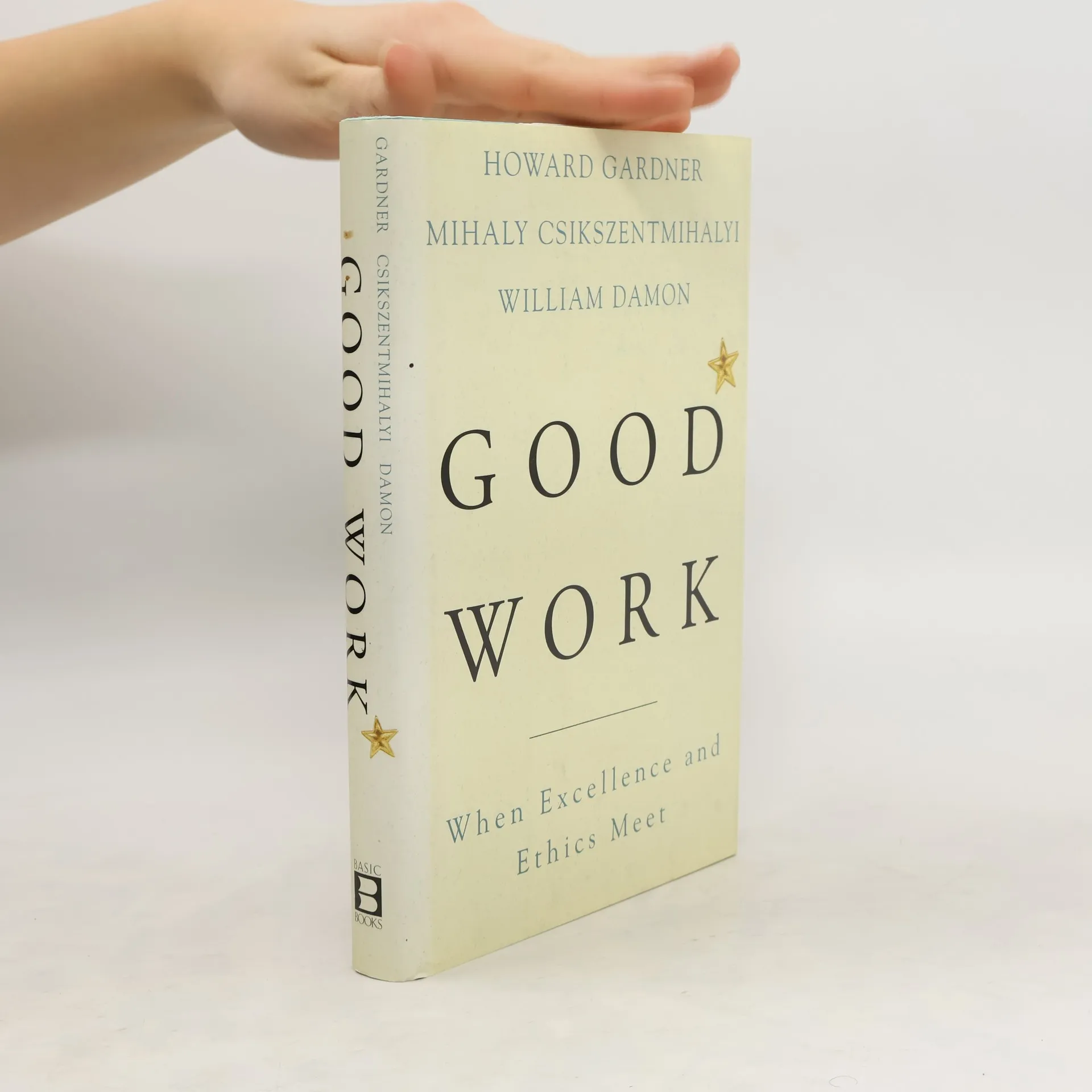
Three world-class psychologists discuss the importance of expert but socially responsible "Good Work" in a market-driven world. 30,000 first printing.
Alford Dalrymple Gardner is one of the few living passengers to have travelled on the Empire Windrush. He is one of 10 whose portrait was commissioned by King Charles, and appears in the BBC's Windrush: Portraits of a Generation special. Now published for the first time, this is his stirring life story.
"Howard Gardner's concept of multiple intelligences has been hailed as perhaps the most profound insight into education since the work of Jerome Bruner, Jean Piaget, and, even earlier, John Dewey. Now in The Disciplined Mind, Gardner pulls together the threads of his previous works in a major new synthesis aimed at parents, educators, and the general public alike. The Disciplined Mind looks beyond such parochial issues as charters, vouchers, unions, and affirmative action in order to explore the larger questions of what an educated person should be and how such an education can be achieved for all students. Gardner eloquently argues that the purpose of K-12 education should be to enhance students' deep understanding of truth (and falsity), beauty (and ugliness), and goodness (and evil) as defined by their various cultures. With this stance, Gardner transforms the tired debate between "traditionalists" and "progressives."" "In an effort to reconcile conflicting educational viewpoints, he proposes the creation of six different educational pathways that, when taken together, could satisfy people's concern for student learning and their widely divergent views of what knowledge and understanding should be."--Jacket
The most complete account of the theory and application of Multiple Intelligences available anywhere Howard Gardner's brilliant conception of individual competence, known as Multiple Intelligences theory, has changed the face of education. Tens of thousands of educators, parents, and researchers have explored the practical implications and applications of this powerful notion, that there is not one type of intelligence but several, ranging from musical intelligence to the intelligence involved in self-understanding. Multiple Intelligences distills nearly three decades of research on Multiple Intelligences theory and practice, covering its central arguments and numerous developments since its introduction in 1983. Gardner includes discussions of global applications, Multiple Intelligences in the workplace, an assessment of Multiple Intelligences practice in the current conservative educational climate, new evidence about brain functioning, and much more.
