
Federico Campagna è un filosofo italiano il cui lavoro affronta le sfide ontologiche ed etiche del nichilismo contemporaneo. Esplora la possibilità di un'architettura filosofica fondamentale di emancipazione e cerca percorsi per la ricostruzione della realtà. La sua scrittura si concentra sulla rivalutazione della nostra percezione del mondo e sulla critica degli atteggiamenti che portano a un senso di vuoto.
Globalisierung und soziale Netzwerke scheinen dem in der Vergangenheit häufig diagnostizierten „Rückzug ins Private“ entgegenzulaufen und bewirken zugleich auch eine Veränderung in der Kommunikation, Verbreitung und Präsenz des Künstlerischen. „The New Public“ untersucht die Auswirkungen dieser neuen Formen von Öffentlichkeit auf die Institution Museum wie auch auf die Rezeption von Kunst durch ein „neues Publikum“. Die Fragestellung nach der Veränderung der Kunstproduktion wird anhand ausgewählter Werke von 14 künstlerische Postionen aufgezeigt.
We take for granted that only certain kind of things exist - electrons but not angels, passports but not nymphs. This is what we understand as `reality'. But in fact, `reality' varies with each era of the world, in turn shaping the field of what is possible to do, think and imagine. Our contemporary age has embraced a troubling and painful form of reality: Technic. Under Technic, the foundations of reality begin to crumble, shrinking the field of the possible and freezing our lives in an anguished state of paralysis. Technic and Magic shows that the way out of the present deadlock lies much deeper than debates on politics or economics. By drawing from an array of Northern and Southern sources - spanning from Heidegger, Junger and Stirner's philosophies, through Pessoa's poetry, to Advaita Vedanta, Bhartrhari, Ibn Arabi, Suhrawardi and Mulla Sadra's theosophies - Magic is presented as an alternative system of reality to Technic. While Technic attempts to capture the world through an `absolute language', Magic centres its reconstruction of the world around the notion of the `ineffable' that lies at the heart of existence. Technic and Magic is an original philosophical work, and a timely cultural intervention. It disturbs our understanding of the structure of reality, while restoring it in a new form. This is possibly the most radical act: if we wish to change our world, first we have to change the idea of `reality' that defines it
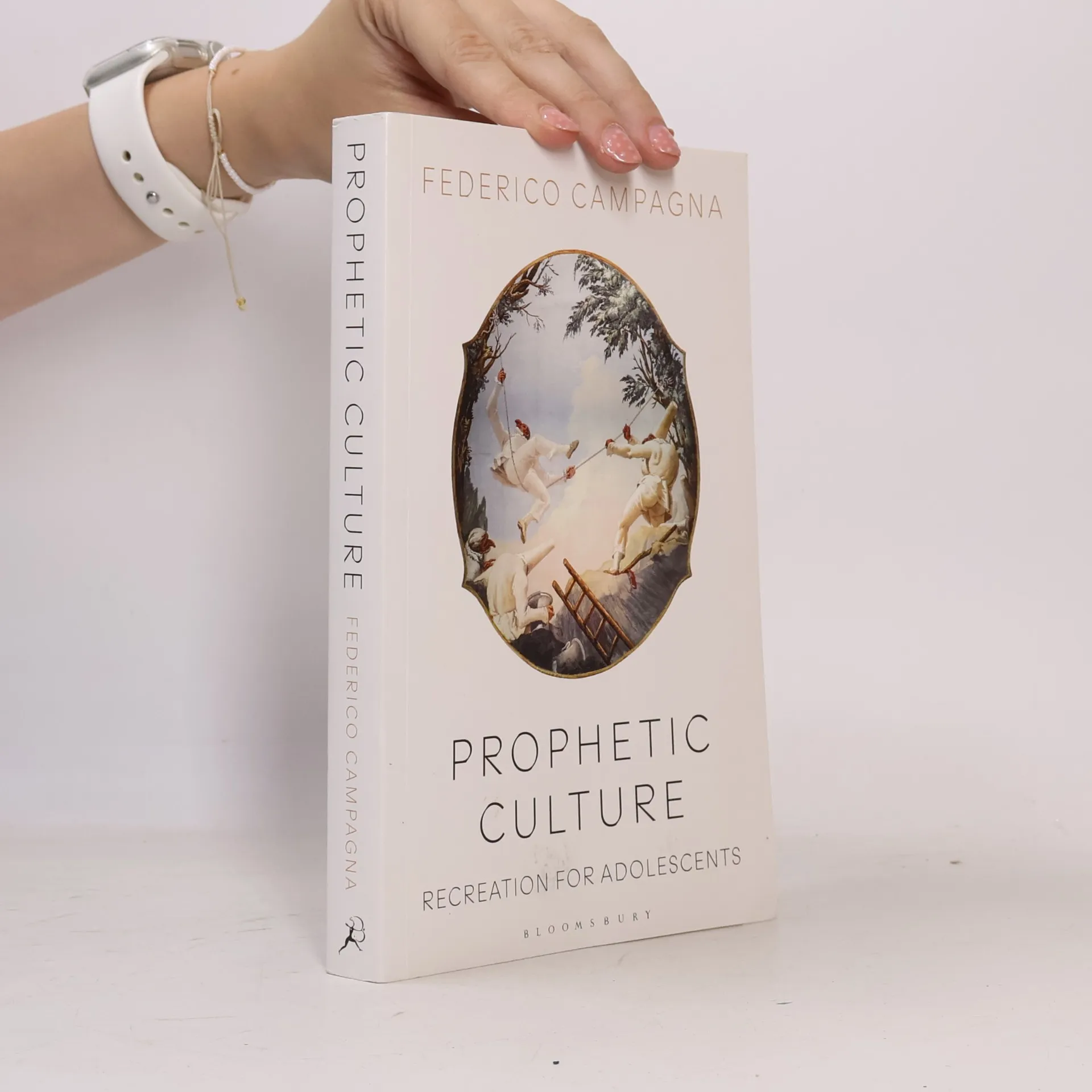
For a long time, we have been told that humanity is in a state of 'crisis' and in response to this terrible impasse, a stream of countless voices has poured forth numerous solutions. Each of them have advocated the need for a different way of understanding culture, politics, economics, humanity, or the world itself. But do these numerous remedies only identify a deeper problem? Is there actually just something wrong with how we humans turn the mystery of existence into a form of 'reality'? In an exciting continuation of Technic and Magic (Bloomsbury, 2018), Federico Campagna argues that if the crisis afflicting humanity is to be solved, then humans need to embark upon a new journey of discovery within reality itself. For Campagna, the main task of cultural work today, and indeed tomorrow, is to draw a new map of the universe that is hidden within each thing and outline the reality that is specific to that generation. As has happened countless times in history, those who rebuild societies face the prophetic challenge of allowing the mystery of existence to speak once again, whilst also containing it within a new system of reality. This innovative and unique book shows that each time humans attempt to produce prophetic culture, culture itself emerges transformed at its very core.
Dieser Band beantwortet die Frage, die die bürgerliche Presse vor allem Teilnehmern an aktuellen Protest- und Widerstandsaktionen stellt – ob in den amerikanischen Occupy-Camps oder der Blockupy-Bewegung in Deutschland, den jungen Militanten in Griechenland, Spanien und Italien. Das Manifest des Radikalen Kollektivs vereinigt einige der wichtigsten TheoretikerInnen und AktivistInnen der neuen Protestbewegung, die sich seit 2008 international artikuliert. David Graeber, John Holloway, Nina Power, Richard Seymour und Franco Berardi sowie zahlreiche weitere AutorInnen formulieren nicht nur die Strategien künftiger Widerstandsbewegungen, sondern analysieren auch das modische Vokabular des Neoliberalismus wie 'new governance' und 'grüne Ökonomie'. Dieser Reader ist ein Handbuch für alle, die sich als Teil einer neuen radikalen Bewegung gegen die Zumutungen des gegenwärtigen Systems begreifen. Der hiermit auf Deutsch vorliegende Band ist 2012 unter dem Titel 'What we are fighting for' bei Pluto Press erschienen.