
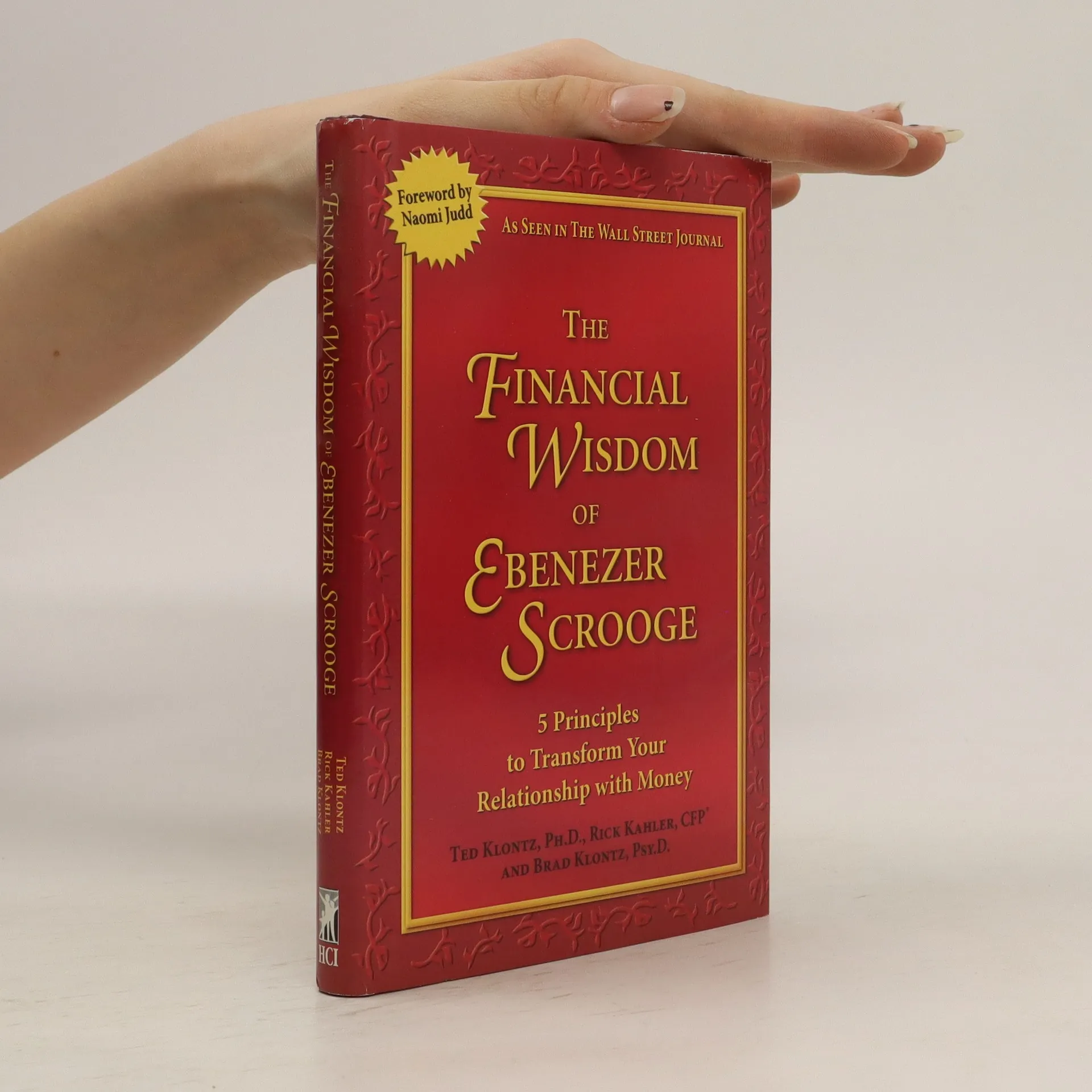
--The Wall Street Journal Ebenezer Scrooge would seem an unlikely source from which to glean financial wisdom. However, Dickens' classic tale of how Scrooge left behind his miserly ways and transformed into a joyful, compassionate and generous man is a powerful model we all can benefit from today. Unlike other financial planning books that focus narrowly on the 'dollar and cents' of money, The Financial Wisdom of Ebenezer Scrooge is an easy read. Written for the layperson, this book provides advice that is simple, transformational and timeless. Through the process they've used successfully with their clients, the authors will show you how to recognize ways unconscious Money Scripts may keep you trapped; how to deal with the relationship between your net worth and your self-worth; how to discover your authentic goals and values; how to permanently change self-destructive money behaviors; and, through five principles of financial prosperity, how to leave a family legacy of financial wellness.
Ted Klontz Libri


This practical companion resource enhances the authors' previous work by providing assessments, reflections, and exercises that help financial planners understand their own biases and behaviors, as well as those of their clients. It includes exercises aligned with the learning objectives found in the Psychology of Financial Planning relevant to the CFP® Exam. The toolkit offers a variety of tools designed to deepen the concepts explored in the companion book, facilitating discussions and interactions between planners and clients. Readers will find strategies to comprehend client and planner attitudes, values, and biases, alongside explorations of multicultural competence and behavioral finance. It also addresses how to help clients navigate crises and resolve common money conflicts, encouraging action, goal-setting, and effective communication. This resource is aimed at current and aspiring financial planning professionals and educators across various roles and business models. The Psychology of Financial Practitioner’s Toolkit is an essential addition to the bookshelves of practitioners in firms of all sizes.
Psychology of Financial The Practitioner’s Guide to Money and Behavior In PSYCHOLOGY OF FINANCIAL The Practitioner’s Guide to Money and Behavior, distinguished authors Drs. Brad Klontz, CFP®, Charles Chaffin, and Ted Klontz deliver a comprehensive overview of the psychological factors that impact the financial planning client. Designed for both professional and academic audiences, PSYCHOLOGY OF FINANCIAL PLANNING is written for those with 30 years in practice as well as those just beginning their journey. With a focus on how psychology can be applied to real-world financial planning scenarios, PSYCHOLOGY OF FINANCIAL PLANNING provides a much-needed toolbox for practicing financial planners who know that understanding their client’s psychology is critical to their ability to be effective. The PSYCHOLOGY OF FINANCIAL PLANNING is also a much-needed resource for academic institutions who now need to educate their students in the CFP Board’s newest category of learning psychology of financial planning. Topics PSYCHOLOGY OF FINANCIAL PLANNING goes beyond just theory to show how practitioners can use psychology to better serve their clients. The accompanying workbook provides exercises, scripts, and workshop activities for firms and practitioners who are dedicated to engaging and implementing the content in meaningful ways.