

10 libri per 10 euro qui
Bookbot

César A. Hidalgo

    Wachstum geht anders
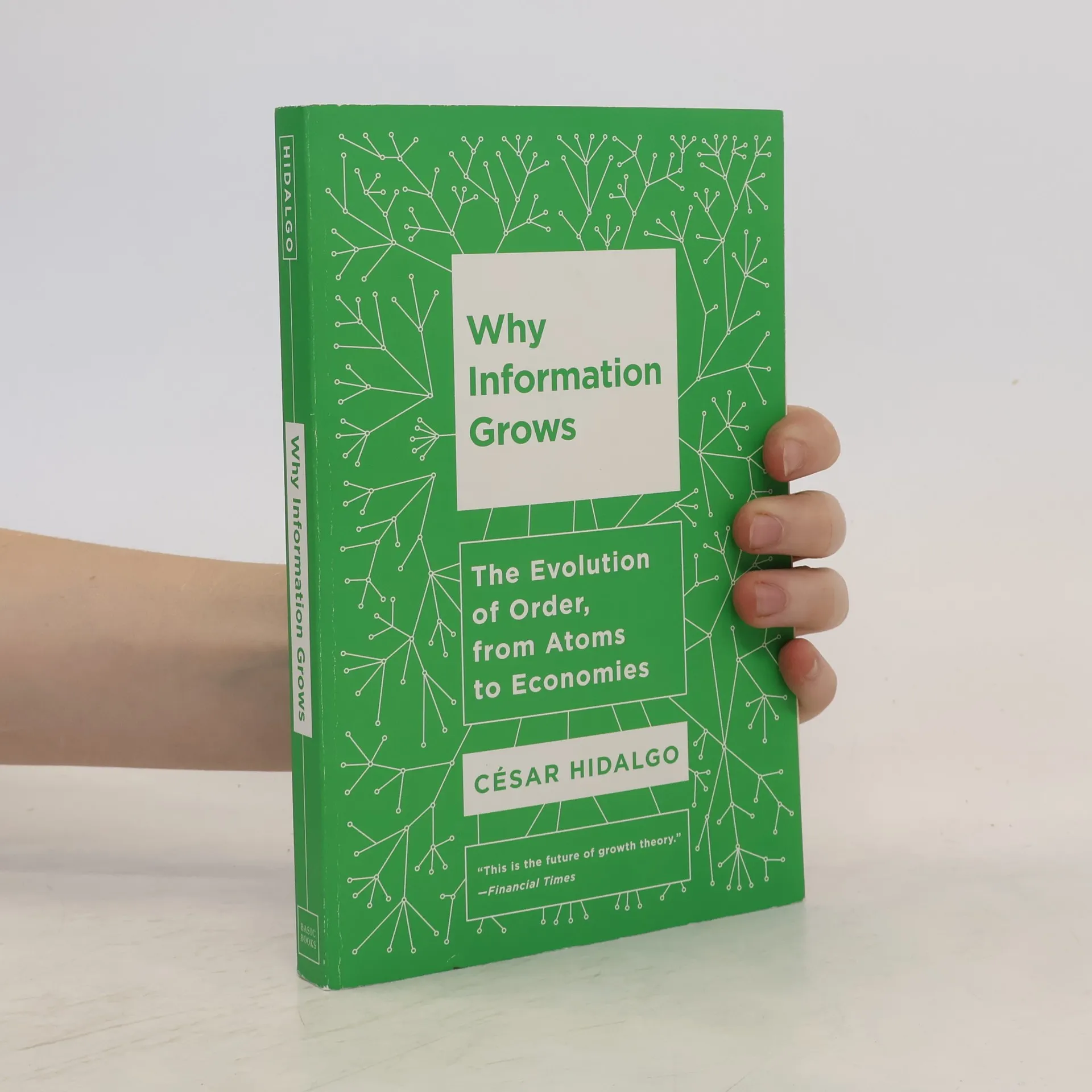
    Why Information Grows
    • Why Information Grows

      The Evolution of Order, from Atoms to Economies

      In Why Information Grows, rising star Cesar Hidalgo offers a radical interpretation of global economicsWhat is economic growth? And why, historically, has it occurred in only a few places? Previous efforts to answer these questions have focused on institutions, geography, finances, and psychology. But MIT professor Cesar Hidalgo argues that in order to fully grasp the nature of economic growth we need to transcend the social sciences and turn to the science of information, networks and complexity. The growth of economies, he explains, is deeply connected with the growth of order - or information. At first glance, the universe seems hostile to order. Thermodynamics dictates that over time, order will disappear. But thermodynamics also has loopholes that promote the growth of information in pockets. Our cities are such pockets where information grows, but they are not all the same. For every Silicon Valley, Tokyo, and London, there are dozens of places with underdeveloped economies. Why does the US economy outstrip Brazil's, and Brazil's that of Chad? Why did the technology corridor along Boston's Route 128 languish while Silicon Valley blossomed? In each case, the key is how people, companies, and the networks they form process information - it is all about their knowledge, knowhow and imagination. As Hidalgo compellingly shows, economies are made of networks of people and society is a collective computer. The problem of economic development is in fact the problem of making these networks more powerful. A radical new interpretation of global economics, Why Information Grows overturns traditional assumptions about the development of economies and the origins of wealth and takes a crucial step toward making economics less the dismal science and more the insightful one

      Why Information Grows
    • César Hidalgos unkonventionelle Methoden machen ihn zu einem der schillerndsten Denker seiner Generation. „Wachstum geht anders“ richtet sich an Menschen, die einen frischen Blick auf die Gegenwart und Zukunft der globalen Wirtschaft werfen und aktiv mitgestalten wollen. Wirtschaftswachstum ist ein weit verbreitetes Ziel, doch was genau bedeutet es? Es geht um mehr Effizienz, aber auch um die Frage, wer das Wachstum tatsächlich fördert. Leser werden gezwungen sein, langgehegte Glaubenssätze zu hinterfragen. Herkömmliche Wirtschaftsmodelle konzentrieren sich auf Kapital, Arbeit, Investitionen und Produktivität. Hidalgos Ansatz hingegen basiert auf anderen Bausteinen: Information und Netzwerken. Dabei versteht er Information nicht nur als Daten, sondern als die Ordnung von Dingen und Lebensformen. Seine Forschung zeigt, dass wirtschaftlicher Erfolg vor allem von der Fähigkeit abhängt, neue Ideen in Produkten zu verkörpern und Wissen in Netzwerken zu verbreiten. Zudem verdeutlicht Hidalgo, wie Volkswirtschaften nicht nur mehr, sondern auch kreativere und interessantere Leistungen erbringen können. Dichtere, flexiblere Wissensnetze fördern komplexere und vielfältigere Produkte.

      Wachstum geht anders