
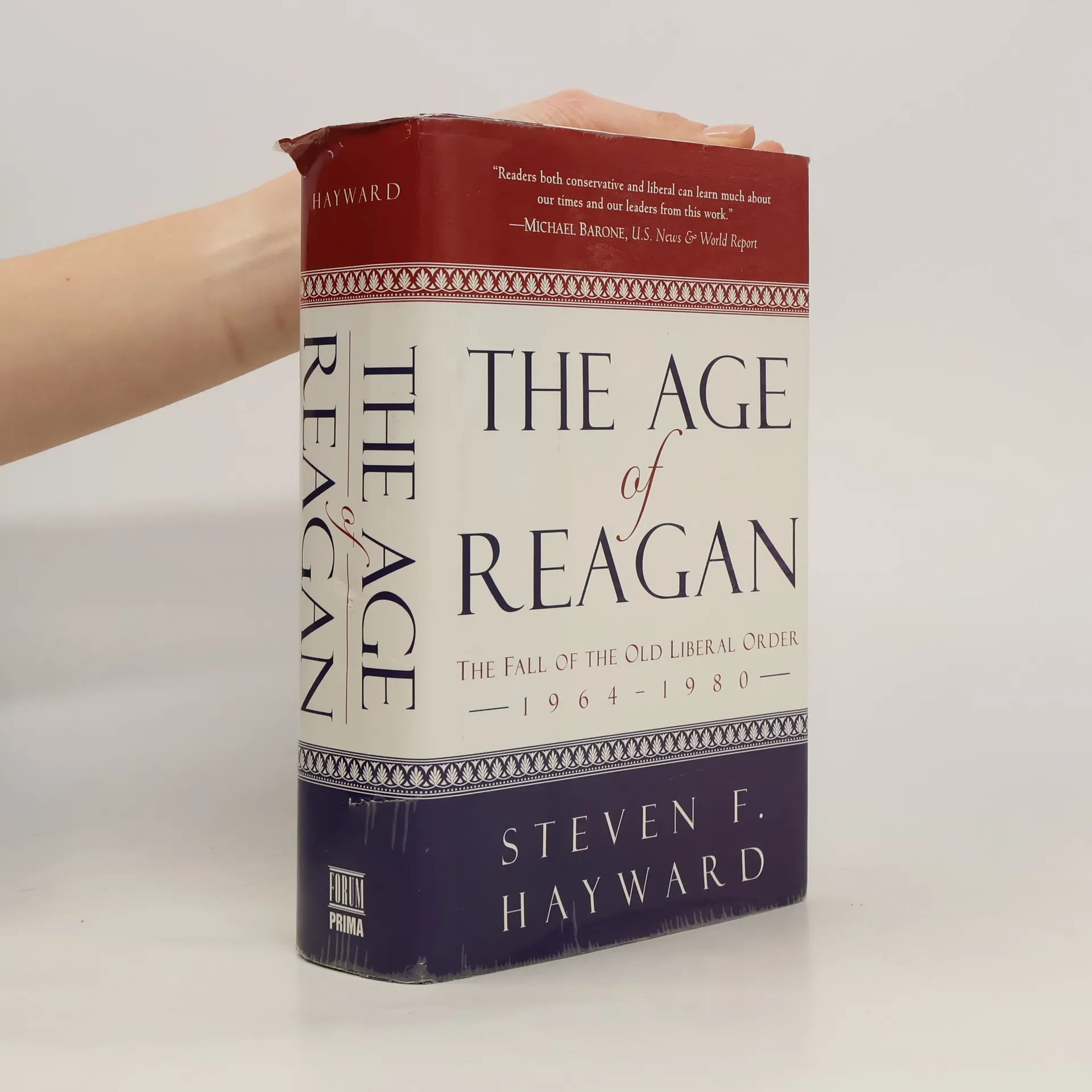
The Age of Reagan brings to life the tumultuous decade and a half that preceded Ronald Reagan's ascent to the White House. Based on scores of interviews and years of research, Steven F. Hayward takes us on an engrossing journey through the most politically divisive years the United States has had to endure since the decade before the Civil War. Overseas, we were embroiled in a war we couldn't win; at home our streets had become battlefields; and in Washington, the old liberal order was collapsing under the weight of a long string of failed policies. "It seemed that an era of American optimism and progress had come to a close," Hayward writes. "The concatenation of Vietnam, Watergate, the recurrent energy crisis, the swooning economy, the increasingly disorderly world scene, and the failed presidencies associated with these events robbed Americans of their native optimism for the future." Meanwhile, from out of the West arose a new conservative movement led by Ronald Reagan, a one-time Hollywood actor whose speech in 1964 in support of the doomed candidacy of Barry Goldwater not only electrified a national television audience but also created a political star who would change the course of history. With meticulous detail, Hayward captures an America at war with itself--and an era whose reverberations we feel to this very day. He brings new insight into the profound failure of Lyndon Johnson's Great Society, the oddly liberal nature of Richard Nixon's administration, the significance of Reagan's years as California's governor, and the sudden-death drama of his near defeat of Gerald Ford in the 1976 Republican primary, the listlessness of Jimmy Carter's leadership, and the political earthquake that was Reagan's victorious presidential campaign in 1980. Provocative, authoritative, and majestic in scope, The Age of Reagan is an unforgettable account of the rebirth and triumph of the American spirit.--Publisher description
Steven F. Hayward Libri
Questo autore, passato dalla consulenza sui crimini finanziari alla narrativa, porta una prospettiva unica che fonde una profonda comprensione del mondo finanziario con la suspense dei thriller polizieschi. Il suo stile narrativo esplora magistralmente le intricate motivazioni di personaggi che si ritrovano a navigare nell'intersezione complessa tra legalità e crisi personale. Attraverso protagonisti che abbandonano le loro vite consolidate, l'autore approfondisce i temi della redenzione e della ricerca di un nuovo scopo. Le sue avvincenti storie sono caratterizzate da colpi di scena e rivelazioni inaspettate, assicurando che i lettori rimangano affascinati fino all'ultima pagina.


M. Stanton Evans was one of the unsung heroes and key figures of the modern conservative movement, offering a model to be remembered and emulated in both thought and deed. A person of extraordinary breadth, he combined the roles of journalist, first-rank thinker, and political action, often at the center of crucial events for the conservative movement from the mid-1950s to his last decade in the 2010s. He was the principal author of the Sharon Statement, the founding document of Young Americans for Freedom. Evans was also a mentor to an entire generation of conservative writers and journalists, including Ann Coulter, John Fund, Martin Morse Wooster, Tim Carney, Richard Miniter, William McGurn, and this author. Evans was libertarian in economics and policy, traditionalist in moral and social matters, respectful of religion, and resolutely anti-Communist. Over the years he wrote a number of elegant articles and one book, The Theme is Freedom, that reconciled many of the strains that often appear between these differing schools of conservative thought. He also wrote a controversial defense of Joseph McCarthy, which is one of many examples of his fearlessness in contesting the conventional wisdom.