

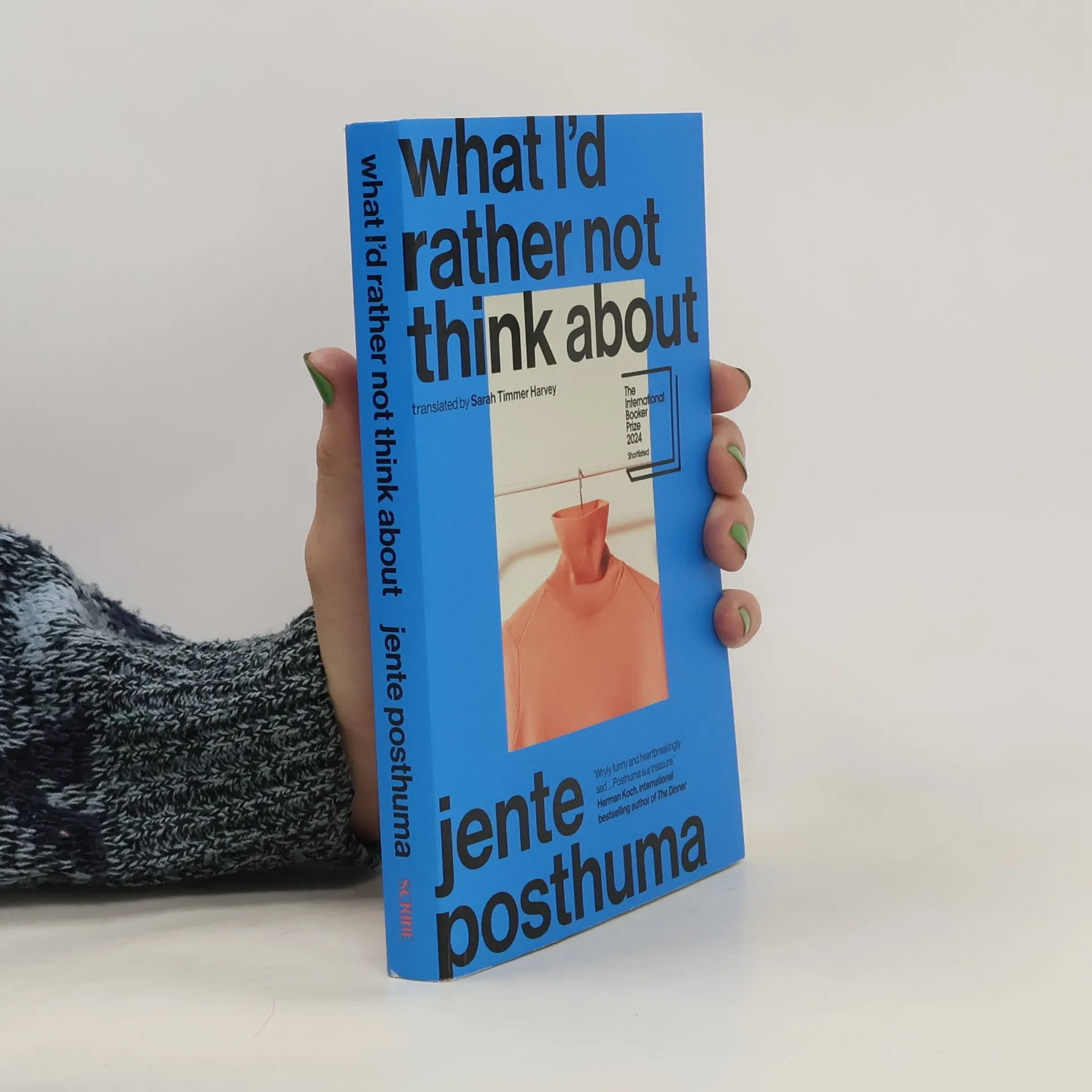
What if one half of a pair of twins no longer wants to live? What if the other can't live without them? This question lies at the heart of Jente Posthuma's deceptively simple What I'd Rather Not Think About. The narrator is a twin whose brother has recently taken his own life. She looks back on their childhood, and tells of their adult lives: how her brother tried to find happiness, but lost himself in various men and the Bhagwan movement, though never completely. In brief, precise vignettes, full of gentle melancholy and surprising humour, Posthuma tells the story of a depressive brother, viewed from the perspective of the sister who both loves and resents her twin, struggles to understand him, and misses him terribly.
Jente Posthuma Libri
Jente Posthuma crea narrazioni che approfondiscono temi di isolamento e ricerca d'identità, impiegando spesso elementi autobiografici per esplorare le complessità del legame umano. La sua prosa è caratterizzata da un'acuta introspezione e da una qualità lirica che attira i lettori nella vita interiore dei suoi personaggi. Posthuma indaga questioni esistenziali che risuonano con il pubblico contemporaneo, catturando la silenziosa solitudine che si cela sotto la superficie della vita quotidiana. Il suo lavoro si distingue per la sua cruda onestà e una profonda comprensione della psiche umana.

Mensen zonder uitstraling
- 173pagine
- 7 ore di lettura
De stuurloze hoofdpersoon van 'Mensen zonder uitstraling' leeft in de schaduw van haar moeder, een ontevreden actrice. Haar vader is hoofd van een psychiatrische inrichting. Psychopaten en depressieven raadt hij aan hun bezigheden in afgepaste tijdsblokken in te delen, zodat ze meer controle krijgen over hun bestaan. Zijn eigen dochter geeft hij hetzelfde advies, zodat haar leven weer ‘behapbaar’ wordt. Dat woord gebruikt hij graag. Dan overlijdt plotseling haar moeder en blijven vader en dochter met zijn tweeën over. Elke avond speelt vader patience op zijn computer en eet hij staande aan het aanrecht een pak magnetronpannekoeken. Zij houdt zich op met pyromanen, pedofielen, garagehouders, schrijvers en masseurs en probeert krampachtig iets van haar leven te maken. In droogkomische stijl schetst Posthuma een caleidoscopisch portret van een gemankeerde familie – normale mensen in een absurd universum, of andersom.