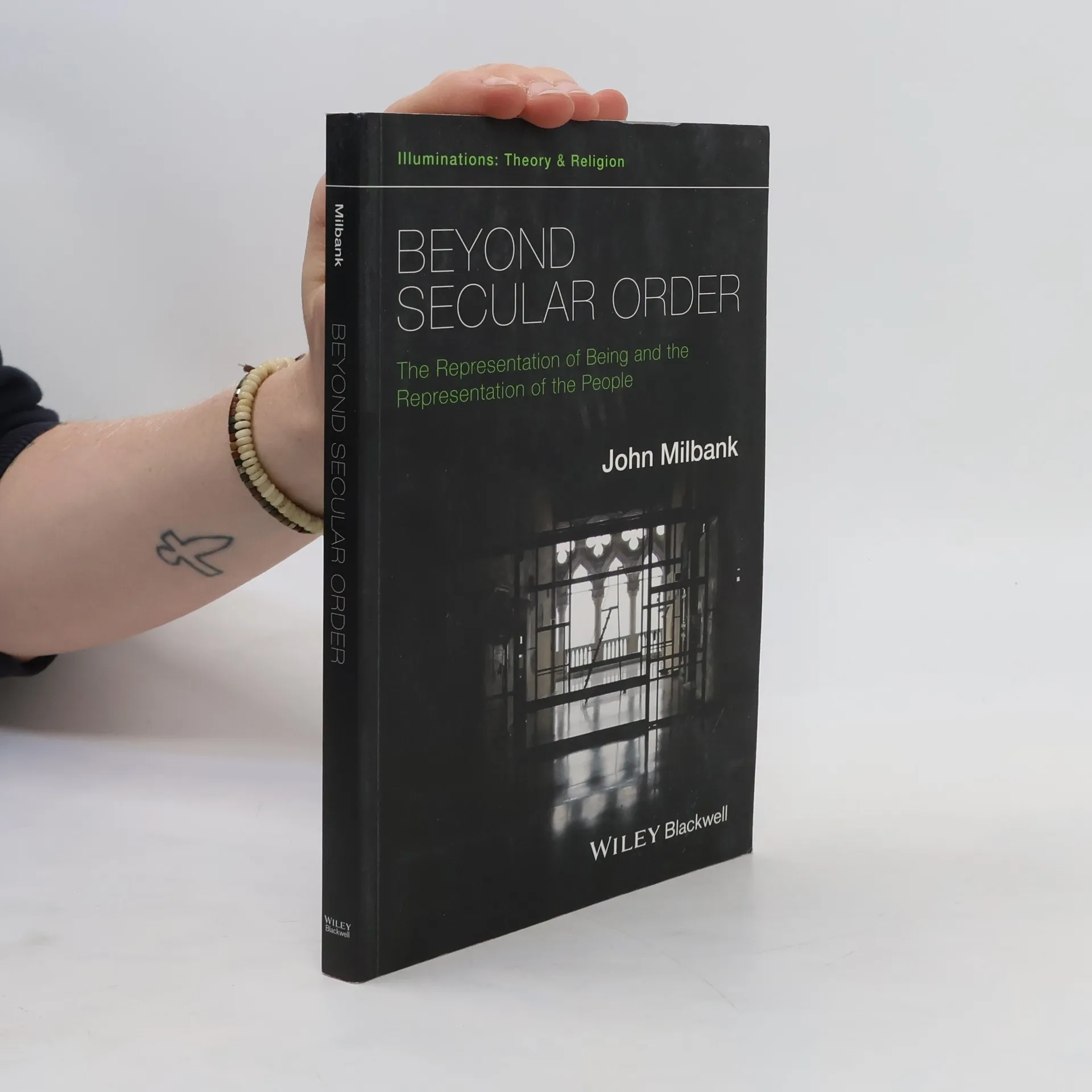
John Milbank si sforza di resistere alla nozione che le comprensioni secolari debbano definire l'agenda della teologia. Egli promuove invece il cristianesimo come un'esposizione ricca e vitale dell'intera realtà. Il suo lavoro approfondisce l'intersezione tra teologia, teoria sociale ed etica, esplorando come la fede plasmi la nostra comprensione del mondo. L'approccio di Milbank sfida i lettori a riconsiderare la profonda relazione tra religione e società.
Beyond Secular Order is the first of a two-volume work that expands upon renowned theologian John Milbank s innovative attempt to understand both theology and modern thought begun in his previously published classic text Theology and Social Theory.
Focusing on the intersection of theology and social theory, this revised edition presents John Milbank's influential ideas that challenge conventional social thought. It explores the implications of a theological perspective on society, offering a unique framework for understanding social structures and relationships. Milbank's work invites readers to reconsider the foundations of social theory through a theological lens, making it a significant contribution to contemporary philosophical discourse.
The book offers a thorough critique of contemporary liberalism while presenting post-liberal alternatives across various domains, including politics, economics, culture, and international relations. The expert authors delve into the deficiencies of liberalism and propose a comprehensive exploration of post-liberal ideas, aiming to reshape the discourse around Western political thought.
Exploring the relationship between the physical and spiritual realms, the book delves into the profound connection between humanity and the cosmos. It emphasizes how the Earth's organic and spiritual layers symbolize a journey toward transcendence, while simultaneously acknowledging that this ascent is inherently tied to our earthly existence. Through this lens, poetry emerges as a vital expression of the human experience, navigating the complexities of our vertical aspirations and horizontal realities.
When the Radical Reformers demanded the separation of church and state, it was not to privatize their convictions or depoliticize the church, but rather an attempt to recognize Jesus as Lord over all. The theological movement known as Radical Orthodoxy is currently rethinking theology's influence by secular modernity, thereby making a bold critique of contemporary Christianity. It should not be surprising that Anabaptist theologians have found theological kinship with Radical Orthodoxy. Taking their cues from John Howard Yoder, Henri de Lubac, Jacques Derrida, Stanley Cavell, Hans Urs von Balthasar, Stanley Hauerwas, and others, writers in this volume engage Radical Orthodoxy on topics such as ecclesiology, martyrdom, worship, oath-taking, peace and violence. (Amazon)