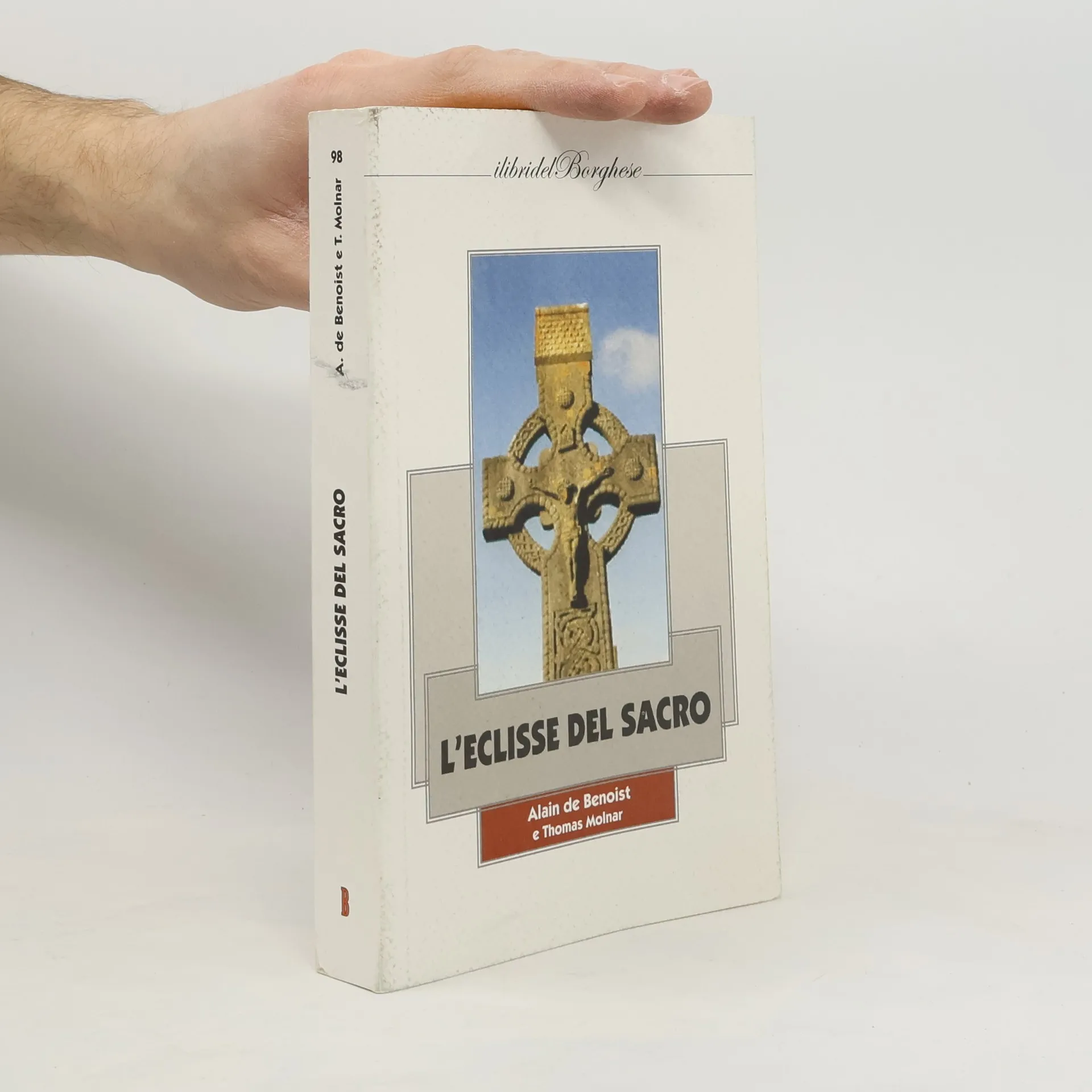
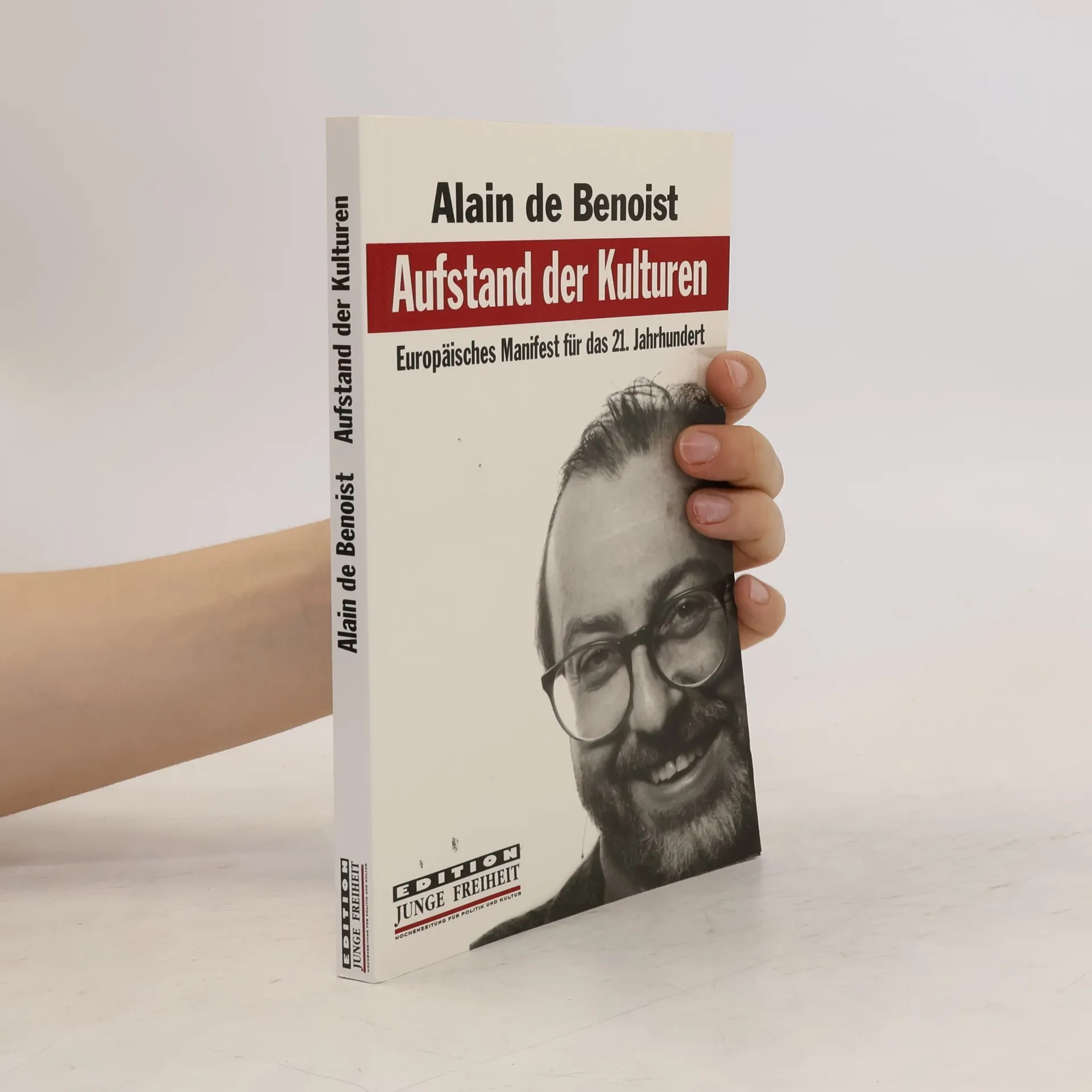
Alain de Benoist ha dedicato oltre tre decenni all'analisi e alla riflessione meticolosa delle idee, con un focus particolare sulla filosofia politica e sulla storia del pensiero. Il suo lavoro è caratterizzato da un'indifferenza verso le tendenze ideologiche e dal rifiuto dell'estremismo, evitando di criticare la modernità sulla base di un passato idealizzato. Invece, affronta preoccupazioni postmoderne, esaminando la critica congiunta dell'individualismo e del nazionalismo. Il suo quadro intellettuale comprende anche la decostruzione della logica di mercato e la difesa delle autonomie locali e del federalismo integrale radicati nella sussidiarietà e nella democrazia partecipativa.
Da diversi decenni Alain de Benoist, attraverso un’inesauribile attività di poligrafo eclettico, scandita dalla pubblicazione di molti libri e articoli sugli argomenti più disparati, conduce una battaglia personale volta in qualche modo a decostruire i termini-chiave del mondo moderno, in vista di un suo superamento radicale. Infatti, per quanto possa sembrare un paradosso, nell’interpretazione del pensatore francese una reale evoluzione dell’esperienza umana dipenderà non solo dall’emancipazione dalle convenzioni e dai pregiudizi del passato, ma dall’emancipazione consapevole dal moderno, inteso come summa di prospettive ormai inadeguate.
Exploring the concept of paganism, Alain de Benoist presents a compelling manifesto that engages with the historical debate between monotheism and polytheism. Drawing from diverse philosophical sources, including Nietzsche and Heidegger, the work delves into ancient philosophy and mythology to construct a unique pagan theology rooted in Indo-European traditions. Rather than simply surveying pre-Christian religions or advocating for modern neo-paganism, it offers a rigorous intellectual framework for understanding paganism's significance in contemporary thought.
Ernst Jünger, a notable figure of the twentieth century, was not only a soldier and adventurer but also a prolific writer. His significant contributions include the World War I memoir "Storm of Steel," which offers a vivid account of wartime experiences, the influential treatise "The Worker," exploring the intersection of technology and modernity, and the dystopian novel "On the Marble Cliffs," reflecting his complex views on society and existence. Jünger's works delve into profound themes of conflict, identity, and the human condition.
Dr. Sunic examines the principal themes which have concerned the thinkers of the New Right since its inception by Alain de Benoist in 1968, and also discusses the significance of some of the older authors who have been particularly influential on the development of the movement, including Oswald Spengler, Carl Schmitt, and Vilfredo Pareto.
In this wide-ranging yet concise study, Alain de Benoist brings his incisive intelligence and wide erudition to bear on the fiercely debated subject of the mysterious origin and practical and magical functions of runes, providing the reader with a thorough grounding in the potential origin points and evolutions of the Fuþark. Runes and the Origins of Writing carries its reader on an archaeological and anthropological journey through an enigmatic past, giving to layman and academic alike unique insight into the history of this archaic script, and others like it.
The Problem of Democracy is the first of Alain de Benoist's book-length political works to appear in English. It presents the complexity and depth which underlies all of de Benoist's work and which is often neglected by those who seek to dismiss him by oversimplifying or distorting his arguments. De Benoist shows how democracy is, contrary to what some critics have claimed, something which has been a part of our civilisation from the beginning. The problem, he says, is not the notion of democracy in itself, but rather the current understanding of the term which, instead of empowering the individual, reduces him to little more than a cog in a machine over which he has no control, and in which the direction is set by politicians with little genuine accountability. De Benoist proposes that effective democracy would mean a return to an understanding of citizenship as being tied to one's belonging to a specific political community based on shared values and common historical ties, while doing away with the liberal notion of the delegation of sovereignty to elected representatives. The type of government which is called for is thus a return to the form of government widely understood in Antiquity, but which now seems to us to be a revolutionary notion. This is the first in a series of volumes by Alain de Benoist which will be translated and published by Arktos.
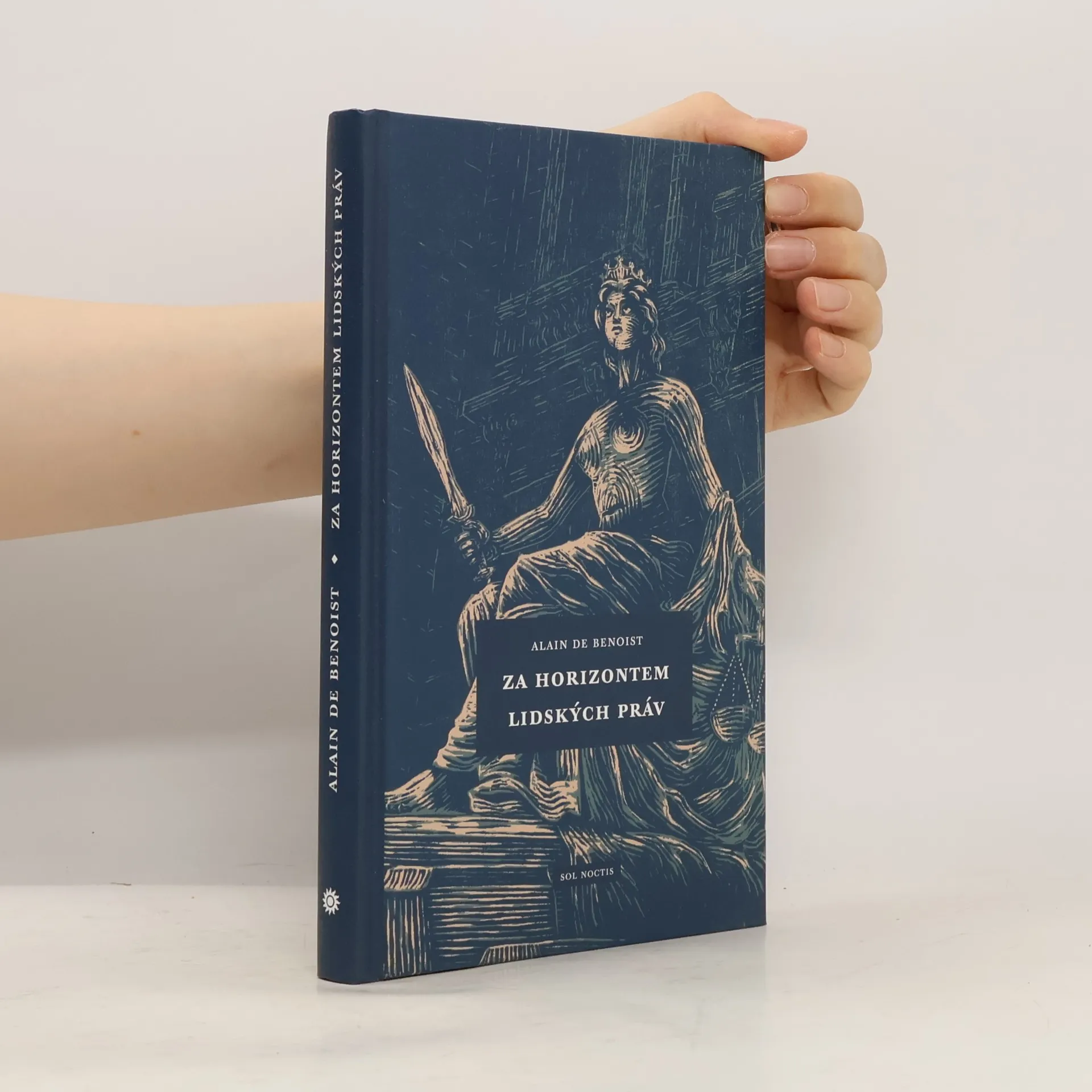
Ideologie lidských práv se stala sekulárním náboženstvím naší doby. Má svá dogmata, své svaté, své mučedníky, své křížové výpravy a svou inkvizici. Ačkoli byla formulována s úmyslem zabránit tyranii a přinést svobodu, nakonec se sama stala svazující. Autor v této knize zkoumá dějiny lidskoprávního diskurzu, jeho předchůdce a jeho současné dopady na společnost. Odhaluje člověka antiky jako neodlučitelného od svého rodu či komunity. Sleduje dlouhou cestou od toho, jak rané křesťanství přisoudilo každému člověku nesmrtelnou duši, až po současné zbožštění člověka jakožto egoistického jednotlivce. Poukazuje na kulturní a historickou relativitu lidských práv. Jejich absolutizaci a univerzalismus považuje za formu západního etnocentrismu. Vrhá světlo na jejich ideologizaci v prospěch západních zájmů a globalizace a především poukazuje na jejich atomizační a dezintegrační dopady na společnost. Francouzský filosof Alain de Benoist (*1943) je zakladatelem a předním představitelem Sdružení pro výzkum a studium evropské kultury (Groupement de recherche et détudes pour la civilisation européenne, GRECE). Je autorem několika desítek knih: kromě lidských práv psal i o indoevropských jazycích a náboženstvích, o dějinách filosofie, o ekonomice, o totalitarismu a o geopolitice. Ve své aktuální knize Za horizontem lidských práv předkládá jedinečnou kritiku jednoho z nejzávažnějších problémů naší doby.
„Der Vergleich des Kommunismus mit dem Nationalsozialismus ist nicht bloß zulässig, sondern geradezu geboten, und der beste übergeordnete Begriff ist derjenige des , Totalitarismus'.“ Alain de Benoist skizziert aber auch die Gefahr eines „weichen Totalitarismus“ im Liberalismus.
Der Russland-Ukraine-Konflikt verdeutlicht, dass Europa ein fremdbestimmtes Anhängsel der USA ist, unfähig zu einer eigenständigen Positionierung innerhalb der „westlichen Wertegemeinschaft“. Als Vasall Washingtons ist Europa fest in US-dominierte Bündnissysteme integriert. Seit 1945 hat sich der Alltagsverstand der Menschen in Ländern wie Frankreich und Deutschland zunehmend amerikanisiert. Alain de Benoist schlägt vor, den Westen zu brechen und thematisiert in seinen Notizen zur Epoche des Globalismus die Befreiung der europäischen Völker vom US-amerikanischen Denken. Der vorliegende Band versammelt erstmals über 70 ausgewählte Editorials von de Benoist aus der Prestigezeitschrift „éléments“ seit den 1980er Jahren. Diese prägnanten Texte wecken den Widerstandsgeist und vermitteln Wissen. Die Themen sind vielfältig und spiegeln Benoists Denken wider: vom Verfall und der möglichen Wiederbelebung der Demokratie über die ökologische Katastrophe bis hin zu Kapitalismus und Liberalismus als „siamesische Zwillinge“. Auch Feminismus, echte Weiblichkeit, Freiheit, Diktatur und die „Pandemie der Angst“ werden behandelt. „Den Westen brechen“ setzt dort an, wo „Gegen den Liberalismus“ endet!
Derzeit reden alle vom Wirtschaftswachstum: Wie läßt es sich ankurbeln, wie inmitten der Krise im Schwung halten? Welche sozio-politischen Horrorszenarien kommen andernfalls auf uns zu? Alain de Benoist dagegen fordert eine gezielte Wachstumsrücknahme. Zweitausend Jahre 'Entgötterung' und Inbesitznahme durch den Menschen, zweihundert Jahre Industrialisierung und Raubwirtschaft haben die Erde geplündert, ausgezehrt, verschandelt. Wie lange noch, bis sie gänzlich unbewohnbar wird? Auf einem endlichen Planeten ist kein Platz für das unendliche Machtstreben des Menschen, das lehren die elementaren Gesetze der Physik. So wird die Ökologie zur Schicksalsfrage unserer Zeit. Sie markiert das Ende der Fortschrittsideologie. Eine Streitschrift gegen den Selbstmord des Planeten: Es ist höchste Zeit für eine Abkehr vom blinden Technikglauben und vom Konsumfetisch, höchste Zeit für eine 'Entkolonisierung des Vorstellungsvermögens', eine Rückbesinnung auf Werte, die nicht der Markt bestimmt.
Carl Schmitt (1888 - 1985) war keineswegs der Theoretiker des „Krieges gegen den Terrorismus“ und Vordenker der US-Neokonservativen, als der er seit dem 11. September 2001 vielfach mißverstanden wird. Im Gegenteil nahm sein Werk eine fundierte Kritik am amerikanischen Weltmachtstreben um Jahrzehnte vorweg, wie Alain de Benoist in seinem Essay darlegt. Schmitts Lehre zeigt, so der französische Philosoph, daß auch Europa nicht länger in der alten Ordnung der Moderne verharren kann. Vielmehr erfordert das 21. Jahrhundert eine allgemeine Neuordnung der internationalen Beziehungen im Rahmen einer simplen Alternative: Unipolarität oder Multipolarität. Im Zeitalter asymetrischer Kriege ist der große Staatsrechtler Carl Schmitt mit seiner präzisen Unterscheidung zwischen politischem Feind und Freund aktueller denn je.
Neben dem aktuellen Manifest der "Nouvelle Droite" enthält dieses Buch Benoists programmatische politische Ideen. Statt der "Einen Welt" unter westlich-amerikanischer Vormacht plädiert Benoist für eine multipolare Welt mit starken nationalen und kulturellen Identitäten
Eine kritische Anthologie zeitgenössischer Ideen Aus rechter Sicht besteht aus einer Reihe von Essays und Porträts verschiedener Denker und Persönlichkeiten, die Benoist als Verkörperung der wesentlichen Elemente der verschiedenen Strömungen des rechten Denkens betrachtet. Das Buch wird als eines der wichtigsten modernen französischen Werke zur politischen Philosophie angesehen und als grundlegende Erklärung der Prinzipien der Neuen Rechten in ihren frühen Jahren. Dieser erste Band einer dreibändigen Übersetzung ist eine enzyklopädische Ideengeschichte, die sich mit den philosophischen, spirituellen, wissenschaftlichen und kulturhistorischen Grundlagen des europäischen Erbes beschäftigt.
S'il est, avec le chien, l'un des deux compagnons familiers de l'homme depuis des millénaires, le chat n'en demeure pas moins un animal de légende. Son regard lançant un éclair vert dans les ténèbres a stimulé l'imaginaire de nombreux écrivains. Combien de contes a-t-on brodés autour de la séduisante et multiple personnalité de sa majesté le chat ?Que de légendes nées de ses agissements supposés ou réels ? Ce livre met en scène le chat depuis son apparition dans le monde. Il côtoie tour à tour Dieu et Diable, les puissants et les humbles, apportant mystère, fantaisie, inquiétude ou tendresse dans chacune de ses apparitions. On n'en attendait pas moins d'un animal qui ne cesse de nous fasciner depuis son apparition dans l'Egypte des pharaons.
Man muß eine Tradition „in sich selberheben, um sie recht zu hassen“, wußte noch Adorno. Der Liberalismus dagegen spricht dem Menschen jegliche Bindung ab, um ihn zum Verbraucher und Humankapital, Heimat zum Wirtschaftsstandort zu degradieren. Die bruchfälligen Institutionen des Nationalstaats vermögen keinen Halt mehr zu geben. Kein Wunder, daß sich Widerstände regen, die dem Gesetz des Marktes spezifisch identitäre Forderungen entgegensetzen. Niemand kann sich seine Identität aussuchen. Aber was ist Identität? Worauf beruht sie, wie macht sie sich bemerkbar? Wann wird sie zur Pathologie? Welche Antworten bietet der Kommunitarismus als Gegenbewegung zum Liberalismus? In seiner kleinen Kulturgeschichte der Identität erläutert der französische Philosoph Alain de Benoist, warum sie neben Freiheit und Gleichheit nicht nur zu den großen Schlagworten, sondern zu den Schlüsselbegriffen der Moderne zählt.
Une société libérale est une société où dominent la primauté de l'individu isolé, l'idéologie du progrès, l'idéologie des droits de l'homme, l'obsession de la croissance, la place disproportionnée des valeurs marchandes, l'assujettissement de l'imaginaire symbolique à l'axiomatique de l'intérêt. Le libéralisme a acquis en outre une portée mondiale depuis que la mondialisation a institué le capital en tant que réel sujet historique de la modernité. Il est à l'origine de cette mondialisation, qui n'est jamais que la transformation de la planète en un immense marché. Il inspire ce qu'on appelle aujourd'hui la "pensée unique" libérale-libertaire. Et bien entendu, comme toute idéologie dominante, il est aussi l'idéologie de la classe dominante. Le libéralisme est une doctrine philosophique, économique et politique, et c'est comme tel qu'il doit être étudié et jugé. Le vieux clivage droite-gauche est à cet égard de peu d'utilité, puisque la gauche morale, oubliant le socialisme, s'est ralliée à la société de marché, tandis qu'une certaine droite conservatrice ne parvient toujours pas à comprendre que le capitalisme libéral détruit systématiquement tout ce qu'elle veut conserver. Ce livre se propose d'aller à l'essentiel, au coeur de l'idéologie libérale, à partir d'une analyse critique de ses fondements, c'est-à-dire d'une anthropologie essentiellement fondée sur l'individualisme et sur l'économisme - celle de l'Homo oeconomicus.
Éphémère "first lady", Cécilia a eu la France à ses pieds, mais sa quête d'indépendance l'a poussée à divorcer de Nicolas Sarkozy, président de la République. Ce livre explore les raisons de cette décision et la recherche d'une identité propre, après une vie passée à se définir à travers les autres. Élevée par les Sœurs de l'Assomption, elle a tenté sa chance comme mannequin et dans divers emplois dans la mode et les relations publiques, souvent sans succès. Cécilia a côtoyé la jet-set et la haute société, laissant derrière elle des souvenirs ambivalents. Son premier mariage avec le présentateur Jacques Martin lui a ouvert les portes du show-biz et de la maternité, mais le couple a fini par se séparer. Avec Nicolas Sarkozy, elle a goûté au pouvoir avant de s'en distancier. Bien qu'elle ait pu s'engager en politique ou dans l'humanitaire, comme lors de son expérience en Libye, elle a choisi de partir pour exister par elle-même. Ce livre, fruit d'une enquête approfondie auprès de ses proches, révèle pour la première fois la face cachée de l'ex-Première dame et les secrets qui l'habitent.
Was ist der Platz des Menschen in der Natur? Diese grundlegende Frage beschäftigt Philosophen und Wissenschaftler seit zweieinhalb Jahrtausenden und wird möglicherweise niemals abschließend geklärt. Alain de Benoist untersucht die Trennung zwischen Mensch und Tier von ihren frühesten Anfängen bis zur Existenzphilosophie des 20. Jahrhunderts. Er beleuchtet die Perspektiven von christlichen Apologeten bis zum modernen »New Atheism« und klärt, was gegenwärtig relevant ist. Dabei geht es nicht um banale Themen wie Veganismus oder die Ethik der Viehzucht, sondern um das grundlegende Selbstverständnis des Menschen in seiner Umwelt. De Benoist, als Grandseigneur der französischen Nouvelle Droite, greift die bereits im 18. Jahrhundert von Bonnot de Condillac formulierte Aussage auf: »Es wäre wenig interessant, zu wissen, was Tiere sind, wenn es nicht ein Mittel wäre, um zu wissen, was wir sind.« Die menschliche Selbstauffassung erfordert eine Distanz zum Tier, und entlang dieser Kluft wird jeder Begriff von Ethik und Moral definiert. Benoists Erkundung der europäischen Geistesgeschichte führt von Aristoteles über die christlichen Apologeten bis hin zu Martin Heidegger und Arnold Gehlen, einem Mitbegründer der Philosophischen Anthropologie.
K tvrzení, že „věda existenci ras vyvrací“, existuje podstatná a velmí
zvláštní námitka. I kdyby existence ras byla nesprávná, je třeba přezkoumat
slovo „vyvrací“. Jinými slovy, působí rasistická ideologie na úrovní
„dokazování“ a „vyvracení“ nebo spíše na úrovni výkladu? A dále, je možné se
kvůli určení pravdivosti či nesprávnosti různých ideologií obracet k „vědě“,
aniž bychom upadli do zcela obyčejného scientismu? Prohlašovat, že se
rasistické teorie minulosti prosazovaly pouze na pseudovědeckých základech,
může uklidňovat zaryté antirasisty, pravda to však není. „Vědecká“ způsobilost
řady rasistických autorů, od Linnéa a Blumenbacha k Otmaru von Verschuerovi či
Vacherovi de Lapouge a mnoha dalších, je nepochybná. Bylo by mylné s mnoha
rasisty věřit, že rasismus je vědecky pevně podložený, nebo s mnoha
antirasisty uvěřit, že dnes kontorverzní autoři jsou jen „pseudovědci“.
Alain de Benoist, französischer Philosoph und Publizist, zeigt in diesem geistesgeschichtlich fundierten Werk, daß die Pathologien und Verfallserscheinungen der modernen Welt ihre tieferen Wurzeln in der christlichen Theologie haben. Jahrtausendelang haben die Menschen in Europa „heidnische“ Religionen ausgeübt, die zahlreichen Kulturen spirituellen Halt gaben. Die Vielfalt des ursprünglichen Heidentums, der Glaubensüberzeugungen und Götterverehrungen prägten unsere Ahnen und deren Lebensweise. Erst mit dem Einbrechen des Christentums in den europäischen Kulturenreichtum erlebten die Völker Europas den zerstörerischen Furor einer monotheistischen Religion aus einem kulturfremden Raum. Bis in die Gegenwart hinein wurzeln alle totalitären Ideologien, die nur eine Wahrheit gelten lassen und alle anderen Lebensanschauungen verwerfen, in diesem biblisch-christlichen Denken. Der Autor versteht ein modernes Heidentum als umfassenden geistigen Gegenentwurf, der die Suche nach dem Göttlichen, Heiligen und Schönen als lebensbejahendes paganistisches Prinzip wieder ermöglicht. Es gibt bereits deutliche Anzeichen, daß Europa nach einer Zeit der Entfremdung nun wieder zu sich selbst findet, nicht zum alten Heidentum der Vorzeit, sondern zu einer toleranten, pluralistischen, naturhaften und kosmischen, diesseitsbezogenen Anschauung, die die Verschiedenheit der Menschen, Völker und Kulturen betont und achtet.
Das Interesse an Carl Schmitt, dem deutschen Staatsrechtler und politischen Philosophen (1888–1985), wächst in verschiedenen politischen Lagern, sowohl im deutschsprachigen Raum als auch international. Trotz seiner umstrittenen Rolle, insbesondere wegen seiner Kritik an der Weimarer Verfassung und seines anfänglichen Engagements für den Nationalsozialismus, wird er von Politikwissenschaftlern wie Herfried Münkler als „Klassiker des politischen Denkens“ angesehen. Schmitts bekanntestes Werk, „Der Begriff des Politischen“, ist weltweit übersetzt und enthält die grundlegende Unterscheidung von „Freund und Feind“, die er als zentral für politisches Denken erachtete. Auch seine Ideen zur „Politischen Theologie“, in denen er die theologischen Entwicklungen der Neuzeit im Kontext politischer und staatskirchenrechtlicher Aspekte analysiert, finden bis heute große Beachtung. Alain de Benoists umfassende Bibliographie dokumentiert die Primär- und Sekundärliteratur zu Schmitt und stellt den ersten systematischen Versuch dar, sein umfangreiches Werk zu erfassen. Diese Bibliographie umfasst Werke in mehreren Sprachen, darunter Englisch, Französisch, Italienisch und Spanisch. Sie ist ein unverzichtbarer Wegweiser für alle, die sich mit Schmitts Denken auseinandersetzen möchten.
Der globale Terrorismus als Herausforderung des Westens
285pagine
10 ore di lettura
Am 11. September 2001 ereigneten sich die Angriffe auf das Welthandelszentrum und das Pentagon, die als Wendepunkt in der politischen Auseinandersetzung gelten. Terrorgruppen, die global agieren und moderne Technologien nutzen, ersetzen nationale Armeen und agieren ohne Kriegserklärung, oft ohne Rücksicht auf Zivilisten. Diese Sichtweise wird jedoch durch zahlreiche Merkwürdigkeiten in Frage gestellt. Die USA erlebten einen Schock, als Symbole ihrer Macht angegriffen wurden, was ihr Selbstbewusstsein erheblich erschütterte. Die erste Reaktion war militärische Gewalt und massive Aufrüstung, gefolgt von Drohungen gegen sogenannte „Schurkenstaaten“. Auch Deutschland, als engster Verbündeter, bot sofortige Unterstützung an. Die Bundeswehr ist nun in Afghanistan engagiert, wo der Konflikt durch monatelange Bombardierungen Tausende zivile Opfer forderte, ohne dass die gesuchten Personen gefunden wurden. Hintergründe und Provokationen des Krieges kommen nur langsam ans Licht, und es gibt Spekulationen, ob die USA einen Vorwand für ein geplantes Eingreifen am Hindukusch genutzt haben. Der neue Krieg könnte auch der angeschlagenen US-Wirtschaft zugutekommen und den Einfluss der USA in der NATO stärken. Der globale Kampf gegen den Terror eröffnet militärische Eingriffe in anderen Regionen, während sich neue Krisen anbahnen. Fragen zur Auseinandersetzung zwischen islamischem Fundamentalismus und dem Westen sowie zur Weiterentwicklung des
ein Essay zu den Ursachen des globalen Terrorismus
62pagine
3 ore di lettura
"Derzeit herrscht ein Diskussionsklima, demzufolge diejenigen, die das westliche Modell kritisieren, gefährliche Verrückte sein müssen.“ Alain de Benoist