

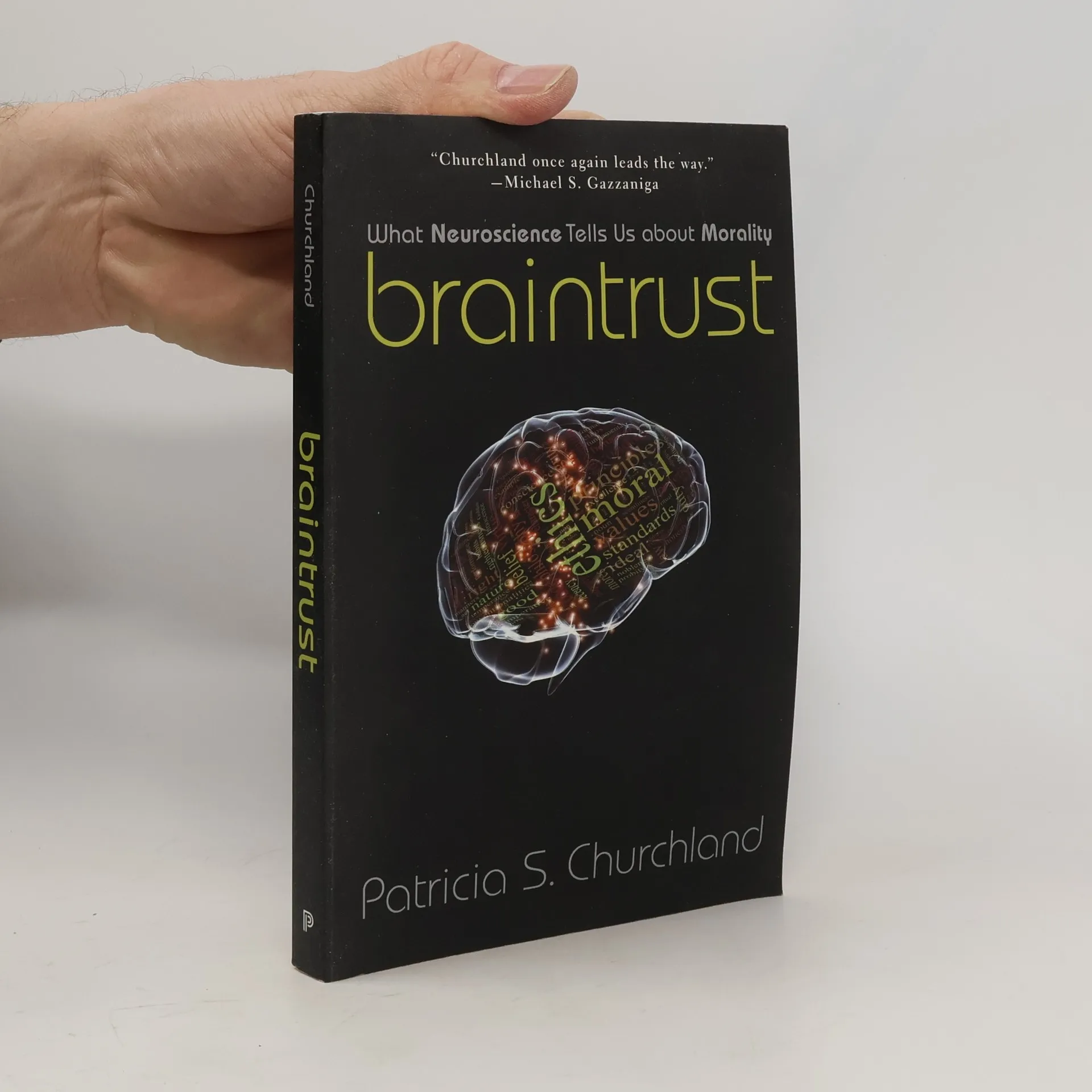
Where does morality come from? Can its origins be found in biology? What role does the brain play in shaping our moral attitudes? Is morality something specifically human? In "Braintrust," Patricia Churchland takes the reader on a journey through the latest discoveries in neuroscience and evolutionary theory. The aim of this extraordinary journey is to understand the fundamental values that make our social life also a moral life. The bold questions posed by the author and the sometimes even bolder answers should interest all those who are curious not only about the mystery of the origins of morality but also about understanding human nature.
Patricia S. Churchland Libri
Patricia Smith Churchland opera all'intersezione tra neuroscienze e filosofia, postulando che la comprensione del cervello sia cruciale per comprendere la mente. È associata all'eliminativismo, una scuola di pensiero che suggerisce che i concetti psicologici tradizionali potrebbero necessitare di revisione man mano che la nostra comprensione scientifica della funzione cerebrale si approfondisce. Il suo lavoro si estende alla neuroetica, esplorando la scelta e la responsabilità attraverso la lente della funzione cerebrale, dell'evoluzione e della cultura. Churchland è nota per il suo approccio naturalistico e per un modo notevolmente preciso e neurochimicamente informato di descrivere i propri stati interiori.

Grundlagen zur Neuroinformatik und Neurobiologie
The Computational Brain in deutscher Sprache
- 720pagine
- 26 ore di lettura
Das Buch über vergleichende Forschung zwischen menschlichem Gehirn und moderner Computertechnologie liegt nun erstmals in deutscher Sprache vor. Verfasst von einem renommierten Forscherteam aus den USA, bietet es umfassende Einblicke in den aktuellen Stand der Wissenschaft auf diesem Gebiet. Die Autoren verknüpfen Neuroinformatik und Neurobiologie mit ausgewählten Beispielen und fundierter Hintergrundinformation. Dadurch wird es sowohl Fachwissenschaftlern als auch interdisziplinär interessierten Informatikern und Biologen gerecht. Die Übersetzung stammt von Prof. Dr. Steffen Hölldobler und Dipl.-Biol. Claudia Hölldobler. Die Originalausgabe von 1992 gilt bereits als Klassiker. Das Werk wird als unverzichtbar empfohlen, da es die Faszination theoretischer Hirnforschung vermittelt, die in Deutschland immer mehr Wissenschaftler anzieht. Das Inhaltsverzeichnis umfasst Themen wie neurowissenschaftliche Grundlagen, Berechnungsgrundlagen, die Repräsentation der Welt, Plastizität sowie sensomotorische Integration. Es behandelt unter anderem die Mechanismen des Lernens, die Entwicklung von Nervensystemen und verschiedene neuronale Modelle. Zudem werden anatomische und physiologische Techniken zur Untersuchung des Gehirns erläutert.