
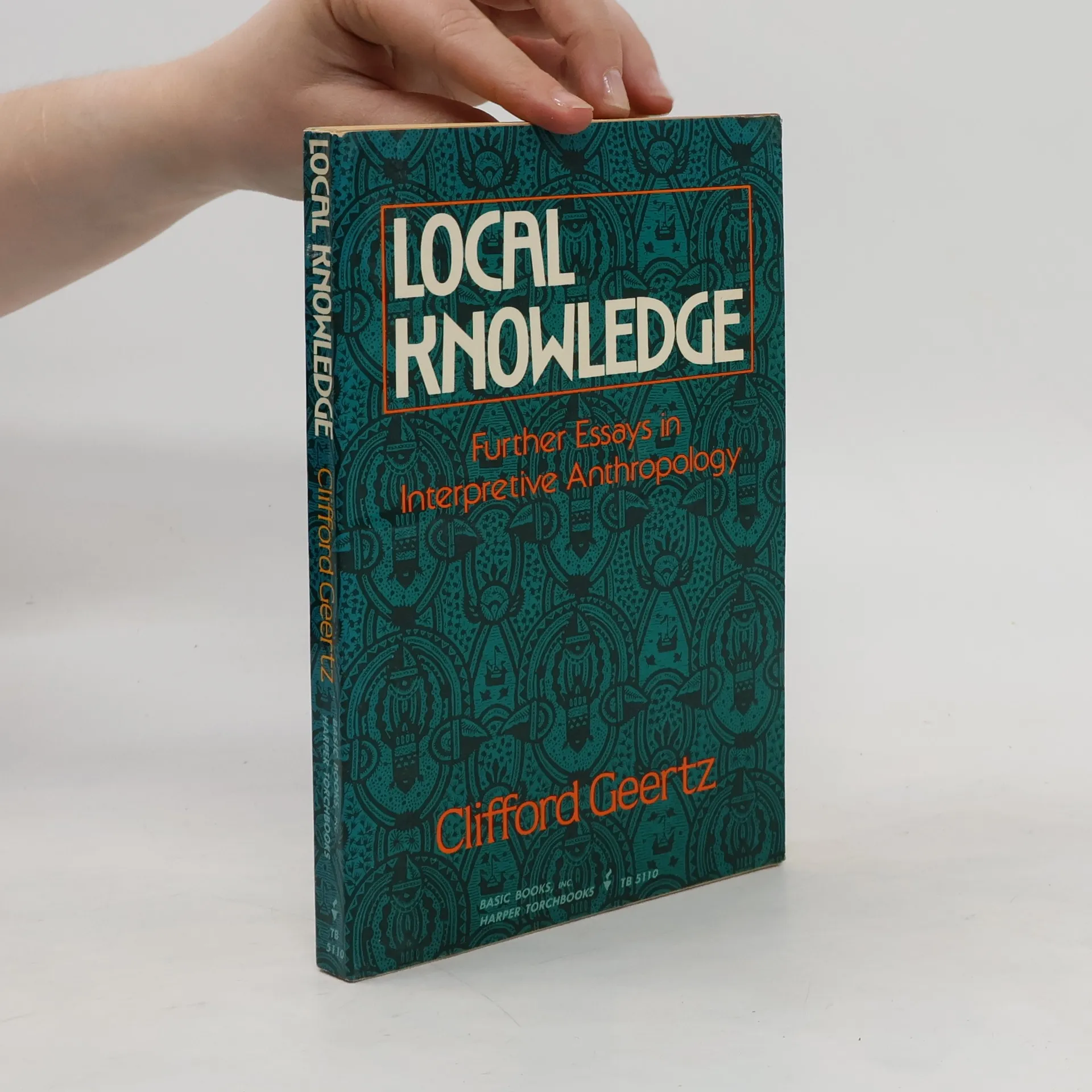
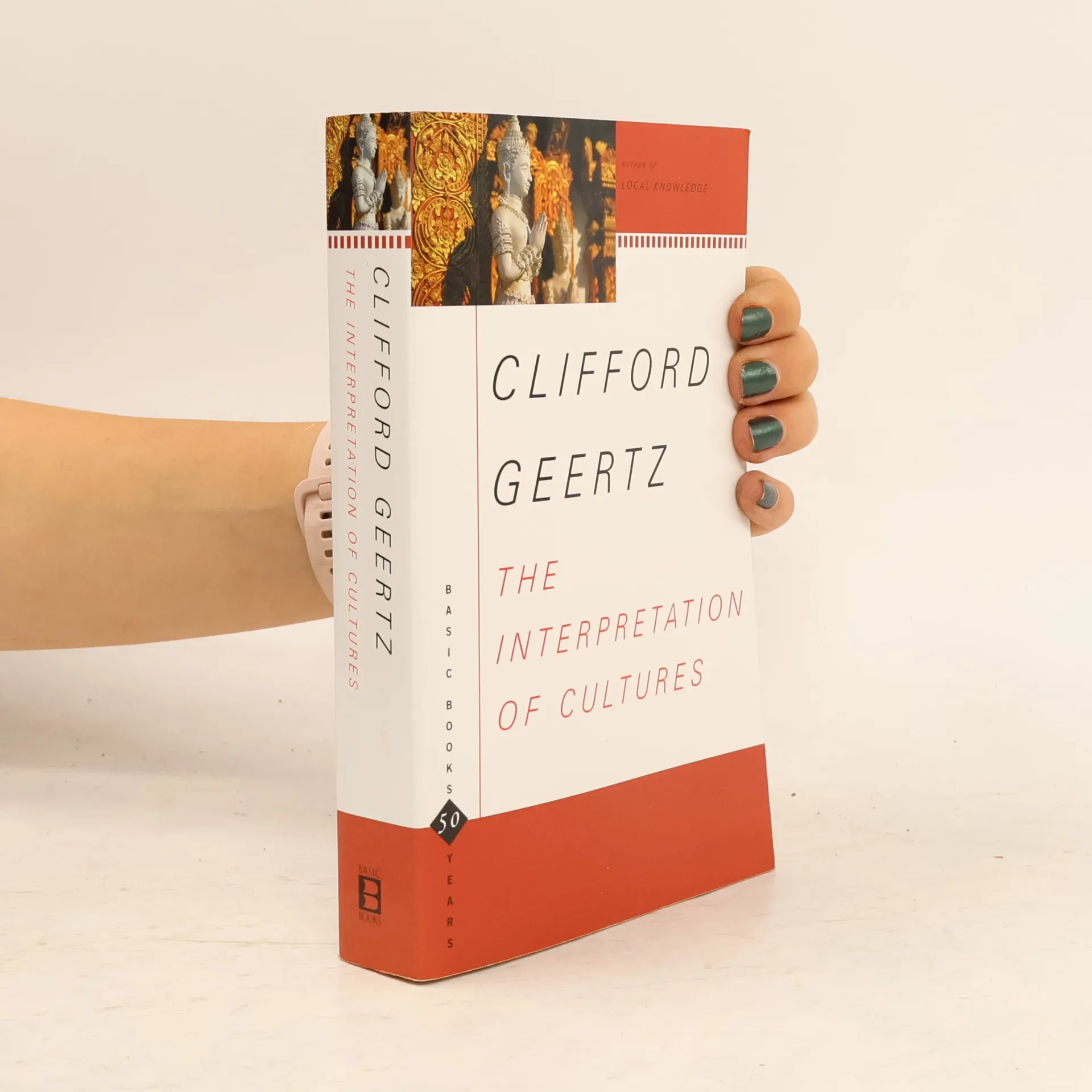
This sequel to The Interpretation of Cultures is a collection of essays which reject large abstractions, going beyond the mere translation of one culture into another, and looks at the underlying, compartmentalized reality.
Clifford Geertz Libri
Questo autore ha ottenuto riconoscimenti per i suoi profondi studi antropologici. Il suo lavoro si concentra sull'interpretazione delle culture e del comportamento umano. Si è dedicato in particolare alla descrizione e all'analisi dettagliate dei fenomeni sociali.


The Interpretation of Cultures
- 547pagine
- 20 ore di lettura
In The Interpretation of Cultures, the most original anthropologist of his generation moved far beyond the traditional confines of his discipline to develop an important new concept of culture. This groundbreaking book, winner of the 1974 Sorokin Award of the American Sociological Association, helped define for an entire generation of anthropologists what their field is ultimately about.
In essays covering everything from art and common sense to charisma and constructions of the self, the eminent cultural anthropologist and author of The Interpretation of Cultures deepens our understanding of human societies through the intimacies of "local knowledge." A companion volume to The Interpretation of Cultures , this book continues Geertz's exploration of the meaning of culture and the importance of shared cultural symbolism. With a new introduction by the author.
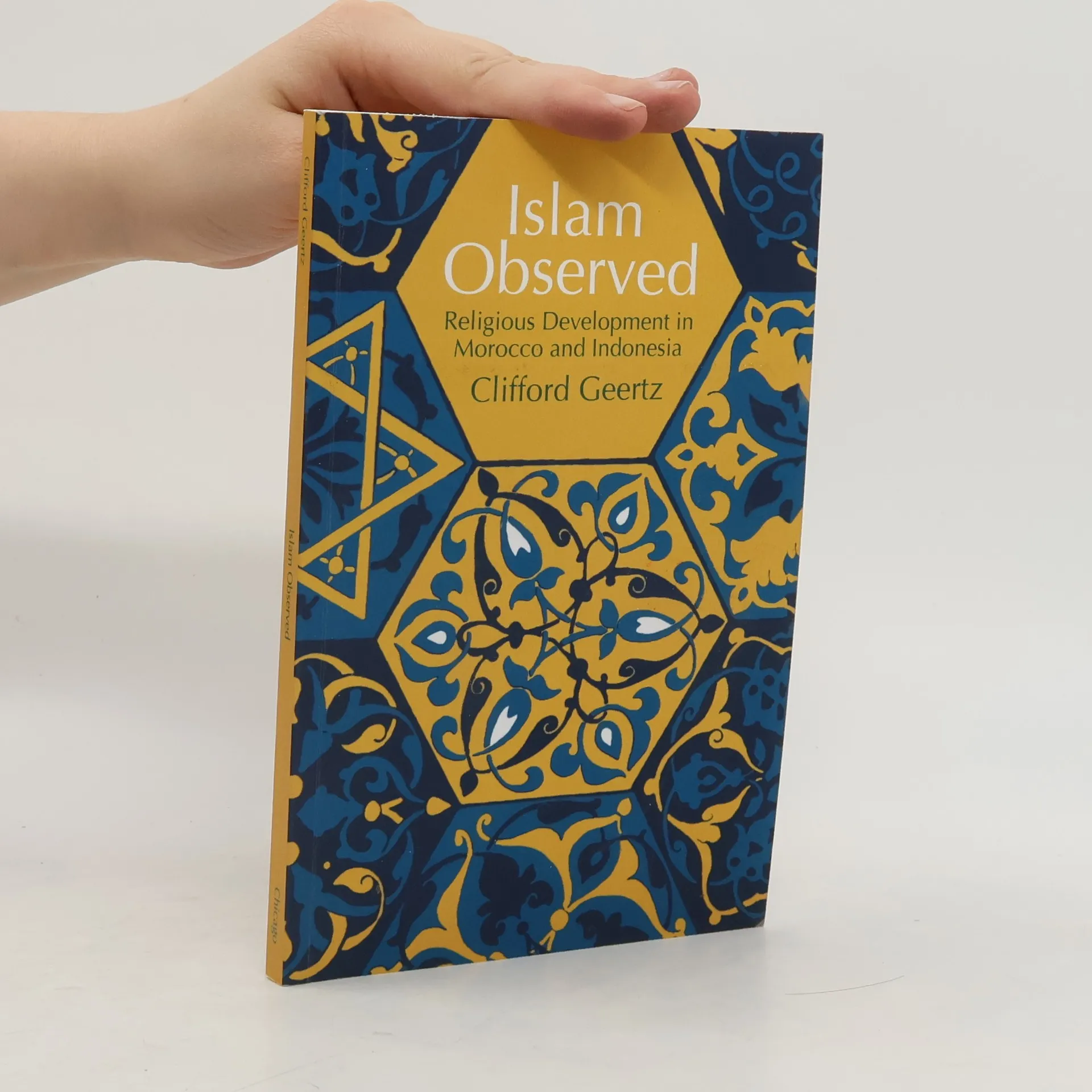
Islam Observed
- 144pagine
- 6 ore di lettura
"In four brief chapters," writes Clifford Geertz in his preface, "I have attempted both to lay out a general framework for the comparative analysis of religion and to apply it to a study of the development of a supposedly single creed, Islam, in two quite contrasting civilizations, the Indonesian and the Moroccan." Mr. Geertz begins his argument by outlining the problem conceptually and providing an overview of the two countries. He then traces the evolution of their classical religious styles which, with disparate settings and unique histories, produced strikingly different spiritual climates. So in Morocco, the Islamic conception of life came to mean activism, moralism, and intense individuality, while in Indonesia the same concept emphasized aestheticism, inwardness, and the radical dissolution of personality. In order to assess the significance of these interesting developments, Mr. Geertz sets forth a series of theoretical observations concerning the social role of religion.
After the Fact Two Countries, Four Decades, One Anthropologist
- 208pagine
- 8 ore di lettura
In looking back on four decades of anthropology in the field, Clifford Geertz creates a personal history that is also a retrospective reflection on developments in the human sciences amid political, social, and cultural changes in the world.
A formative ethnography of the relationship between markets and social life, back in print. Originally published in 1979, Clifford Geertz’s essay on the Moroccan bazaar is a classic ethnographic account of the interplay of economic, social, and religious lives in the bustle of transaction. Drawing on years of fieldwork in the Middle Atlas town of Sefrou, Geertz explores how actors from diverse backgrounds assess the worth and meaning of other people’s wares, words, and ways of doing business. He shows how the search for market information, so central to the theorization of markets by economists, is here based on careful appraisals of social relations, embedded in understandings of the broader institutional environment of the market town and its hinterlands. With a richness of insights procured for generations of readers, Geertz’s essay on the sūq is a model of and for the craft of ethnographic theory. Long out of print, it is republished here in a stand-alone edition introduced by Lawrence Rosen.
Kinship in Bali
- 213pagine
- 8 ore di lettura
This work constitutes the first book-length examination of Balinese kinship in English and an important theoretical analysis of the central ethnographic concept of "kinship system." Hildred and Clifford Geertz's findings challenge the prevailing anthropological notion of a kinship system as an autonomous set of institutionalized social relationships. Their research in Bali suggests that kinship cannot be studied in isolation but must be perceived as a symbolic subsystem governed by ideas and beliefs unique to each culture.
Die in diesem Band enthaltenen Untersuchungen fragen alle, obgleich auf unterschiedliche thematische Schwerpunkte gerichtet, nach dem Wesen von Kultur, ihrer Rolle im sozialen Leben und ihrer adäquaten Untersuchung.