
Bookbot

Thomas Hobbes

    5 aprile 1588 – 4 dicembre 1679

    Questo filosofo britannico è un pensatore fondamentale della filosofia politica moderna. Le sue idee, fondate sul materialismo meccanicista, caratterizzano la natura umana come guidata dall'avidità e dalla paura della morte, sostenendo così una monarchia assoluta. Ha posto le basi per gran parte della filosofia politica occidentale attraverso la teoria del contratto sociale, affermandosi anche come un distinto studioso della storia e della letteratura greca classica.

    Thomas Hobbes
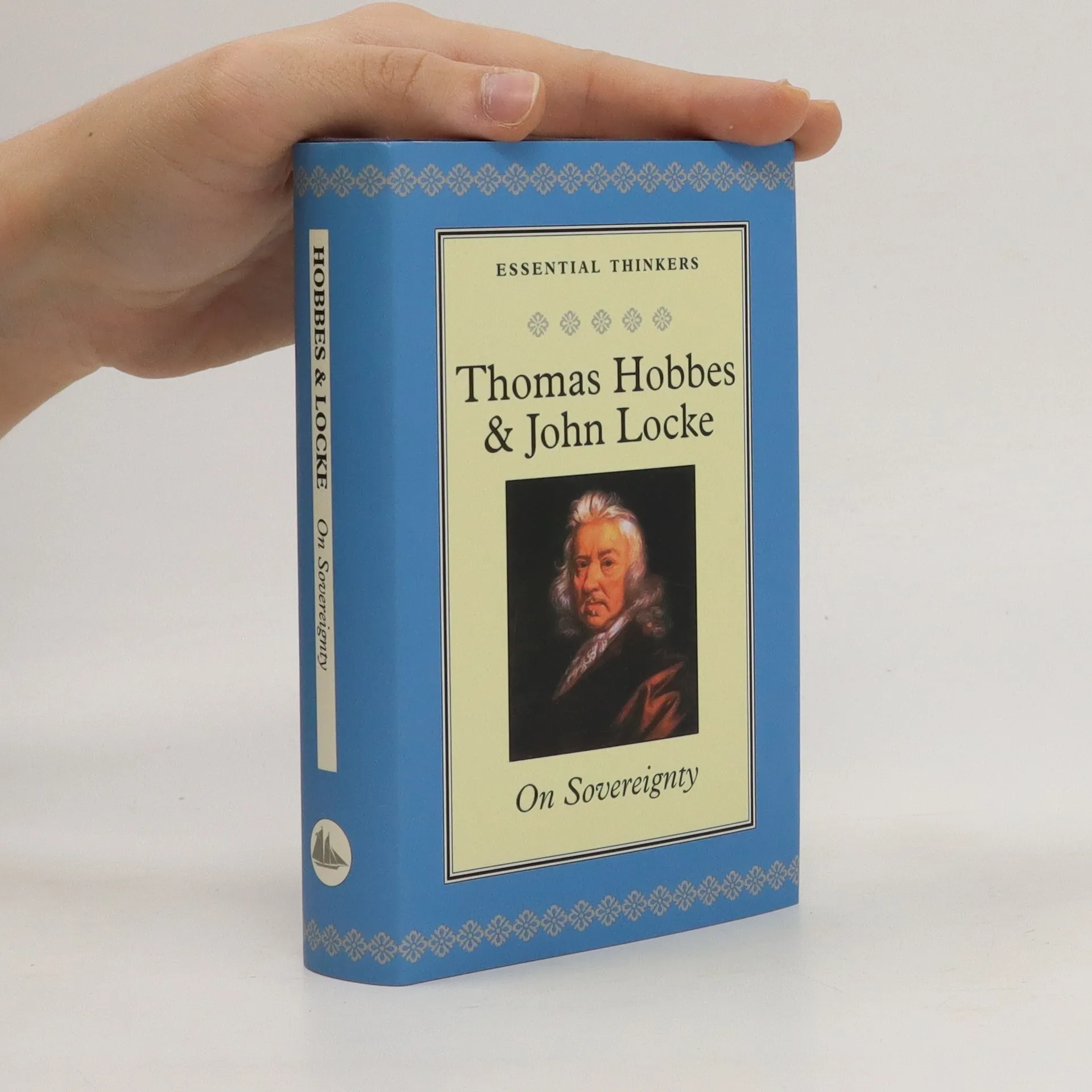
    On Sovereignty
    The "Art" of Rhetoric
    The Elements of Law
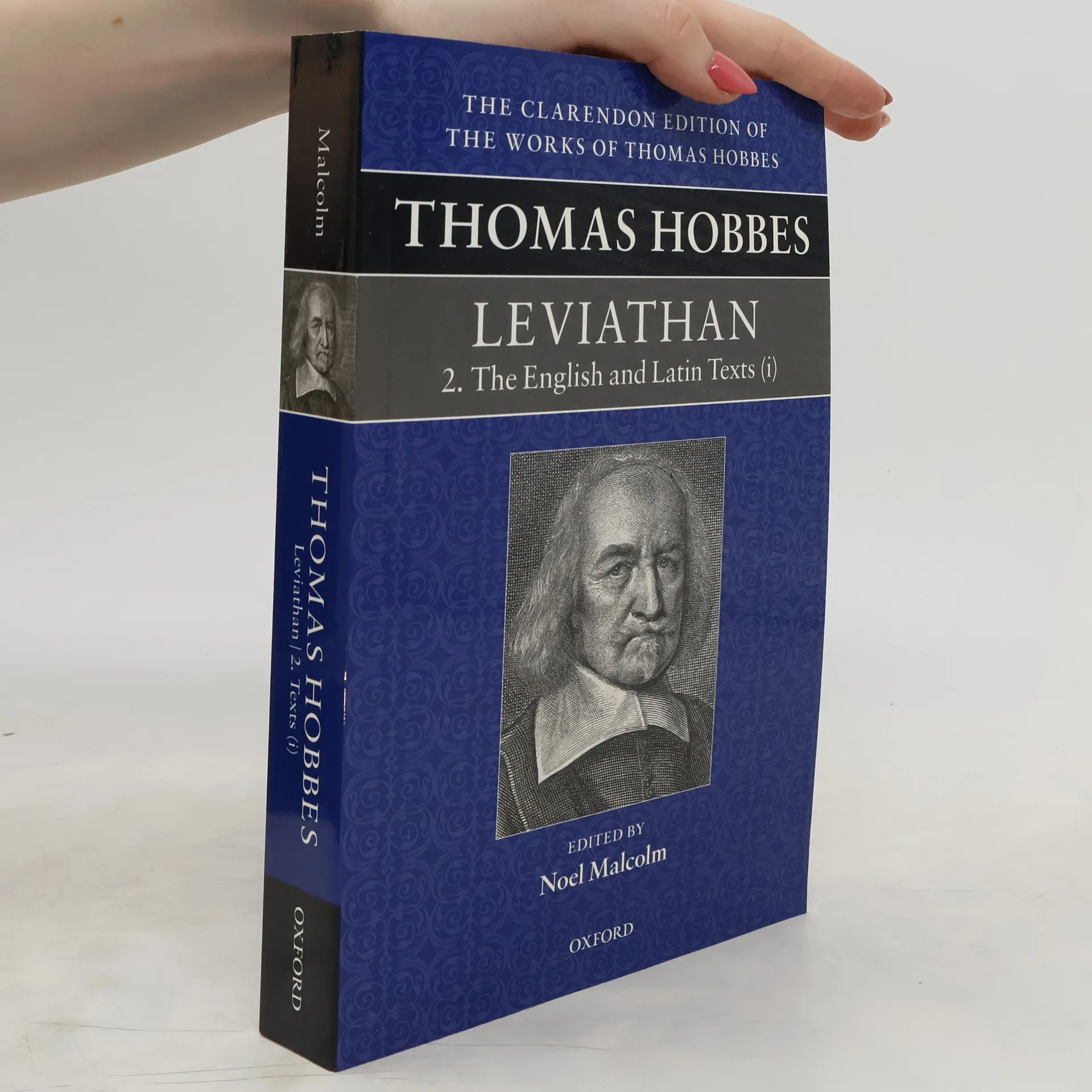
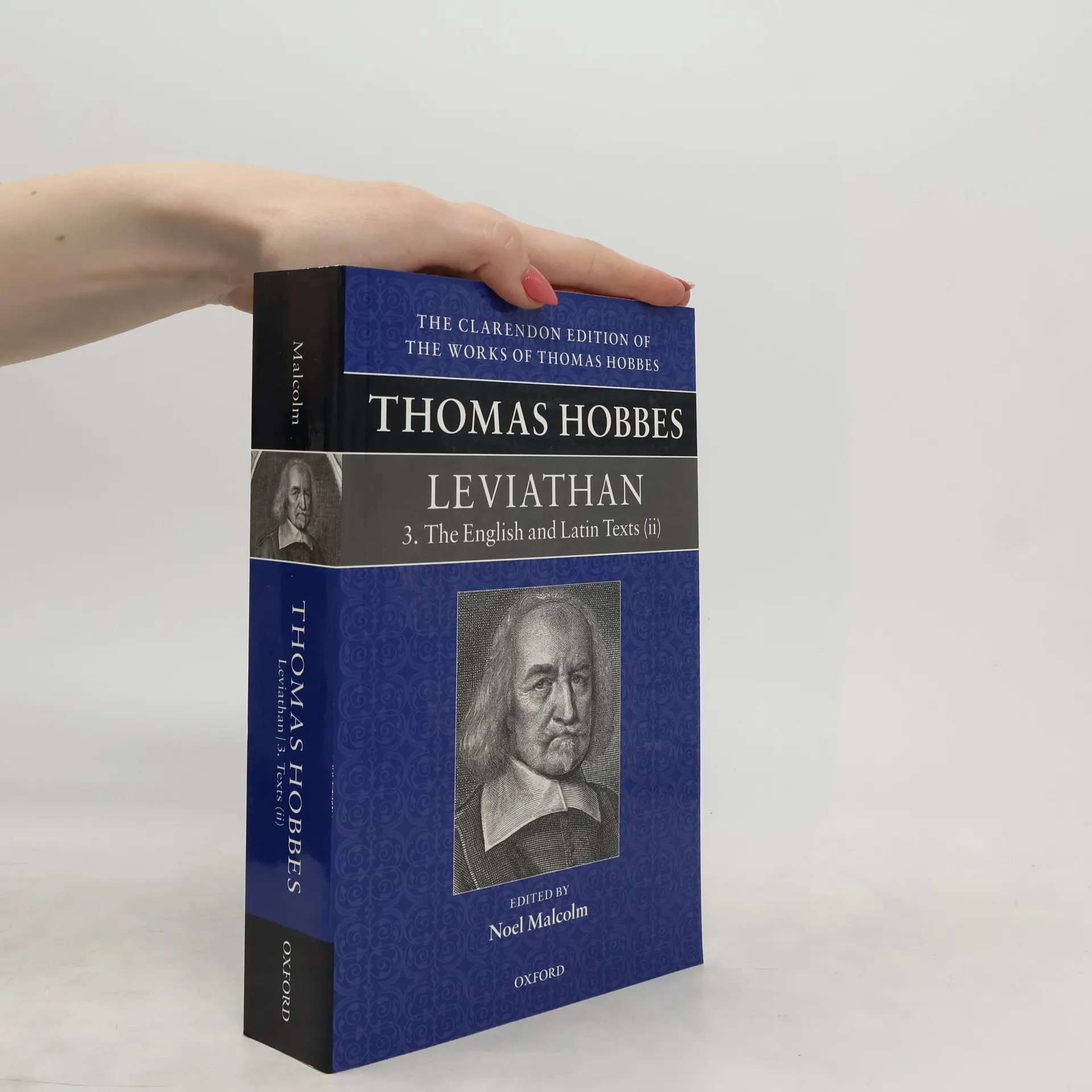
    Leviathan 3
    The Correspondence
    The Leviathan (1651), The Two Treatises of Government (1689), The Social Contract (1762), The Constitution of Pennsylvania (1776)
    • The Leviathan (1651), The Two Treatises of Government (1689), The Social Contract (1762), The Constitution of Pennsylvania (1776)

      The Original Texts from Hobbes, Locke, Rousseau and The Founding Fathers of the United States

      • 372pagine
      • 14 ore di lettura

      Exploring the evolution of political thought, this collection includes foundational texts that shaped modern governance. It begins with Hobbes' view of the necessity of a strong central authority, followed by Locke's arguments for natural rights and government by consent. Rousseau's work introduces the concept of collective will and social agreements, while the Constitution of Pennsylvania exemplifies practical application of these theories in establishing a democratic framework. Together, these works highlight the transition from absolute rule to democratic principles.
      The Leviathan (1651), The Two Treatises of Government (1689), The Social Contract (1762), The Constitution of Pennsylvania (1776)
      4,9
    • The Correspondence

      Volume II: 1660-1679

      • 516pagine
      • 19 ore di lettura

      The correspondence of Thomas Hobbes, a pivotal figure in European thought, is presented in this comprehensive edition, offering a fresh perspective on his intellectual contributions. Each letter is accompanied by detailed explanatory notes, along with extensive biographical and bibliographical information. This landmark publication enhances understanding of Hobbes's life and ideas, reflecting the growing interest in his work and the context in which he wrote.

      The Correspondence
      5,0
    • Leviathan 3

      The English and Latin Texts

      • 1780pagine
      • 63 ore di lettura

      "The first volume contains the editorial introduction and the second and third volumes contain the texts, with annotations." from back cover.

      Leviathan 3
      5,0
    • The Elements of Law

      Natural and Politic

      • 226pagine
      • 8 ore di lettura

      Ferdinand Tonnies presents two works by Thomas Hobbes, highlighting "The Elements of Law," Hobbes's inaugural systematic political treatise completed in 1640. This foundational text offers insight into Hobbes's philosophical development, serving as a precursor to his later political theories. It explores the intricacies of his thought process and lays the groundwork for understanding his contributions to political philosophy.

      The Elements of Law
      3,4
    • Thomas Hobbes, the royalist, is above all famous for his 'social contract theory', the appeal to the agreement that would be made among rational, free, and equal persons. His conclusion - that we should submit to the authority of an absolute and unlimited sovereign power - may not have found many followers, but his analysis remains unchallenged. John Locke, by contrast, was a parliamentarian. He argued that sovereignity resides with the people, and that the state is supreme only when bound by civil and natural law. It follows that revolution is not only a right, but sometimes an obligation. He was a strong supporter of religious freedom, and of a system of checks and balances in government. Many of his ideas were later embodied in the US constitution.

      On Sovereignty
      2,4
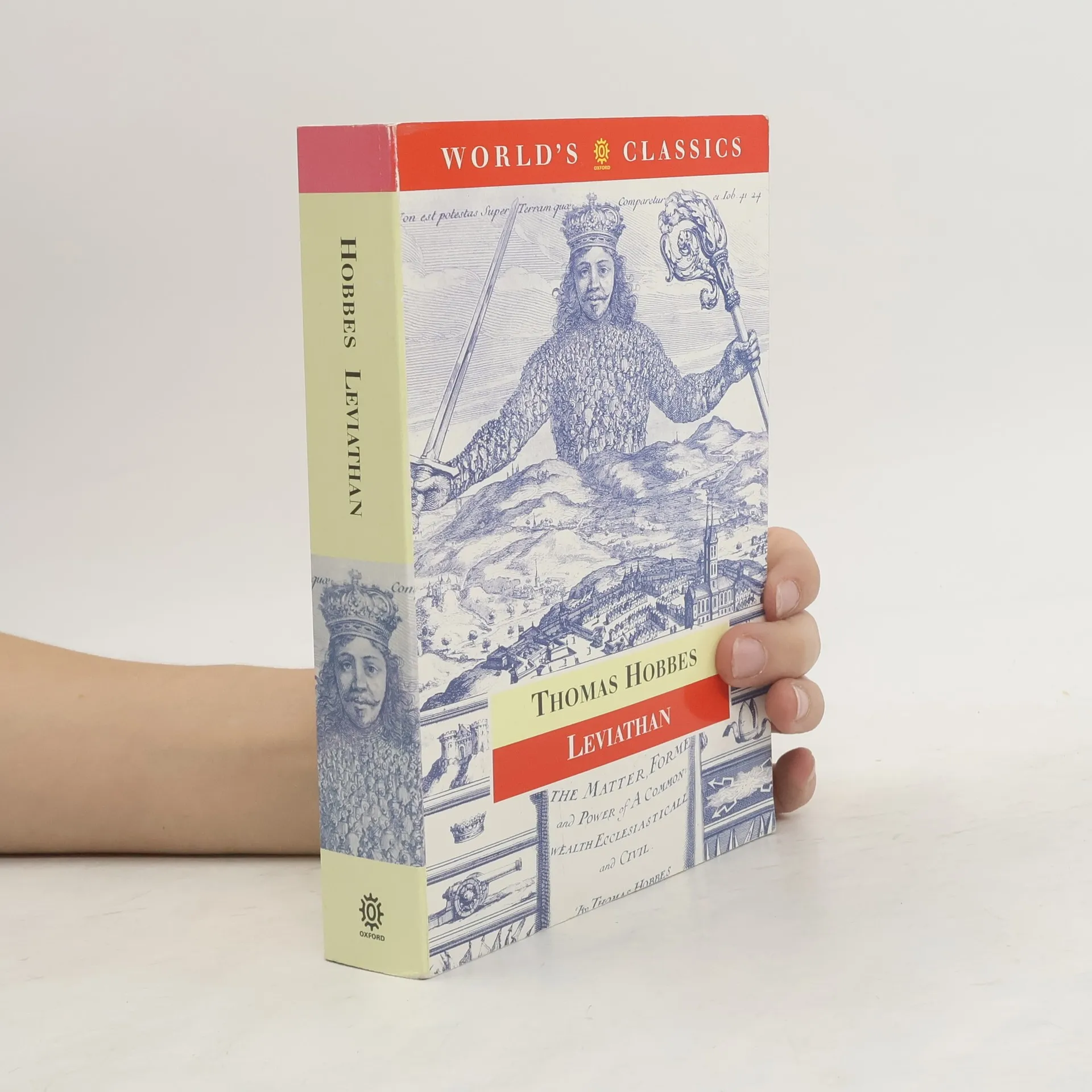
    • Leviathan

      • 246pagine
      • 9 ore di lettura

      Leviathan is a book written by Thomas Hobbes (1588-1679) and published in 1651. Its name derives from the biblical Leviathan. The work concerns the structure of society and legitimate government, and is regarded as one of the earliest and most influential examples of social contract theory. Leviathan ranks as a classic western work on statecraft comparable to Machiavelli's The Prince. Written during the English Civil War (1642-1651), Leviathan argues for a social contract and rule by an absolute sovereign. Hobbes wrote that civil war and the brute situation of a state of nature ("the war of all against all") could only be avoided by strong, undivided government.

      Leviathan
      3,6
    • Leviathan by Thomas Hobbes

      • 304pagine
      • 11 ore di lettura

      "Thomas Hobbes's essay on the social contract is both a founding text of western thought and a masterpiece of wit and imagination" -Robert McCrum ; The Guardian Leviathan is a book written by Thomas Hobbes (1588-1679) and published in 1651. Its name derives from the biblical Leviathan. The work concerns the structure of society and legitimate government, and is regarded as one of the earliest and most influential examples of social contract theory. Leviathan ranks as a classic Western work on statecraft comparable to Machiavelli's The Prince. Written during the English Civil War (1642-1651), Leviathan argues for a social contract and rule by an absolute sovereign. Hobbes wrote that civil war and the brute situation of a state of nature ("the war of all against all") could only be avoided by strong, undivided government. A True Classic for All Lovers of Political Philosophy!

      Leviathan by Thomas Hobbes
    • Leviathan 2

      The English and Latin Texts

      • 1780pagine
      • 63 ore di lettura

      "The first volume contains the editorial introduction and the second and third volumes contain the texts, with annotations." from back cover.

      Leviathan 2