

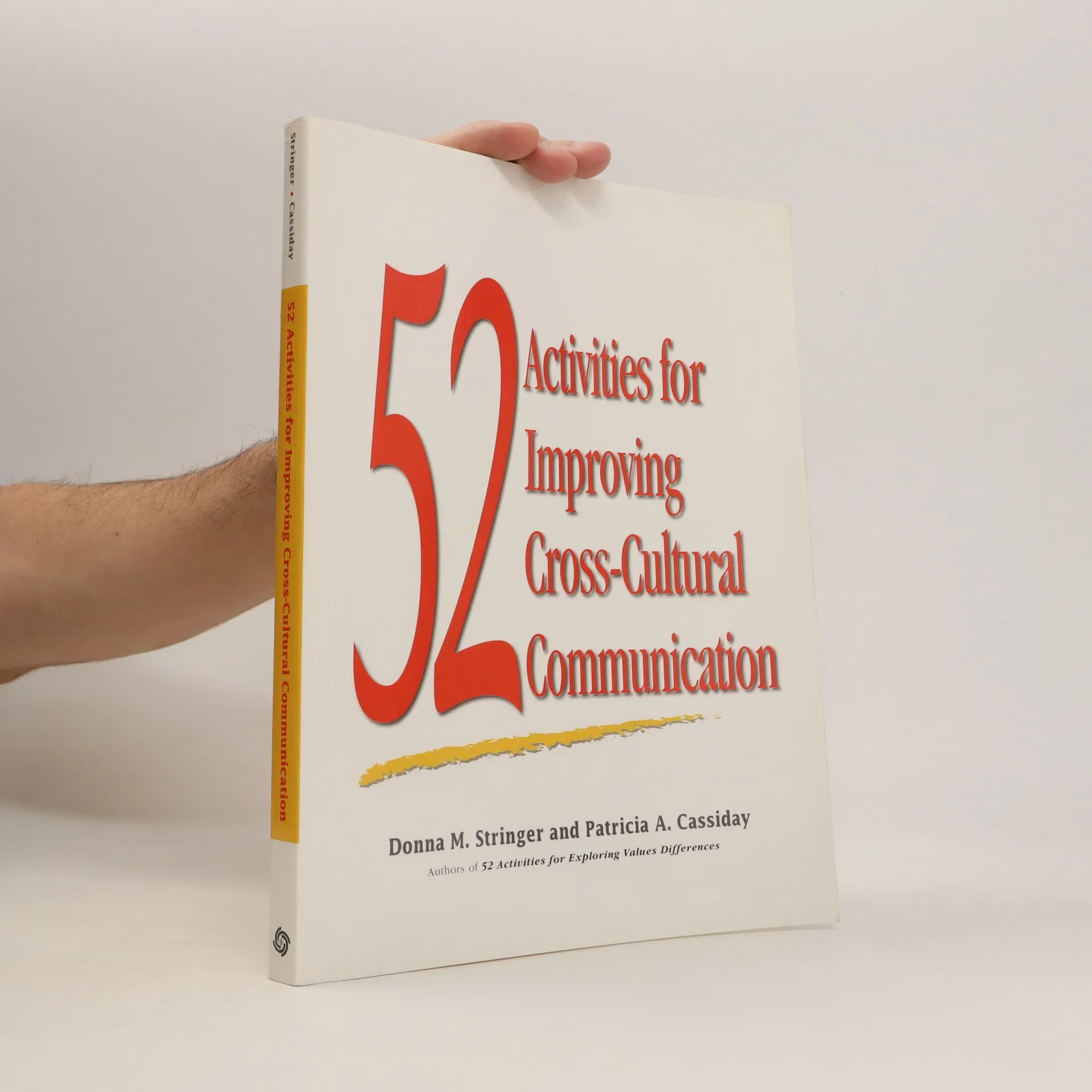
52 activities for improving cross-cultural communication
- 228pagine
- 8 ore di lettura
Exercises to facilitate effective communication across a wide range of cultural differencesCommunication styles and patterns differ vastly among people from different cultures. Every culture has a "communication style norm" and when that style mixes with another, stereotypes and misperceptions arise. 52 Activities for Improving Cross-Cultural Communication explores cross-cultural communication issues with an eye toward increasing understanding and effectiveness.52 Activities for Improving Cross-Cultural Communication is a practical trainer's manual that includes applications from many sectors, such as business, diversity, cross-cultural fields, and from many trainers in the U.S., Europe, Asia, the Middle East and Latin America. Exercises are organized according to audience, time required to perform and the risk level for participants, a unique feature created by the authors, and are easily adaptable to the user's particular need and situation.Many of the exercises are written with instructions that address requirements for a specific audience (e.g., gender or generation). There is something for those who like hands-on, practical activities; those who prefer experiential exercises; and those who learn best through reflection.