The book features a detailed table of contents that outlines its structure and key themes. It serves as a guide for readers, providing a clear overview of the topics covered and the organization of the material. This layout enhances accessibility and understanding, allowing readers to navigate through the content effectively. The emphasis on a well-structured table of contents indicates a methodical approach to the subject matter, making it easier for readers to locate specific information and engage with the text.
Elza Adamowicz Libri


The book explores the representation of the body in Dada art across different media and locations, highlighting its dual role as a reflection of the fragmented, dehumanized society during and after the war, and as a vision for the New Man. Through examining various forms, from masks to machine parts, it delves into the grotesque and iconoclastic aspects of these images, offering insights into the cultural and historical context of the Dada movement.
Takes fresh approaches to the film Un chien andalou, exploring how it can be seen both within and beyond the confines of Surrealism and reviewing its openness to so many readings and interpretations. This book reassesses Dali and Bunuel's account of the film as a model surrealist work and its reception by the surrealist group.
An exploration of Andre Breton's life-long commitment to the visual arts.
This collection of essays, inspired by André Breton’s concept of the limites non-frontières of Surrealism, focuses on the crossings, intersections and margins of the surrealist movement rather than its divides and exclusion zones. Some of the essays originated as papers given at the colloquium ‘Surrealism: Crossings/Frontiers’ held at the Institute of Romance Studies, University of London, in November 2001. Surrealism is foregrounded as a trajectory rather than a fixed body of doctrines, radically challenging the notion of frontiers. The essays explore real and imaginary journeys, as well as the urban dérives of the surrealists and situationists. The concept of crossing, central to a reading of the dynamics at work in Surrealism, is explored in studies of the surrealist object, which eludes or elides genres, and explorations of the shifting sites of identity, as in the work of Joyce Mansour or André Masson. Surrealism’s engagement with frontiers is further investigated through a number of revealing cases, such as a political reading of 1930s photography, the parodic rewriting of the popular ‘locked room’ mystery, or the surrealists’ cavalier redrawing of the map of the world. The essays contribute to our understanding of the diversity and dynamism of Surrealism as an international and interdisciplinary movement.
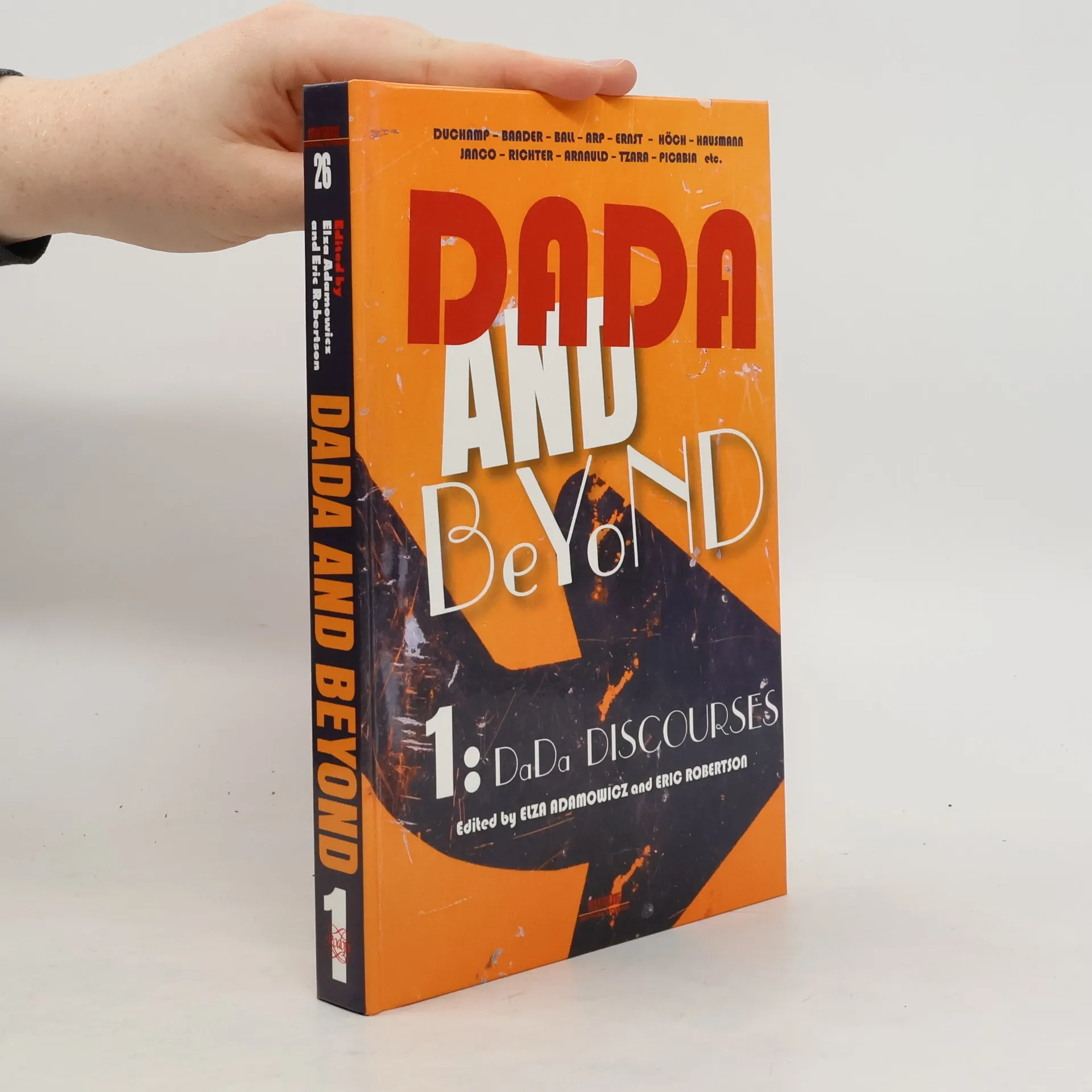
This collection of critical essays celebrates the subversive and challenging creativity of the Dada movement, born in pacifist Zurich in 1916 in violent reaction to the First World War. It examines the collective and individual activities that took place under the name of Dada in Zurich, Cologne, Berlin, Paris, New York and Barcelona, and explores the various creative forms employed, including text, collage, photomontage, objects, dance, performance and film. The authors suggest new ways of understanding the work of the most famous Dadaists, while also casting light on the contribution of hitherto neglected figures.“Dada was a bomb”, declared Max Ernst in an interview in 1958. “Can you imagine anyone, almost half a century after the explosion of a bomb, trying to collect its fragments and stick them together in order to display them?” The aim of this volume is not to reconstitute the bomb, but to analyse some of its explosive effects and after-effects that continue to resonate nearly a century later. Far from attempting to reduce Dada to a homogeneous movement, or to define a unifying principle beneath and beyond the multiple directions taken by Dadaists, this collection aims to respect the diversity and heterogeneity of the movement’s collective activities as well as the specificity of its individual actors.