
10 libri per 10 euro qui
Bookbot

Mark Balaguer

    Czy mamy wolną wolę?
    Mathematical Anti-Realism and Modal Nothingism
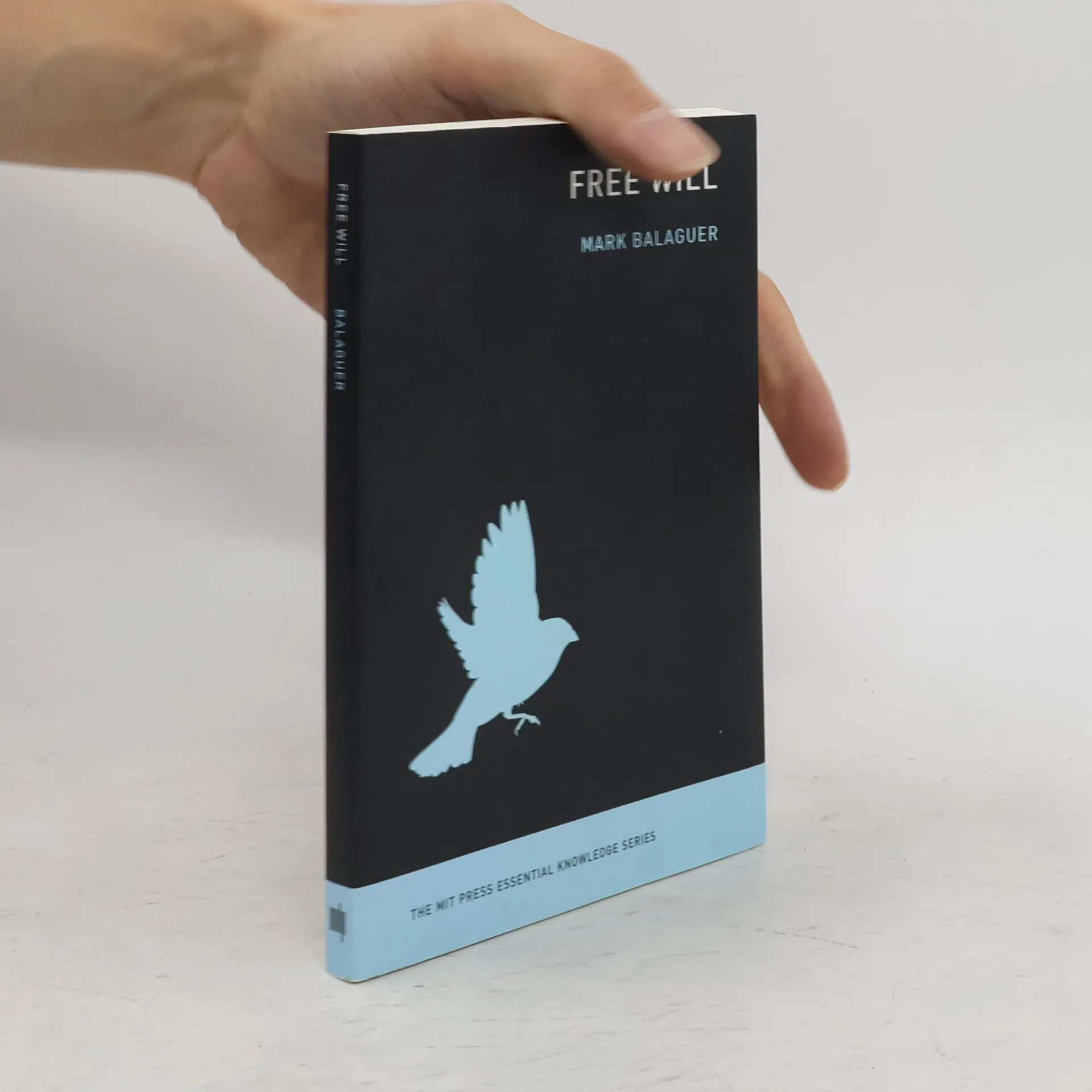
    Free Will
    • In our daily life, it really "seems" as though we have free will, that what we do from moment to moment is determined by conscious decisions that we freely make. You get up from the couch, you go for a walk, you eat chocolate ice cream. It seems that we're in control of actions like these; if we are, then we have free will. But in recent years, some have argued that free will is an illusion. The neuroscientist (and best-selling author) Sam Harris and the late Harvard psychologist Daniel Wegner, for example, claim that certain scientific findings disprove free will. In this engaging and accessible volume in the Essential Knowledge series, the philosopher Mark Balaguer examines the various arguments and experiments that have been cited to support the claim that human beings don't have free will. He finds them to be overstated and misguided. Balaguer discusses determinism, the view that every physical event is predetermined, or completely caused by prior events. He describes several philosophical and scientific arguments against free will, including one based on Benjamin Libet's famous neuroscientific experiments, which allegedly show that our conscious decisions are caused by neural events that occur before we choose. He considers various religious and philosophical views, including the philosophical pro-free-will view known as compatibilism. Balaguer concludes that the anti-free-will arguments put forward by philosophers, psychologists, and neuroscientists simply don't work. They don't provide any good reason to doubt the existence of free will. But, he cautions, this doesn't necessarily mean that we have free will. The question of whether we have free will remains an open one; we simply don't know enough about the brain to answer it definitively. -- Provided by publisher

      Free Will
    • Czy naukowe i filozoficzne argumenty przeciwko wolnej woli są wystarczające, by porzucić wiarę w jej istnienie? Choć wydaje się, że kontrolujemy nasze działania, najnowsze odkrycia sugerują, że wolna wola to złudzenie, a nasze decyzje są całkowicie zdeterminowane przez przeszłość. Autor wciąga czytelnika w polemiki z przeciwnikami teorii wolnej woli, analizując różnorodne odkrycia naukowe oraz problem z perspektyw neuronaukową, filozoficzną, religijną i psychologiczną. Wiele osób twierdzi, że nauka dowiodła, iż ludzie nie mają wolnej woli, co byłoby zaskakujące, ponieważ wydaje się, że podejmujemy świadome decyzje. Przykład z życia codziennego, jak decyzja o wyjściu na spacer, ilustruje naszą wiarę w wolną wolę, nawet jeśli może to być tylko iluzja. Książka jest częścią serii, która bada fundamentalne pytania o człowieka, zapraszając do dyskusji uczonych i myślicieli z różnych środowisk. Seria ta, zainicjowana przez tłumaczenie innej książki, poszerza tematykę o różnorodne zagadnienia dotyczące ludzkiej egzystencji i wartości.

      Czy mamy wolną wolę?