

Bookbot

Leonard Lawlor

    Questo autore approfondisce la filosofia continentale del diciannovesimo e ventesimo secolo, esplorando l'intricato rapporto tra pensiero e caso. Il suo lavoro esamina criticamente le distinzioni nel discorso filosofico, in particolare le differenze tra il pensiero di Ricoeur e Derrida. Inoltre, l'autore è fondamentale per promuovere lo studio del concetto di carne di Merleau-Ponty attraverso contributi editoriali e come editore fondatore di una rivista internazionale trilingue dedicata al suo pensiero.

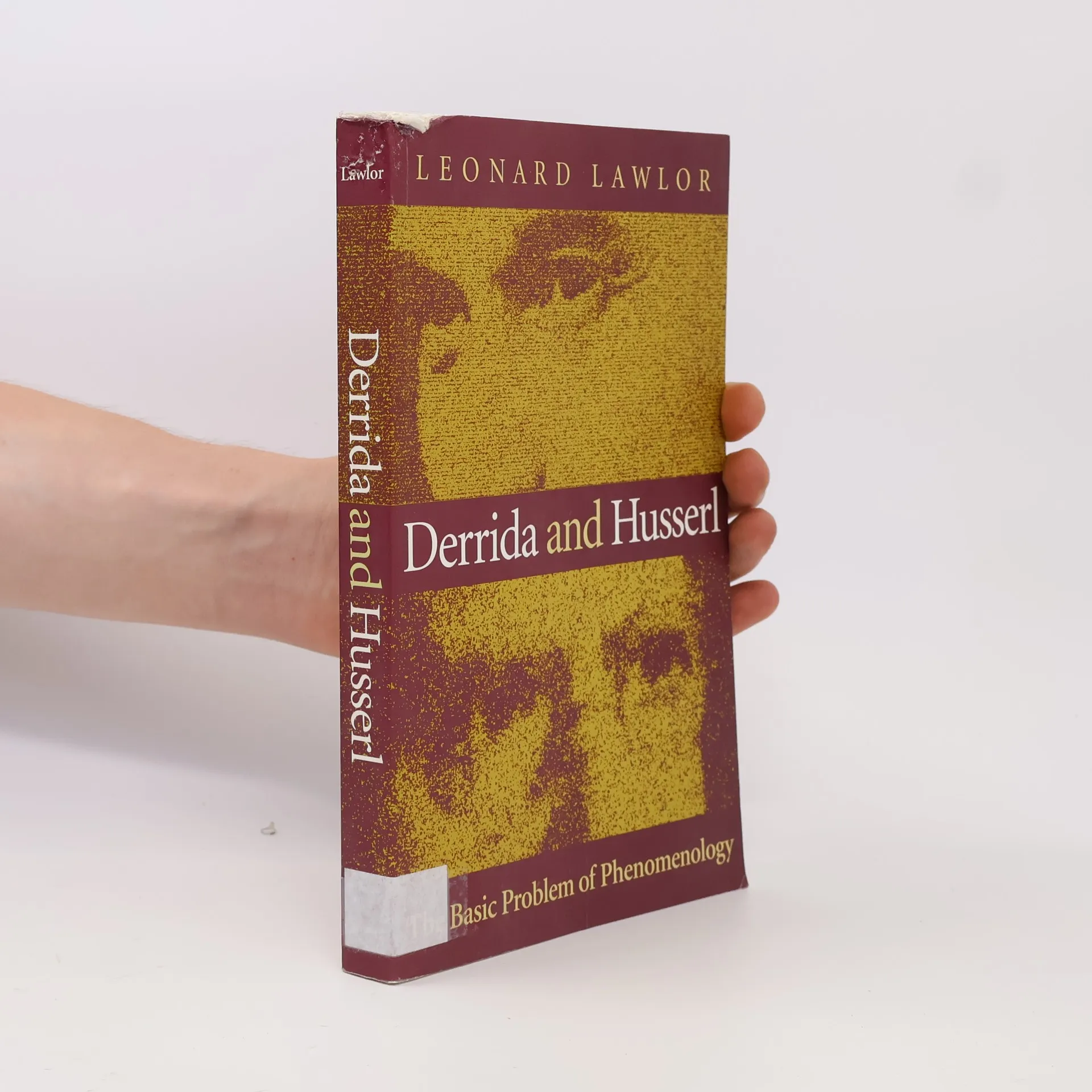
    Derrida and Husserl
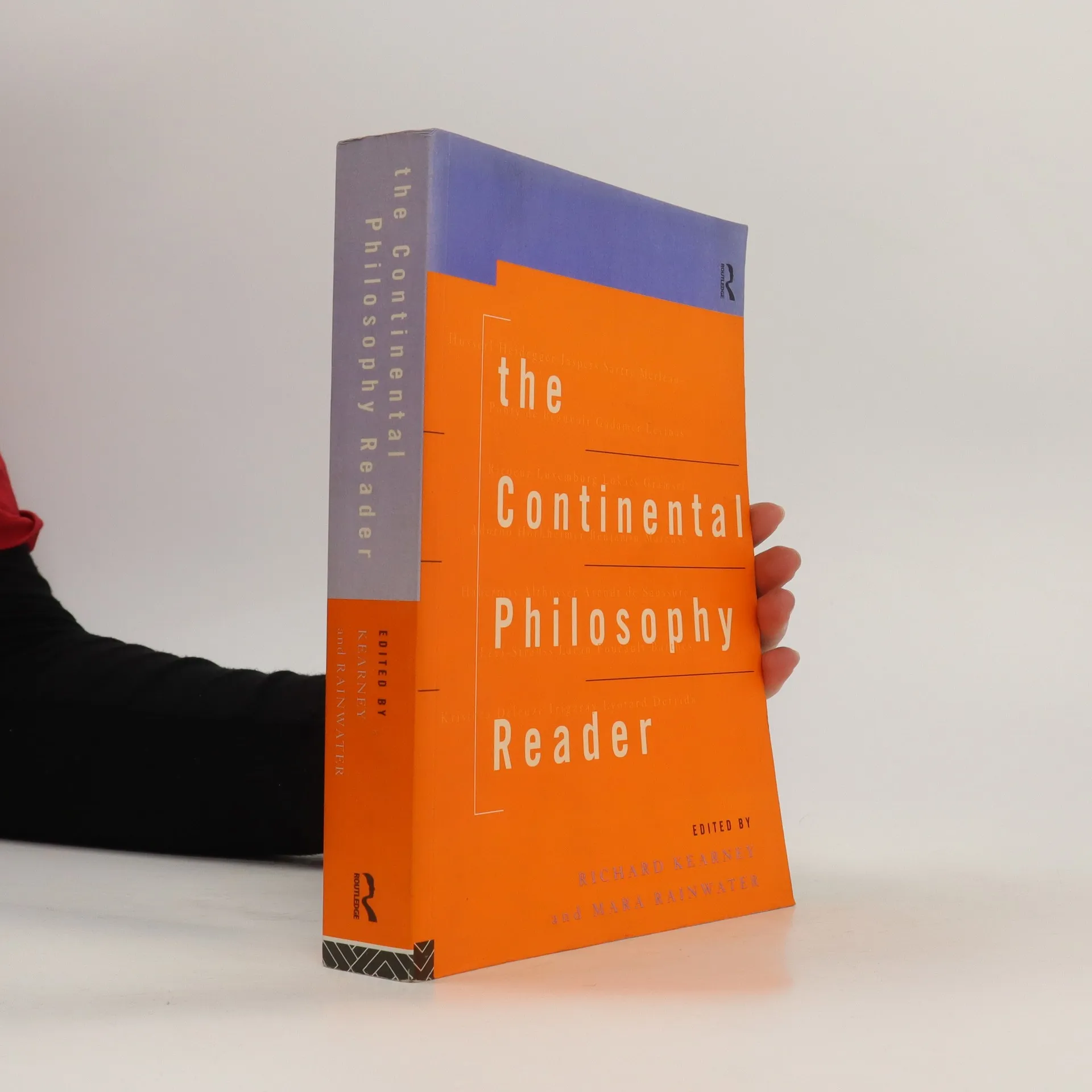
    Continental Philosophy
    Thinking through French Philosophy
    • First Published in 1995. Routledge is an imprint of Taylor & Francis, an informa company.

      Continental Philosophy2009
      4,0
    • Thinking through French Philosophy

      • 212pagine
      • 8 ore di lettura

      A powerful and original engagement with France's most influential philosophers. schovat popis

      Thinking through French Philosophy2003
      3,9
    • Derrida and Husserl

      The Basic Problem of Phenomenology

      • 280pagine
      • 10 ore di lettura

      What is the nature of the relationship of Jacques Derrida and deconstruction to Edmund Husserl and phenomenology? Is deconstruction a radical departure from phenomenology or does it trace its origins to the phenomenological project? In Derrida and Husserl, Leonard Lawlor illuminates Husserl’s influence on the French philosophical tradition that inspired Derrida’s thought. Beginning with Eugen Fink’s pivotal essay on Husserl’s philosophy, Lawlor carefully reconstructs the conceptual context in which Derrida developed his interpretation of Husserl. Lawlor’s investigations of the work of Jean Cavaillès, Tran-Duc-Thao, and Jean Hyppolite, as well as recent texts by Derrida, reveal the depth of Derrida’s relationship to Husserl’s phenomenology. Along the way, Lawlor revisits and sheds light on the origin of many important Derridean concepts, such as deconstruction, the metaphysics of presence, différance, intentionality, the trace, and spectrality.

      Derrida and Husserl2002
      3,8