
10 libri per 10 euro qui
Bookbot

Klara Kemp-Welch

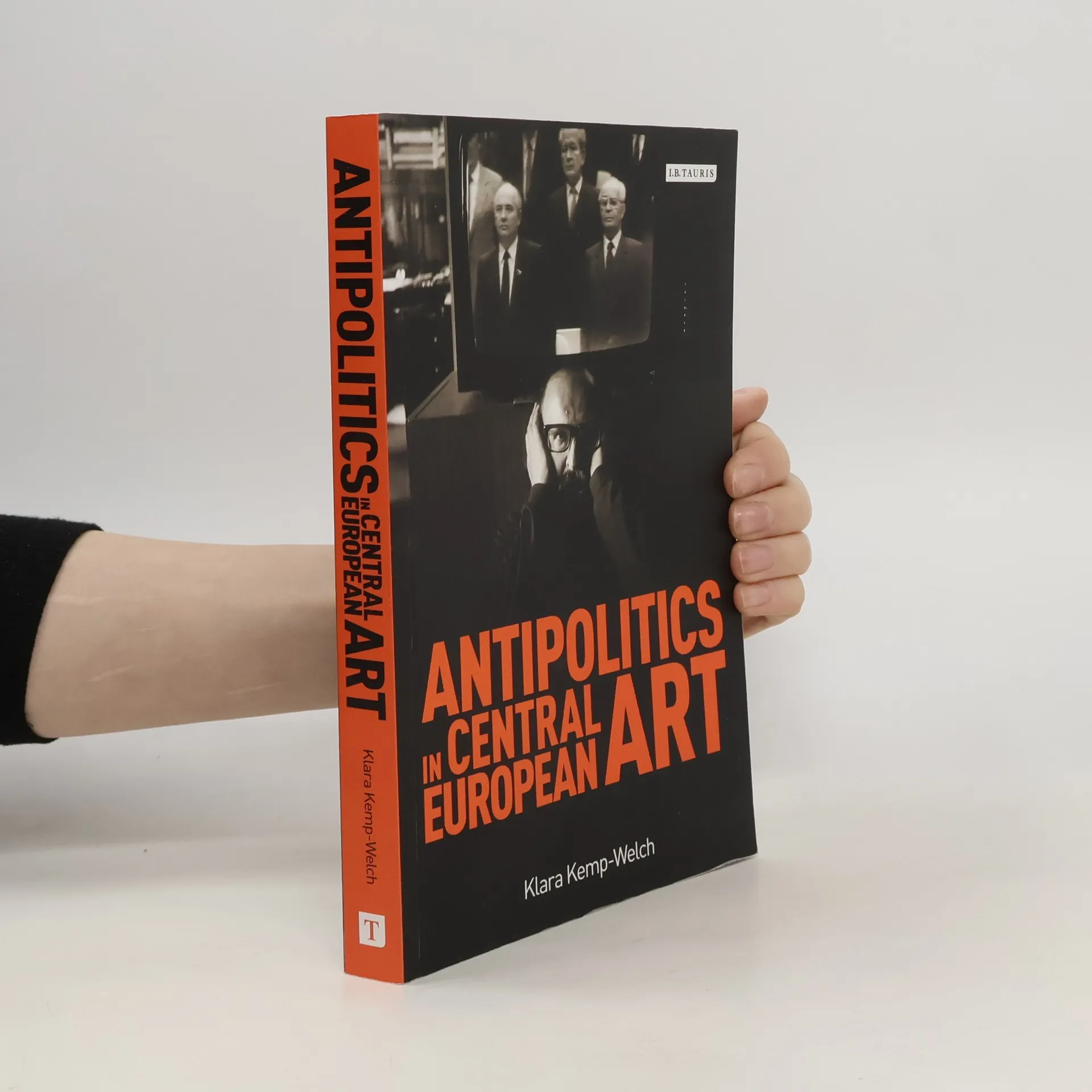
    Antipolitics in Central European Art
    Networking the Bloc
    • 2018

      Networking the Bloc

      • 480pagine
      • 17 ore di lettura

      Throughout the 1970s, a network of artists emerged to bridge the East-West divide and the divides within the Eastern bloc. Originating from initiatives by artists, art historians, and critics in cities like Budapest, Poznań, and Prague, this experimental dialogue included Western participation but is largely forgotten today. Klara Kemp-Welch vividly recaptures this lost chapter of art history, documenting a web of artistic connectivity formed through personal encounters, pioneering dialogues, collaborative projects, and cultural exchanges. Countering the conventional Cold War narrative of isolation, Kemp-Welch illustrates how artistic ideas were shared among like-minded artists across ideological and national boundaries. Much of the created work was collaborative, with personal encounters at its core. Utilizing archival documents and interviews, she emphasizes the exchanges and projects rather than individual personalities. The exploration begins with the network's mobilization from 1964 to 1972, highlighting five pioneering cases, including a friendship between a Slovak artist and a French critic. She then charts way stations for experimental art from 1972 to 1976, examining points of distribution among studios, homes, and galleries. Finally, she investigates shared exhibitions and events in the late 1970s across cities from Prague to Milan to Moscow, inviting a rethinking of late Cold War art from Eastern European perspectiv

      Networking the Bloc
    • 2017

      Antipolitics in Central European Art

      • 352pagine
      • 13 ore di lettura

      Art historians have tended to frame late-socialist Central European art as either 'totalitarian' or 'transitional'. This bold new book challenges this established viewpoint, contending that the artists of this era cannot be simply caricatured as dissident heroes, or easily subsumed into the formalist Western canon. Klara Kemp-Welch offers a compelling account of the ways in which artists in Poland, Czechoslovakia and Hungary embraced alternative forms of action-based practice just as their dissident counterparts were formulating alternative models of politics - in particular, an 'antipolitics' of self- organisation by society. In doing so, she makes a case for the moral and political coherence of Central European art, theory and oppositional activism in the late-socialist period, arguing for the region's centrality to late-20th century intellectual and cultural history.This excellent book is essential reading for anyone who wishes to gain a fuller understanding of the art and culture of the 'other' Europe in the second half of the twentieth century, so long marginalized by Cold War optics, and for those interested in the chameleon strategies of artistic opposition.Susan E. Reid, Professor of Russian Visual Culture and Director of the Centre for Visual Studies, University of Sheffield (UK) Klara Kemp-Welch's book is illuminating and thoroughly written.Dr. Victor Tupitsyn, Emeritus Professor, Pace University, Westchester, New York (US)

      Antipolitics in Central European Art