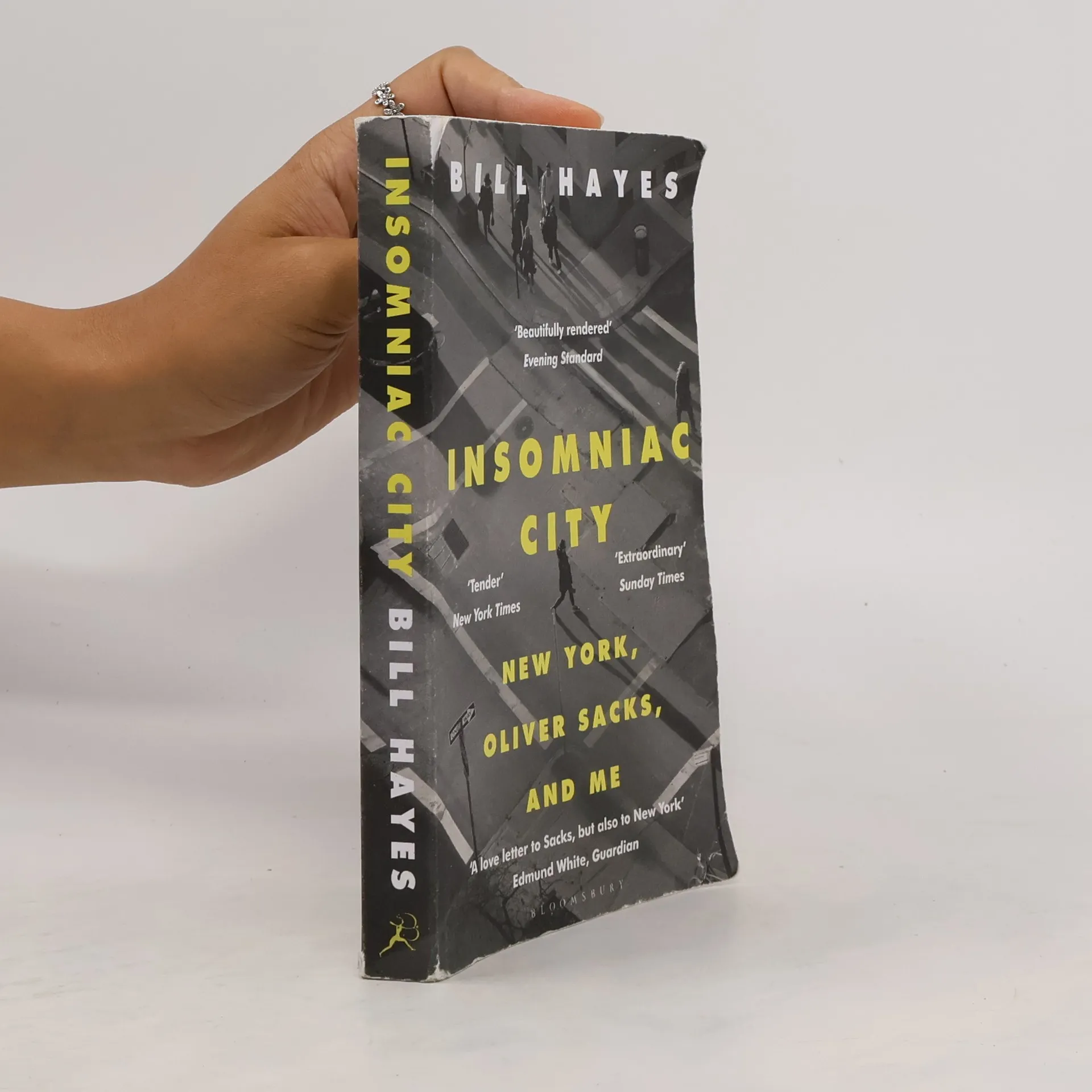
Bill Hayes scrive con penetrante sensibilità sui temi della vita, della morte e dell'esperienza umana. Il suo lavoro, spesso accompagnato dalla sua fotografia artistica, esplora le profondità della connessione umana e le complessità della nostra esistenza. Con una prospettiva unica, cattura momenti fugaci, offrendo ai lettori una profonda riflessione. La sua scrittura è un contributo distintivo alla letteratura contemporanea, caratterizzato dalla sua arte e dalla sua risonanza emotiva.
A loving tribute to Sacks and to New York ... Read just 50 pages, and you'll
see easily enough how Hayes is Sacks's logical complement. Though possessed of
different temperaments, both are alive to difference, variety, the
possibilities of our rangy humanity; both are avid chroniclers of our species
Jennifer Senior New York Times
From the author of Insomniac City 'who can tackle just about any subject in book form, and make you glad he did' (San Francisco Chronicle)- a cultural, scientific, literary, and personal history of exercise. Exercise is our modern obsession, and we have the fancy workout gear and fads to prove it. Exercise - a form of physical activity distinct from sports, play, or athletics - was an ancient obsession, too, but as a chapter in human history, it's been largely overlooked. In Sweat, Bill Hayes runs, jogs, swims, spins, walks, bikes, boxes, lifts, sweats, and downward-dogs his way through the origins of different forms of exercise, chronicling how they have evolved over time, and dissecting the dynamics of human movement. Hippocrates, Plato, Galen, Susan B. Anthony, Jack LaLanne, and Jane Fonda, among many others, make appearances in Sweat, but chief among the historical figures is Girolamo Mercuriale, a Renaissance-era Italian physician who aimed singlehandedly to revive the ancient Greek "art of exercising" through his 1569 book De arte gymnastica. In the pages of Sweat, Mercuriale and his illustrated treatise are vividly brought back to life. As Hayes ties his own personal experience to the cultural and scientific history of exercise, from ancient times to the present day, he gives us a new way to understand its place in our lives in the 21st century