

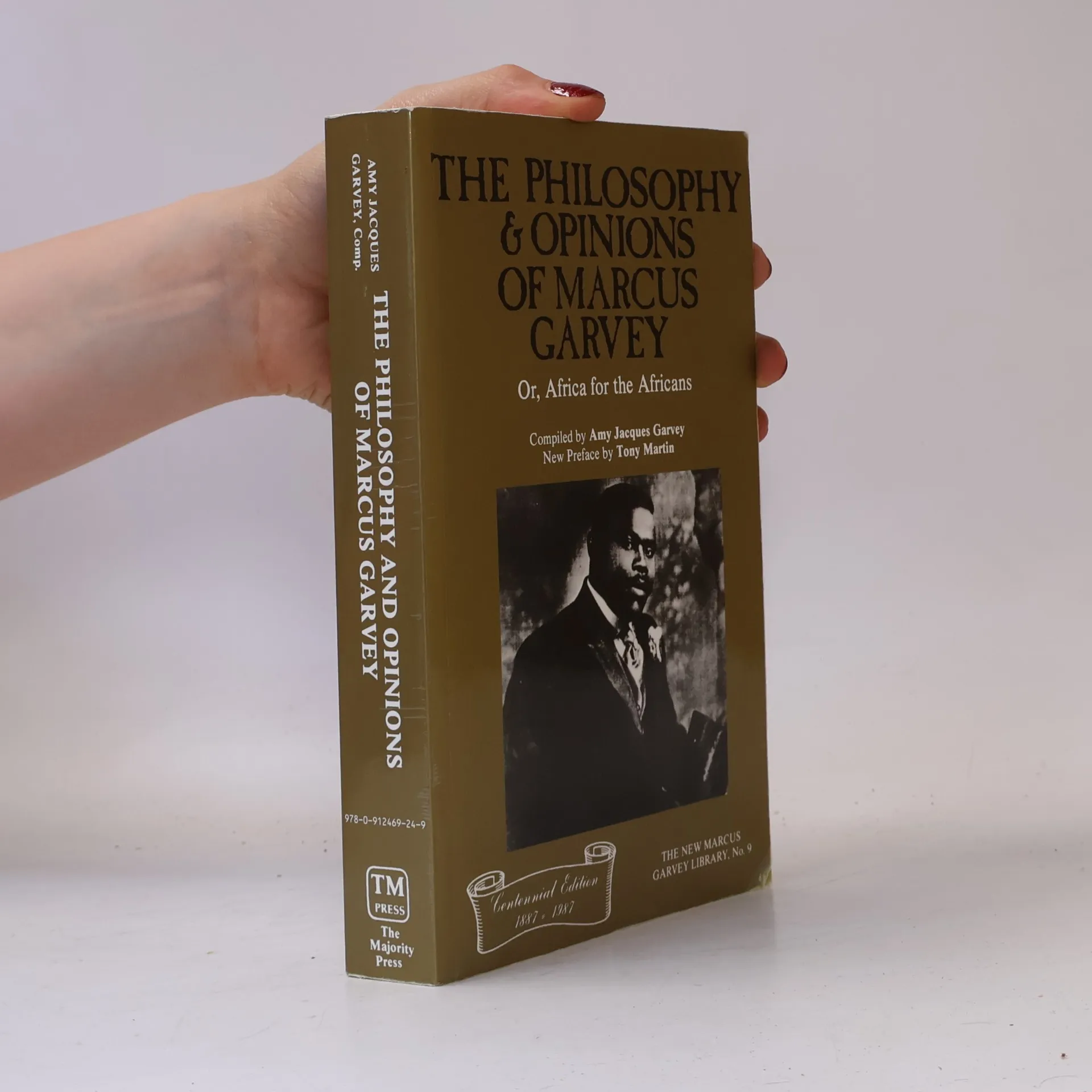
The Philosophy and Opinions , first published in two volumes in 1923 and 1925, quickly became a celebrated apologia for the leader of the largest Pan-African mass movement of all time. "As we approach the 1987 celebration of the centennial of Marcus Garvey's birth, the time seems appropiate for the United States and Jamaican governments to declare null and void the legal proceedings that unjustly sent him to jail in both countries. Nor should a mere 'pardon' suffice, presupposing as it does, the presence of guilt to begin with." --From the Preface.
Marcus Garvey Libri
Marcus Garvey fu un leader e un pensatore visionario che guidò un movimento di massa globale per unire le persone di colore in tutto il mondo. La sua filosofia panafricana ispirò gli individui a rifiutare il colonialismo e ad aspirare alla "redenzione" dell'Africa. Attraverso il suo lavoro di editore e oratore, diffuse idee volte a promuovere l'autosufficienza e un senso di identità collettiva tra le persone di origine africana. La sua eredità continua a influenzare movimenti che promuovono la giustizia e l'autodeterminazione.

Message to the People
- 160pagine
- 6 ore di lettura
In 1937, Marcus Garvey, founder of the Universal Negro Improvement Association and one of the most controversial figures in the history of race relations, assembled his most trusted organizers to impart his life's lessons. For one month he instructed this elite student body — at its peak the largest international mass movement of African peoples — on topics ranging from universal knowledge and how to attain it to leadership, character, God, and the social system. A crucial guide to the understanding of Garvey's philosophy and teachings, Message to the People features profound insights into the nascent days of the Civil Rights movement. This volume will prove an enlightening companion to students of African American and twentieth-century history.
The Tragedy of White Injustice
- 34pagine
- 2 ore di lettura
The book presents a unique narrative style that blends historical facts with personal impressions, reflecting on the injustices faced by the black community due to white oppression. Written during Garvey's imprisonment, it serves as a powerful commentary on racial prejudice, particularly in America. The third edition was motivated by contemporary events, such as Mussolini's aggressive actions in Abyssinia, and highlights the widespread impact of Garvey's work, which had reached a global audience by that time.
Africa for Africans
- 560pagine
- 20 ore di lettura
Originally published in two volumes between 1923 and 1925, Africa for Africans; Or, The Philosophy and Opinions of Marcus Garvey is a compilation of letters, speeches and essays by one of the Fathers of Pan-Africanism. Hailed by Martin Luther King Jr. as, "the first man of color...to make the Negro feel like he was somebody," Garvey was a polarizing yet influential figure whose legacy continues to be felt today. These philosophies, collected by his second wife and pioneering journalist, Amy Jacques Garvey, chronicle Garvey's initial impressions and recollections of America, the formation of the Universal Negro Improvement Association (U.N.I.A.), his imprisonment and subsequent trial over the Black Star Line, and his scathing opinions of the National Association for the Advancement of Colored People (N.A.A.C.P.) Including such pieces as, "An Appeal to the Soul of White America," "The Negro's Greatest Enemy," and "Declaration of Rights of the Negroes of the World," Africa for Africans; Or, The Philosophy and Opinions of Marcus Garvey is an essential piece of Black history, professionally typeset and reimagined for modern readers.
Philosophy and Opinions of Marcus Garvey [Volumes I and II in One Volume
- 562pagine
- 20 ore di lettura
This collection of Garvey's writing remains the most famous collection of Garvey's speeches and essays. Marcus Garvey and the "Universal Negro Improvement Association" form a critical link in black America's centuries-long struggle for freedom, justice, and equality. As the leader of the largest organized mass movement in black history and progenitor of the modern "black is beautiful" ideal, Garvey is now best remembered as a champion of the back-to-Africa movement. In his own time he was hailed as a redeemer, a "Black Moses." Though he failed to realize all his objectives, his movement still represents an attempt at liberation from the psychological bondage of racial inferiority.