

Colin Gordon, a Professor of History at The University of Iowa, explores significant themes in American history through his works. His notable titles include "Dead on Arrival," which examines the political landscape of healthcare in the 20th century, and "New Deals," which analyzes the interplay of business, labor, and politics during the transformative years of 1920 to 1935. Gordon's scholarship provides critical insights into the complexities of American societal changes and the forces shaping its history.
Colin Gordon Libri


Patchwork Apartheid
Private Restriction, Racial Segregation, and Urban Inequality
- 260pagine
- 10 ore di lettura
The book delves into the historical impact of private racial restrictions on property ownership in American cities during the first half of the twentieth century. It highlights how these agreements shaped urban development and perpetuated social, political, and economic exclusion. Through extensive research in five Midwestern counties, the author uncovers the mechanisms of segregation prior to zoning laws and federal redlining. The narrative also examines how these restrictions evolved into subtle practices that continued to enforce segregation, revealing their lasting consequences on housing inequality and economic mobility today.
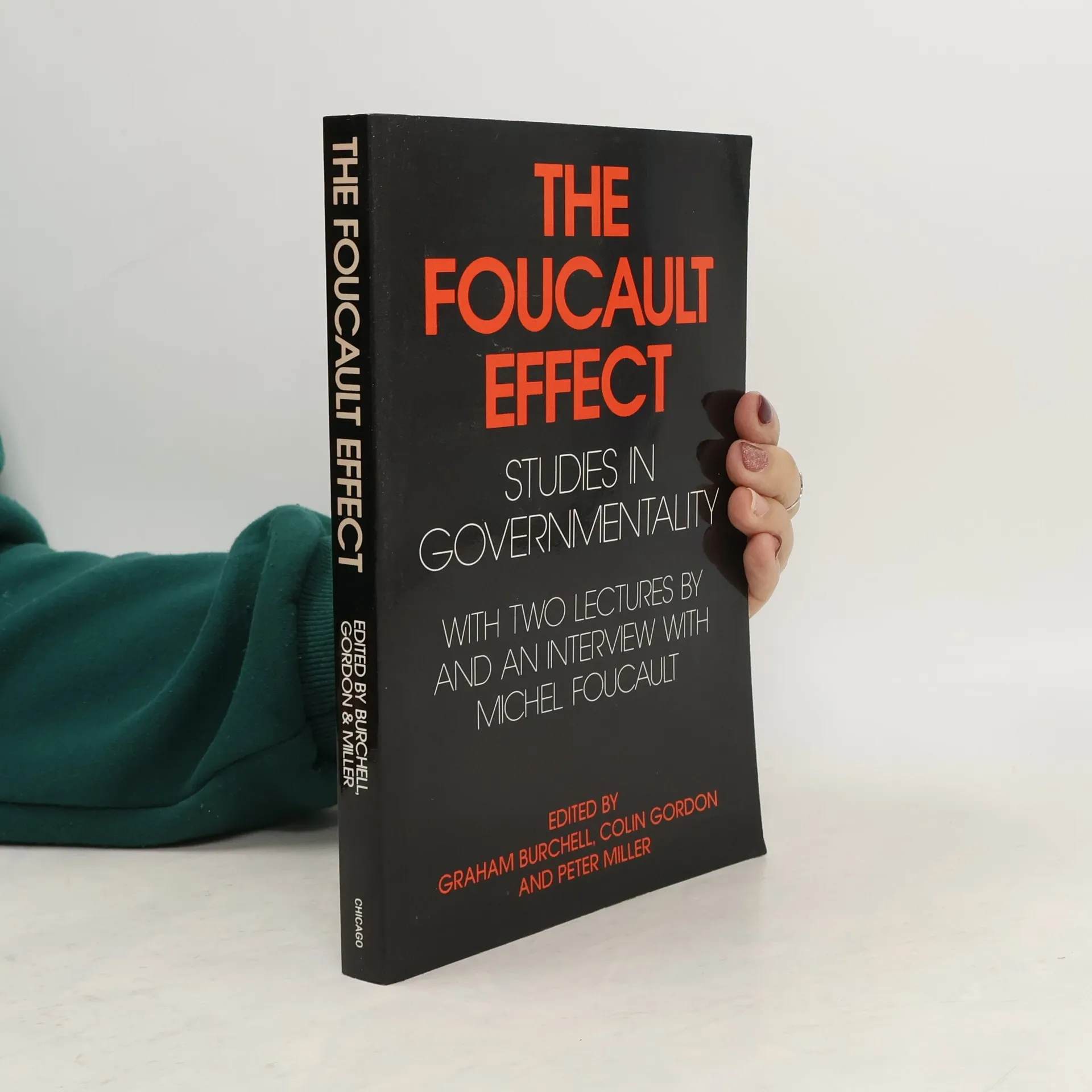
The Foucault Effect
Studies in Governmentality: With Two Lectures by and an Interview with Michel Foucault
- 307pagine
- 11 ore di lettura
With Two Lectures by and an Interview with Michel FoucaultBased on Michel Foucault's 1978 and 1979 lectures at the Collège de France on governmental rationalities and his 1977 interview regarding his work on imprisonment, this volume is the long-awaited sequel to Power/Knowledge. In these lectures, Foucault examines the art or activity of government both in its present form and within a historical perspective as well as the different ways governmentality has been made thinkable and practicable.Foucault's thoughts on political discourse and governmentality are supplemented by the essays of internationally renowned scholars. United by the common influence of Foucault's approach, they explore the many modern manifestations of government: the reason of state, police, liberalism, security, social economy, insurance, solidarity, welfare, risk management, and more. The central theme is that the object and the activity of government are not instinctive and natural things, but things that have been invented and learned.The Foucault Effect analyzes the thought behind practices of government and argues that criticism represents a true force for change in attitudes and actions, and that extending the limits of some practices allows the invention of others. This unique and extraordinarily useful collection of articles and primary materials will open the way for a whole new set of discussions of the work of Michel Foucault as well as the status of liberalism, social policy, and insurance.