

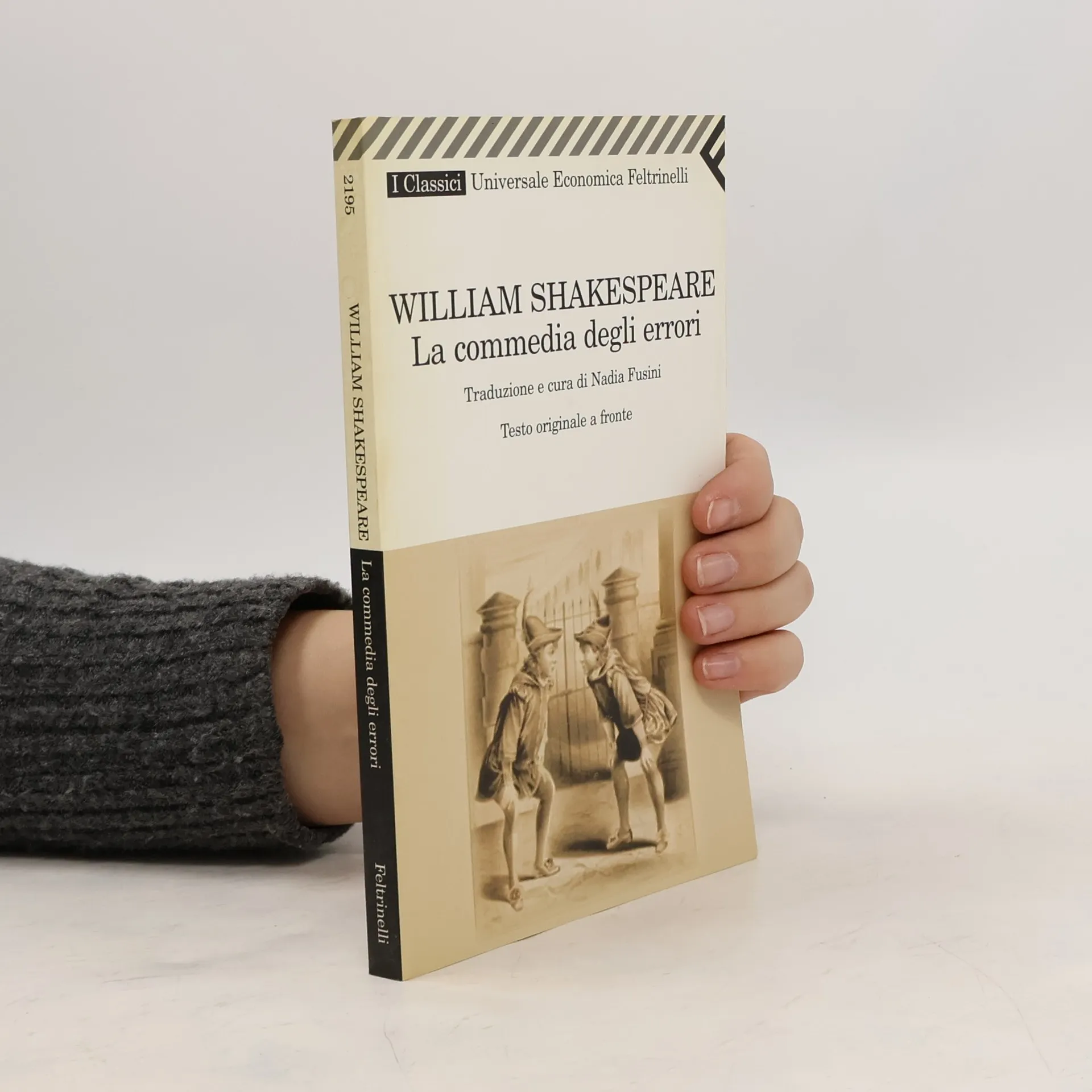
La commedia degli errori. Testo inglese a fronte
Traduzione e cura di Nadia Fusini
- 183pagine
- 7 ore di lettura
Siracusa condanna a morte alcuni mercanti della rivale città di Efeso, perciò Efeso fa lo stesso con dei mercanti siracusani, e tra gli arrestati c'è il vecchio Egeone che cerca di spiegare al duca di Efeso, Solino, il reale motivo della sua presenza lì, raccontandogli la sua storia. Aveva avuto due figli gemelli, chiamati entrambi Antifolo, e aveva due schiavi gemelli, chiamati entrambi Dromo. Un giorno, a causa di un naufragio, si trovò separato dalla moglie, con uno dei figli e uno degli schiavi; quando poi il figlio rimasto con lui ebbe compiuto i diciott'anni lo lasciò partire con lo schiavo in cerca dei rispettivi gemelli; ora sono cinque anni che Egeone erra sulle loro tracce. Solino, commosso dalla vicenda, accorda al mercante una giornata di tempo per trovare i soldi del riscatto e aver salva la vita. Nel frattempo le due coppie di gemelli, Antifolo di Efeso e Antifolo di Siracusa, Dromio di Efeso e Dromio di Siracusani sono ritrovate, ma la perfetta somiglianza tra loro ha ingenerato una serie di equivoci e di situazioni grottesche. Alle quali prendono parte anche Adriana, compagna di Antifolo di Efeso, e sua sorella Luciana,una sguattera, una cortigiana, un creditore e una badessa che si rivelerà poi essere la moglie di Egeone, Emilia. (Testo inglese a fronte)