

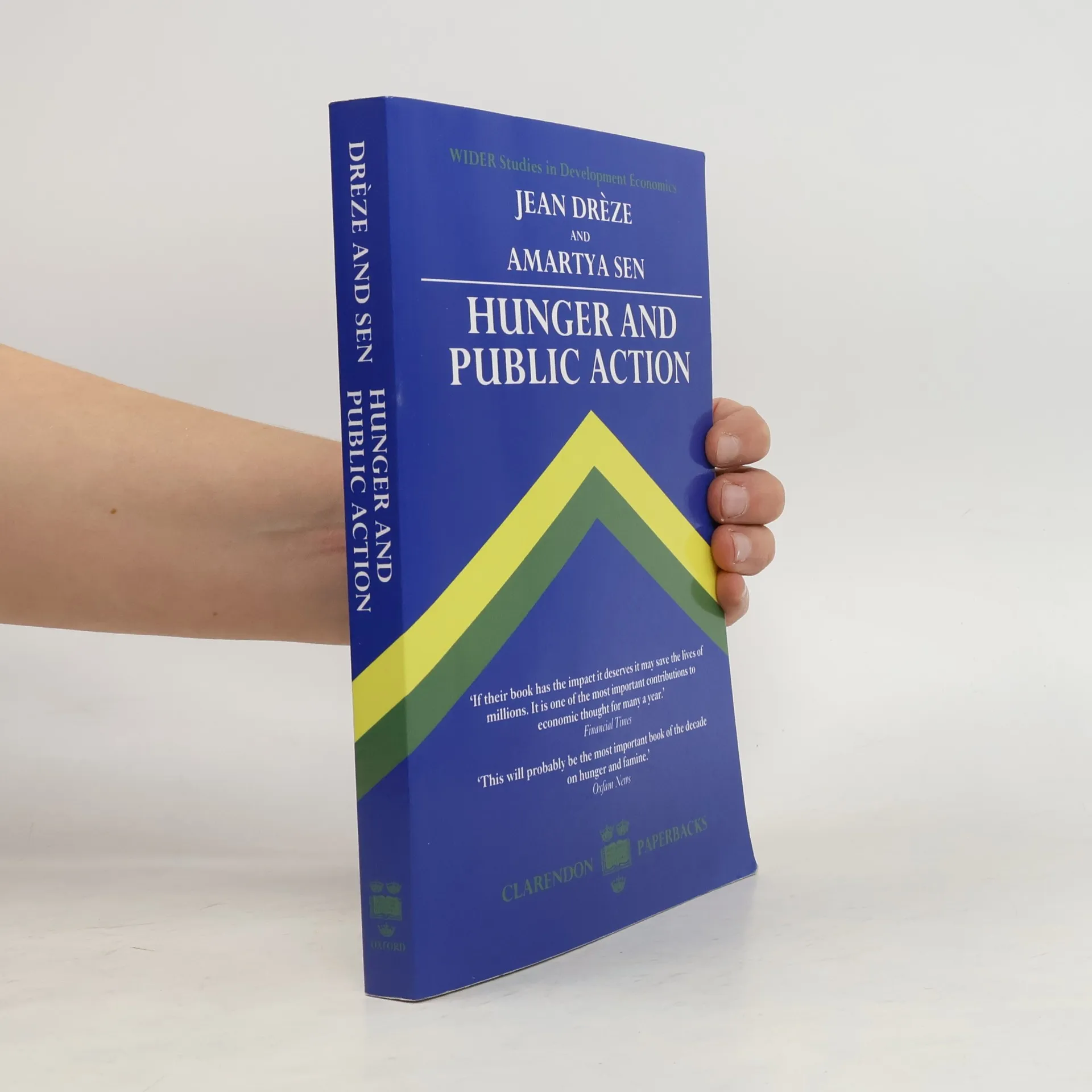
Examining the problem of hunger in the modern world and the role public opinion might play in combating it, Drèze and Sen here provide a coherent perspective on the complex nutritional, economic, social, and political issues involved in the analysis of hunger. They explore famine prevention through a series of case studies in Africa and elsewhere, and discuss the problem of chronic undernourishment. Sen was awarded the second Agnelli Prize for the Ethical Dimension in Advanced Societies in March 1990 in recognition of his outstanding contribution to the understanding of the ethical dimension in modern society.
Jean Dréze Libri
Il lavoro di Jean Drèze si concentra sullo sviluppo sociale ed economico, con un focus particolare sull'India. I suoi scritti approfondiscono temi come la povertà, la carestia, l'istruzione e l'azione pubblica. L'approccio di Drèze è caratterizzato da una ricerca rigorosa unita a un forte impulso per il cambiamento sociale. Le sue pubblicazioni esplorano frequentemente le intricate connessioni tra istituzioni, politiche e le vite delle popolazioni vulnerabili, illuminando percorsi verso una società più equa.
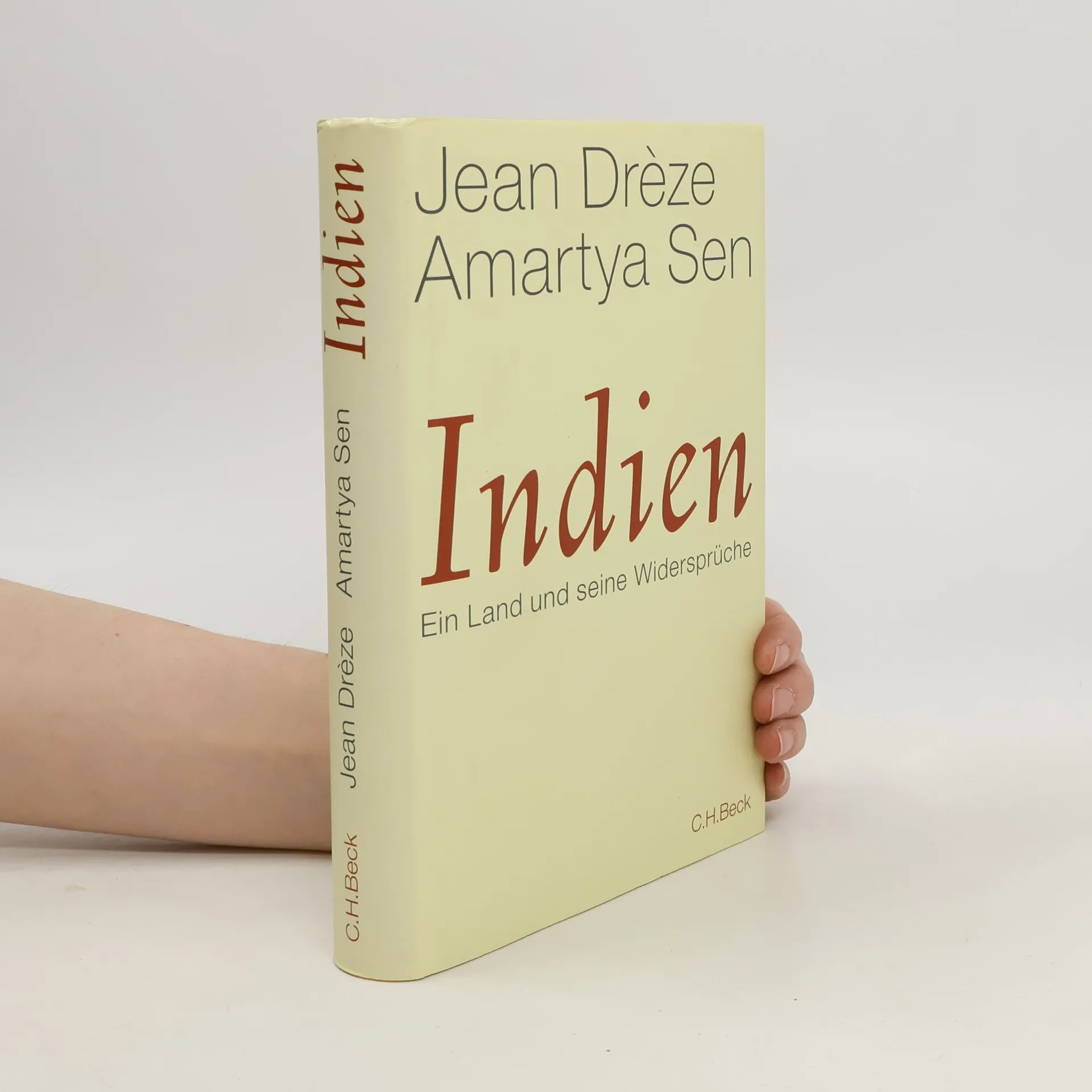

Indien hat in den letzten 70 Jahren eine erstaunliche wirtschaftliche und politische Erfolgsgeschichte vorzuweisen. Zugleich herrschen in der größten Demokratie der Erde weiterhin krasse soziale Ungleichheit und großes Elend in den Unterschichten vor. Amartya Sen und sein Schüler Jean Drèze gehen in ihrer brillanten Analyse den Ursachen dieser Widersprüchlichkeiten auf den Grund. Diese durchaus kritische Betrachtung behandelt die allgemeine ökonomische, politische und gesellschaftliche Entwicklung Indiens von seiner Unabhängigkeit bis heute. Besondere Aufmerksamkeit erfährt hierbei die Rolle, welche die Einführung eines demokratischen Systems auf die Wirtschaft und das soziale Gefüge des einstigen Entwicklungslandes spielte. Anhand zahlreicher Beispiele und Vergleiche mit anderen Ländern führen die Autoren vor Augen, wie die Vernachlässigung sozialer Probleme letzten Endes gravierende Auswirkungen auf das ökonomische, aber auch politische System des Landes haben konnte.