



Bookbot

Saddam Hussein

    Questo autore, ex rivoluzionario e statista, ha concentrato i suoi sforzi letterari e politici sul panarabismo e sul socialismo arabo. Le sue opere scritte includono quattro romanzi storici che riflettono un profondo impegno nella storia e nelle aspirazioni politiche del mondo arabo. Oltre alle sue attività politiche, è stato anche noto per la sua difesa dell'emancipazione delle donne arabe e della protezione della comunità cristiana irachena, dimostrando un impegno per il progresso sociale e i diritti delle minoranze.

    Die Revolution und die Jugend
    Unser Kampf und die internationale Politik
    Das syrisch-iranische Zusammenspiel im Schlaglicht
    Zabibah und der König
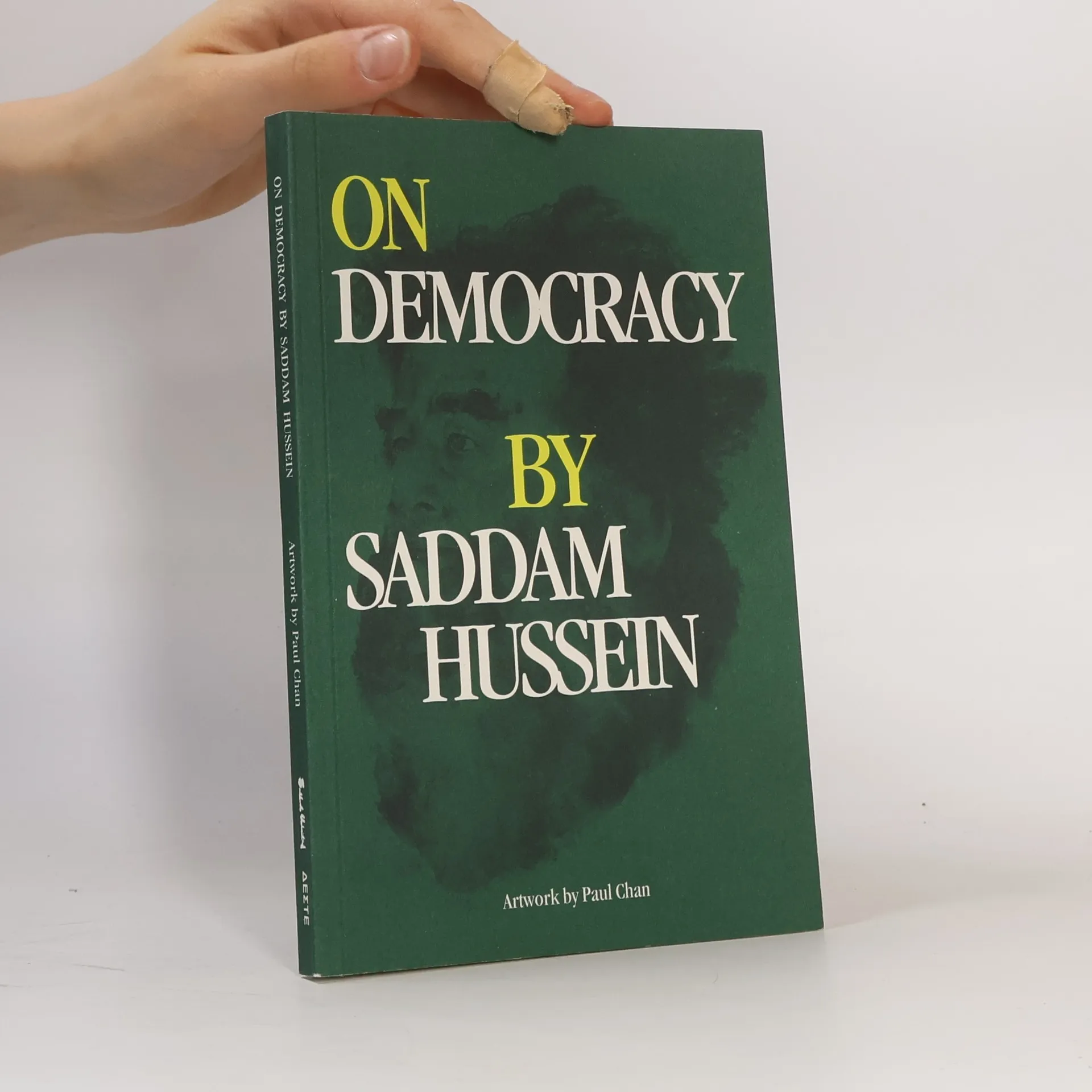
    On Democracy
    • On Democracy

      • 144pagine
      • 6 ore di lettura

      In 2003, after returning from a monthlong stay in Baghdad, American artist Paul Chan was given a gift from a colleague in the human-rights group Voices of the Wilderness: a copy of three speeches on democracy written by Saddam Hussein in the 1970s, before he became president of Iraq. The speeches, compiled here for the first time in English, are politically perverse, yet eerily familiar. The then vice president of Iraq characterizes social democracy as demanding authority, and defines free will as the patriotic duty to uphold the good of the state. This volume takes the speeches as an opportunity to ask what democracy means from the standpoint of a notorious political figure who was anything but democratic, and to reflect on how promises of freedom and security can mask the reality of repressive regimes. With drawings by Paul Chan, including a new suite in its entirety, and essays by Bidoun's Negar Azimi, philosopher and artist Nickolas Calabrese and journalist Jeff Severns Guntzel, this book is the inaugural copublication of the Deste Foundation for Contemporary Art and Chan's own Badlands Unlimited.

      On Democracy
    • Zabibah und der König

      • 192pagine
      • 7 ore di lettura

      Als Saddam Hussein Romane schrieb, spielte er die Rolle des einfachen Mannes und beschrieb eine von Männern dominierte Kultur, die von Unwissenheit, Analphabetismus und Hexerei geprägt ist. Als Führer fehlten ihm nicht die Ressourcen oder die Macht, um Veränderungen herbeizuführen; stattdessen nutzte er Macht und Reichtum für andere Zwecke. Der Roman Zabiba ähnelt der Geschichte von Scheherazade und König Schahrayar; Saddam zeigte Ungerechtigkeiten, war jedoch als Führer seines Volkes nicht in der Lage, diese Ungerechtigkeiten zu unterdrücken.

      Zabibah und der König
      3,0