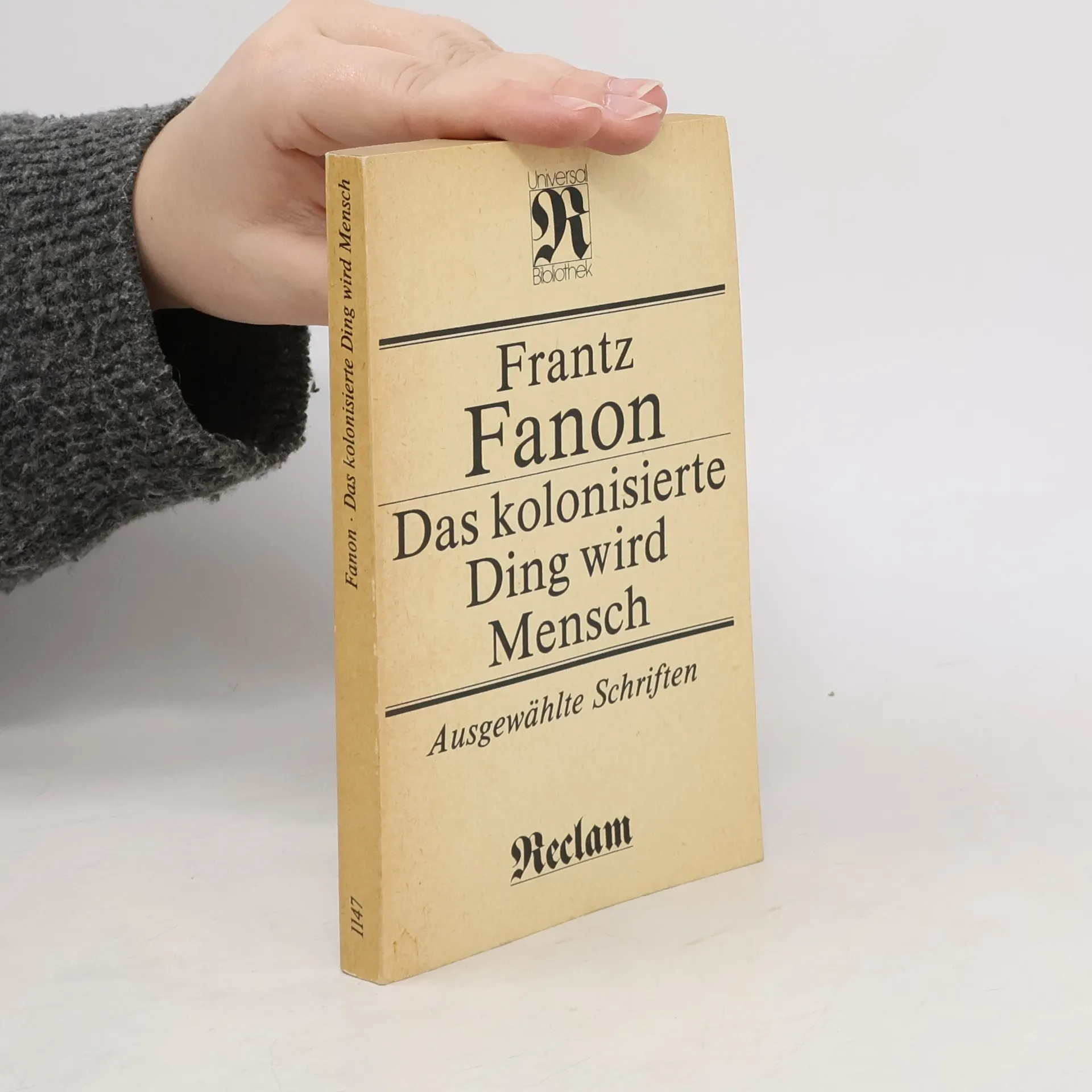
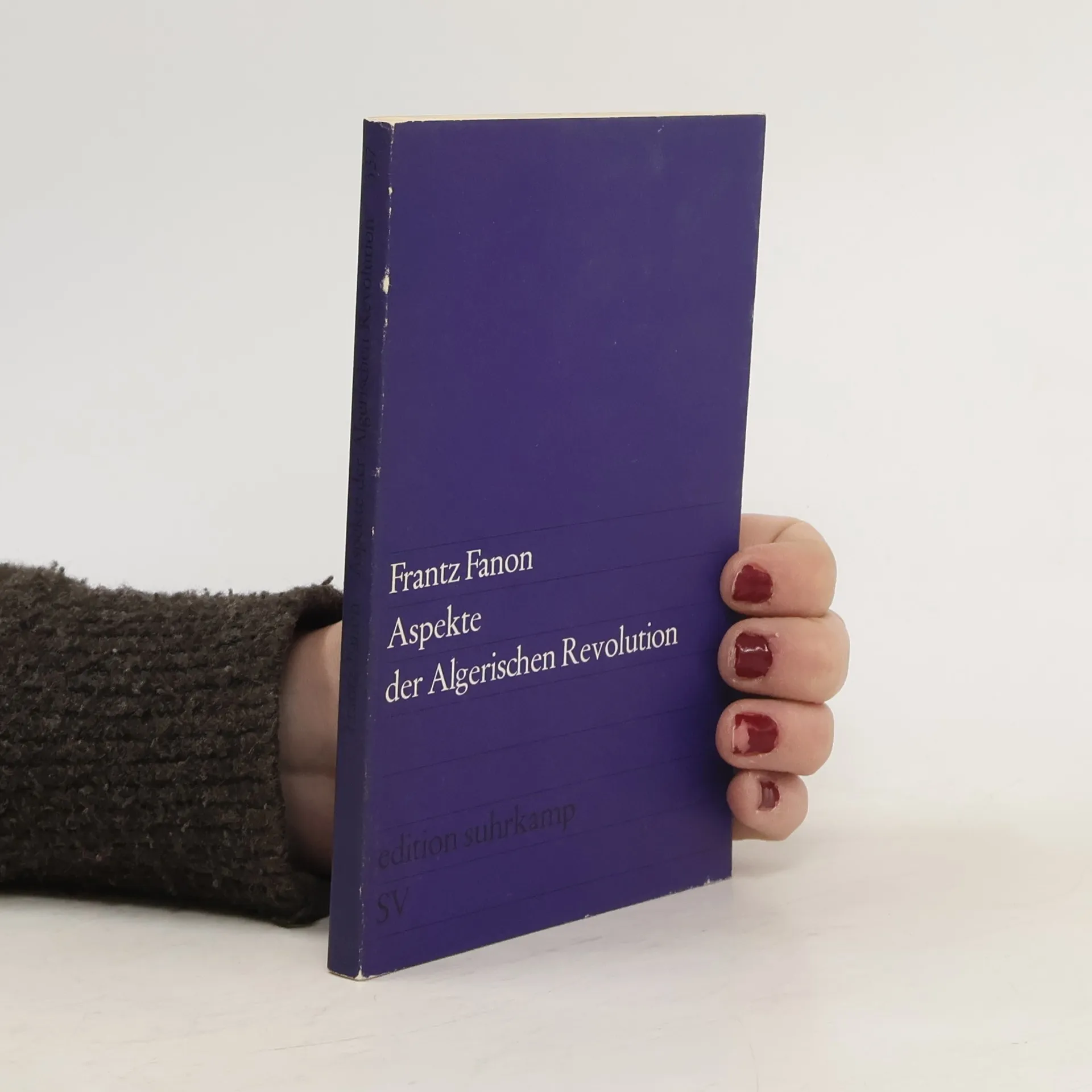
Diese Sammlung enthält 28 der politischen Aufsätze Frantz Fanons. Sie stammen aus seiner aktivsten Periode und reichen von der Erstveröffentlichung von »Schwarze Haut, weiße Masken« im Jahr 1952 bis zu »Die Verdammten dieser Erde« im Jahr 1961. Seiner Diagnose nach gibt es am Rassismus nichts Zufälliges. Vielmehr fügt er »sich in ein charakteristisches Ganzes ein, das der Ausbeutung einer Gruppe Menschen durch eine andere« impliziert. Für Fanon konnte es daher nur eine einzige Lösung geben: »Das logische Ende dieses Kampfwillens ist die totale Befreiung des nationalen Territoriums« und »der Kampf ist von Anfang an total«. Die hier versammelten Aufsätze erlauben einen umfassenden Einblick in das Leben und Denken eines der spannendsten und produktivsten Denker des 20. Jahrhunderts.
Frantz Fanon Ordine dei libri (cronologico)
Frantz Fanon, psichiatra, filosofo e rivoluzionario di Martinica, è un pensatore cruciale negli studi postcoloniali. La sua opera esamina intensamente la psicopatologia della colonizzazione, offrendo profonde intuizioni sugli impatti psicologici dell'oppressione. Le idee rivoluzionarie di Fanon hanno avuto una profonda risonanza, ispirando movimenti di liberazione anticoloniale per decenni. La sua analisi del potere, della razza e dell'identità continua a plasmare il discorso critico.


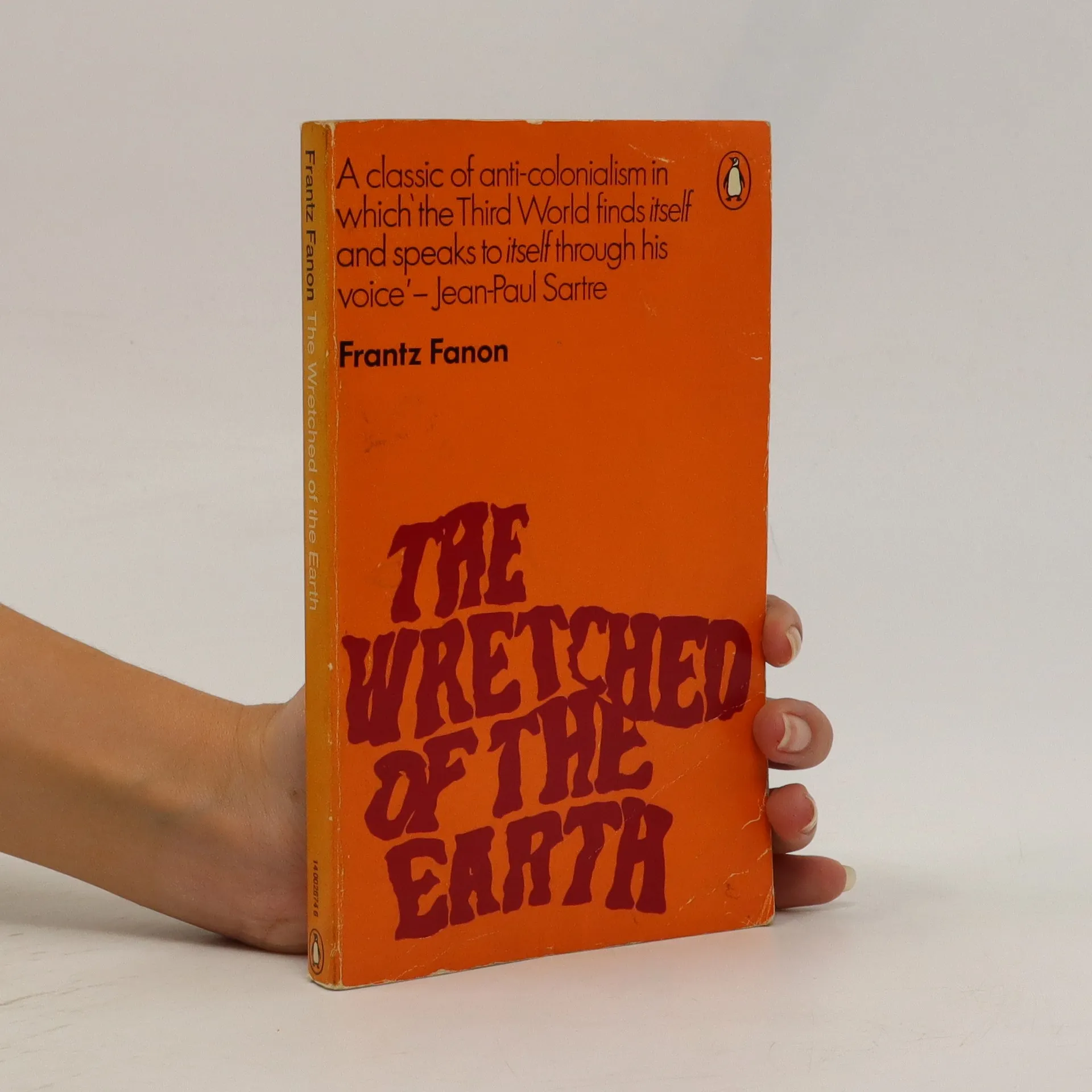
The Wretched of the Earth
- 253pagine
- 9 ore di lettura
Frantz Fanon's book on the trauma of colonization made him the leading anti-colonialist thinker of the twentieth century. Written at the height of the Algerian war for independence from French colonial rule and first published in 1961, it analyses the role of class, race, national culture and violence in the struggle for freedom. Fanon, himself a psychotherapist, makes clear the economic and psychological degradation inflicted by imperialism. Showing how decolonization must be combined with building a national culture, it continues to be one of the most important books on racism ever written.
The Plays from Alienation and Freedom
- 256pagine
- 9 ore di lettura
Prior to becoming a psychiatrist, Frantz Fanon wanted to be a playwright and his interest in dialogue, dramatisation and metaphor continued throughout his writing and career. His passion for theatre developed during the years that he was studying medicine, and in 1949 he wrote the plays The Drowning Eye (L'Œil se noie), and Parallel Hands (Les Mains parallèles). This first English translation of the works gives us a Fanon at his most lyrical, experimental and provocative
The Psychiatric Writings from Alienation and Freedom
- 480pagine
- 17 ore di lettura
Since the publication of The Wretched of the Earth in 1961, Fanon's work has been deeply significant for successive generations of intellectuals, anti-colonial and civil rights activists, and those working in postcolonial studies. Frantz Fanon is regarded as a foundational thinker of Postcolonial Studies, bringing together the analysis of colonialism from an objective, historical perspective and an interrogation of its subjective effects on colonizer and colonized alike. This book furthers his powerful intervention into how we think about identity, race, and activism and provides a unique insight into Fanon's literary, psychiatric, and journalistic theories. Alienation and Freedom represents a rare opportunity to read the last writings of a major 20th-century philosopher whose disruptive and moving work continues to shape how we look at the world.
黑皮肤, 白面具
- 184pagine
- 7 ore di lettura
本书从法国海外省的“法国人”鄙视法属非洲黑人,而作为有色人又在面对白人时存在自卑感的心理入手,揭露长期的殖民统治在已经是法国公民的有色人的心理上留下的伤痛。
A Dying Colonialism
- 181pagine
- 7 ore di lettura
Frantz Fanon's seminal work on anticolonialism and the fifth year of the Algerian Revolution. Psychiatrist, humanist, revolutionary, Frantz Fanon was one of the great political analysts of our time, the author of such seminal works of modern revolutionary theory as The Wretched of the Earth and Black Skin, White Masks . He has had a profound impact on civil rights, anticolonialism, and black consciousness movements around the world. A Dying Colonialism is Fanon's incisive and illuminating account of how, during the Algerian Revolution, the people of Algeria changed centuries-old cultural patterns and embraced certain ancient cultural practices long derided by their colonialist oppressors as "primitive," in order to destroy those oppressors. Fanon uses the fifth year of the Algerian Revolution as a point of departure for an explication of the inevitable dynamics of colonial oppression. This is a strong, lucid, and militant book; to read it is to understand why Fanon says that for the colonized, "having a gun is the only chance you still have of giving a meaning to your death."
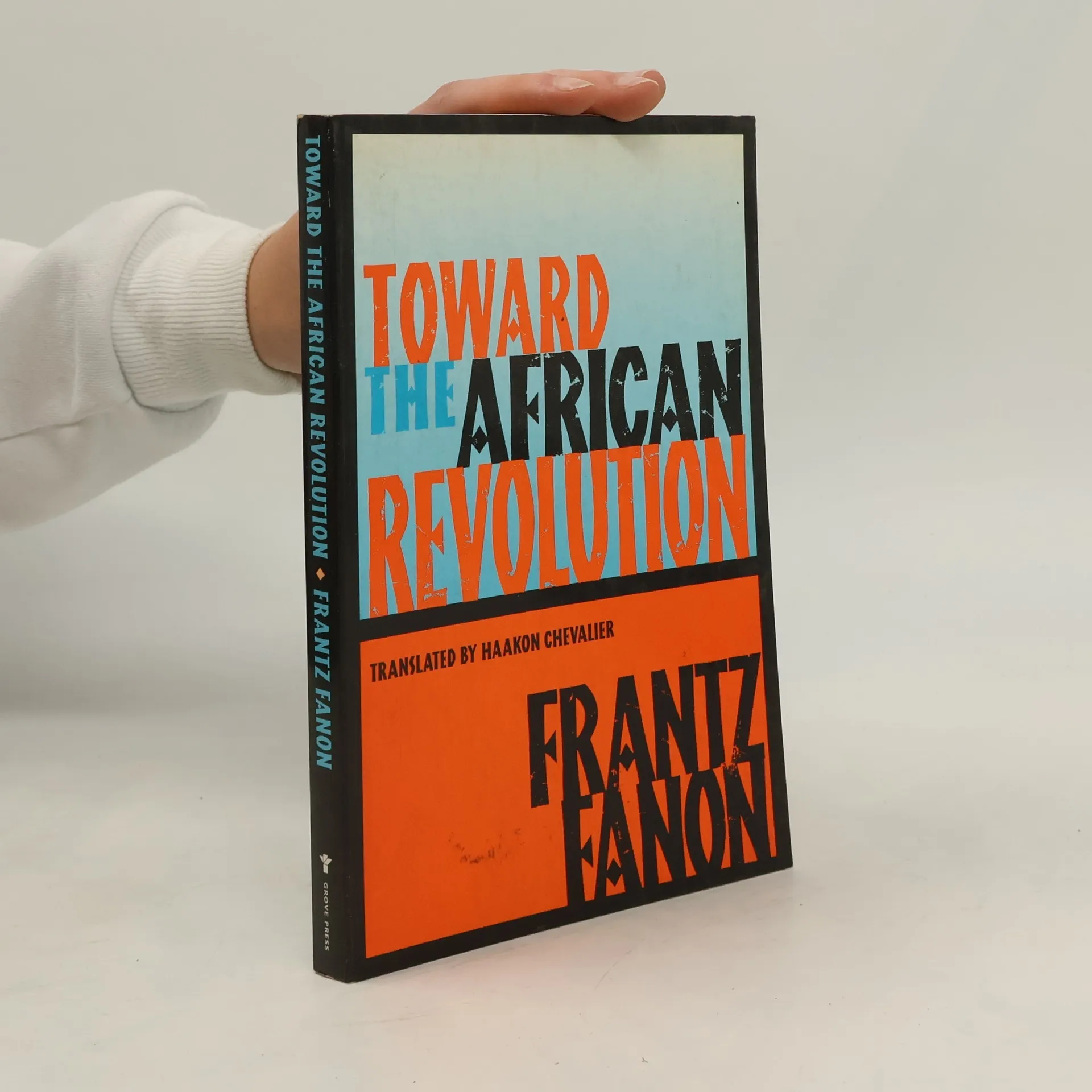
This powerful collection of articles, essays, and letters spans the period between Black Skin, White Masks (1952) and The Wretched of the Earth (1961), Fanon s landmark manifesto on the psychology of the colonized and the means of empowerment necessary for their liberation. These pieces display the genesis of some of Fanon s greatest ideas ideas that became so vital to the leaders of the American civil rights movement.
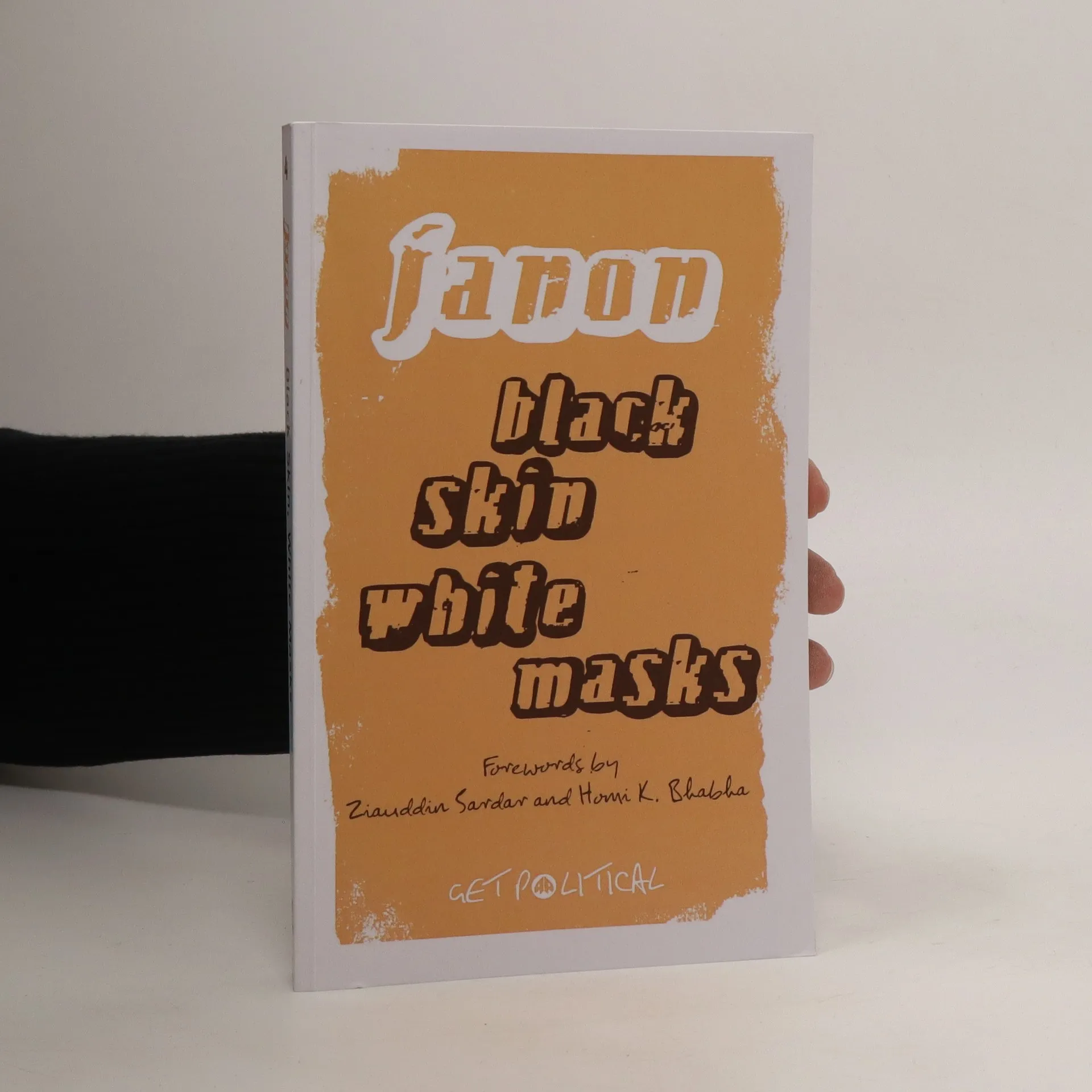
Black skin, white masks
- 186pagine
- 7 ore di lettura
The explosion will not happen today. It is too soon ... or too late.First published in English in 1968, Frantz Fanon's seminal text was immediately acclaimed as a classic of black liberationalist writing. Fanon's descriptions of the feelings of inadequacy and dependence experienced by people of colour in a white world are as salient and as compelling as ever. Fanon identifies a devastating pathology at the heart of Western culture, a denial of difference, that persists to this day. His writings speak to all who continue the struggle for political and cultural liberation in our troubled times.
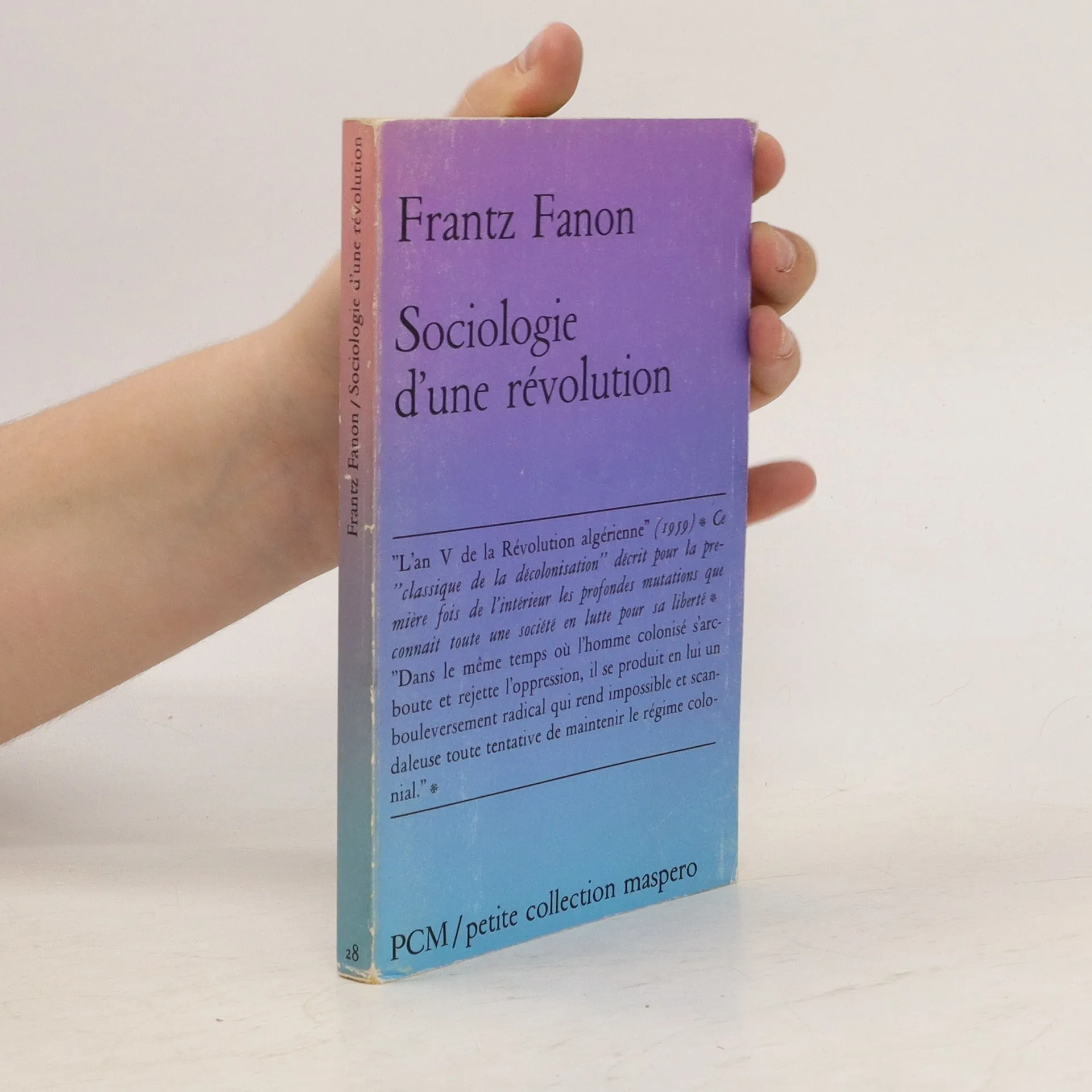
Les textes politiques de Frantz Fanon publiés dans ce volume couvrent la période la plus active de sa vie, de la publication de Peau noire, masques blancs en 1952 - il avait alors vingt-huit ans - à celle des Damnés de la terre en 1961, qui devait coïncider, à quelques jours près, avec la date de sa mort. Retraçant le fil d'une réflexion en constante évolution sur le phénomène colonial, vécu de l'intérieur, ces textes dénoncent à la fois le colonialisme et les pièges de la décolonisation, - la «grande erreur blanche» et le «grand mirage noir ». Explorant tour à tour la situation du colonisé, dont il peut rendre compte scientifiquement par son expérience médicale quotidienne, l'attitude des intellectuels de gauche face à la guerre d'Algérie, les perspectives de conjonction de la lutte de tous les colonisés et les conditions d'une alliance de l'ensemble du continent africain, Frantz Fanon gardait la certitude de la prochaine libération totale de l'Afrique. Son analyse et la clarté de sa vision nous donnent aujourd'hui les clés nécessaires pour comprendre la réalité africaine actuelle.
Frantz Fanon's seminal work on the trauma of colonization established him as a leading anti-colonialist thinker of the twentieth century. This Penguin Modern Classics edition, translated by Constance Farrington and introduced by Jean-Paul Sartre, was written during the Algerian war for independence and first published in 1961. Fanon's classic text has inspired anti-colonial movements, analyzing class, race, national culture, and violence in the struggle for freedom. With power and anger, he highlights the economic and psychological degradation inflicted by imperialism. As a psychotherapist, Fanon revealed the connection between colonial war and mental illness, advocating that the fight for freedom must be paired with the development of a national culture. He proposed revolutionary violence as a path to socialism. While many calls to arms from the decolonization era are now historical, Fanon's passionate analysis of the dynamics between great powers and the 'Third World' remains relevant today. Born in Martinique, Fanon was a French author, essayist, psychoanalyst, and revolutionary who supported Algeria's independence and became a member of the Algerian National Liberation Front. His works have inspired anti-colonial liberation movements for over four decades. If you appreciated this text, you may also enjoy Edward Said's Orientalism, available in Penguin Modern Classics.