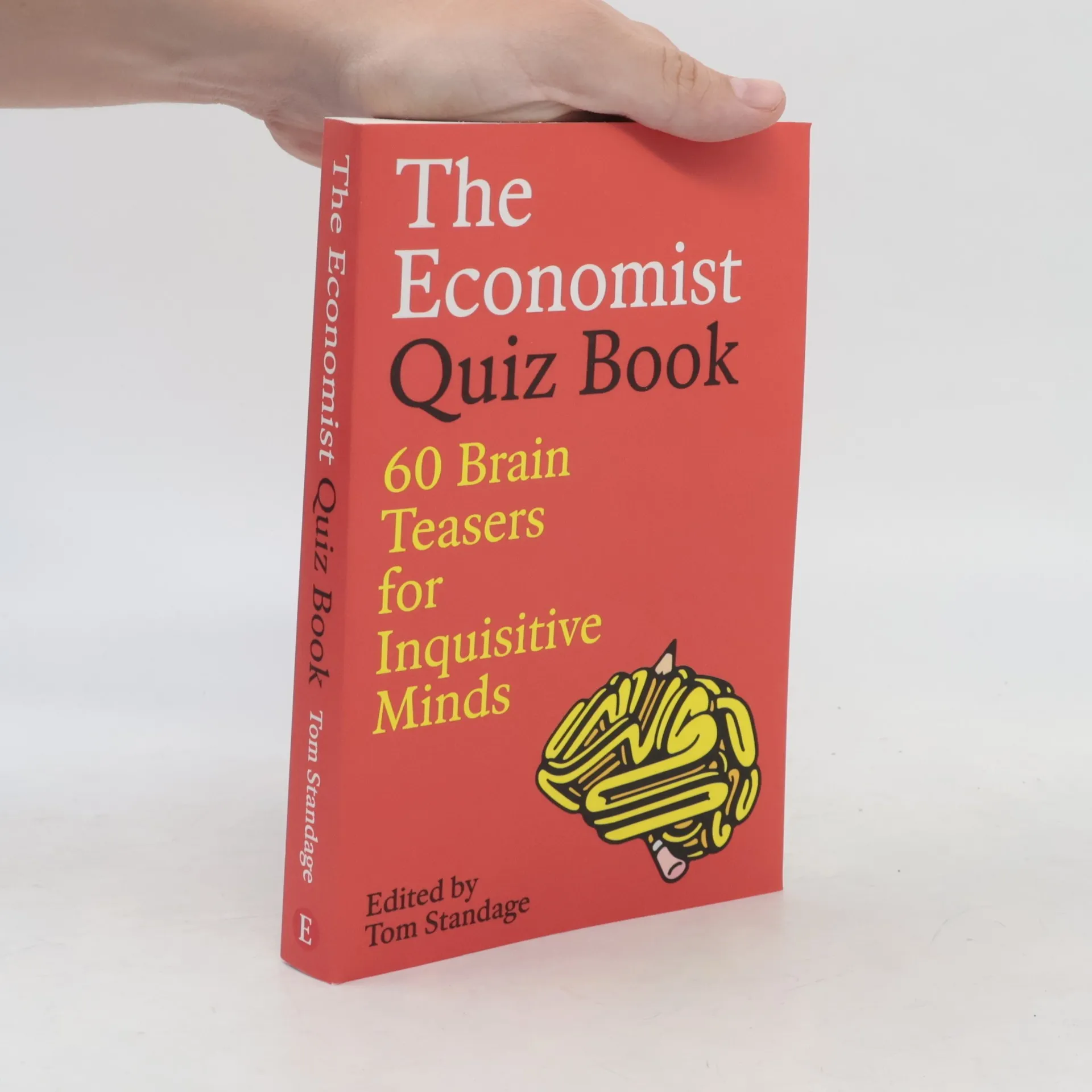
Calling all quizzers and problem solvers drawn to the smart, the quirky and the counter-intuitive: The Economist Quiz Book is here for you.Across 60 themed quizzes - on topics from TV, film and music to politics, science, natural history and more - three quiz rounds challenge the quizzer to find hidden connections, get their facts straight and sort the genuine from the fake.Tackle in teams or go the distance alone. But be prepared to pit your mental agility and general knowledge against some of the world's top journalists - and see the world through the eyes of The Economist.
Tom Standage Ordine dei libri (cronologico)
1 gennaio 1969
Il lavoro di Tom Standage esplora brillantemente gli sorprendenti parallelismi tra le tecnologie di comunicazione passate e presenti. Come giornalista per pubblicazioni di spicco, approfondisce come i nuovi dispositivi plasmino la società e la nostra percezione del mondo. Il suo approccio rivela sorprendenti somiglianze tra lo sviluppo del telegrafo e di internet, evidenziando come entrambi abbiano fondamentalmente alterato la velocità e la trasmissione delle informazioni. Standage si concentra sugli impatti sociali più ampi e sulle reazioni critiche che accompagnano tali progressi.


Oddly Informative
- 272pagine
- 10 ore di lettura
The latest edition in the Economist Explainer series, edited and introduced by Deputy Editor Tom Standage.
Truly Peculiar
- 272pagine
- 10 ore di lettura
Another bestselling collection of astonishing explainers from The Economist.
'Speckled with anecdotes, insights and surprises. It is great fun - and utterly timely' Sunday Times 'Standage writes with a masterly clarity' New York Times 'The product of deep research, great intelligence and burnished prose . . . It is rare that I encounter a non-fiction author whose prose is so elegant that it is worth reading for itself. Standage is a writer of this class' Wall Street Journal Beginning around 3,500 BC with the wheel, and moving through the eras of horsepower, trains and bicycles, Tom Standage puts the rise of the car - and the future of urban transport - into a broader historical context. Our society has been shaped by the car in innumerable ways, many of which are so familiar that we no longer notice them. Why does red mean stop and green mean go? Why do some countries drive on the left, and some on the right? How did cars, introduced only a little over a century ago, change the way the world was administered, laid out and policed, along with experiences like eating and shopping? And what might travel in a post-car world look like? As social transformations from ride-sharing to the global pandemic force us to critically re-examine our relationship with personal transportation, A Brief History of Motion is an essential contribution to our understanding of how the modern world came to be.
Another bestselling collection of astonishing explainers from The Economist.
Uncommon knowledge: The Economist Explains
- 272pagine
- 10 ore di lettura
Following up 2016's hit Go Figure and 2018's Sunday Times bestseller Seriously Curious, another collection of astonishing bite-sized explainers from the Economist.
Some questions you never think to ask. Others, you didn't know you didn't know. And some facts are so surprising they cry out for answers. What can a president actually do? Why do cities sink into the ground? Why is Australia seemingly invulnerable to recessions? Why do people in couples do more housework than singletons?The brilliant minds of the Economist collect these questions. Individually, they might seem bite-sized and inconsequential, but taken together they can reveal a whole new world.
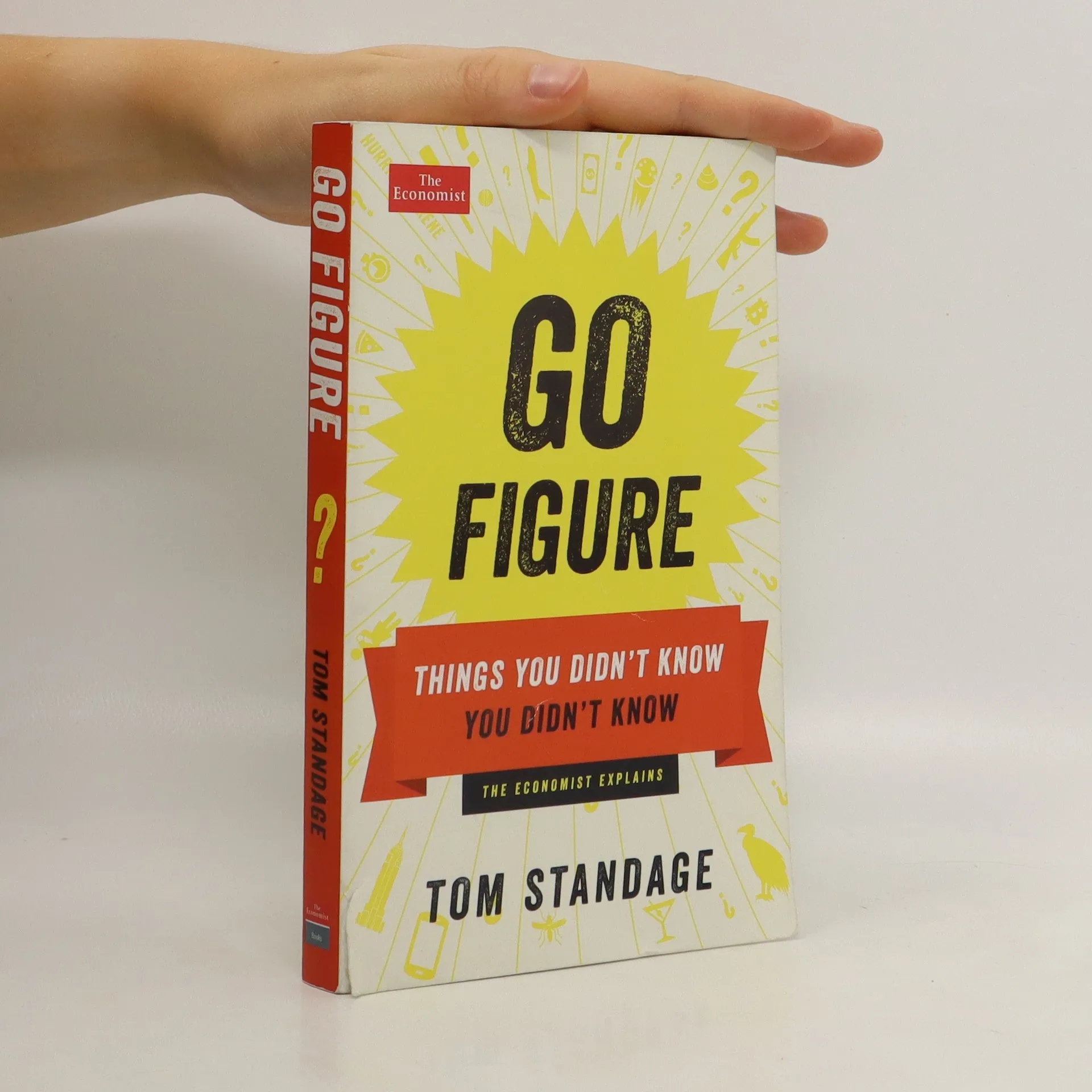
Go Figure: Things You Didn't Know You Didn't Know
- 256pagine
- 9 ore di lettura
Go Figure: Things You Didn't Know You Didn't Know brings together for the first time the very best explainers and charts, written and created by top journalists to help us understand such brain-bending conundrums as why almost half the population of Korea has one of two surnames, how bitcoin mining works, and the seasonal distribution of dog poo on the streets of New York. Subjects both topical and timeless, profound and peculiar, are explained with The Economist's trademark wit and verve. The Economist Explains and its online sister, the Daily Chart, are the two most popular blogs on The Economist's website. Together, these online giants provide answers to the kinds of questions, quirky and serious, that may be puzzling anyone interested in the world around them. Want to know how a tattoo affects your job prospects, why bees are under threat, or even how different countries spend their money? We have the answers. They are sometimes surprising, often intriguing, and always enlightening.
I tweet di Cicerone. I primi 2000 anni dei social media
- 336pagine
- 12 ore di lettura
Oggi siamo costantemente connessi: twittiamo, inviamo messaggi o e-mail. Questo può sembrare senza precedenti, ma non lo è. Nel corso della storia, l'informazione è stata diffusa attraverso reti sociali, con effetti sociali e politici di vasta portata. Il libro esplora come una rete elaborata di scambi epistolari anticipasse i cambiamenti di potere nella Roma di Cicerone, mentre il torrente di opuscoli circolanti nella Germania del XVI secolo innescò la Riforma. L'autore traccia la storia dell'ascesa, della caduta e della rinascita dei social media negli ultimi 2000 anni, offrendo una prospettiva illuminante sulla storia dei media e rivelando che le reti sociali non ci connettono solo oggi, ma ci legano anche al passato.
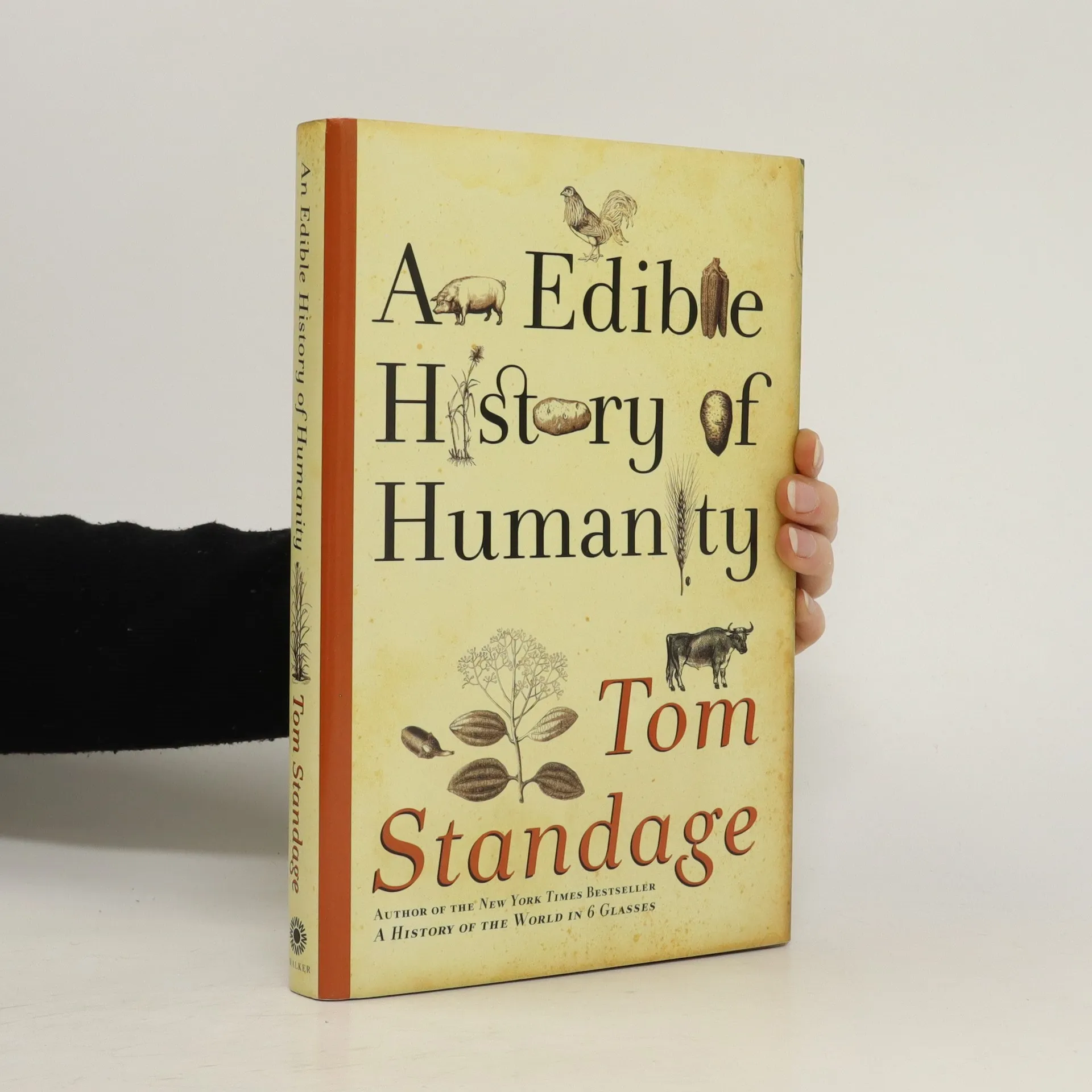
An Edible History of Humanity
- 269pagine
- 10 ore di lettura
From the Publisher: From the bestselling author of A History of the World in Six Glasses, this is a riveting history of humanity told through the foods we eat. Throughout history, food has done more than simply provide sustenance; it has acted as a tool of social transformation, political organization, geopolitical competition, industrial development, military conflict and economic expansion. And today, in the culmination of a process that has been going on for thousands of years, the foods we choose in the supermarket connect us to global debates about trade, development, and the adoption of new technologies. An Edible History of Humanity is a journey through the uses of food that have helped to shape and transform societies around the world, from prehistory to the present. Drawing on genetics, archaeology, anthropology, ethno-botany and economics, the story of these gastronomic revolutions is a deeply satisfying account of the whole of human history.
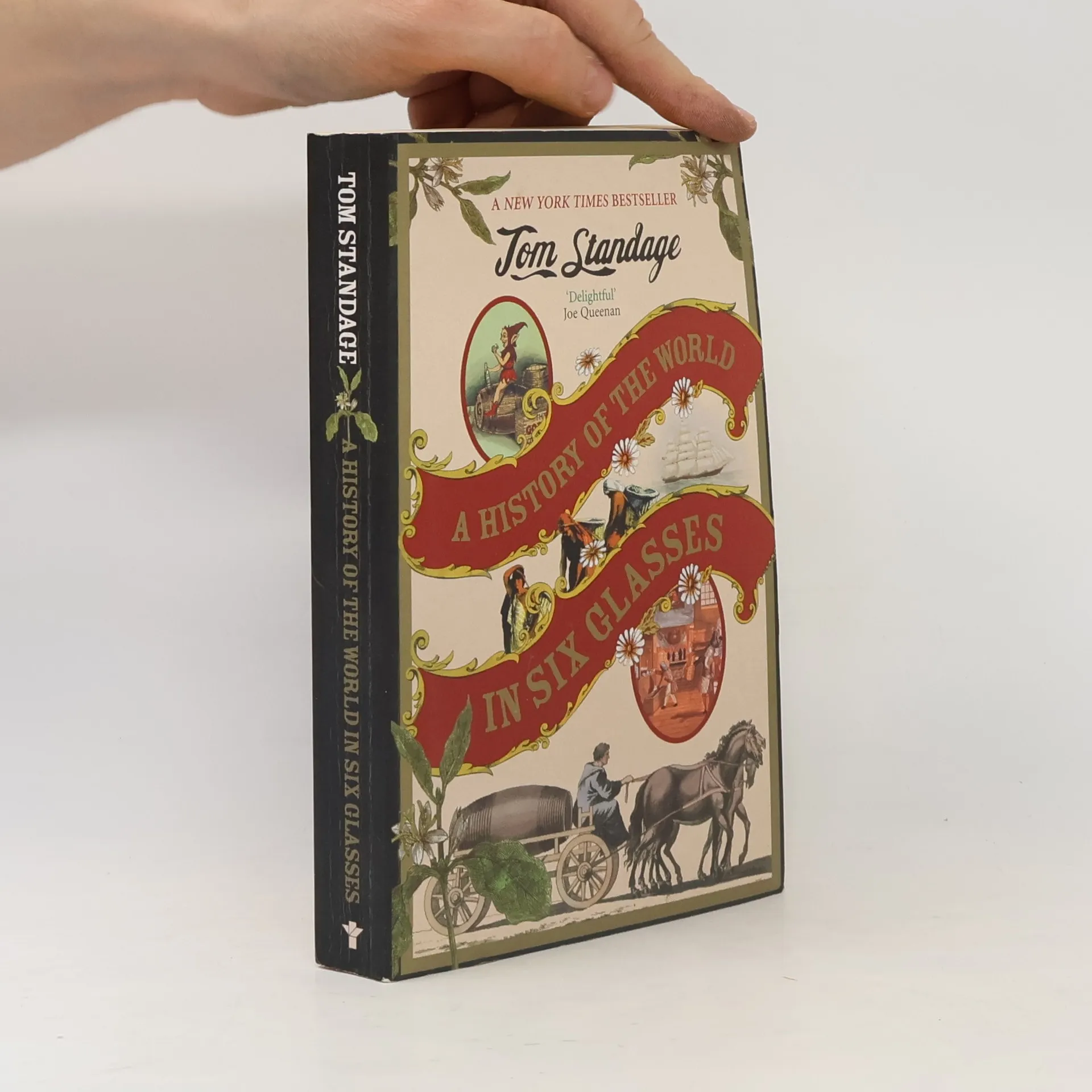
A History of the World in 6 Glasses
- 311pagine
- 11 ore di lettura
This book explores how beverages like beer, wine, spirits, coffee, tea, and cola have significantly influenced human history. It highlights the complex relationships between civilizations, viewing each drink as a form of technology that shaped pivotal moments in history.
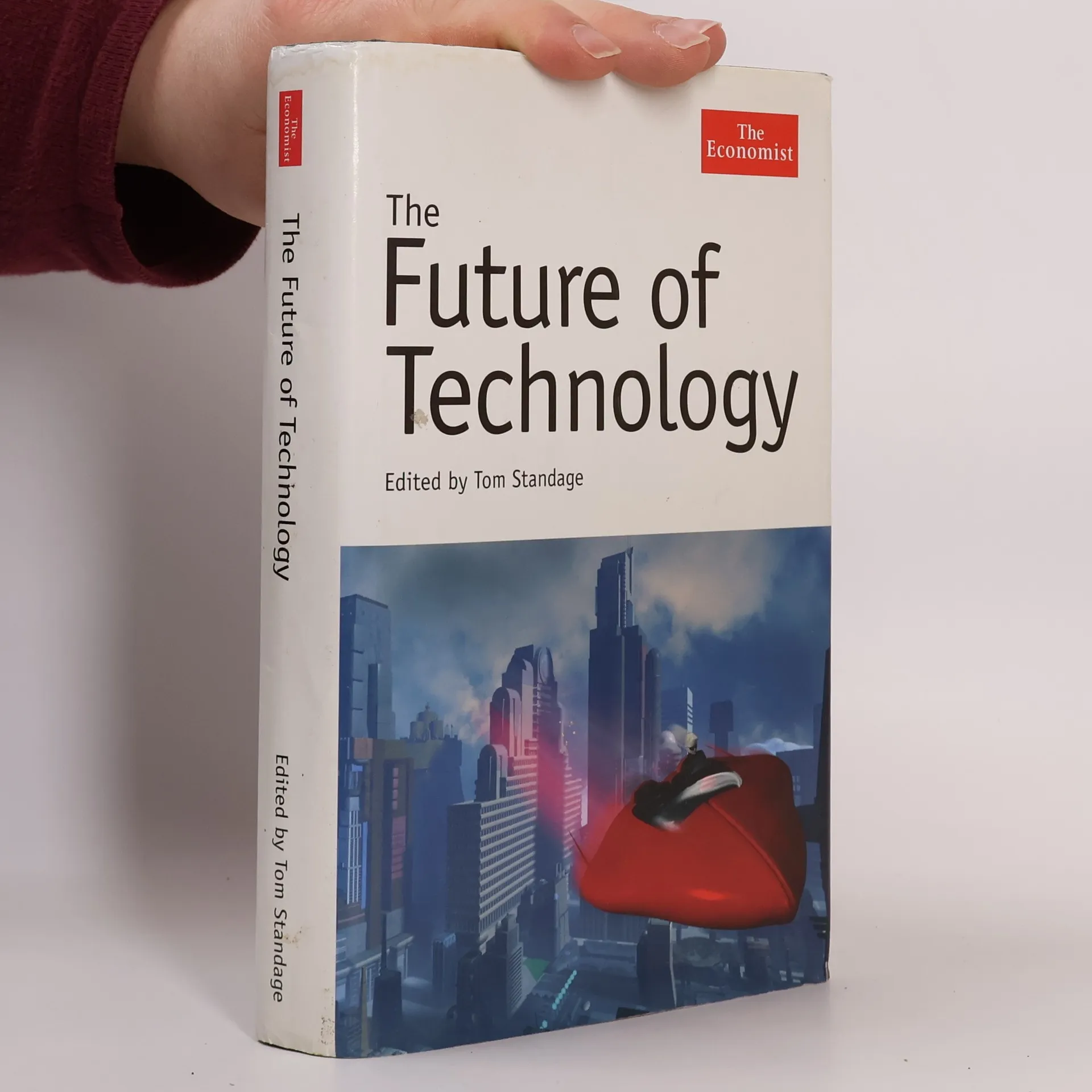
The Economist: The Future of Technology
- 358pagine
- 13 ore di lettura
From the industrial revolution to the railway age, and through electrification, mass production, and the information age, a recurring pattern emerges: an exhilarating phase of innovation and financial speculation is followed by a crash, leading to a prolonged period of proper technology deployment. This collection of surveys and articles from The Economist explores the evolution of technology and its future trajectory. The first part addresses the “greying” of IT, the increasing importance of security, the rise of outsourcing, and the complexities of implementation over mere innovation. The second part examines the transition from corporate computing to consumer technology, highlighting how new innovations often debut in consumer gadgets like mobile phones. It discusses the mobile phone as the “digital Swiss Army knife,” the dominance of digital cameras over film, the expanding games industry, and the social implications of technologies such as text messaging, Wi-Fi, and camera phones. The final part speculates on which technologies will drive the next wave of disruption, focusing on biotechnology, energy technology, and nanotechnology. This comprehensive analysis provides insights into how technology has evolved and where it may lead us next.
The Turk
The Life and Times of the Famous Eighteenth-Century Chess-Playing Machine
- 272pagine
- 10 ore di lettura
On an autumn day in 1769, Hungarian nobleman Wolfgang von Kempelen attended a conjuring show at the court of Maria Theresa, empress of Austria-Hungary. Unimpressed by the performance, he claimed he could do better. Maria Theresa challenged him, granting six months to prepare his own show. Kempelen returned the following spring with a mechanical man, known as the Turk, crafted from wood, powered by clockwork, and dressed in a Turkish costume, capable of playing chess. This invention quickly gained fame, and Tom Standage's book chronicles its remarkable journey across Europe and America over the next eighty-five years. The Turk became associated with historical figures like Benjamin Franklin, Catherine the Great, and Napoleon Bonaparte, and it inadvertently inspired advancements such as the power loom and the computer. Its exhibitions baffled audiences and sparked debates about machine intelligence, leading to rival theories that only fueled the controversy. Blending historical narrative with biography, the book explores the Turk's intriguing career amidst the industrial revolution, a period that redefined human-machine relationships. In today’s computer age, the Turk's legacy remains significant as discussions about machine intelligence continue, highlighting its role in the history of technology.
The Neptune File tells the story of the gifted mathematician John Couch Adams and the discovery of the planet Neptune in 1846. Combining scientific triumph with international controversy, this is an intriguing tale of the search for an unseen planet, and the uproar it caused. More than just an intriguing historical yarn, Adam's work signified the beginning of a new era of planet hunting by providing astronomers with a powerful tool with which to search for new worlds. It marked the genesis of the idea that astronomers could find new planets by looking for their telltale gravitational influence on other bodies, rather than observing them directly with telescopes. In recent years this approach has led to an extraordinary series of discoveries - today's planet detectives are relying on a technique whose theoretical foundations were laid by their 19th-century predecessors.
The Victorian Internet
- 224pagine
- 8 ore di lettura
The history of the telegraph - the men and women who made it - and its relevance to the current Internet debate Beginning with the Abbe Nollet's famous experiment of 1746, when he successfully demonstrated that electricity could pass from one end to the other of a chain of two hundred monks, Tom Standage tells the story of the spread of the telegraph and its transformation of the Victorian world. The telegraph was greeted by all the same concerns, hype, social panic and excitement that now surround the Internet, and Standage provides both a fascinating insight into the past and a context in which to think rather differently of today's concerns. Standage has a wonderful prose style and an excellent eye for the telling and engaging story. Popular history at its best.