Madness Visible
- 304pagine
- 11 ore di lettura
Superb war reporting which sits alongside that of Martha Gellhorn, Fergal Keane and John Simpson


Janine di Giovanni si afferma come una delle reporter di guerra più rispettate d'Europa, rinomata per il suo incrollabile focus sul costo umano dei conflitti. Il suo approccio distintivo prevede l'esplorazione di zone di guerra trascurate, sforzandosi di dare un volto all'immenso dolore causato dalla violenza. Con una carriera caratterizzata da profonda empatia e ricerca rigorosa, è diventata una voce essenziale per coloro che sono stati messi a tacere dalla guerra. Le sue avvincenti narrazioni offrono ai lettori una profonda comprensione dell'esperienza umana nelle circostanze più estreme.




Superb war reporting which sits alongside that of Martha Gellhorn, Fergal Keane and John Simpson
War is a collective matter. It involves nations, factions, and religions. However, it is also a personal affair. War is made by people and lived by people: the one who kills and the one who is killed, the one who becomes disabled and the one who sees their home bombed, the one who fights at the front and the one who watches helplessly as their life, as they knew it until then, collapses. In this book, Janine di Giovanni—the most significant war correspondent of her generation—does not make geopolitical analyses. She does not view war from above. She observes it from within, through the eyes of the people experiencing it. She narrates the stories of soldiers, both from the government army and the opposition, of the tortured, of civilians, of mothers, of children. She captures primal, physical feelings: pain, loss, brutality, horror. She records the smells of war, the sounds, the cold, the mud. She documents fears and hopes, mourning and devastation. Through dozens of human stories—the stories of Nanda, Mariam, Hussein, Mohamed, Abdullah, Carla—the author composes a poignant mural of a society that is devouring itself, driven into a fratricidal war and the greatest tragedy of our time.
At once necessary, difficult and elating. Her reporting from the Syrian revolution and war is clear-eyed and engaged in the best sense - engaged in the human realm rather than the abstractly political. . . . Such reporters as Giovanni, who not only visit but also live (and often die) through wars not their own, are heroic Robin Yassin-Kassab Guardian
Some of the countries that first nurtured and characterized Christianity - along the North African Coast, on the Euphrates and across the Middle East and Arabia - are the ones in which it is likely to first go extinct. Christians are already vanishing. We are past the tipping point, now tilted toward the end of Christianity in its historical homeland. Christians have fled the lands where their prophets wandered, where Jesus Christ preached, where the great Doctors and hierarchs of the early church established the doctrinal norms that would last millennia. From Syria to Egypt, the cities of northern Iraq to the Gaza Strip, ancient communities, the birthplaces of prophets and saints, are losing any living connection to the religion that once was such a characteristic feature of their social and cultural lives. In The Vanishing, Janine di Giovanni has combined astonishing journalistic work to discover the last traces of small, hardy communities where ancient rituals are quietly preserved amid 360 degree threats. Full of faith and hope, di Giovanni's riveting personal stories make a unique act of pre-archeology: the last chance to visit the living religion before all that will be left are the stones of the past
A masterpiece of war reportage, The Morning They Came for Us bears witness to one of the most brutal internecine conflicts in recent history. Drawing from years of experience covering Syria for Vanity Fair, Newsweek, and the front page of the New York Times, award-winning journalist Janine di Giovanni chronicles a nation on the brink of disintegration, all written through the perspective of ordinary people. With a new epilogue, what emerges is an unflinching picture of the horrific consequences of armed conflict, one that charts an apocalyptic but at times tender story of life in a jihadist war zone. The result is an unforgettable testament to resilience in the face of nihilistic human debasement.
In a voice both innocent and wise, reminiscent of Anne Frank, Zlata Filipovic's diary has awakened the world's conscience. At thirteen, Zlata began her diary just before her eleventh birthday, capturing the peaceful life of a bright, carefree girl in Sarajevo. Her early entries reflect her friendships, family, school, and interests, including a desire to join the Madonna Fan Club. However, her perspective shifts dramatically when she sees bombs falling on Dubrovnik. Initially unable to imagine such violence in her own city, she soon faces the harsh reality as war descends upon Sarajevo. The tone of her diary transforms, beginning with a harrowing entry addressed to "Dear Mimmy," her deceased goldfish, filled with words like "SLAUGHTERHOUSE! MASSACRE! HORROR!" Zlata's world becomes increasingly confined as she and her family take refuge in a neighbor's cellar, enduring nights of relentless shelling. The war disrupts her education, deprives her of basic necessities, and takes a toll on her loved ones. Amidst despair, she expresses profound thoughts on humanity and the inhumanity of war. Yet, with remarkable courage and clarity, Zlata clings to remnants of her former life, continuing her piano studies, seeking books, and celebrating special moments, all chronicled in her extraordinary diary.
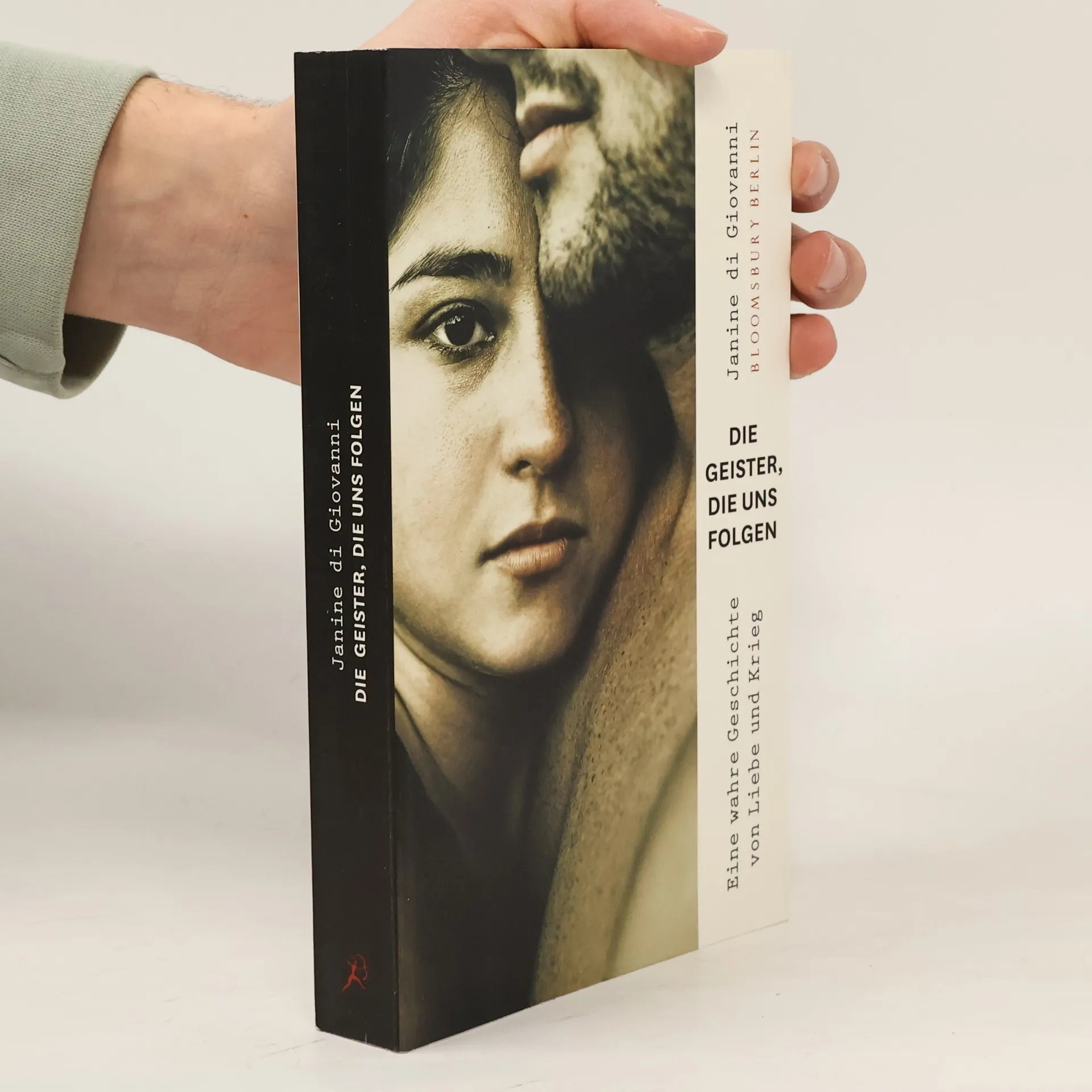
Janine und Bruno wollen sich ein gemeinsames Leben aufbauen - die beiden Kriegsreporter, die sich im belagerten Sarajevo ineinander verliebt haben. Jahrelang sind sie über den Globus geirrt, von einem Konflikt zum nächsten, von einer Trennung zur nächsten. Nur unterbrochen von kurzen, aber intensiven Momenten der Zweisamkeit. Aber der Plan, nach den zahlreichen Kriegen in Paris endlich Fuß zu fassen, will und will nicht aufgehen. Ihr Familienalltag wird immer wieder von den Erlebnissen der Vergangenheit eingeholt: So kämpft Bruno mit seinen traumatischen Erfahrungen und Janine damit, ihrer neuen Rolle als Mutter und Ehefrau gerecht zu werden. Der Krieg hat sie zusammengeführt. Nun stehen sie vor der Frage: Wie zusammenbleiben ohne ihn? Mitreißend und mit schonungsloser Offenheit erzählt die renommierte Kriegsberichterstatterin Janine di Giovanni davon, was es heißt, ankommen zu wollen, ohne ankommen zu können.