Klasični jezik arhitekture
- 153pagine
- 6 ore di lettura




The author charts the development of architectural theory and practice from Elizabeth I to George IV. Questions of style, technology, and the social framework are resolved as separable but always essential components of the building worlds.
Between 1714 and 1830, squares, stucco and brick terraces, churches, parks and thoroughfares transformed the appearance of London. The author paints a picture of the architect's aims, the technical innovations and the social and political background which determined the character of these changes.
Inigo Jones was the first English classical architect, famous in his own time (he was nine years junior to Shakespeare) and the posthumous sponsor of the Palladianism of the 18th century. Sir John Summerson clears away a mass of legend in order to direct attention to the essential, basing a new assessment of his genius on the evidence of buildings and designs of undoubted authenticity. While the Queen's house at Greenwich and the famous Whitehall Banqueting House receive due acknowledgement, such long lost works as the Covent Garden Piazza and the transformation of old St Paul's are shown, after rigorous examination of there cords, to be even more eloquent of their architect's philosophy. Inigo Jones emerges as a unique figure in Europe of his time and an architect of fundamental importance.
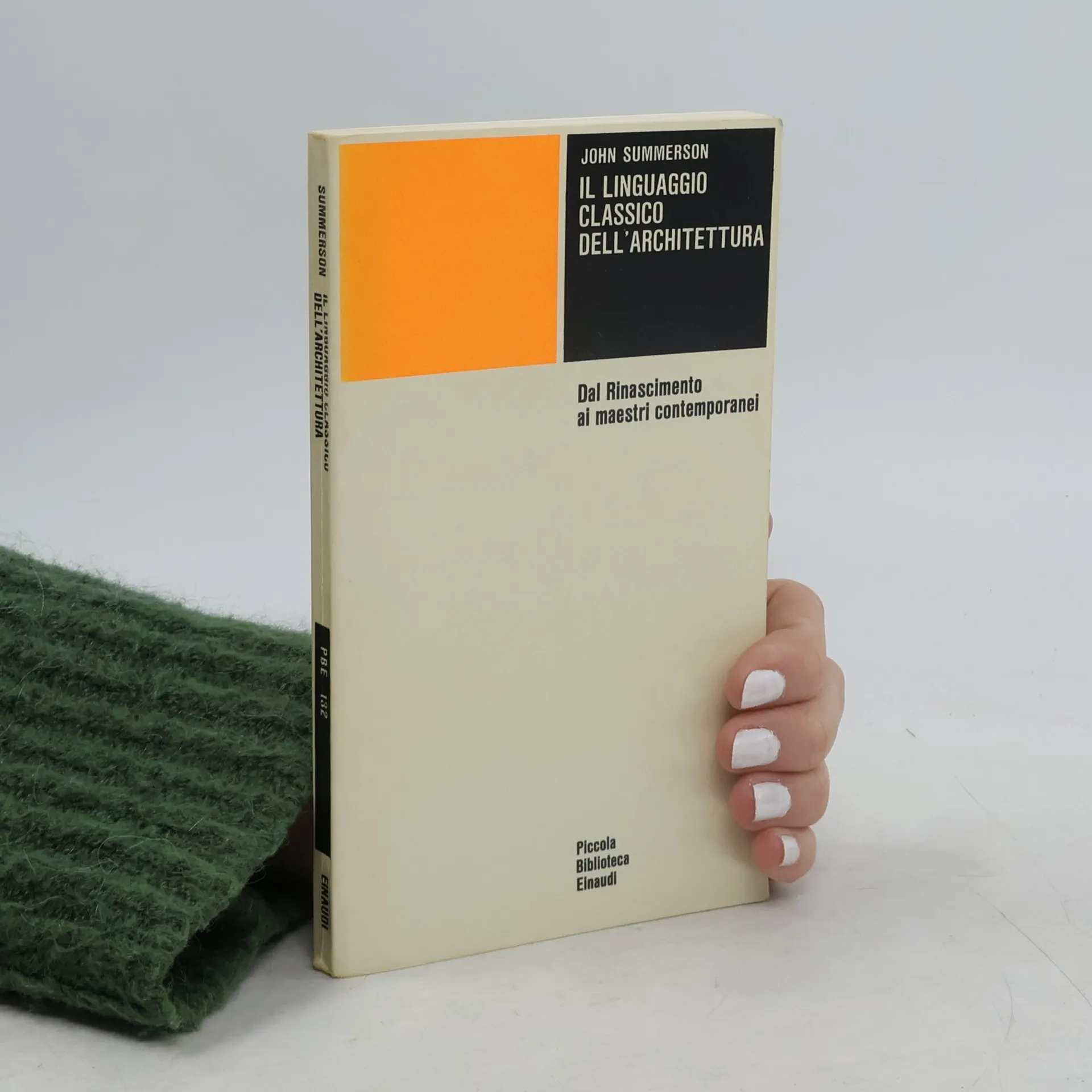
Una delle opere fondamentali di Sir John Summerson, questo testo analizza il linguaggio visivo dell'architettura attraverso i suoi elementi classici. Derivato dai principi dell'architettura greca e romana, lo stile classico ha dominato la storia dell'architettura occidentale dal Rinascimento a oggi. Summerson dimostra come gli edifici, nel corso dei secoli, esprimano una consapevolezza della 'grammatica' dello stile e delle sue regole, anche quando queste vengono variate, infrante o contraddette poeticamente. Dalle strutture originali di Grecia e Roma alle rielaborazioni e innovazioni del Rinascimento; dalla retorica esplosiva del Barocco alle dichiarazioni solenni del Neoclassicismo; fino all'ecclettismo vivace dei vittoriani e degli edwardiani e al 'neoclassicismo spoglio' di alcuni moderni, Summerson spiega come ogni epoca abbia utilizzato il linguaggio classico per esprimere il proprio messaggio. Questo testo rimane una lettura fondamentale per tutti gli studenti di architettura.