

'Utterly fascinating' Daisy Goodwin, Sunday Times Benjamin Franklin took daily naked air baths and Toulouse-Lautrec painted in brothels. Edith Sitwell worked in bed, and George Gershwin composed at the piano in pyjamas. Freud worked sixteen hours a day, but Gertrude Stein could never write for more than thirty minutes, and F. Scott Fitzgerald wrote in gin-fuelled bursts - he believed alcohol was essential to his creative process. From Marx to Murakami and Beethoven to Bacon, Daily Rituals by Mason Currey presents the working routines of more than a hundred and sixty of the greatest philosophers, writers, composers and artists ever to have lived. Whether by amphetamines or alcohol, headstand or boxing, these people made time and got to work. Featuring photographs of writers and artists at work, and filled with fascinating insights on the mechanics of genius and entertaining stories of the personalities behind it, Daily Rituals is irresistibly addictive, and utterly inspiring.
Mason Currey Libri
Mason Currey è uno scrittore ed editore affascinato dai rituali quotidiani e dalle routine degli artisti. Il suo lavoro approfondisce come gli individui creativi strutturano il loro tempo e coltivano gli ambienti necessari per il loro mestiere. Esplora la meccanica pratica del processo creativo, esaminando come queste routine influenzano la produzione artistica. Attraverso i suoi scritti, offre uno spaccato delle vite e delle abitudini di lavoro di coloro che creano.


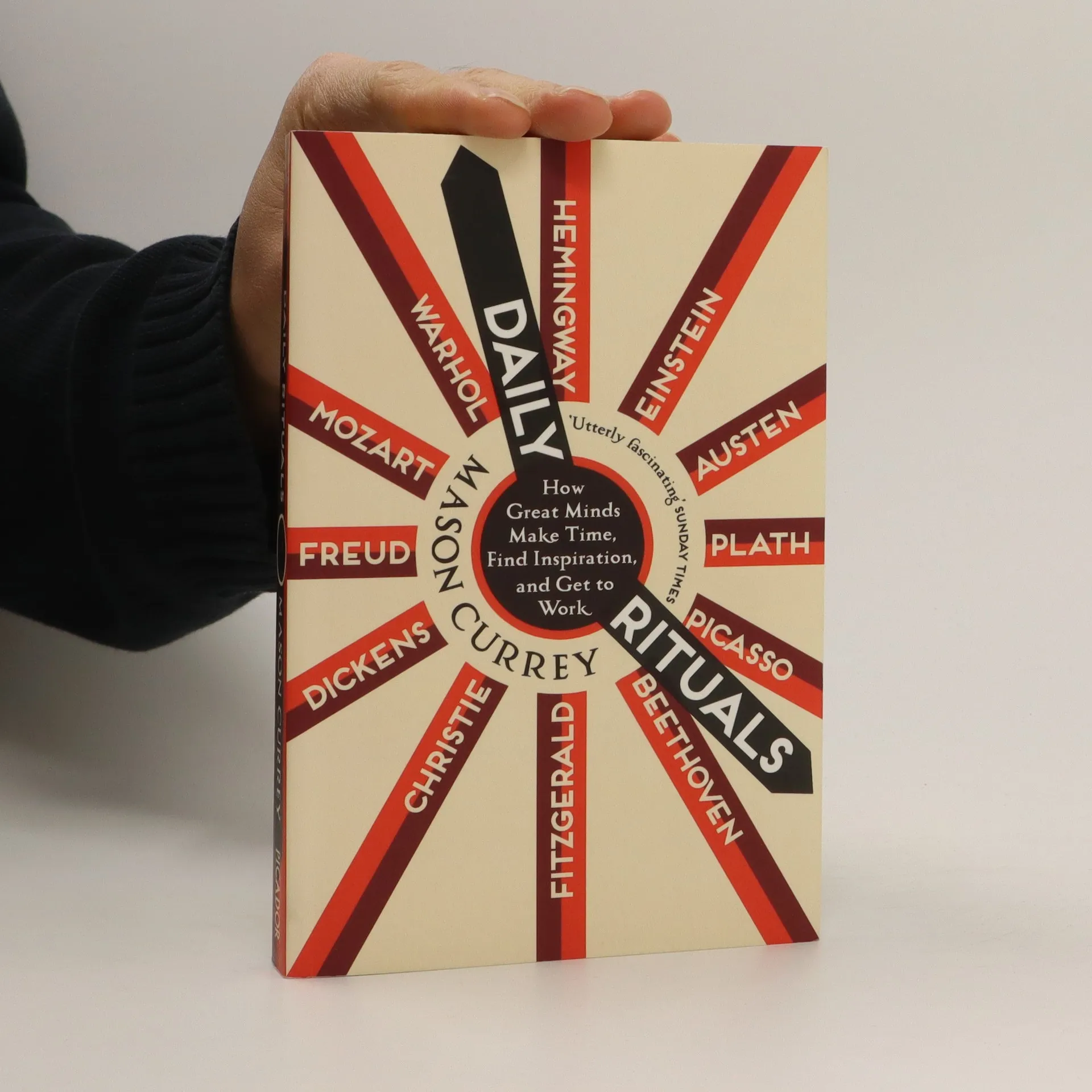
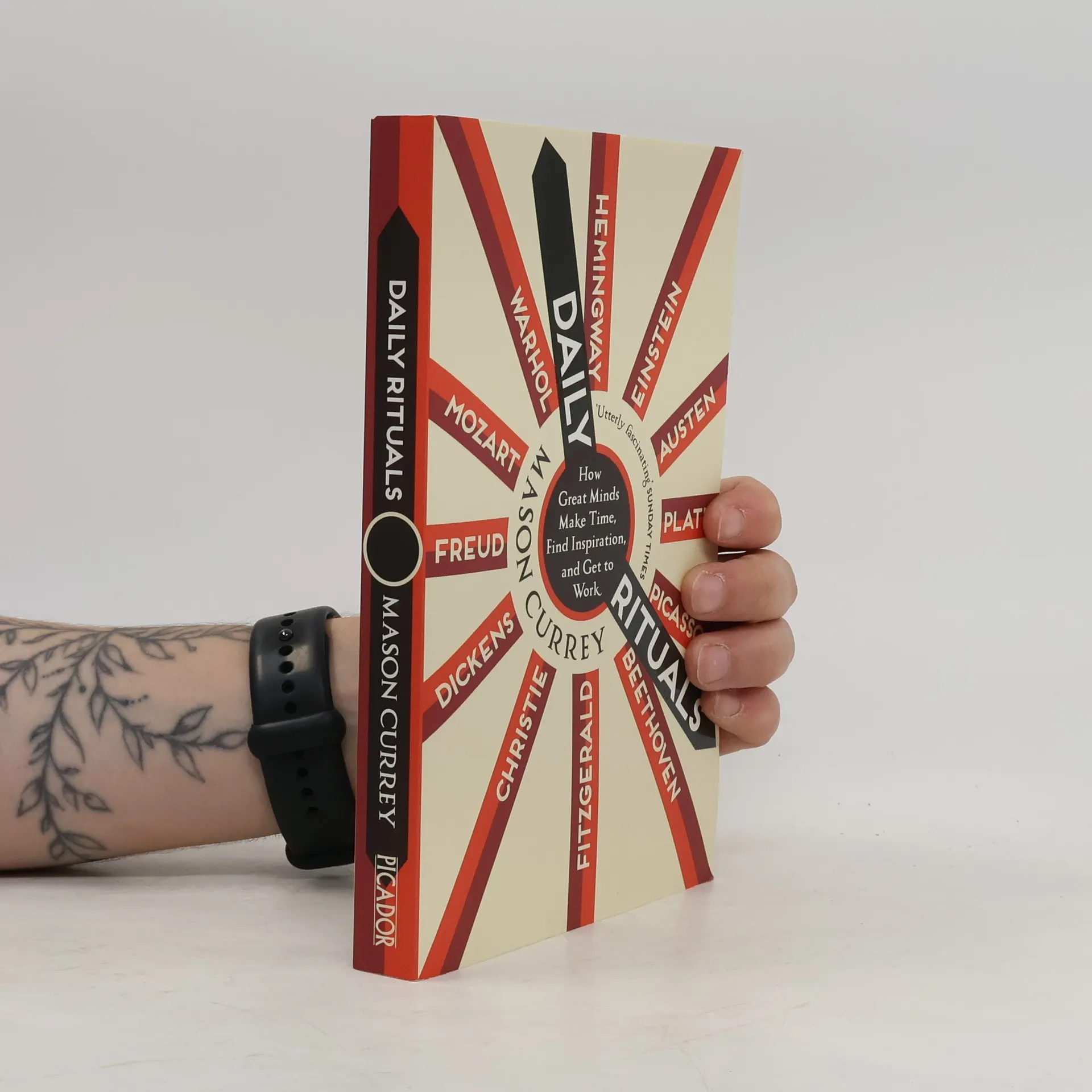
Daily rituals : how great minds time, find inspiration, and get to work
- 288pagine
- 11 ore di lettura
'Utterly fascinating' Daisy Goodwin, Sunday TimesAnthony Trollope wrote three thousand words every morning before heading off to his job at the Post Office. Toulouse-Lautrec did his best work at night, sometimes even setting up his easel in brothels, and George Gershwin composed at the piano in pyjamas and a bathrobe. Freud worked sixteen hours a day, but Gertrude Stein could never write for more than thirty minutes, and F. Scott Fitzgerald wrote in gin-fuelled bursts - he believed alcohol was essential to his creative process. From Marx to Murakami and Beethoven to Bacon, Daily Rituals examines the working routines of more than a hundred and sixty of the greatest philosophers, writers, composers and artists ever to have lived. Filled with fascinating insights on the mechanics of genius and entertaining stories of the personalities behind it, Daily Rituals is irresistibly addictive, and utterly inspiring.
Daily Rituals
- 288pagine
- 11 ore di lettura
From Vanessa Bell and Charlotte Bronte to Nina Simone and Jane Campion, here are over one hundred and forty female writers, painters, musicians, sculptors, poets, choreographers, and filmmakers on how they create and work.
Mehr Musenküsse
Die täglichen Rituale berühmter Künstler
Auch der zweite Band der Musenküsse widmet sich den Strategien und Tricks von 88 Künstlern, dem Tag ein Kunstwerk abzutrotzen. Für Wolf Haas ist ein winziger Schreibtisch essenziell, für Lena Dunham ist der Arbeitsort egal, Hauptsache sie kann auf ihrem Laptop schreiben. Richard Wagner komponierte in aller Stille und Zurückgezogenheit, Jonathan Meese wiederum hört beim Malen laute Elektromusik und tänzelt von Bild zu Bild. Dem Choreografen George Balanchine kamen die besten Ideen beim Bügeln, während Hunter S. Thompson eher auf viel Kokain und Alkohol setzte. Mason Currey und Arno Frank versammeln in Mehr Musenküsse weitere Rituale von Schriftstellern, Malern, Philosophen, Architekten, Komponisten und anderen kreativen Berühmtheiten in pointierten, amüsanten und überraschenden Mini-Biografien.