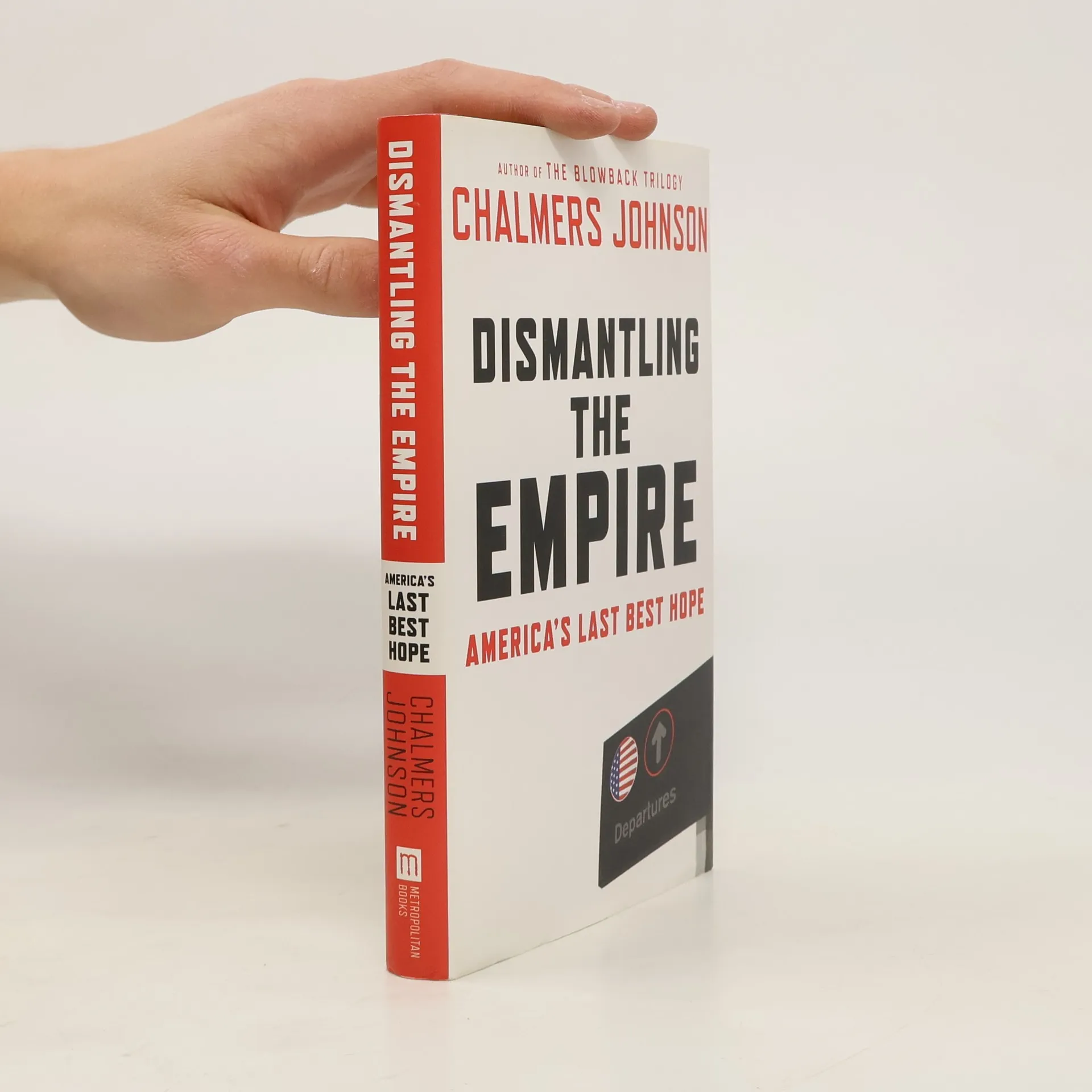
The author of the bestselling Blowback Trilogy reflects on America's waning power in a masterful collection of essays In his prophetic book Blowback, published before 9/11, Chalmers Johnson warned that our secret operations in Iraq and elsewhere around the globe would exact a price at home. Now, in a brilliant series of essays written over the last three years, Johnson measures that price and the resulting dangers America faces. Our reliance on Pentagon economics, a global empire of bases, and war without end is, he declares, nothing short of "a suicide option." Dismantling the Empire explores the subjects for which Johnson is now famous, from the origins of blowback to Barack Obama's Afghanistan conundrum, including our inept spies, our bad behavior in other countries, our ill-fought wars, and our capitulation to a military that has taken ever more control of the federal budget. There is, he proposes, only one way out: President Obama must begin to dismantle the empire before the Pentagon dismantles the American Dream. If we do not learn from the fates of past empires, he suggests, our decline and fall are foreordained. This is Johnson at his best: delivering both a warning and an urgent prescription for a remedy.
Chalmers Johnson Ordine dei libri (cronologico)
Chalmers Johnson è stato un autore e professore emerito americano il cui lavoro si è addentrato in profonde analisi delle relazioni geopolitiche e culturali, in particolare nell'Asia orientale. I suoi scritti hanno spesso esplorato le dinamiche di potere tra Oriente e Occidente e l'impatto della globalizzazione sulla sovranità nazionale. Sfruttando la sua vasta conoscenza ed esperienza, Johnson ha offerto prospettive incisive su complesse questioni internazionali, plasmando il discorso pubblico e il dibattito accademico. La sua prosa si distingue per la precisione e la capacità di rivelare i meccanismi nascosti della politica globale.
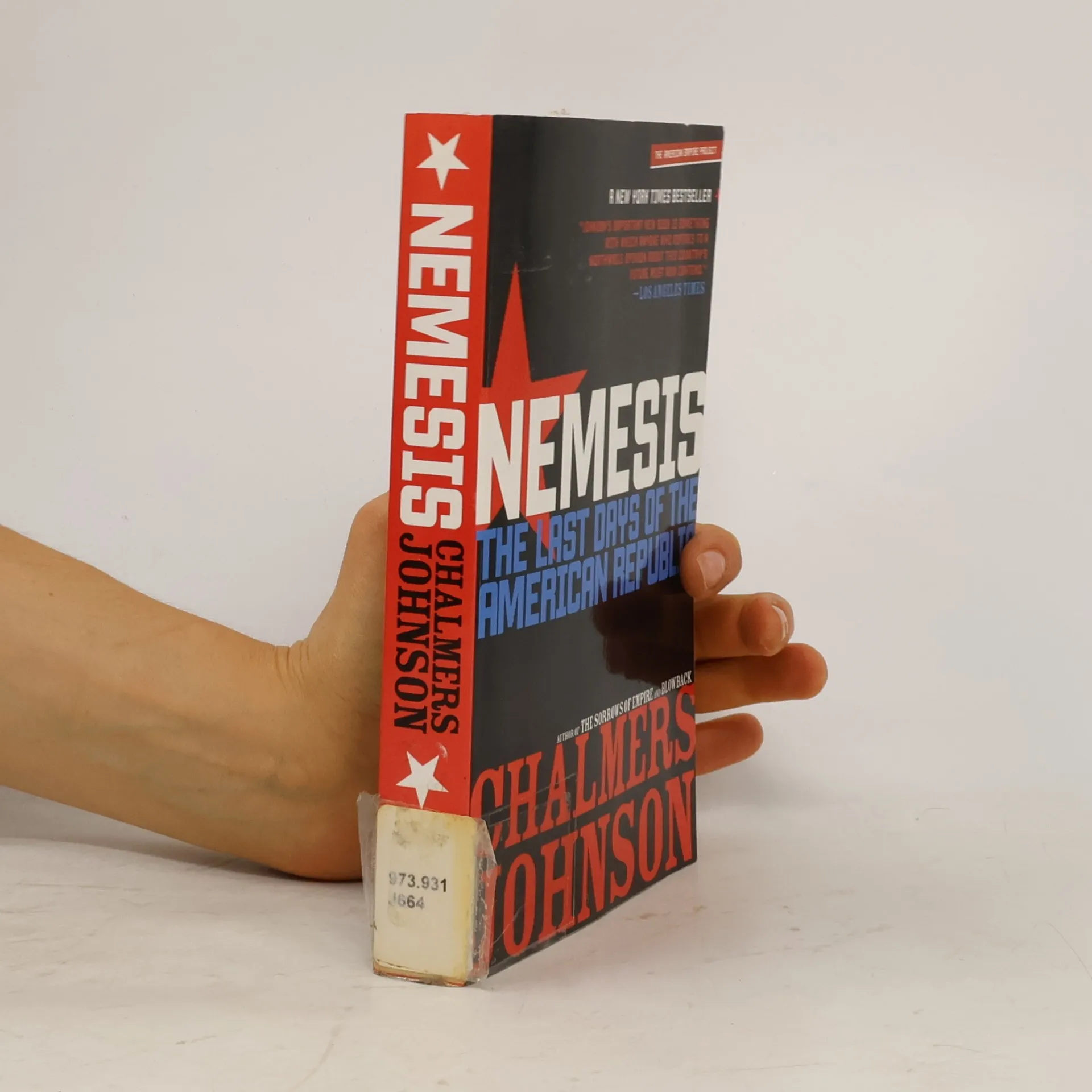


The American Empire Project: Nemesis
The Last Days of the American Republic
- 368pagine
- 13 ore di lettura
A New York Times bestseller, Nemesis is Chalmers Johnson's "fiercest book—and his best" (Andrew J. Bacevich) In his prophetic book Blowback , Chalmers Johnson linked the CIA's clandestine activities abroad to disaster at home. In The Sorrows of Empire , he explored the ways in which the growth of American militarism and the garrisoning of the planet have jeopardized our stability. In Nemesis , the bestselling and final volume in what has become known as the Blowback Trilogy, he shows how imperial overstretch is undermining the republic itself, both economically and politically. Delving into new areas—from plans to militarize outer space to Constitution-breaking presidential activities at home and the devastating corruption of a toothless Congress— Nemesis offers a striking description of the trap into which the reckless ambitions of America's leaders have taken us. Johnson confronts questions of pressing urgency: What are the unintended consequences of our dependence on a permanent war economy? What does it mean when a nation's main intelligence organization becomes the president's secret army? Or when the globe's sole "hyperpower" becomes the greatest hyper-debtor of all times? Writing "as if the very existence of the nation is at stake" ( San Francisco Chronicle ), Johnson offers his most "bracing" and "important" ( Los Angeles Times ) exploration of the crisis facing America.
Exploring the theme of militarism, this book delves into its impact both internationally and domestically. It examines the ramifications of American military actions and policies, offering a critical perspective on their effects on global relations and internal dynamics. Through insightful analysis, the author presents a compelling argument regarding the consequences of a militarized approach to foreign affairs, making it a thought-provoking read for those interested in contemporary geopolitical issues.
Blowback, a term invented by the CIA, refers to the unintended consequences of American policies. In this book, Chalmers issues a warning America would do well to consider: it is time for our empire to demobilize before our bills come due.
This revised edition not only brings the original analysis up to date but adds two new chapters: one on terrorism, the most celebrated form of political violence throughout the 1970s, and one on theories of revolution from Brinton to the present day.
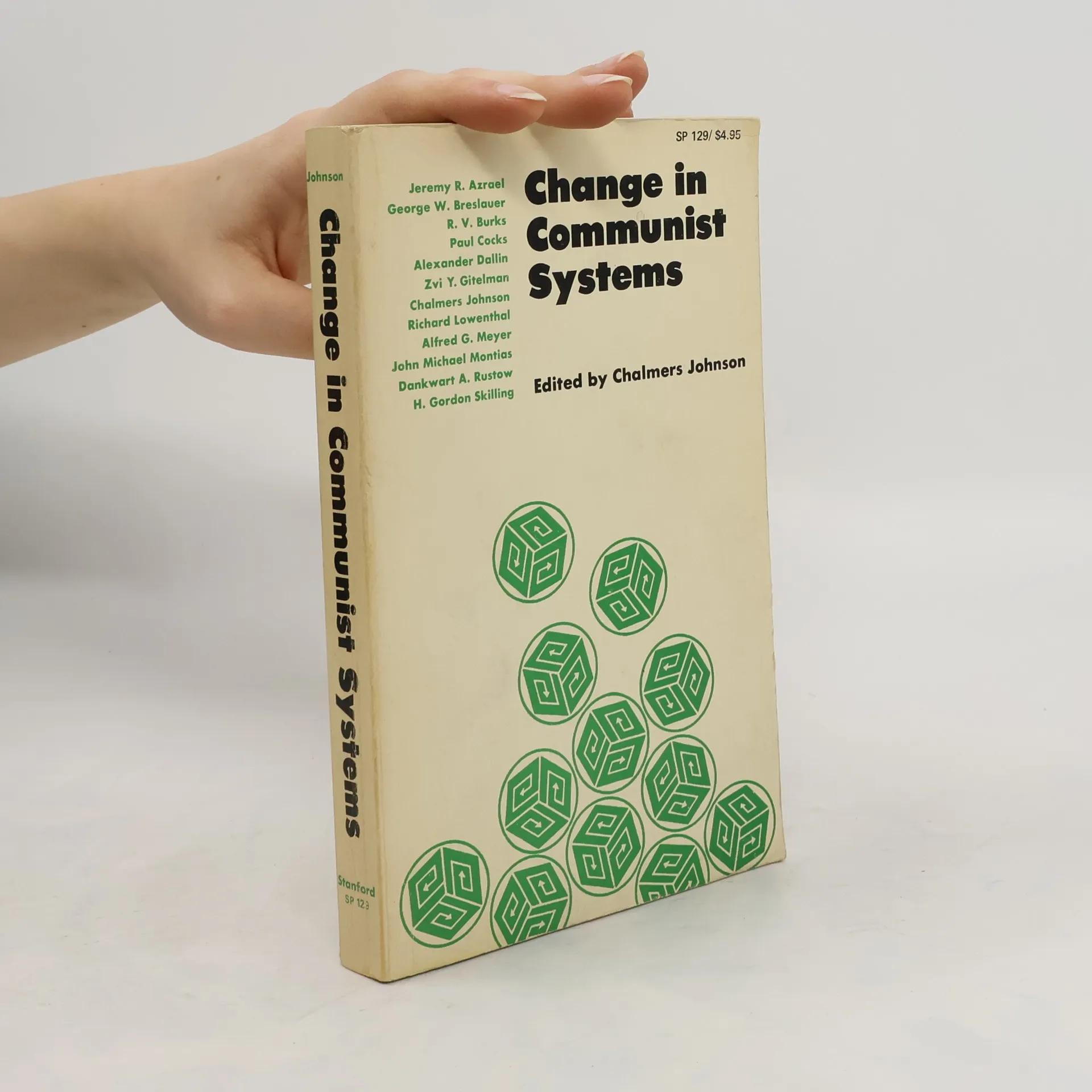
Change in Communist Systems
- 368pagine
- 13 ore di lettura
xiii 368p paperback, old price mark to endpaper, clean firm, firm, cover edges a bit worn, a very useful copy, in good overall condition, this copy published in the year 1970
Peasant Nationalism and Communist Power
- 272pagine
- 10 ore di lettura
Mr. Johnson's research on the Chinese Communists' wartime expansion, according to the documentation recorded by Japanese intelligence and his comparison of it with that of the Yugoslav Communists, is a pathbreaking work in comparative history.--John K. Fairbank.