Bookbot

Douglas Crockford

    Prawo pięciu przemian. Podstawy tradycyjnej medycyny chińskiej
    How JavaScript Works
    A Million Nines
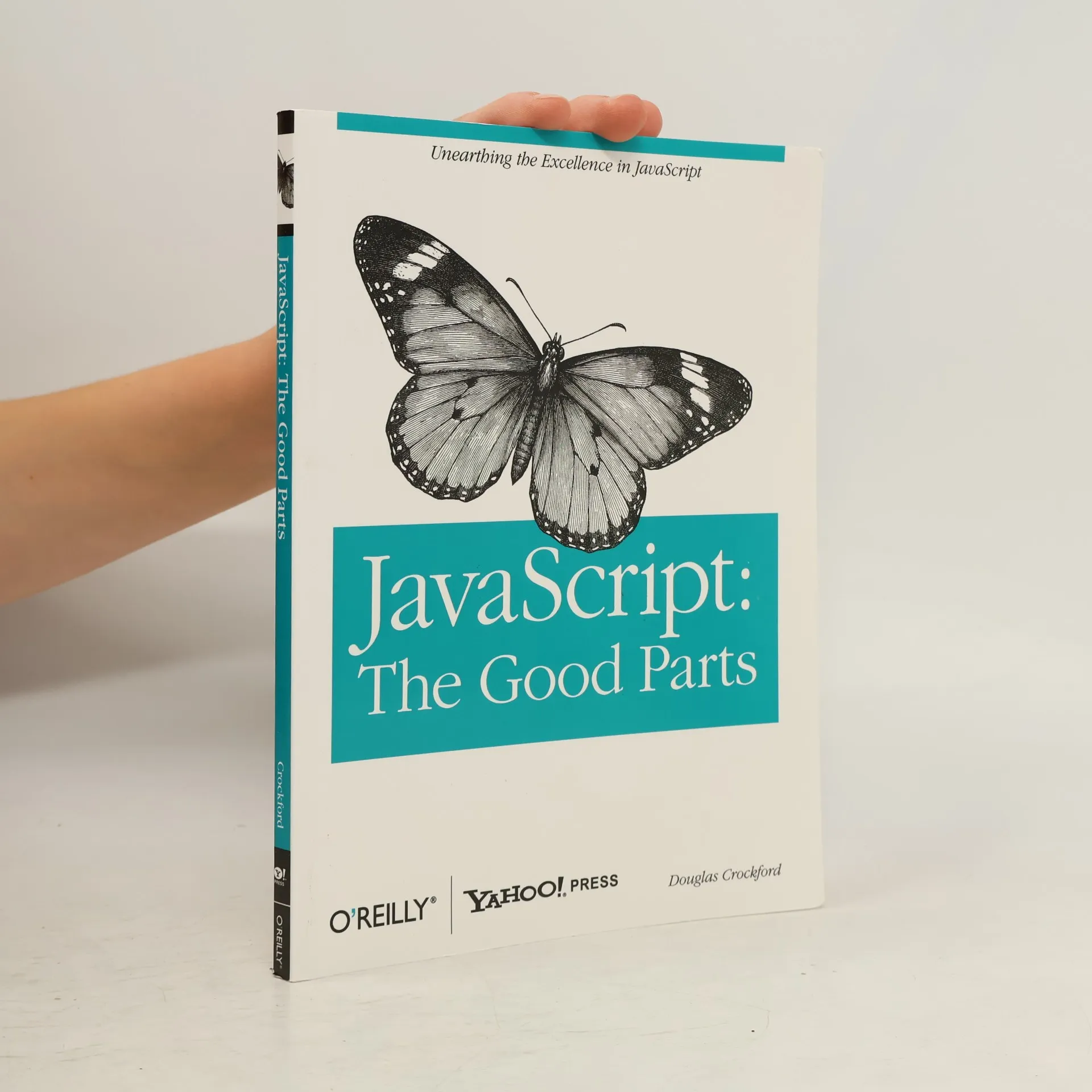
    JavaScript. The Good Parts
    • JavaScript, having been developed and released in a hurry before it could be refined, has more than its share of the bad parts. This book scrapes away these bad features to reveal a JavaScript subset that's more reliable, readable, and maintainable than the language as a whole-a subset you can use to create extensible and efficient code. (back cover copy)

      JavaScript. The Good Parts
      4,3
    • A Million Nines

      • 210pagine
      • 8 ore di lettura

      The sequel offers an extensive collection of random digits, featuring 200 pages with 50 lines on each. Each line presents a unique sequence, making it a fascinating resource for those interested in numerical patterns or randomness. This volume continues the exploration of digits in a structured format, perfect for both casual browsing and serious study.

      A Million Nines
    • How JavaScript Works

      • 279pagine
      • 10 ore di lettura

      Douglas Crockford starts by looking at the fundamentals: names, numbers, booleans, characters, and bottom values. JavaScript’s number type is shown to be faulty and limiting, but then Crockford shows how to repair those problems. He then moves on to data structures and functions, exploring the underlying mechanisms and then uses higher order functions to achieve class-free object oriented programming. The book also looks at eventual programming, testing, and purity, all the while looking at the requirements of The Next Language. Most of our languages are deeply rooted in the paradigm that produced FORTRAN. Crockford attacks those roots, liberating us to consider the next paradigm.He also presents a strawman language and develops a complete transpiler to implement it. The book is deep, dense, full of code, and has moments when it is intentionally funny.

      How JavaScript Works
    • Prawo PIĘCIU PRZEMIAN opisuje pięć elementów, które wpływają na zjawiska w naszym otoczeniu oraz w nas samych, ukazując relacje między żeńskim YIN a męskim YANG. Jan Pincel, lekarz z szeroką specjalizacją, zdobył doświadczenie w różnych instytucjach, takich jak Zakład Fizjologii Człowieka UW i Instytut Hematologii w Warszawie. Jako zapalony turysta, odkrył akupunkturę podczas swoich podróży, co zainspirowało go do ukończenia wielu kursów akupunktury, prowadzonych przez ekspertów z Azji. Pincel odwiedził Japonię, Chiny i Koreę, aby pogłębić swoją wiedzę u źródeł tej tradycji. W chińskiej filozofii pięć praelementów – ZIEMIA, METAL, WODA, DRZEWO i OGIEŃ – jest powiązanych z głównymi narządami ciała: serce odpowiada OGNIU, śledziona ZIEMI, płuca METALOWI, nerki WODZIE, a wątroba DRZEWU. Narządy te oddziałują na siebie, co wpływa na nasze zdrowie poprzez pobudzanie lub hamowanie. Opracowanie Pincela ma na celu przybliżenie zasad tradycyjnej medycyny chińskiej, akupunktury oraz Prawa Pięciu Przemian w kontekście diagnostyki i terapii.

      Prawo pięciu przemian. Podstawy tradycyjnej medycyny chińskiej