Arkadij Natanovič Strugackij Libri
- С. Ярославцев
- С. Бережков


Far Rainbow / The Second Invasion From Mars
- 240pagine
- 9 ore di lettura
Two Soviet science fiction novels by the Strugatsky brothers. Introduction by Theodore Sturgeon.
One of Russian SF's most important novels, available uncensored for the first time, in a new translation by Andrew Bromfield.
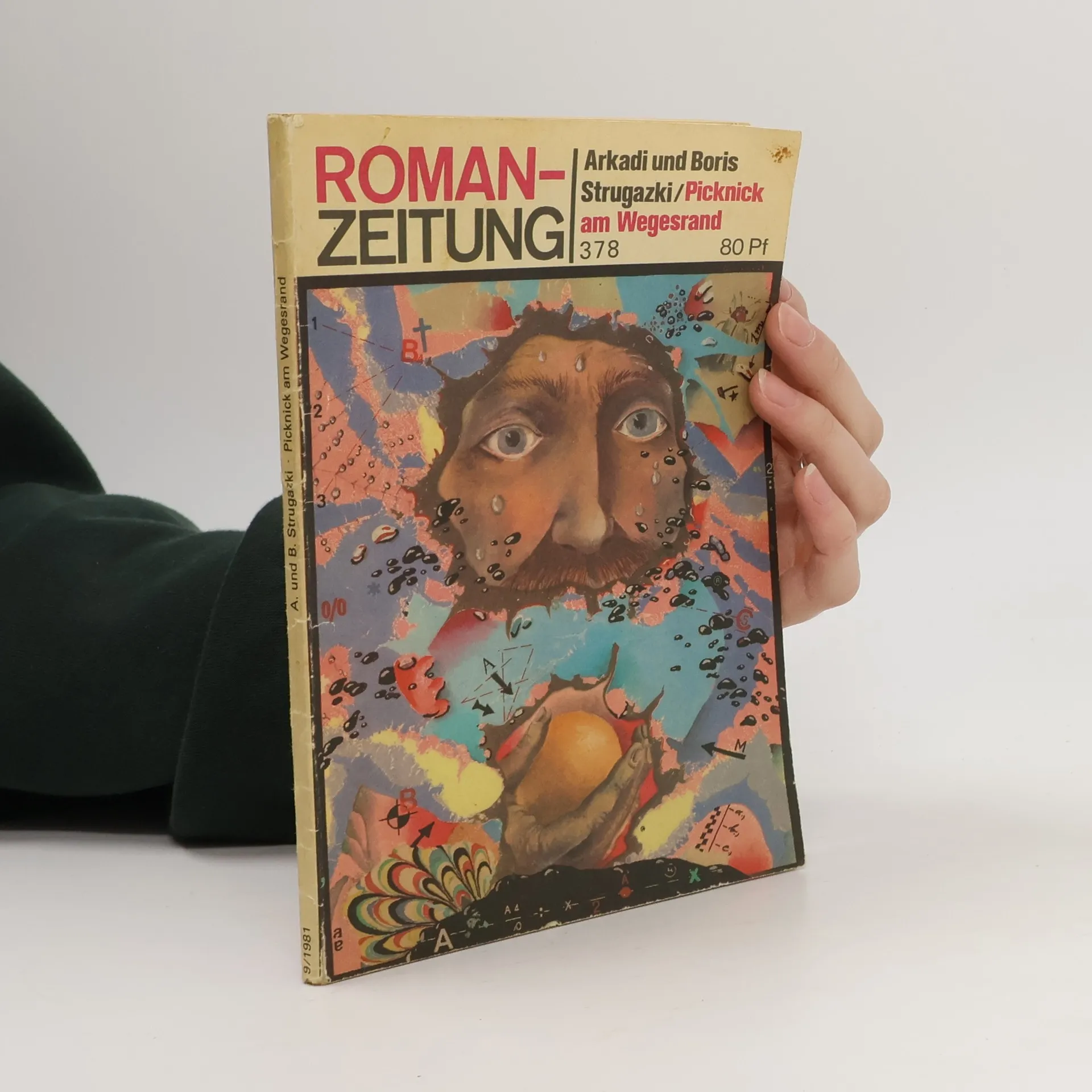
Red Schuhart is a stalker, one of those misfits who are compelled, in spite of extreme danger, to venture illegally into the Zone to collect the mysterious artefacts that the alien visitors left scattered around. His life is dominated by the place and the thriving black market in the alien products. Even the nature of his mutant daughter has been determined by the Zone. And it is for her that he makes his last tragic foray into the hazardous and hostile territory.
The Snail on the Slope
- 272pagine
- 10 ore di lettura
A science fiction masterpiece from the Russian greats, Arkady and Boris Strugatsky.
The Doomed City
- 480pagine
- 17 ore di lettura
It is a mysterious city whose sun is switched on in the morning and switched off at night, bordered by an abyss on one side and an impossibly high wall on the other. Its inhabitants are people who were plucked from twentieth-century history at various times and places and left to govern themselves, advised by Mentors whose purpose seems inscrutable. This is life in the Experiment. Andrei Voronin, a young astronomer plucked from Leningrad in the 1950s, is a die-hard believer in the Experiment, even though his first job in the city is as a garbage collector. As increasinbly nightmarish scenarios begin to affect the city, he rises through the political hierarchy, with devastating effect.
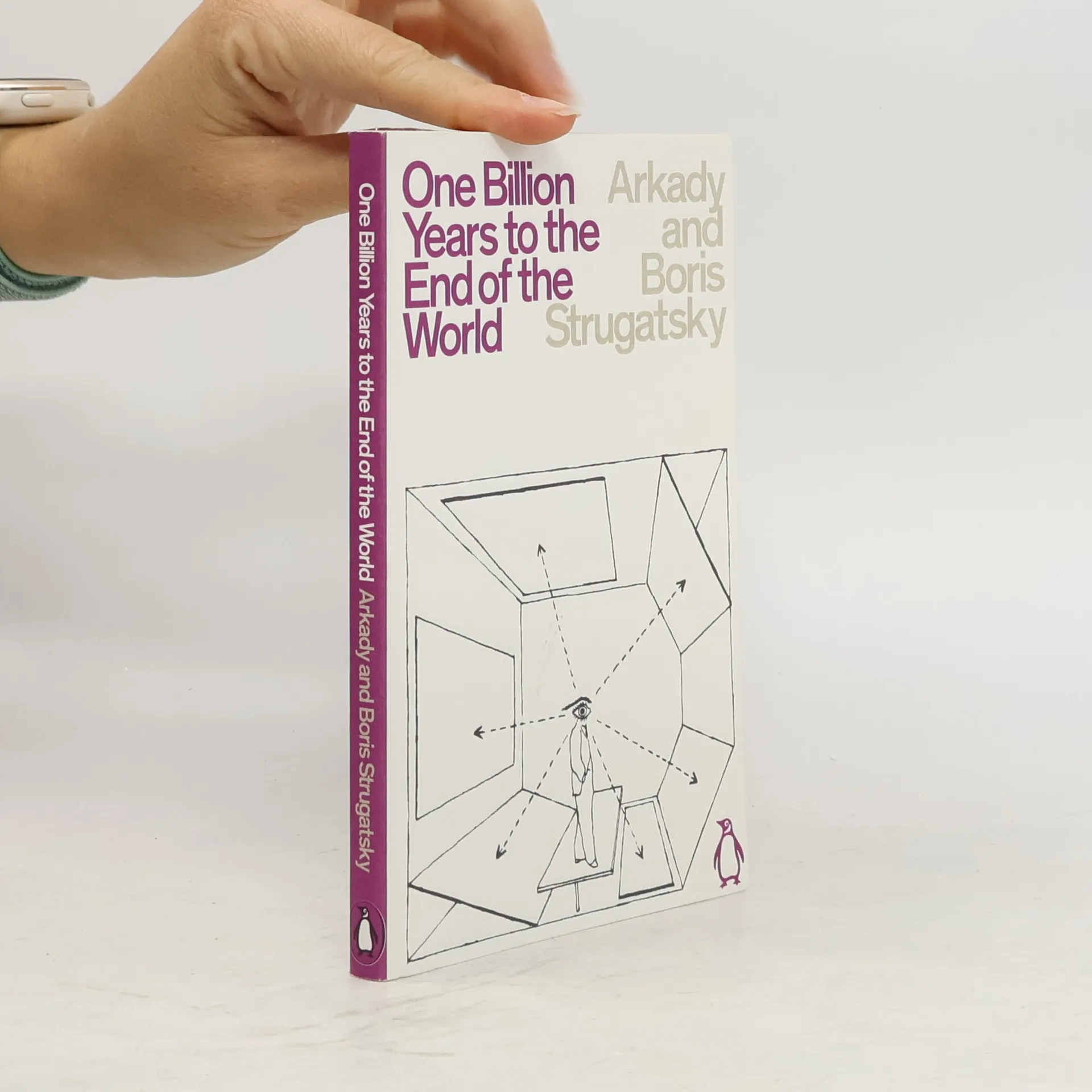
One Billion Years to the End of the World
- 176pagine
- 7 ore di lettura
Astrophysicist Dmitri Malianov is on the precipice of a major discovery - a Nobel Prize-worthy break though. Yet, home alone in his Leningrad apartment, his work is beginning to be stymied. Strange and improbable distractions are mounting around him - and he is not alone. Across the city, his scientific colleagues, all close to their own eureka moments, keep finding themselves subject to countless mysterious interruptions. Are they paranoid, or is a malign authority conspiring against them . . . ? A science fiction classic from two Russian masters, One Billion Years to the End of the World is at turns both hilarious and suspenseful, while at its heart hides a quiet yet biting critique of Soviet totalitarianism.
Red Star Tales: A Century of Russian and Soviet Science Fiction
- 470pagine
- 17 ore di lettura
This collection offers a significant selection of influential science fiction from Russia, making it accessible to English-speaking readers for the first time. By bridging the gap between cultures, it highlights the unique themes and perspectives that have shaped Russian science fiction over the past century, providing insights into the genre's evolution within the world's largest country.
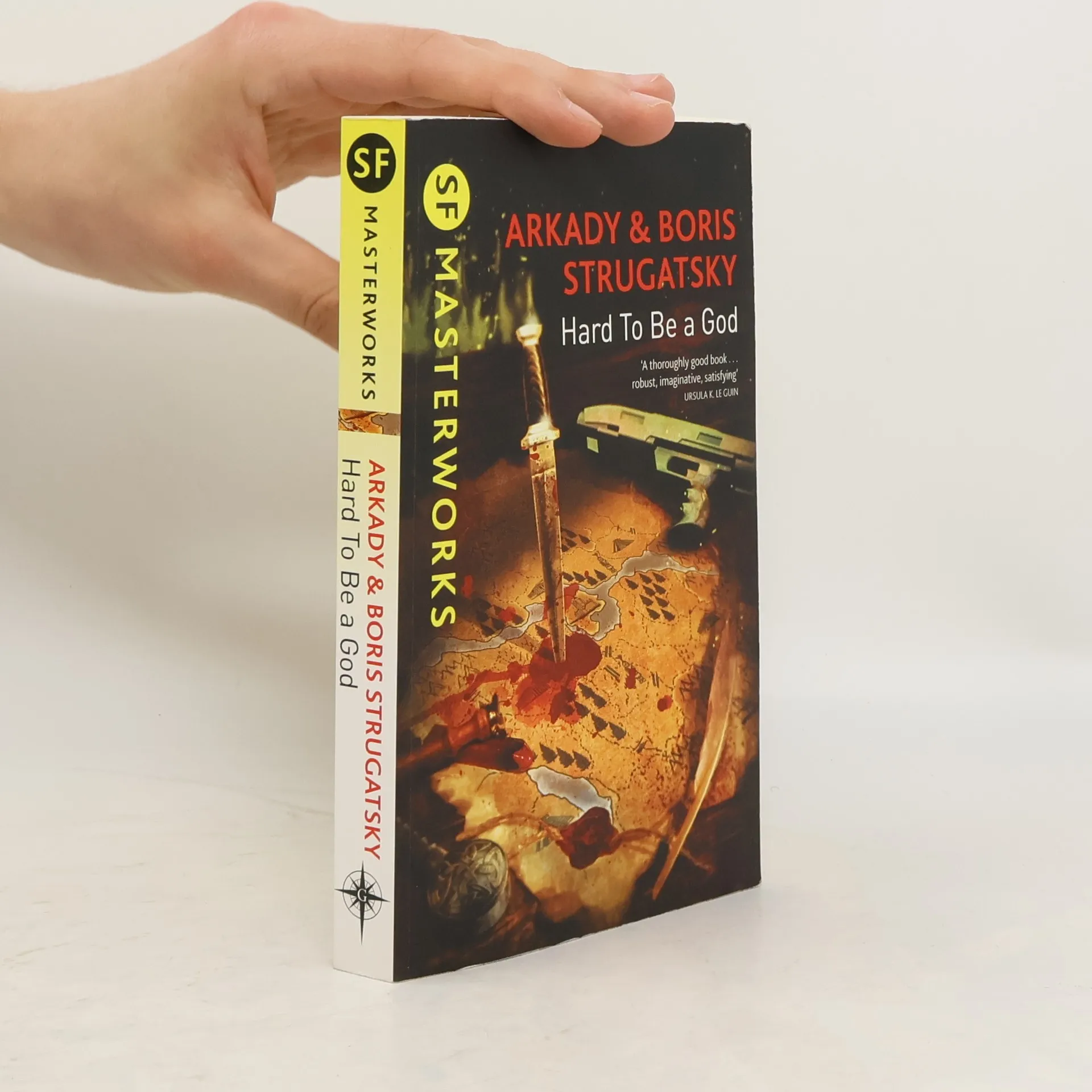
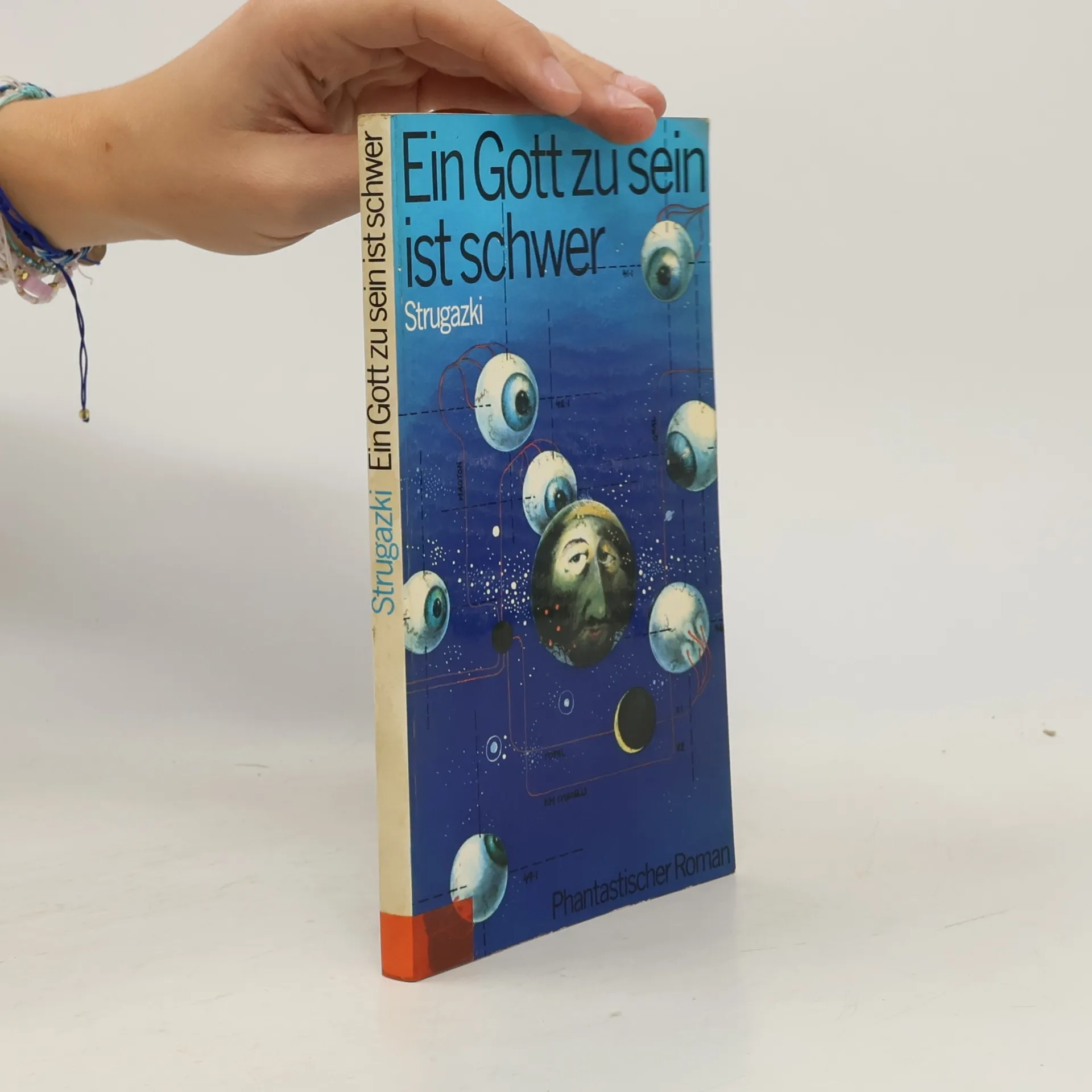
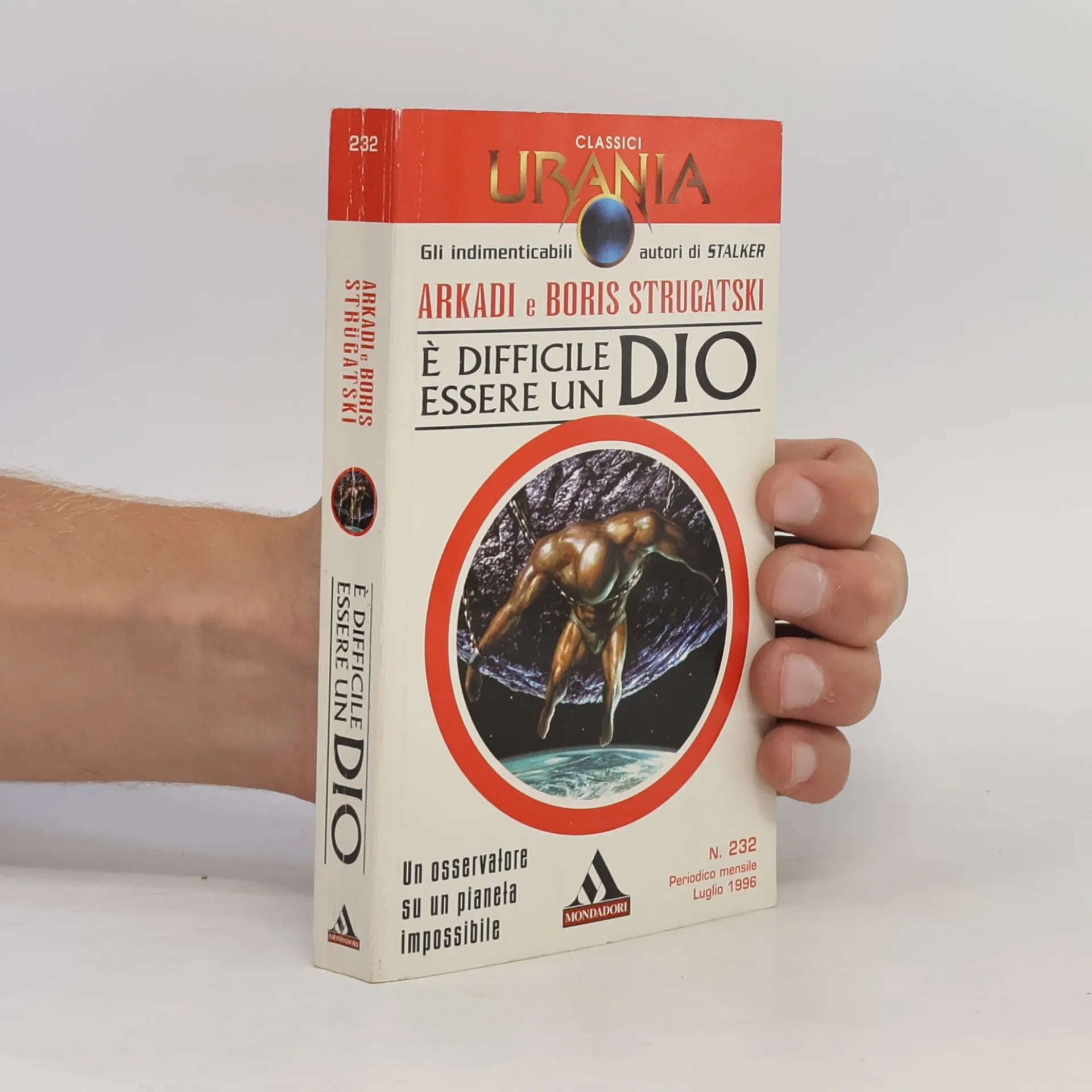
Hard To Be A God
- 256pagine
- 9 ore di lettura
Anton is an undercover operative from future Earth, who travels to an alien world whose culture has not progressed beyond the Middle Ages. Although in possession of far more advanced knowledge than the society around him, he is forbidden to interfere with the natural progress of history. His place is to observe rather than interfere - but can he remain aloof in the face of so much cruelty and injustice ...'
The Dead Mountaineer's Inn
- 238pagine
- 9 ore di lettura
A hilarious spoof on the classic country-house murder mystery, from the Russian masters of sci-fi—never before translated When Inspector Peter Glebsky arrives at the remote ski chalet on vacation, the last thing he intends to do is get involved in any police work. He’s there to ski, drink brandy, and loaf around in blissful solitude. But he hadn’t counted on the other vacationers, an eccentric bunch including a famous hypnotist, a physicist with a penchant for gymnastic feats, a sulky teenager of indeterminate gender, and the mysterious Mr. and Mrs. Moses. And as the chalet fills up, strange things start happening—things that seem to indicate the presence of another, unseen guest. Is there a ghost on the premises? A prankster? Something more sinister? And then an avalanche blocks the mountain pass, and they’re stuck. Which is just about when they find the corpse. Meaning that Glebksy’s vacation is over and he’s embarked on the most unusual investigation he’s ever been involved with. In fact, the further he looks into it, the more Glebsky realizes that the victim may not even be human. In this late novel from the legendary Russian sci-fi duo—here in its first-ever English translation—the Strugatskys gleefully upend the plot of many a Hercule Poirot mystery—and the result is much funnier, and much stranger, than anything Agatha Christie ever wrote.
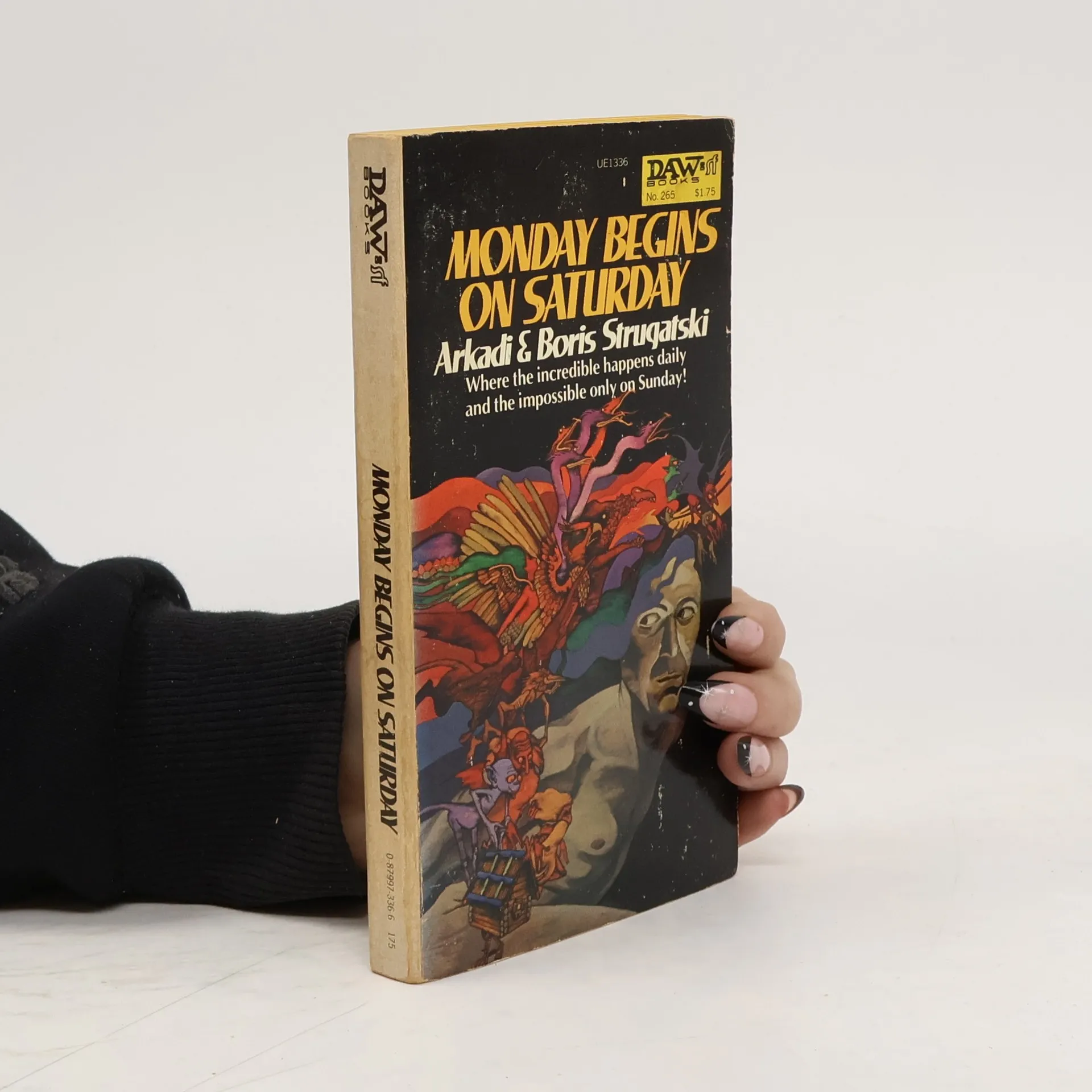
When young programmer Alexander Ivanovich Privalov picks up two hitchhikers while driving in Karelia, he is drawn into the mysterious world of the National Institute for the Technology of Witchcraft and Thaumaturgy, where research into magic is serious business. And where science, sorcery and socialism meet, can chaos be far behind?
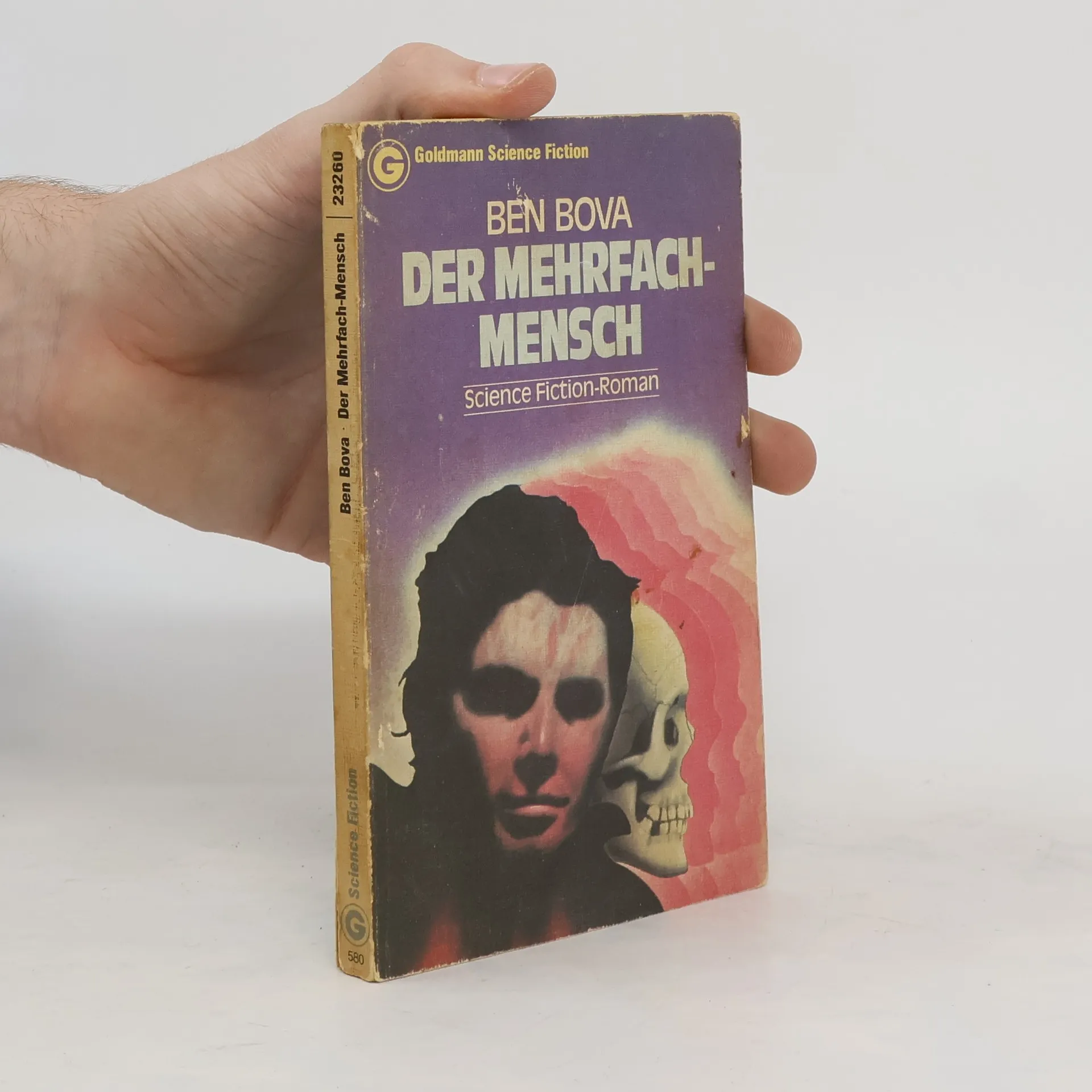
Der Präsident der Vereinigten Staaten wird ermordet aufgefunden. Nein, nicht der Präsident, sondern sein Double. Und aus der Vergangenheit taucht ein ähnlicher Fall auf. Meric Albano, Pressesprecher des Weißen Hauses, spielt mit seinem Leben, als er die Hintergründe der beiden Todesfälle beleuchtet und schließlich entdeckt, daß es den Präsidenten in siebenfacher Ausfertigung gibt...
Werkausgabe
- 906pagine
- 32 ore di lettura
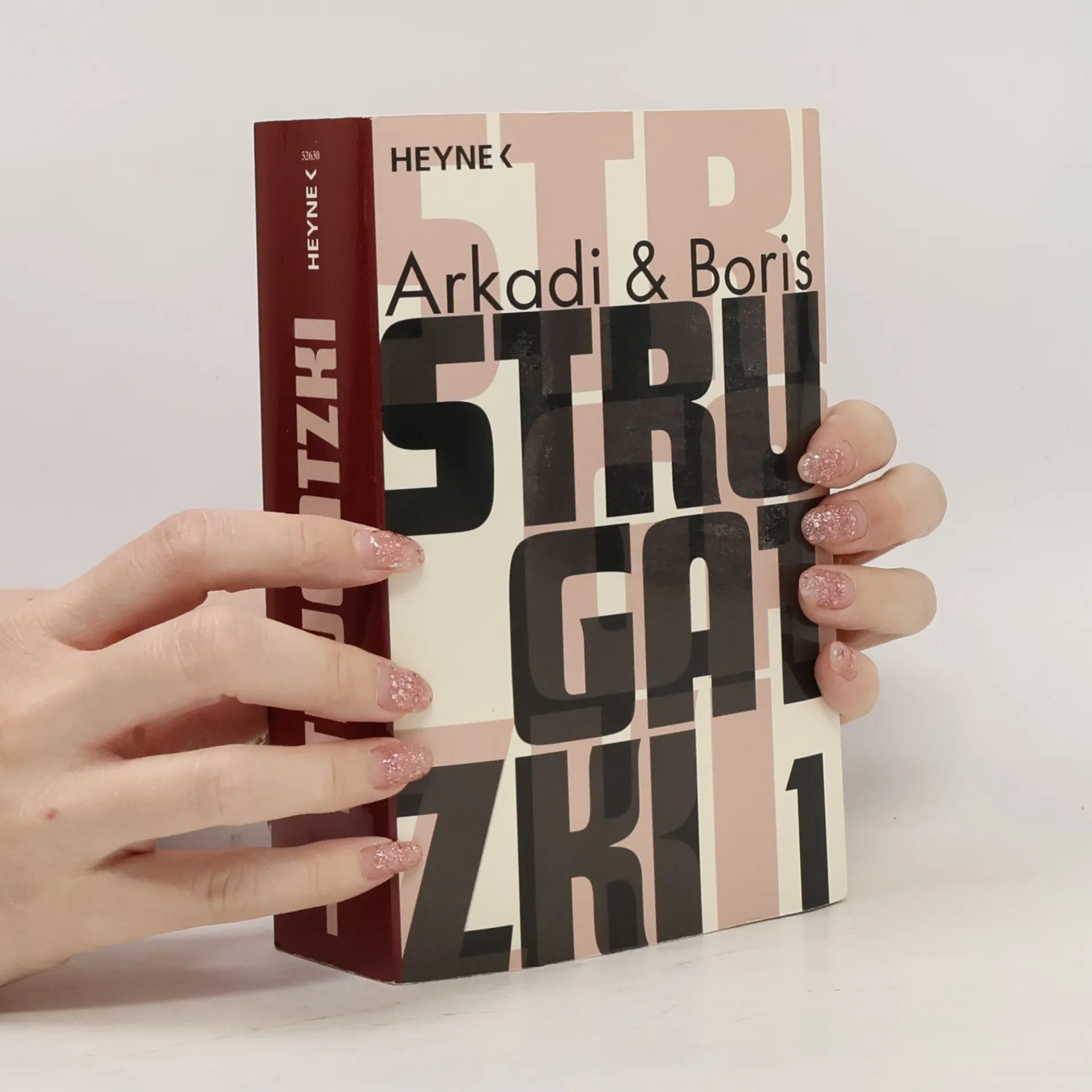
Arkadi und Boris Strugatzki gelten als die unumstritten besten Autoren der osteuropäischen Science Fiction. Ihr Werk wurde in zahlreiche Sprachen übersetzt und erschien in Millionenauflage. Der erste Band des Gesamtwerks enthält die Einzelromane "Die bewohnte Insel", "Ein Käfer im Ameisenhaufen"und "Die Wellen ersticken den Wind"
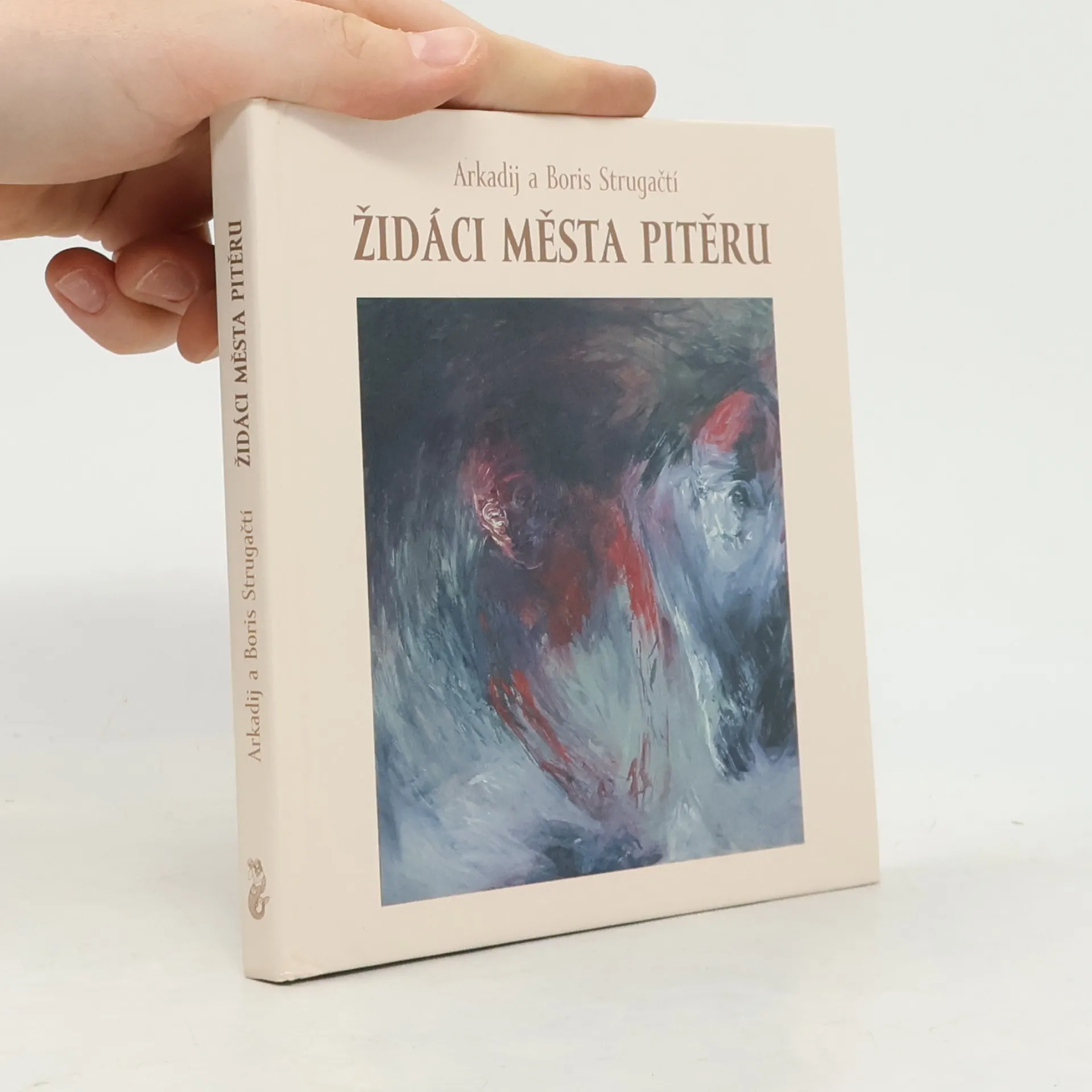
Židáci města Pitěru je jediná divadelní hra A. a B. Strugackých a rozhodně nepojednává o fantastických událostech či daleké budoucnosti. Děj se odehrává na konci Gorbačovovy perestrojky, kdy se v řadě petrohradských domácností objevuje muž v černém, který přináší podivnou obsílku. Ta „Židáky města Pitěru“ vyzývá, aby si rychle sbalili svých pár švestek a dostavili se na předem určené shromaždiště… Tři hrdinové dlouho o všem přemítají, vyslovují zcela nesmyslné hypotézy, jeden druhému se vysmívají a jeden druhého litují – ale zároveň se rozhodnou, že se jako vždy podřídí. Přestože Strugačtí označují Židáky města Pitěru za komedii, ve skutečnosti je to příběh nejhorší formy lidského otroctví – otroctví duševního, paralyzujícího rozum, vůli i samotnou lidskou potřebu žít svobodně.
Nezapomenutelné experimenty
- 424pagine
- 15 ore di lettura
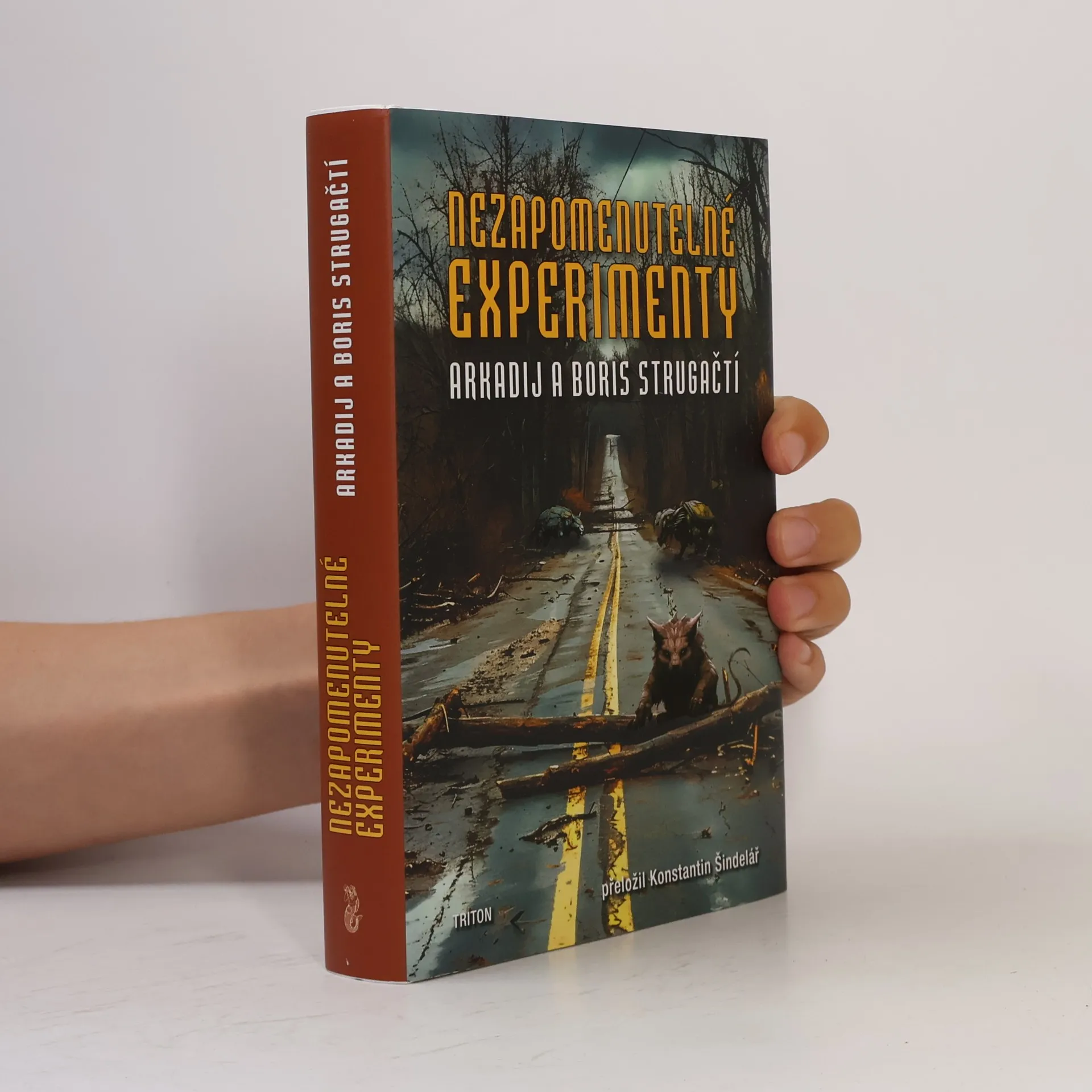
Čím by byl žánr science fiction bez setkání s tajemným, nepoznaným, přesahujícím meze lidského chápání? Arkadij a Boris Strugačtí si toho byli velice dobře vědomi, a tak ve svých dílech často líčili interakci člověka s neznámými silami, jejichž jednání je zcela nepochopitelné a záměry nevysvětlitelné.V povídce Zapomenutý experiment hrstka odvážlivců proniká na území nikoho, do divočiny plné záhadných jevů a prazvláštních tvorů. V novele Capart pozemská výprava na vzdálené planetě postupně odhaluje, že svět, kde během své mise přistála, není ani zdaleka tak prázdný, jak se zpočátku jevil. A konečně novela Miliardu let před koncem světa přesvědčivě ukazuje, že podivno nemusí číhat jen v pustinách či zapadlých koutech vesmíru...Hlavními hrdiny všech tří děl přesto zůstávají především lidé v celé lidské rozmanitosti: Odvážní i zbabělí, rozhodní i váhaví, ti, kteří tváří v tvář neznámu raději ucouvnou, i ti, kteří v sobě naleznou vůli a odhodlání neuhnout z původního směru.
Возвращение
Полдень. 22й век
Die zweite Invasion auf der Ede
- 251pagine
- 9 ore di lettura
В девятый том собрания сочинений включены произведения, написанные в период с 1985 по 1990 годы: «Отягощенные Злом, или Сорок лет спустя», «Жиды города Питера, или Невеселые беседы при свечах», и киносценарии. Том дополняют комментарии Б. Стругацкого к данным произведениям и отрывки из критики того времени.
Trojicí science fiction Dravci mého století, Obydlený ostrov a Miliardu let před koncem světa z tohoto svazku představujeme čtenářům další dosud nepřeložená díla Arkadije Strugackého a Borise Strugackého. Obydlený ostrov vyšel i samostatně.
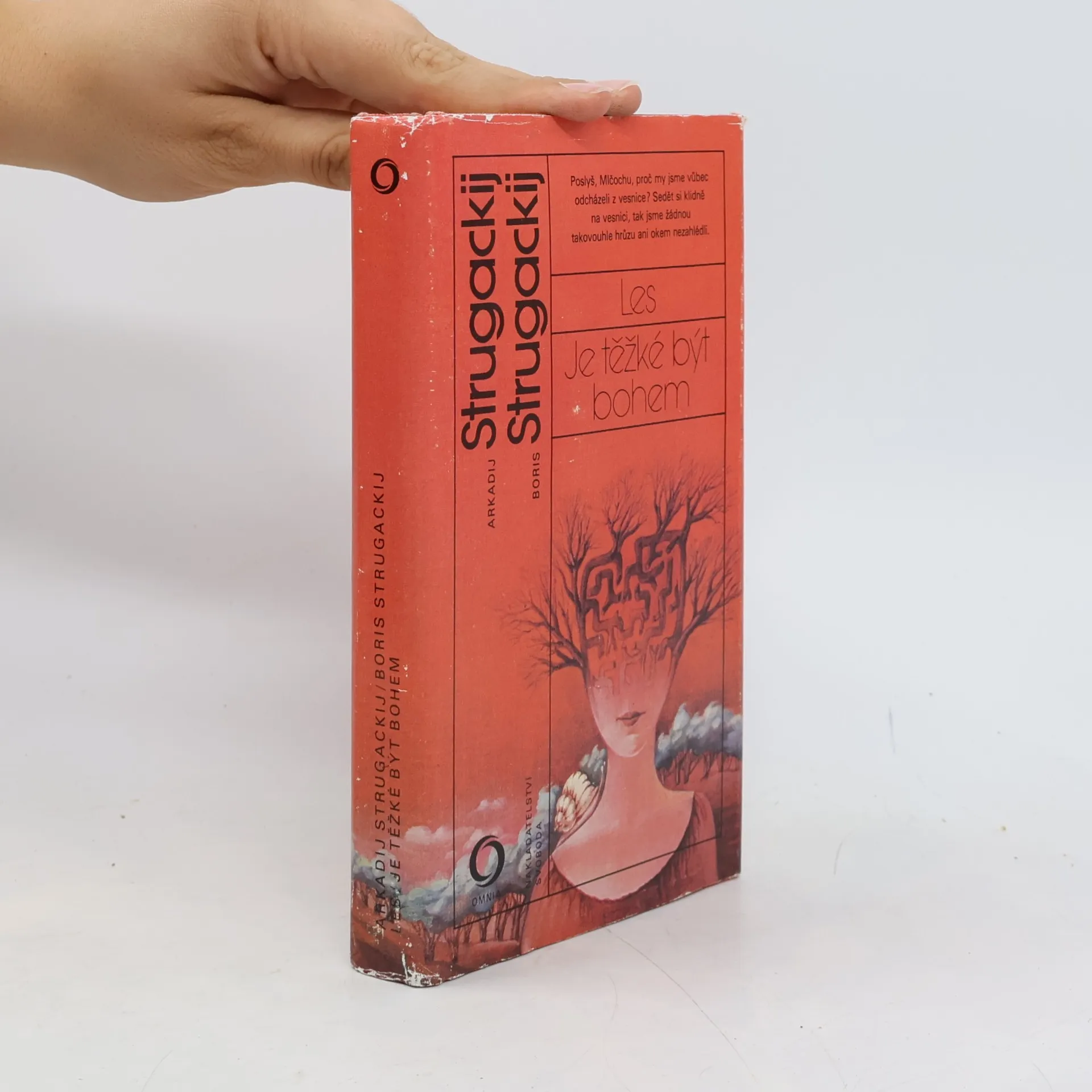
Kniha obsahuje dvě díla bratrů Strugackých. Les (slovensky vyšlo samostatně pod názvem Slimáčik na úbočí) a Je těžké být bohem. V lese je všechno jinak: oděvy, nábytek i nádobí rostou ze země, ta je ostatně jedlá a chutná jako sýr, houba je s to zarůst celé vesnice, kolem nichž se potulují mrtváci, ale snad největší hrozba se tají v Dosažení... Pozemšťan to na cizí planetě, procházející právě údobím středověku s veškerou špínou, dvorskými intrikami a krutostí, nemá lehké. Třebaže je svými znalostmi, schopnostmi a technickými možnostmi roven bohům, někdy je těžké být bohem…
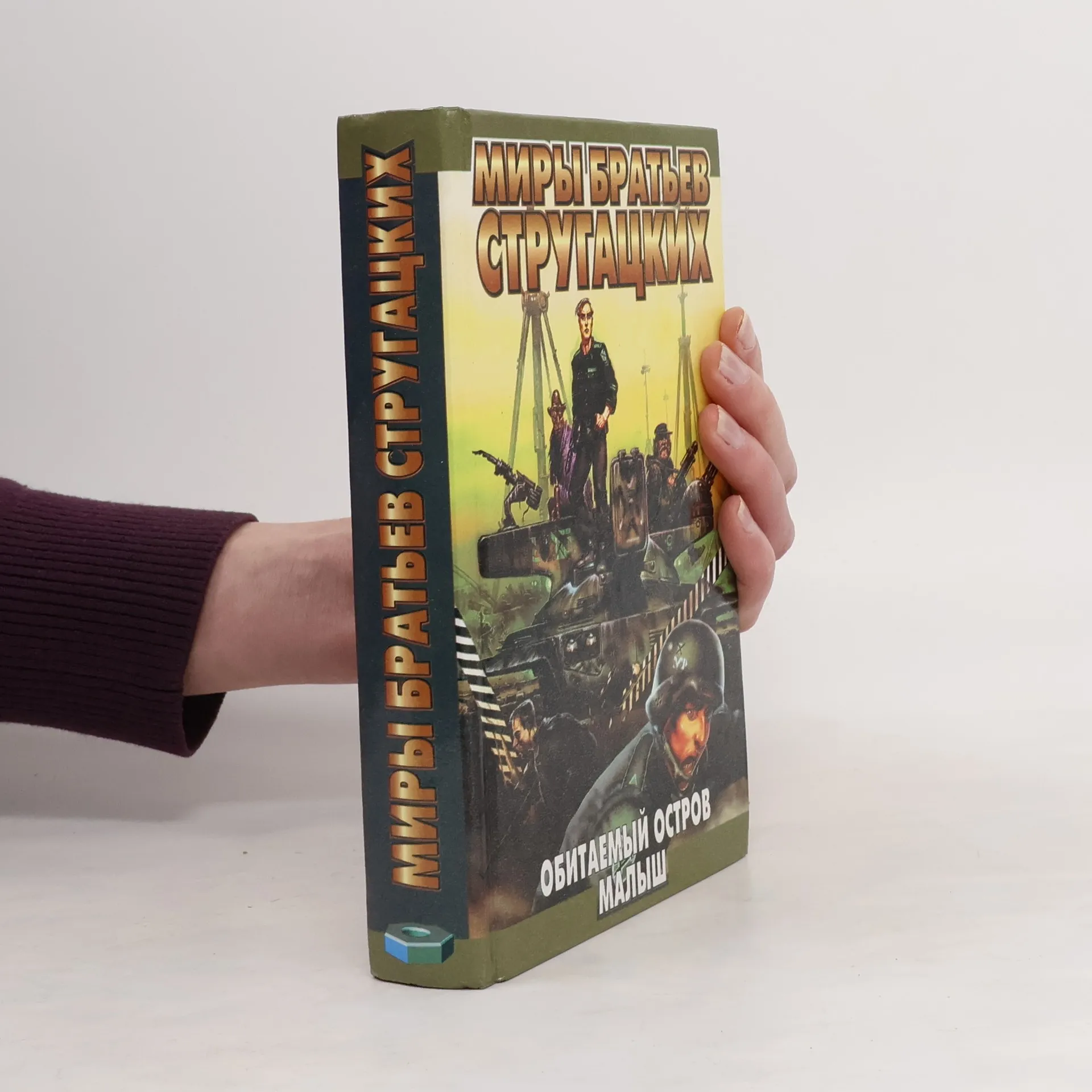
Обитаемый остров. Малыш
- 544pagine
- 20 ore di lettura
Schneller Versand aus Deutschland, gebundene Ausgabe. V 2114 godu chelovechestvo sozdaet novuju kosmicheskuju gruppu - Gruppu Svobodnogo Poiska. Teper' ljuboj chelovek, poluchiv kosmicheskij korabl' i zaregistrirovav marshrut, mozhet otpravit'sja v otkrytyj kosmos. Tysjachi ljudej ustremljajutsja k zvezdam... Romanticheskij poryv neuderzhim, no strashnye i zhestokie ispytanija ozhidajut molodyh volonterov GSP...
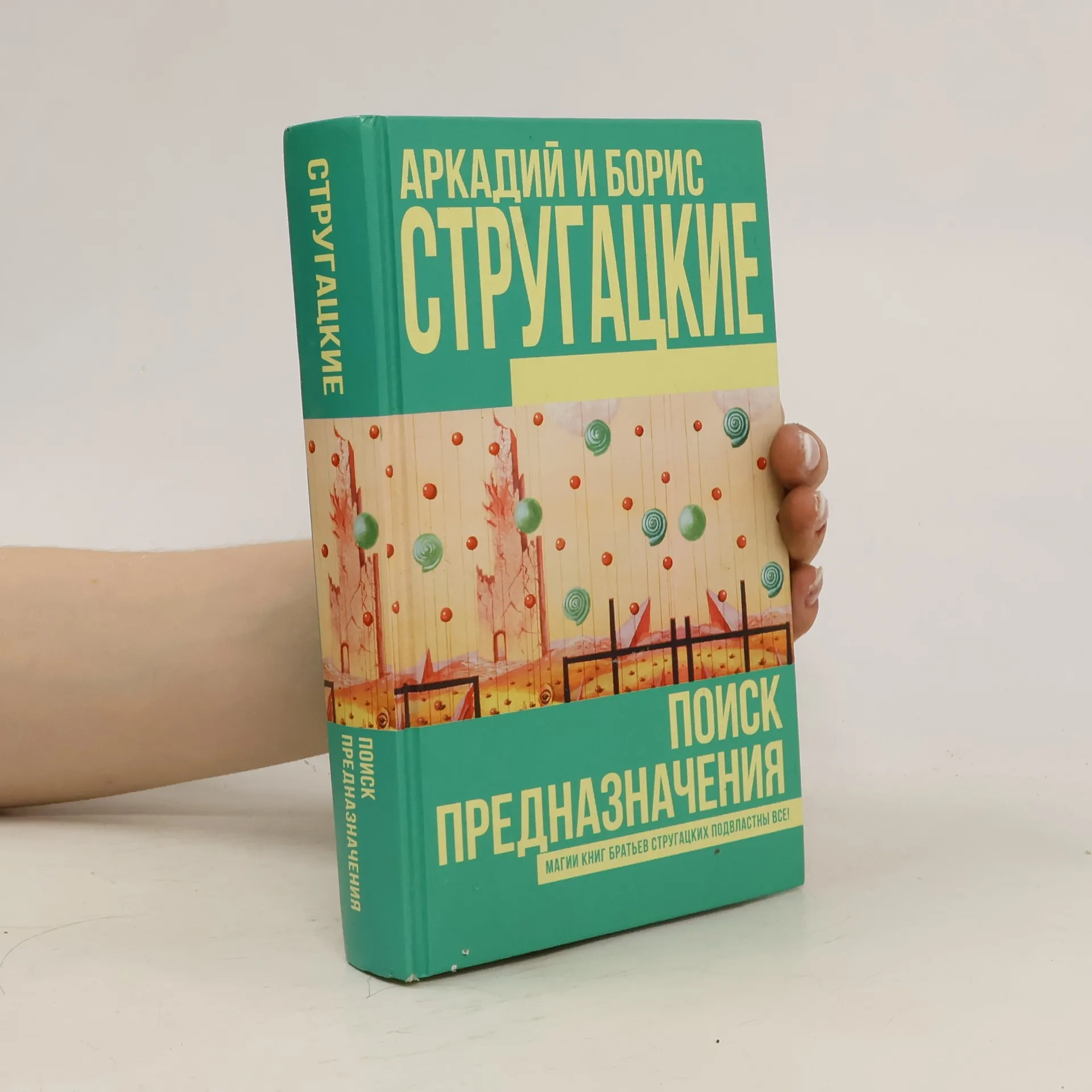
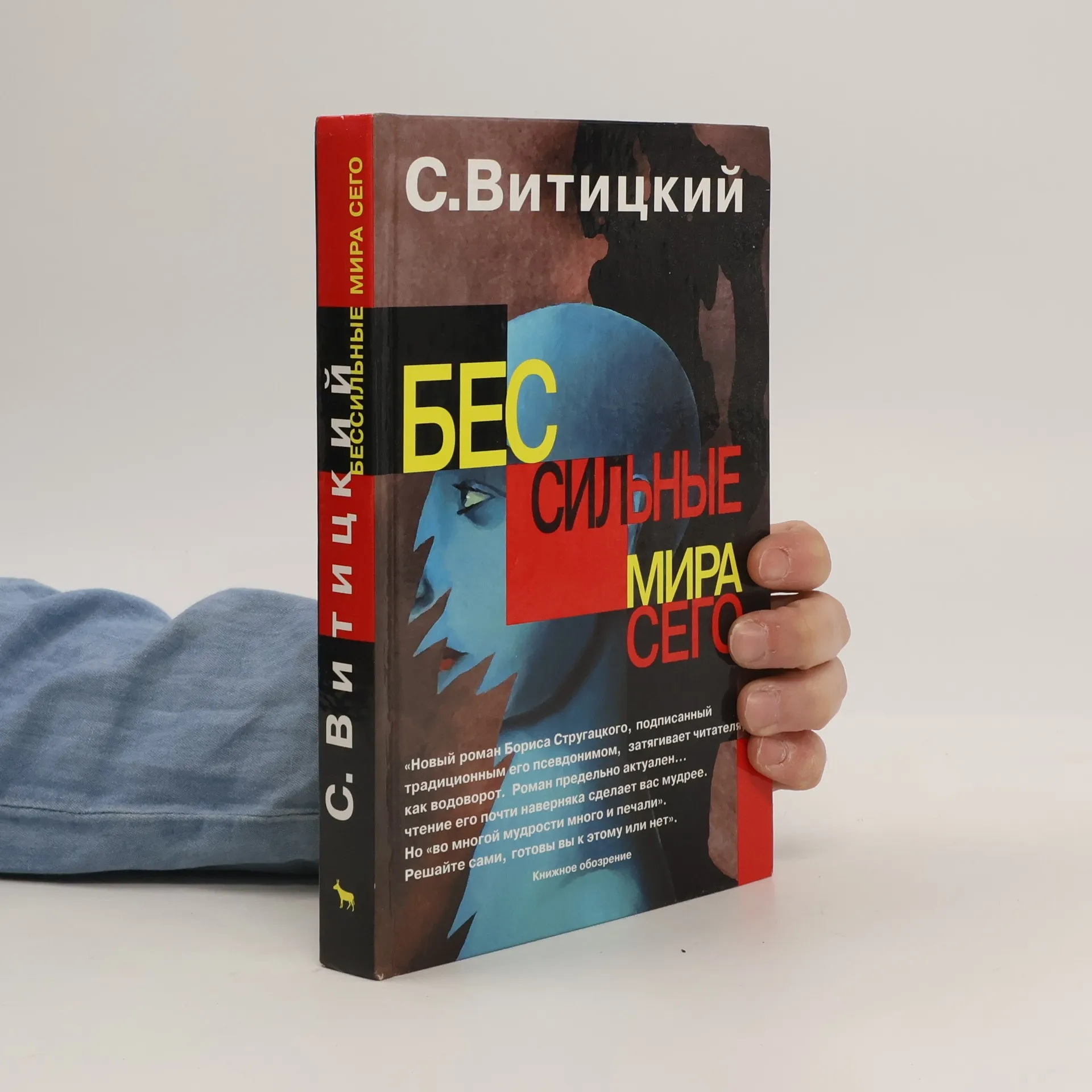
В этот том вошел "сольный" роман Б.Н.Стругацкого "Поиск предназначения", опубликованный им под псевдонимом С.Витицкий, - истинный шедевр социально-философской фантастики. История упрямо хранимого некими высшими силами инженера-программиста, который чувствует эту защиту судьбы и мечется в поисках смысла своей жизни, начинающаяся в эпоху "оттепели" и завершающаяся в "лихие девяностые", потрясает глубиной психологизма и тонкостью притчевого начала...
Das Buch handelt von einem Schriftsteller namens Banev, der den Autoritäten Probleme bereitet und ständig betrunken ist. Es thematisiert nicht nur die Vergangenheit, sondern spiegelt auch die gegenwärtige Realität wider, in der wir leben und in der wir leider noch lange oder sogar für immer leben müssen.
Das Buch handelt von einem Schriftsteller namens Banev, der den Behörden Probleme bereitet und ständig betrunken ist. Es thematisiert die Herausforderungen und das Schicksal in einem Land, das sowohl Vergangenheit als auch Gegenwart widerspiegelt.
Gesammelte Werke. Bd.4
- 880pagine
- 31 ore di lettura
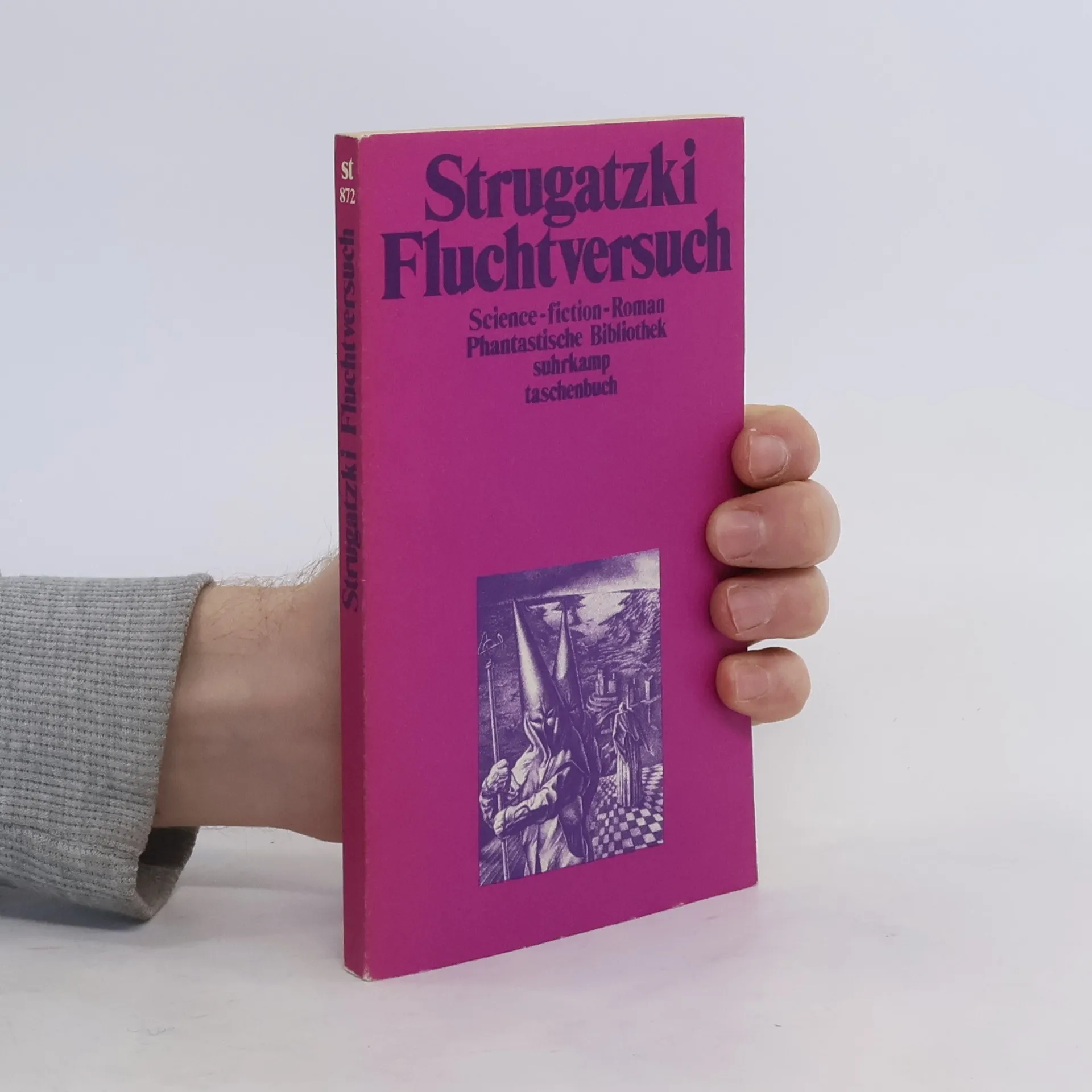
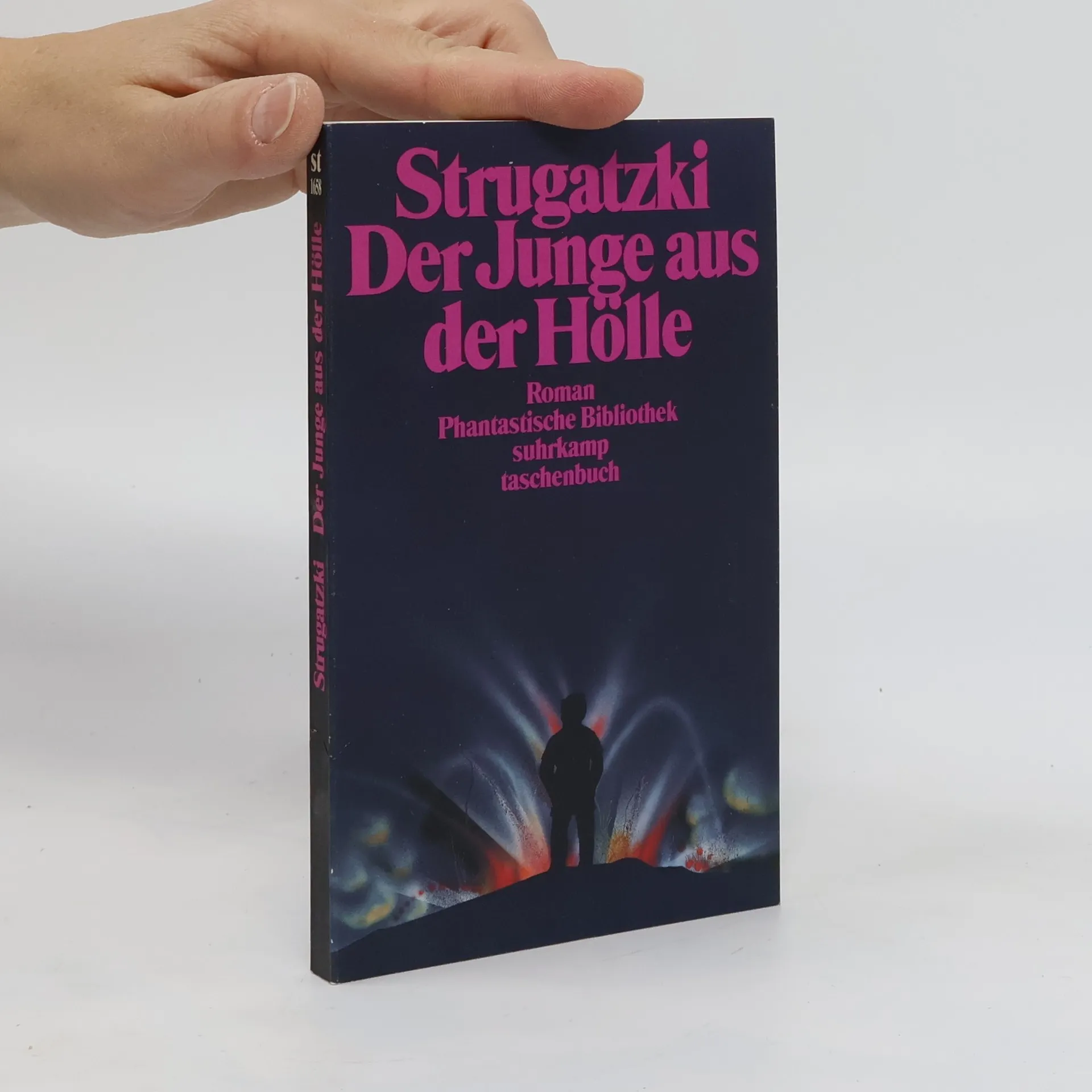
Die einzigartige Strugatzki-Edition§§Arkadi und Boris Strugatzkis Romane sind nicht nur atemberaubende Parabeln über die Stellung des Menschen im Universum, sondern auch schonungslose Abrechnungen mit Ideologiegläubigkeit und Personenkult. Der vierte Band der Werkausgabe enthält fünf Romane aus der Welt des Mittags: 'Es ist schwer ein Gott zu sein', 'Die dritte Zivilisation', 'Der Junge aus der Hölle', 'Fluchtversuch' und 'Unruhe', alle in völlig neuer Überarbeitung und ungekürzt.§§
Útěky z pekla
- 336pagine
- 12 ore di lettura
Jedním z hlavních témat bratrské dvojice v jejich tvorbě je progresorství – pomoc vyspělé civilizace civilizaci zaostalé. Toto téma prostupuje sbírkou, která obsahuje dvě novely a dvě povídky. V novele Pokus o útěk se mladíci z dvacátého druhého století, spolu s podivínským společníkem, ocitají na středověké planetě, kde čelí lhostejné krutosti. Naopak novela Kluk z pekla představuje mladého vojáka z válkami zmítaného světa, který je přenesen na šťastnou Zemi. Místo aby se radoval z jejích výhod, přistupuje k místním obyvatelům a technologiím s nedůvěrou a touží se vrátit domů. Povídka Ubozí zlí lidé líčí selhání pokusu o „otevřené progresorství“, zatímco v Prvních mužích na prvním prámu se pozemšťan, současník autorů, setkává se zástupci podivné civilizace, která je zároveň zaostalá i vyspělá. Klade se otázka, zda má pokročilejší civilizace právo zasahovat do vývoje méně vyspělé společnosti, nebo zda by měla nechat dějiny plynout samy. Novely Pokus o útěk a Kluk z pekla byly dosud česky publikovány pouze jednou v antologiích z 80. let, nyní jsou k dispozici v necenzurované a plně zrestaurované podobě. Povídky První muži na prvním prámu a Ubozí zlí lidé vycházejí poprvé v češtině.
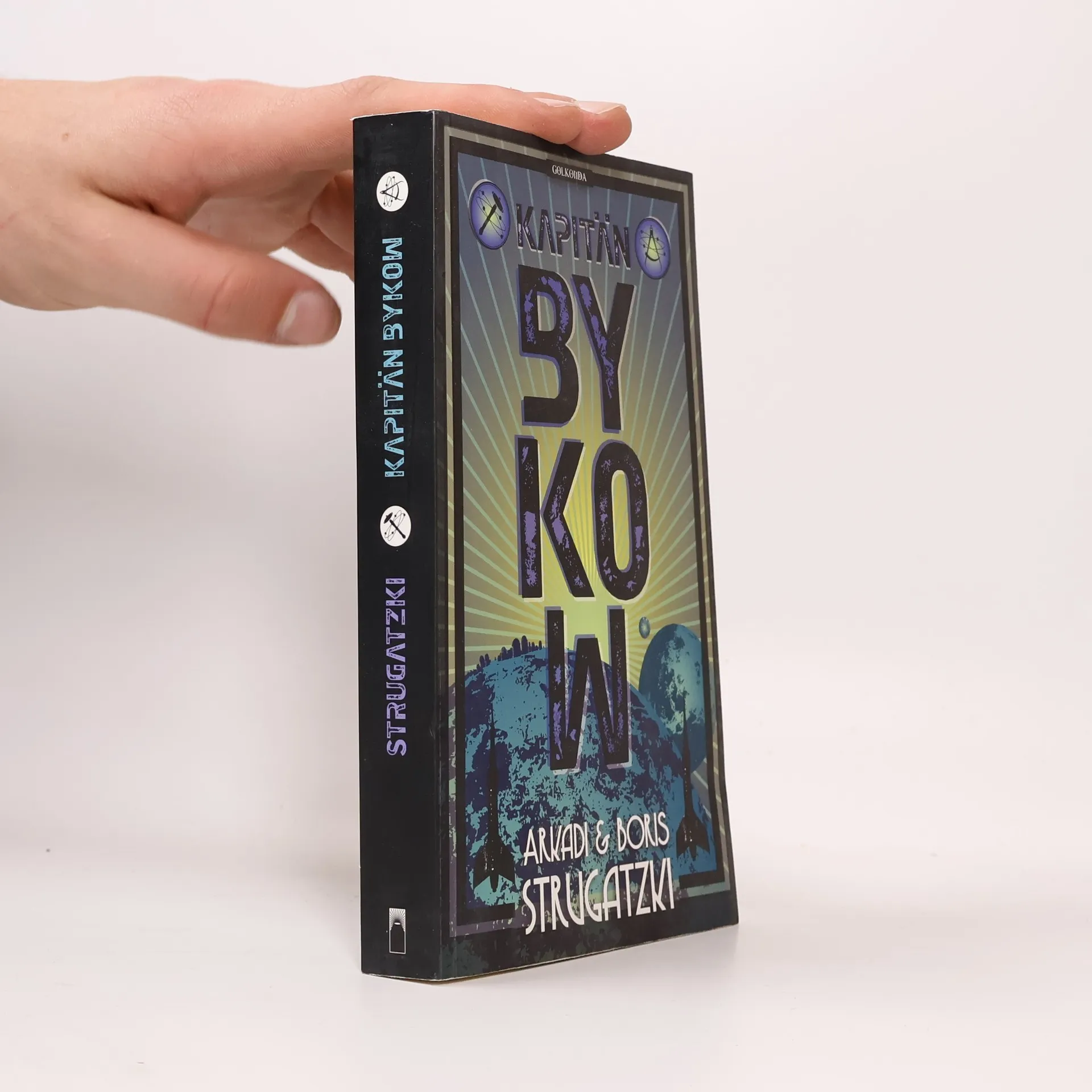
Kapitän Bykow
- 375pagine
- 14 ore di lettura
Alexej Bykow, der Raumfahrtneuling aus "Atomvulkan Golkonda", ist nunmehr als Kapitän eines Frachtraumschiffs zwischen den Planeten, Monden und Asteroiden des Sonnensystems unterwegs. Teil 2 und 3 der Bykow-Trilogie, die umfangreiche Erzählung "Der Weg zur Amalthea" und der Roman "Praktikanten", zeichnen das Bild eines teilweise erschlossenen Nahen Weltraums, der immer noch reichlich Gelegenheit für sensationelle Entdeckungen und Abenteuer bietet, in den aber auch schon die Normalität des Alltags eingezogen ist. Die Bykow-Trilogie verkörpert im Oeuvre der Strugatzkis die klassische Raumfahrt-Thematik und steht am Beginn eines weitgespannten Zukunftsentwurfs, der Welt des Mittags. Die vorliegende Ausgabe präsentiert die vollständigen Textfassungen, ergänzt durch ein nicht in die Endfassung der "Praktikanten" aufgenommenes Kapitel, das einen zweiten Blick auf die Venus bietet, durch Kommentare Boris Strugatzkis zur Entstehungsgeschichte der Texte, ein Nachwort und Anmerkungen.
Werkausgabe 6
- 1037pagine
- 37 ore di lettura
Der krönende Abschluss der grossen Neuausgabe der Gesammelten Werke von Arkadi und Boris Strugatzki Ein Forschungsinstitut für Magie und Zauberei, in dem die Unredlichkeit der Mitarbeiter durch Haarwuchs aus den Ohren kenntlich wird. Ein Schriftsteller, dessen Gestalten aus einem aus Angst vor der Zensur unveröffentlichten Roman ins Leben treten und ihn zu verfolgen beginnen ... Die Geschichten von Arkadi und Boris Strugatzki haben nichts von ihrer unmittelbaren erzählerischen Kraft verloren, mit der sie Gesellschaftssatire und Fantastik vereinen. In Russland einst verboten, hat ihr Werk heute international eine Millionenauflage erreicht. Der sechste und letzte Band der Gesammelten Werke enthält die Romane Der Montag fängt am Samstag an, Das Märchen von der Troika und Das lahme Schicksal. Arkadi (geboren 1925, gestorben 1991) und Boris (geboren 1933) Strugatzki zählen zu den bedeutendsten und erfolgreichsten russischen Autoren der Nachkriegszeit. Ihre Romane sind nicht nur faszinierende Parabeln über die Stellung des Menschen im Universum, sondern auch schonungslose Abrechnungen mit Ideologiegläubigkeit und Personenkult. Viele ihrer Romane wurden verfilmt - darunter Andrej Tarkowskijs Stalker nach "Picknick am Wegesrand"
Репрезентативная публикация представляет три прозы обоих братьев, написанных под псевдонимами. В 70-х и 80-х годах Стругацкие обычно прибегали к ним в те времена, когда не могли публиковать под своими именами. Псевдоним С. Ярославцев использовался также для некоторых произведений, предназначенных для детского читателя. Центральной фигурой двух первых проз, то есть заглавного произведения "Дьявол среди людей" и романа "Поиск управления", является действительно дьявол в человеческом обличье — в новелле это странный журналист и ремонтник сельскохозяйственной техники Ким Волошин, а в романе дьявол представлен парой неразлучных друзей Станислава Красногорова и Виктора Киконина. Дьявол по мнению Стругацких не является порождением ада, а является творением самих людей. Последняя новелла "Детали из жизни Никиты Воронцова" написана в середине 80-х годов. Ее главный герой находится в сорокалетней временной петле (1937-1977), которая постоянно повторяется, и из которой Никита Воронцов не может выбраться.
Souborné vydání tří románů Obydlený ostrov, Brouk v mraveništi a Vlny ztišují vítr. 22. století… Lidská rasa je na vrcholu svých sil. Války, nemoci, tmářství – to všechno zůstalo v dávné minulosti. Civilizace, nesmírně vyspělá nejen po technologické, ale i po mravní stránce, již dávno opustila svůj mateřský svět a její mezihvězdné lodě nyní brázdí galaxii. Někteří z pozemšťanů, známí jako progresoři, působí i na těch nejzapadlejších a nejzaostalejších planetách, kde šíří pokrok a zasévají myšlenky humanismu… Je ale pozemská civilizace skutečně hlavní silou ve vesmíru? Nebo zde působí nějaká další mocnost – skrytá, ale o to vlivnější a nebezpečnější? Jaká tajemství skrývala dávno zaniklá supercivilizace Poutníků, jejíž stopy se dodnes objevují na vzdálených planetách? A lze tuto civilizaci skutečně považovat za zaniklou? Odpovědi na tyto otázky hledá Maxim Kammerer, jehož osud a proměny sledujeme od mládí, plného optimismu a elánu, až po hluboké stáří, které přináší poznání a moudrost… ale také smutek a rozčarování. Souborné vydání tří románů Obydlený ostrov, Brouk v mraveništi a Vlny ztišují vítr.
Die einzigartige Werkausgabe Arkadi und Boris Strugatzki zählen zu den bedeutendsten Autoren der osteuropäischen Science Fiction. Einst in Russland verboten, sind ihre Texte heute in mehr als 30 Sprachen übersetzt und haben eine Millionenauflage erreicht. Mit ihren atemberaubenden Romanen haben die Brüder Strugatzki die Science-Fiction-Literatur weit über die Grenzen Russlands hinaus nachhaltig beeinflusst. Arkadi (geboren 1925, gestorben 1991) und Boris (geboren 1933) Strugatzki zählen zu den bedeutendsten und erfolgreichsten russischen Autoren der Nachkriegszeit. Ihre Romane sind nicht nur faszinierende Parabeln über die Stellung des Menschen im Universum, sondern auch schonungslose Abrechnungen mit Ideologiegläubigkeit und Personenkult. Viele ihrer Romane wurden verfilmt - darunter Andrej Tarkowskijs Stalker nach "Picknick am Wegesrand."
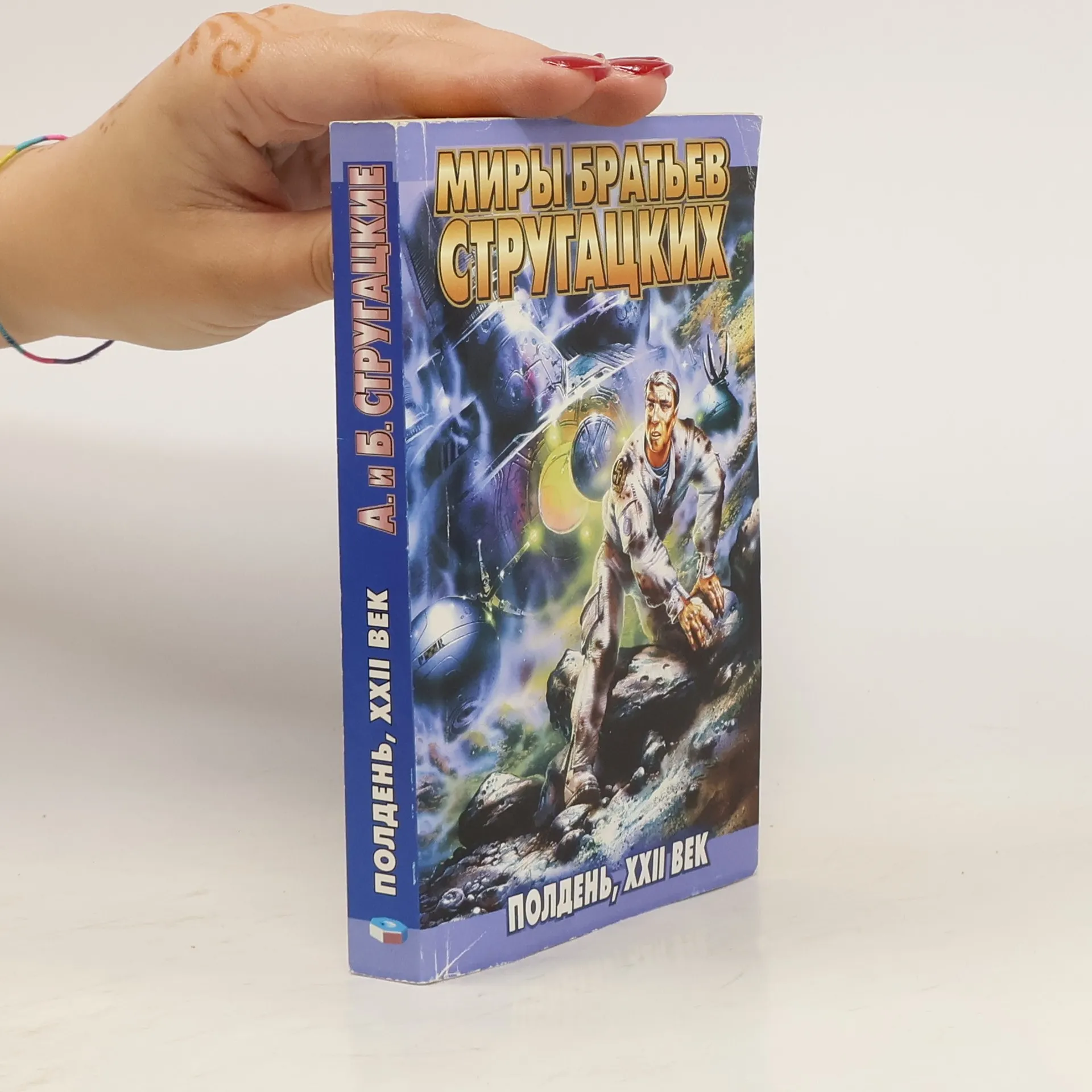
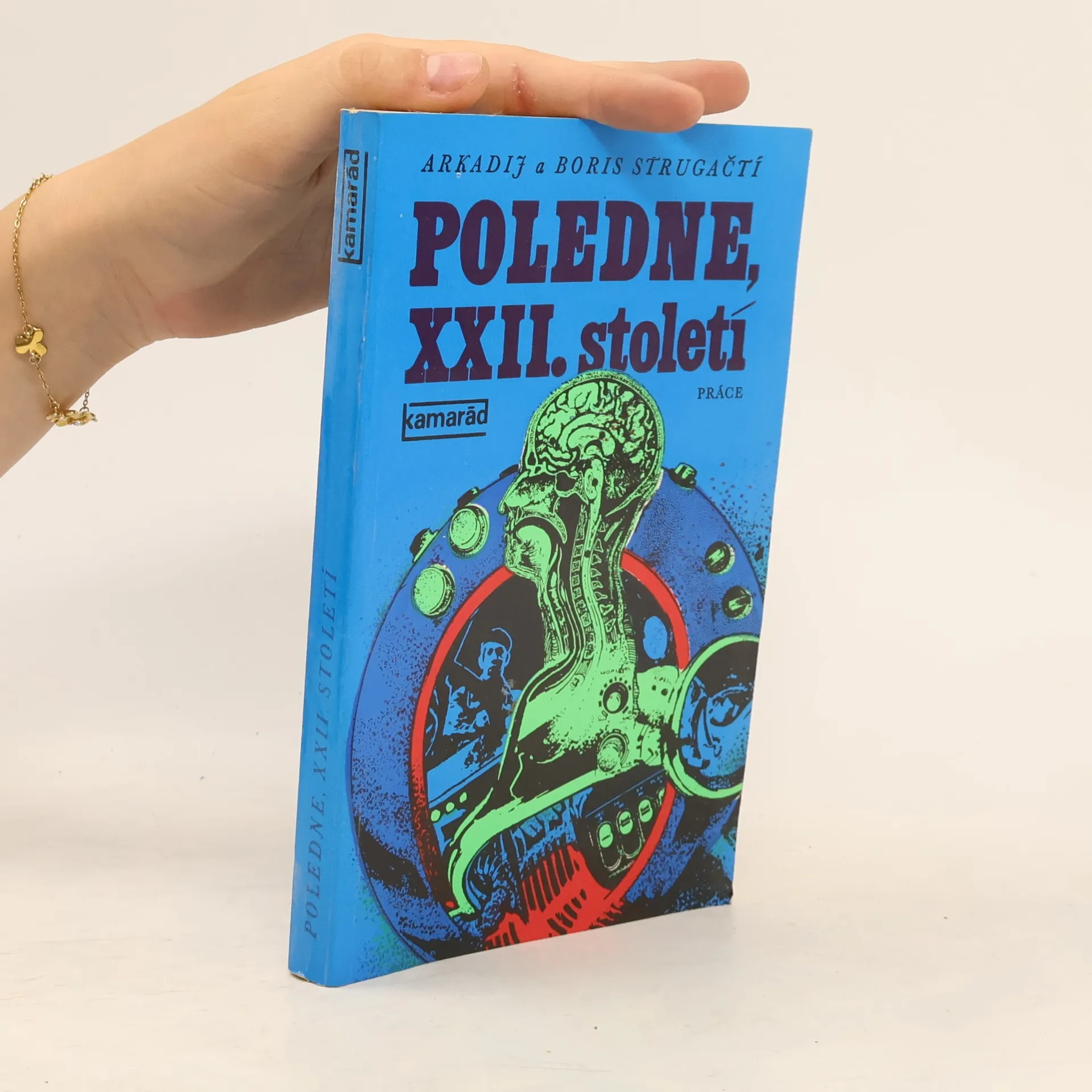
Полдень, XXII век
- 429pagine
- 16 ore di lettura
Два космонавта, Сергей Кондратьев и Евгений Маркович Славин, возвращаются на Землю после долгого звездного полета и сталкиваются с 22-м веком. В первую очередь их привлекают чудеса науки и техники: планету охватывает сеть полууорганических, движущихся глайд-улиц; повсюду работают автоматы и роботы, называемые «Кибер»; мировое море экономически освоено; биокибернетики стремятся осуществить бессмертие... Кроме того, великое приключение в космосе: люди обосновались в Солнечной системе и начинают колонизацию негостеприимной Венеры. Этот хорошо устроенный мир 22-го века, «Полдень» в большом цикле будущего братьев Стругацких, является фоном большинства рассказов этого сборника.
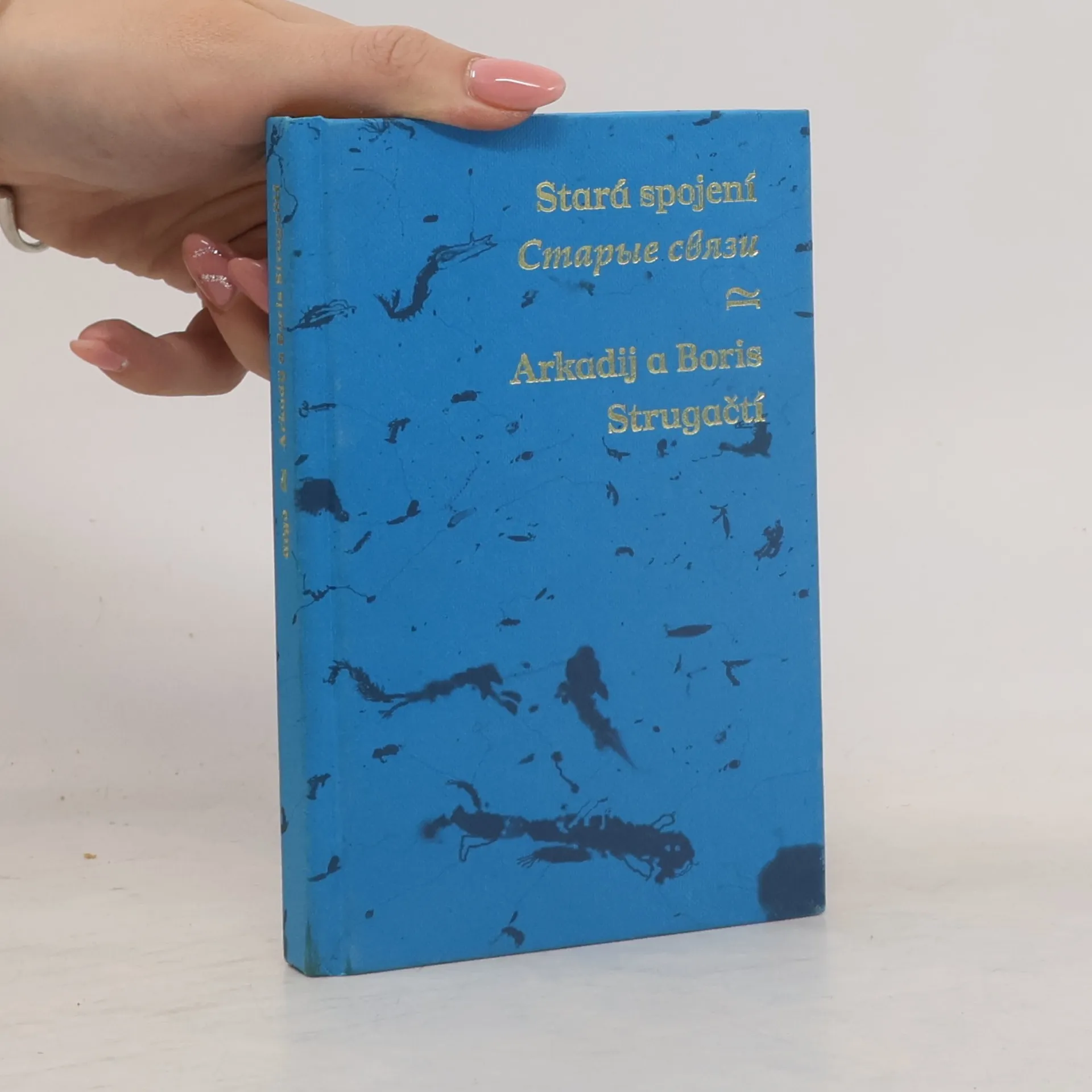
Stará spojení / Staryje svjazy
- 124pagine
- 5 ore di lettura
Světově uznávaní ruští spisovatelé v žánru sci-fi – bratři Arkadij a Boris Strugačtí – byli vždy vnímáni jako nedělitelná autorská srostlice. Že tomu tak nebylo vždy a od samého počátku, ukazuje tato malá knížečka. Najdete v ní pět malých próz, jež jsou tematicky svázány motivem „jiné paměti“. Mohli bychom je označit za Arkadijovy a Borisovy juvenilie, a také první pokusy o společnou tvorbu – s komentáři Borise Strugackého k tomu, jak se rodil mechanismus této mnohaleté tvůrčí spolupráce. Česko-ruské bilingvní vydání.
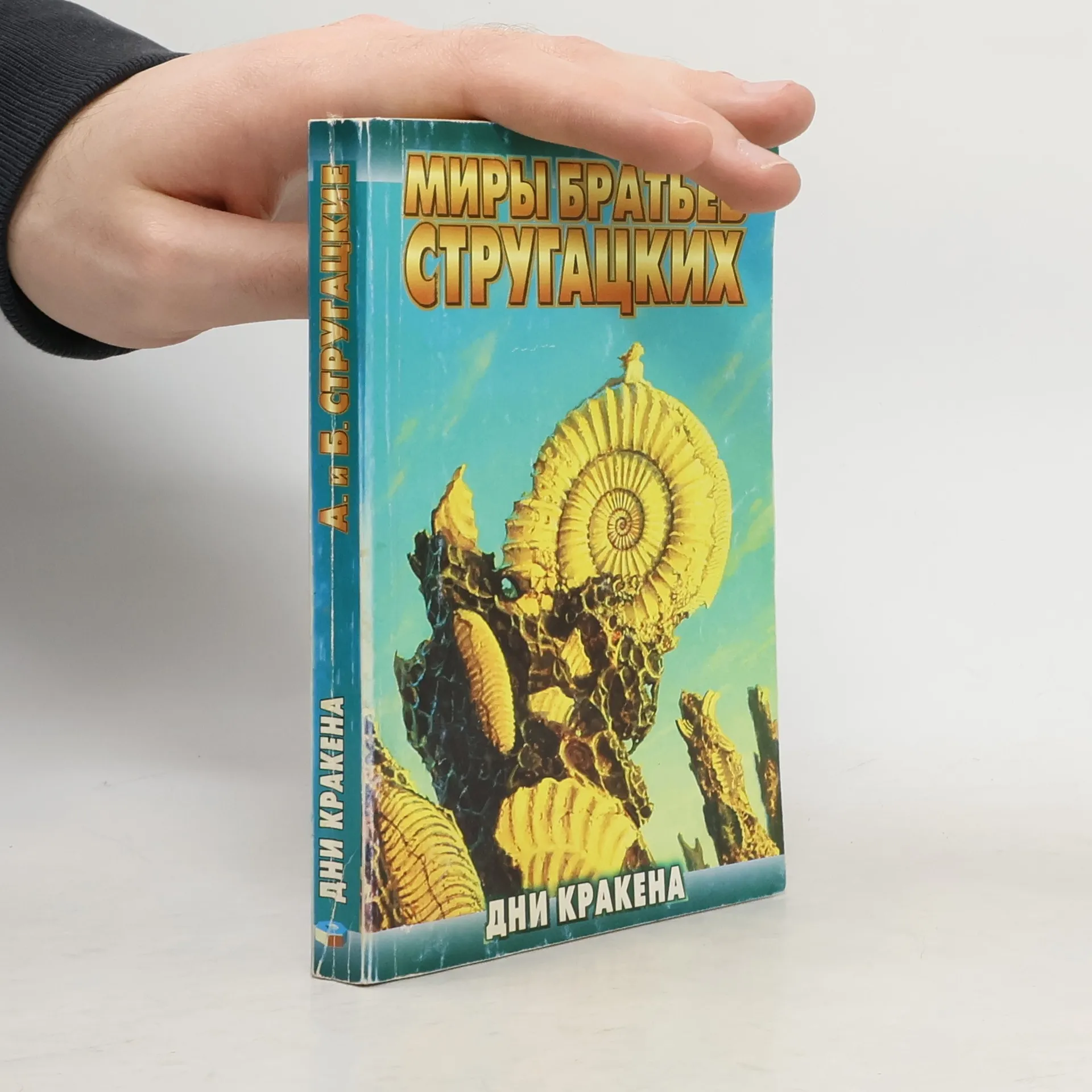
Дни Кракена
- 368pagine
- 13 ore di lettura
НЕОПУБЛИКОВАННЫЕ произведения братьев Стругацких... Повести и рассказы, либо изначально написанные "в стол", либо впоследствии переработанные до неузнаваемости, либо так или иначе включенные в сюжетную и литературную ткань их более поздних творений... Как они создавались? Почему так и не были изданы? Читайте об этом в "Комментариях" Б.Н. Стругацкого...
Drei Romane in einem Band!§§Arkadi und Boris Strugatzkis Romane sind nicht nur Parabeln über die Stellung des Menschen im Universum, sondern auch schonungslose Abrechnungen mit Ideologiegläubigkeit und Personenkult. In der UdSSR durften zahlreiche ihrer Texte nicht erscheinen. Der zweite Band der Werkausgabe enthält die Romane 'Picknick am Wegesrand', verfilmt von Andrej Tarkowski als 'Stalker', 'Das Experiment' und 'Eine Milliarde Jahre vor dem Weltuntergang'.§§
Werkausgabe. Bd.3
- 896pagine
- 32 ore di lettura
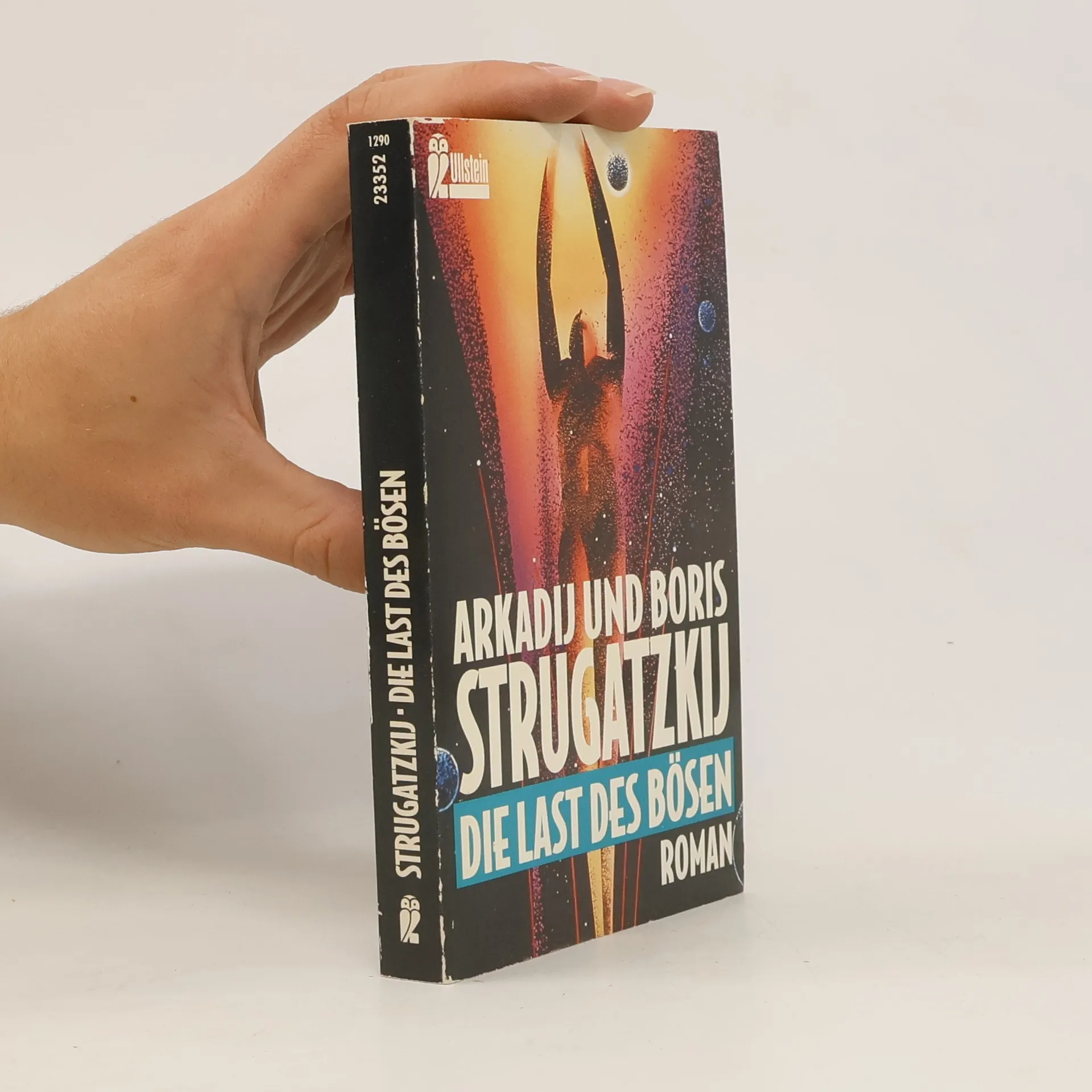
Das Gesamtwerk der Brüder Strugatzki - vollständig neu überarbeitet und umfassend kommentiert§§Arkadi und Boris Strugatzki gelten unumstritten als die besten Autoren der osteuropäischen Science Fiction. Ihr Werk wurde in zahllose Sprachen übersetzt und erschien in Millionenauflage. Der dritte Band der großen Strugatzki-Edition enthält die fünf Einzelromane 'Die Schnecke am Hang', 'Die zweite Invasion der Marsmenschen', 'Die Last des Bösen' sowie die unter dem Pseudonym S. Jaroslawzew erschienenen Romane Arkadi Strugatzkis 'Aus dem Leben des Nikita Woronzow' und 'Ein Teufel unter den Menschen'.§§
«Далёкая Радуга» (1963) — это повесть, по существу завершившая целый этап в творчестве авторов, большой цикл о мире Полдня — солнечный, радостный, в чём-то наивно-оптимистичный. Здесь ещё звенит бравурная медь утопии, но привычные атрибуты научной фантастики отступают в тень, и на первый план выходят люди — с их удачами и утратами, с их достижениями и страданиями, с их муками совести. В центре повествования — напряжённейшая ситуация: из-за техногенной катастрофы на далёкой планете погибнут люди, всех эвакуировать не удастся, и герои должны решить, кого и как спасать в первую очередь. Вечная проблема выбора между бесчестьем и смертью.
In den Tiefen des Weltraums formen Menschen von der Erde die Natur eines anderen Planeten um; im Rahmen einer kosmischen Hilfsaktion soll er im 22. Jahrhundert zur Heimat einer menschenähnlichen, außerirdischen Zivilisation werden. Kür die hochentwickelte Technik der Zukunft eine Routineangelegenheit. Doch gerade Stas Popow, Herr über etliche halborganische Arbeitsroboter, den die Aufgabe auf dem leeren, öden, fast leblosen Planeten langweilt, wird mit dem Unbekannten konfrontiert: Er hört unheimliche Geräusche, sieht Phantome, zweifelt am eigenen Verstand, bis auch andere unerklärliche Vorgänge bemerken und schließlich ihr Urheber selbst auftaucht- "der Kleine", ein Menschenkind, das als einziger Überlebender eines Vorjahren abgestürzten irdischen Raumschiffes auf dem Planeten aufgezogen wurde.
В этот том вошли одни из самых напряженных и увлекательных произведений братьев Стругацких."Путь на Амальтею" - первая повесть "жилинского" цикла, в которой экипажу звездолета "Тахмасиб", находящемуся в очередном рейсе, приходится пережить множество опасных приключений."Далекая Радуга" - роман из цикла "XXII век. Поддень" - читающаяся на одном дыхании история испытаний нового способа межпланетных передвижений, которые колонисты-земляне проводят на планете Радуга. История катастрофы и борьбы, подвига и беспримерного мужества…
После миссии Максима Каммерера на планете Саракш прошло 20 лет. Теперь он работает на Земле, в КОМКОНе-2. Его очередное задание — разыскать прогрессора Льва Абалкина, самовольно покинувшего Саракш, но проигнорировавшего требование зарегистрироваться на Земле. Встречи Каммерера со знакомыми Абалкина вскрывают тайну, способную нанести серьезный вред не только окружающим его людям, но и, возможно, всему человечеству...
Troika. Phantastischer Roman
- 181pagine
- 7 ore di lettura
Volné pokračování knihy Pondělí začíná v sobotu, se kterou ji spojuje prostředí výzkumného ústavu paranormálních jevů a část jednajících osob. První verze Pohádky byla otištěna v povídkovém žurnálu Angara v roce 1967 a setkala se s ostrou reakcí oficiální literární kritiky. Dílku bylo vytýkáno znevažování sovětské vědy a sovětských řídících mechanismů. Číslo bylo staženo z prodeje a stalo se bibliografickou vzácností. Pohádka byla v následujících dvaceti letech vydávána samizdatem, oficiálního vydání se dočkala v roce 1986. Pohádka o trojce existuje ve dvou verzích – první verze končí vítězstvím byrokratů, druhá verze, upravená autory v roce 1972, má optimistické vyznění. Trojka, představovaná v textu trojicí nevzdělaných a samozvaných „kanalizátorů“, navozovala příliš mnoho asociací k mimořádným komunistickým soudům a k rozhodujícím trojúhelníkům, složeným z předsedy stranické organizace, předsedy odborového výboru a předsedy komsomolské organizace.
Русская классика: Волны гасят ветер
- 256pagine
- 9 ore di lettura
Последняя повесть из трилогии о Максиме Каммерере. Историк и социолог Айзек Бромберг направил Каммереру пространный меморандум "Рабочая модель прогрессорской деятельности Странников в системе человечества Земли". Резюме меморандума гласило: "…человечество будет разделено на две неравные части по неизвестному нам параметру, причем меньшая часть форсированно и навсегда обгонит большую, и это свершится волею и искусством сверхцивилизации, решительно человечеству чуждой". Теория Бромберга, как ни странно, оказалась и ложной, и правдивой одновременно… Появление Homo Super, или, иначе, люденов, вызвало грандиозную перемену в жизни людей.
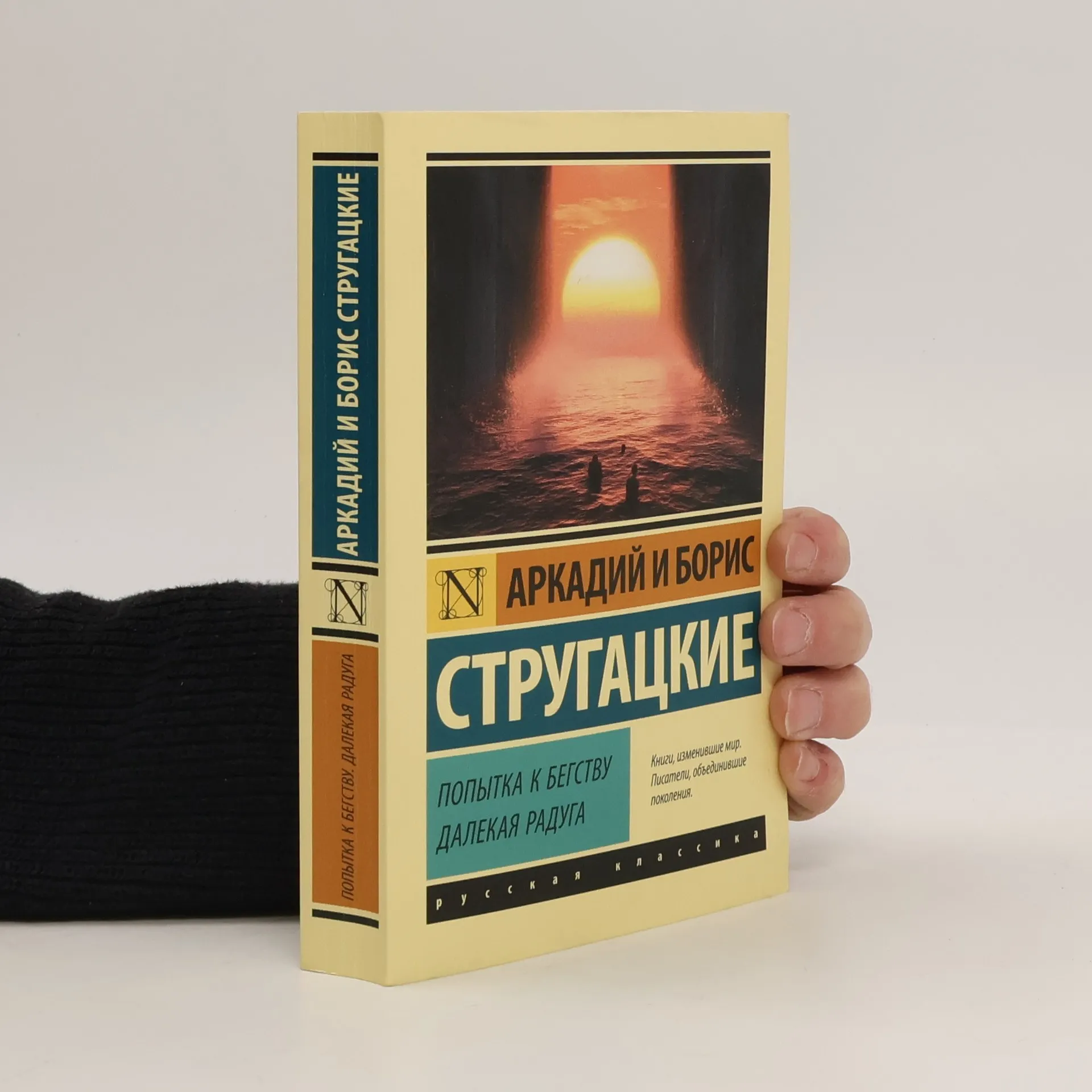
Попытка к бегству. Далекая радуга
- 320pagine
- 12 ore di lettura
На Радуге ежедневно осуществляются тысячи важных экспериментов, и главный из них - новый способ перемещения в пространстве - "Нуль-Т". Но однажды эксперимент пошел не так, как планировалось, и возникла гигантская сокрушительная Волна, сметающая с поверхности планеты все живое.Корабль "Тариэль" способен взять на борт лишь ограниченное число пассажиров. Кого же спасать в первую очередь?В сборнике также представлена повесть "Попытка к бегству", как и "Далекая Радуга", входящая в условный "полуденный"цикл.
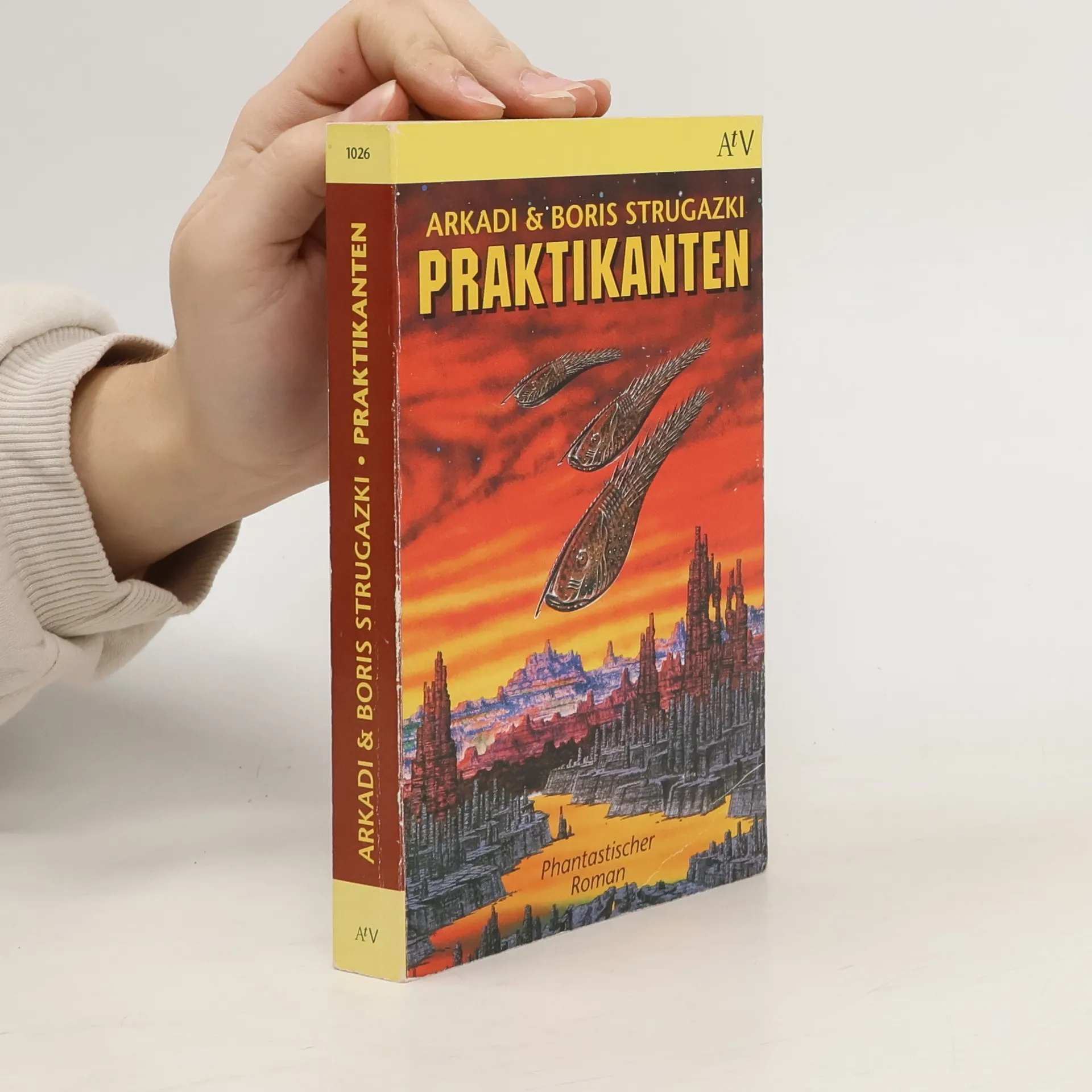
Praktikanten
- 281pagine
- 10 ore di lettura
Dies ist ein sowjetischer Science-Fiction-Roman der Strugatsky-Brüder, der in ihrem Yurkovsky/Zhilin-Universum spielt.
Boris Strugatzki (1933–2012) zählt zusammen mit seinem Bruder Arkadi (1925–1991) zu den erfolgreichsten russischen Autoren der modernen Science-Fiction und Phantastik, ihre Bücher sind in über 30 Sprachen übersetzt. Viele ihrer Romane wurden verfilmt. Arkadi Strugatzki, geboren 1925, war ein sowjetischer Schriftsteller. Er wurde während seiner Armeezeit zum Japanisch-Dolmetscher ausgebildet und verbrachte so die Kriegsjahre im Osten Russlands. Später war er als Verlagslektor und Übersetzer in Moskau tätig. Arkadi Strugatzki verstarb 1991 in Sankt Petersburg (Russland)
Názvem sbírky je označován i svět, v němž se odehrávají další romány a povídky stejné autorské dvojice. Lidstvo žije v ideální společnosti, v níž všichni lidé pracují na úkolech, jež je baví, je zajištěna hojnost všeho, lidé provádějí průzkum Země i Vesmíru. Lidstvo tohoto světa osidluje cizí planety, setkává se s cizími civilizacemi a pomáhá vývoji některých z nich. Další aspekty a stinné stránky tohoto světa jsou vykresleny až v pozdějších dílech, které nejsou obsahem základní sbírky. Postavami, které procházejí řadou povídek sbírky jsou Jevgenij Slavin and Sergej Kondratěv. -- zdroj: legie.info --
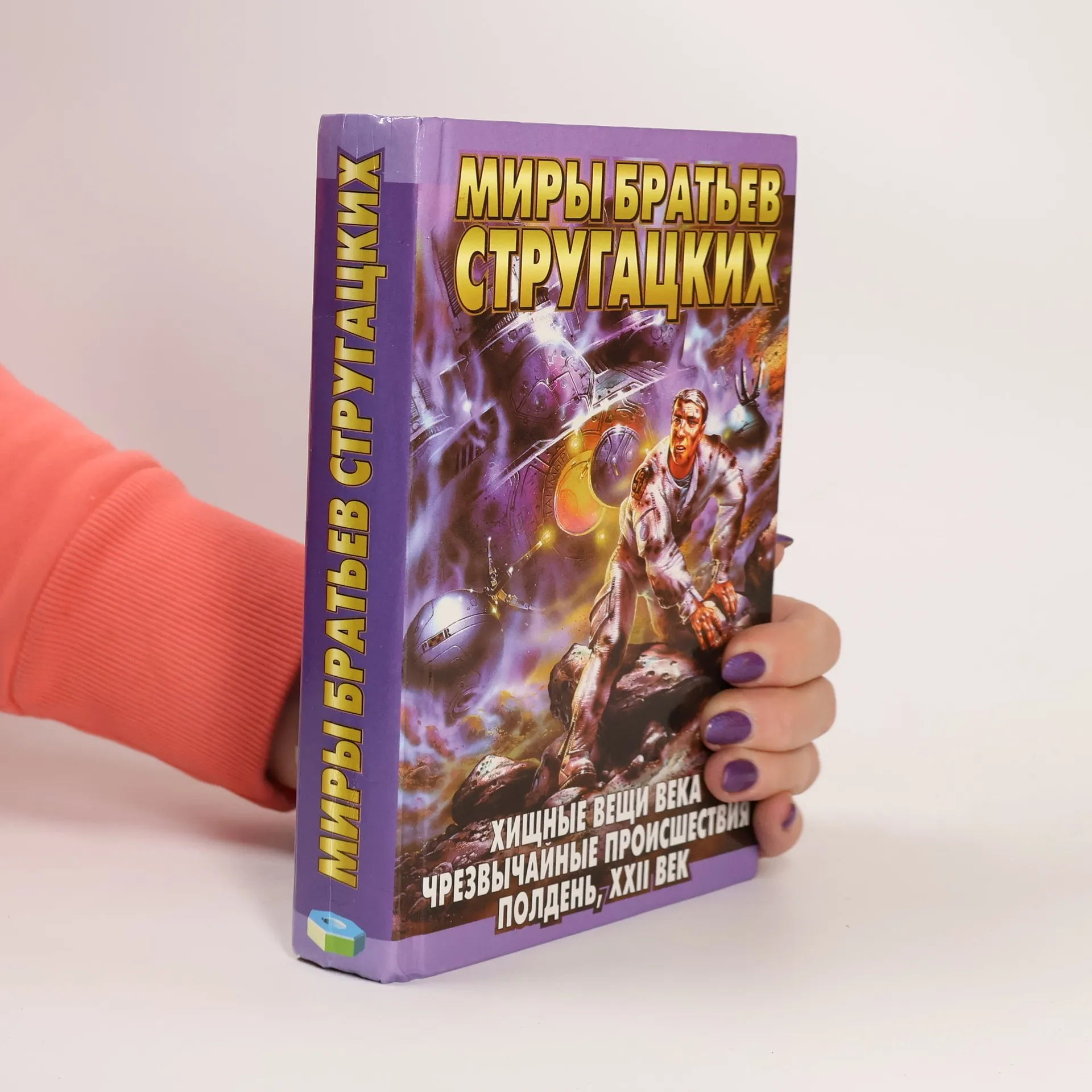
Хищные вещи века. Чрезвычайные происшествия. Полдень, XXII век
- 666pagine
- 24 ore di lettura
XXI век - эпоха перемен... В этот мир окунается космонавт Иван Жилин, навсегда возвратившийся на Землю, где его ждут «хищные вещи века». А впереди, вслед за цепочкой «чрезвычайных происшествий», маячит золотой XXII век, век галактической цивилизации землян, ее Полдень. Эпоха, когда Земля захотела подарить свое счастье иным мирам, - эпоха Прогрессорства. Второй том Настоящего Собрания включает в себя повесть «Хищные вещи века» и рассказы, объединенные в два цикла: «Чрезвычайные происшествия» и «Полдень, XXII век».
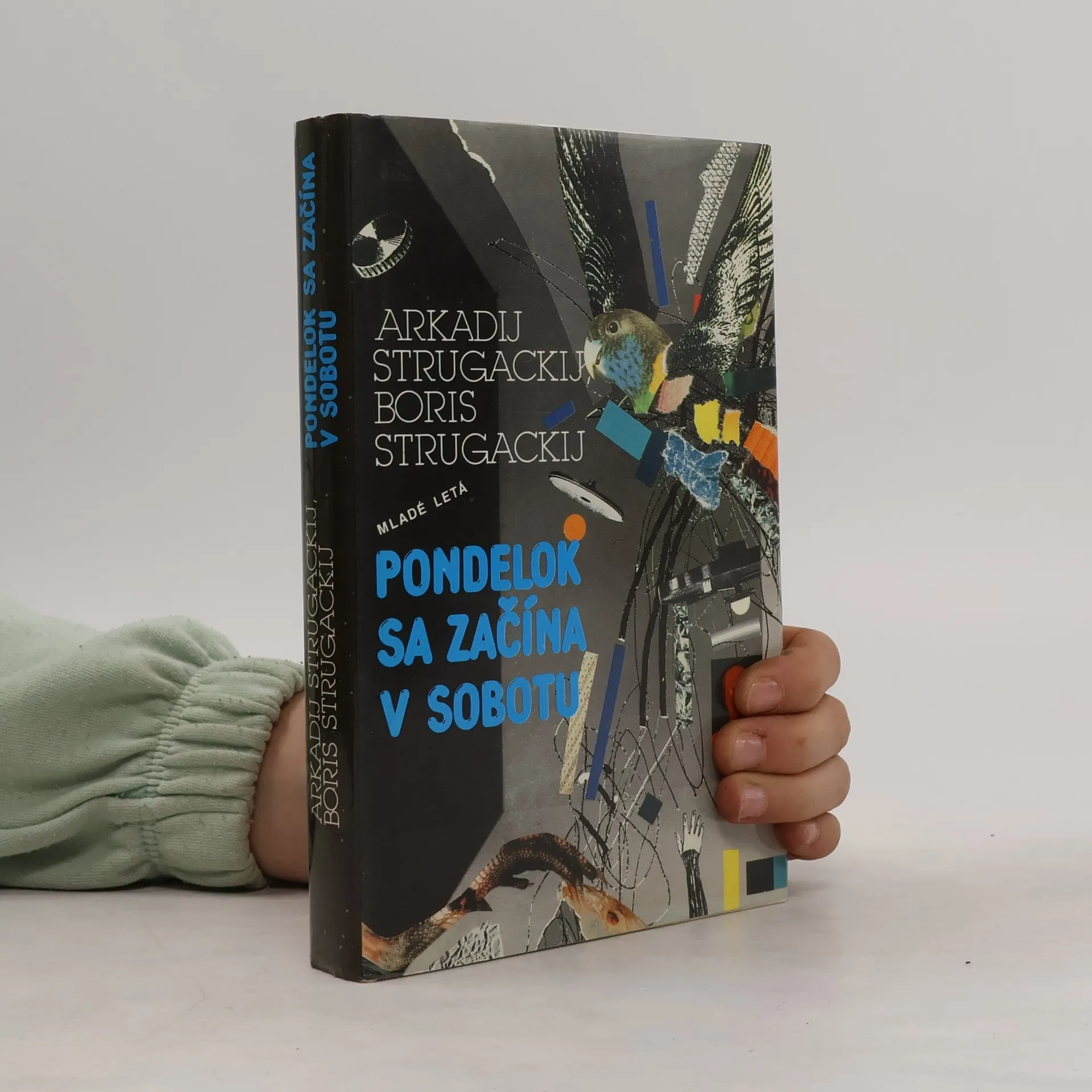
Existuje veľa rozličných výskumných ústavov. Vedecký ústav pre výskum čarodejníctva a kúzelníctva (VÚVČAK) však možno nájsť iba v knihe bratov Strugackovcov Pondelok sa začína v sobotu. Už samotný názov diela dáva tušiť, že v tomto ústave sa dejú veľmi nezvyčajné veci. Prečo? Pretože v ňom ako vedci pracujú známi i neznámi, starí i mladí mágovia a čarodejníci. Život napreduje čoraz rýchlejšie a musia sa mu prispôsobovať aj stároční mágovia, ktorí sa sústredili práve vo VÚVČAKu. Pri práci a pre svoje pokusy využívajú vymoženosti súčasnej vedy a techniky. I tá najbujnejšia fantázia si ťažko predstaví, čo môže vzniknúť spojením starého myslenia a novej techniky, premiešaním rozprávky so skutočnosťou. Strugackovci ponúkajú čitateľovi množstvo najneuveriteľnejších nápadov, predstáv a výtvorov ľudskej vynaliezavosti. Všetko to robia so značným pôvabom, humorom, no často aj s iróniou a ostrou satirou, ktorá varuje pred využívaním ľudského umu bez uváženia prípadných dôsledkov. Čitateľ sa pri čítaní tejto knihy s bohatým myšlienkovým obsahom a živým dejom určite nebude riadiť podľa jedného z výrokov v texte: Prísne tajné! Pred prečítaním spáliť!
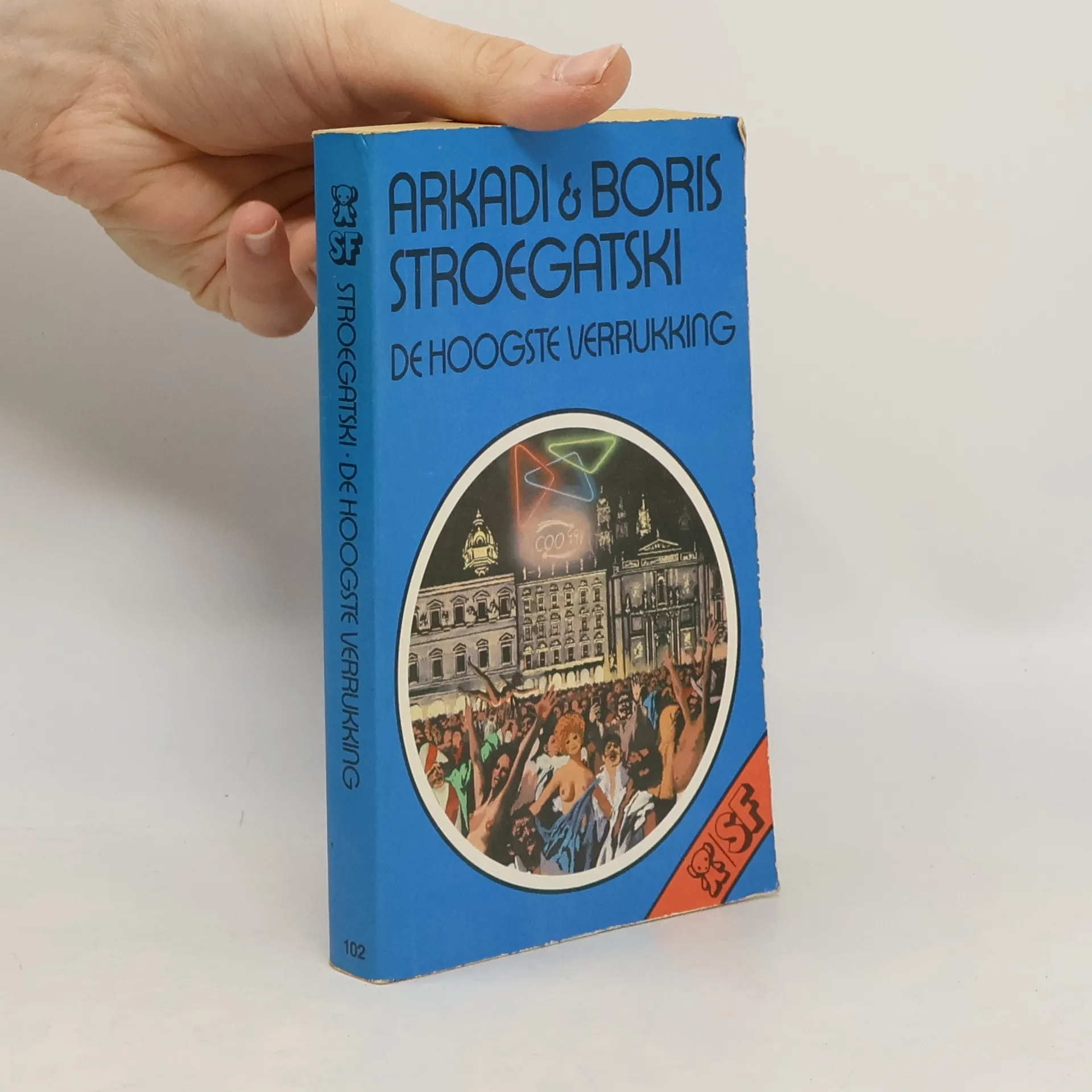
De hoogste verrukking
- 220pagine
- 8 ore di lettura
In een zonnige stad aan de kust van de Middellandse Zee arriveert, op een mooie zomerochtend, Ivan Zjilin. Hij vindt er een pension en bezoekt, net als iedere rechtgeaarde toerist, de gelegenheden waar de bevolking haar - overvloedige - vrije tijd doorbrengt. De mensen zijn in de greep van het amusement en hun zucht naar ontspanning en verrukking overschrijdt alle grenzen. Zo zijn er de dagelijkse orgieën met drank en drugs, en de psychedelische 'rillers' waarbij mannen en vrouwen zich massaal overgeven aan verbijsterende hallucinaties. Maar welke is de hoogste verrukking? Om dat te ontdekken neemt geheim agent Zjilin grote risico's, maar het grootste gevaar is; de verrukking zelf...
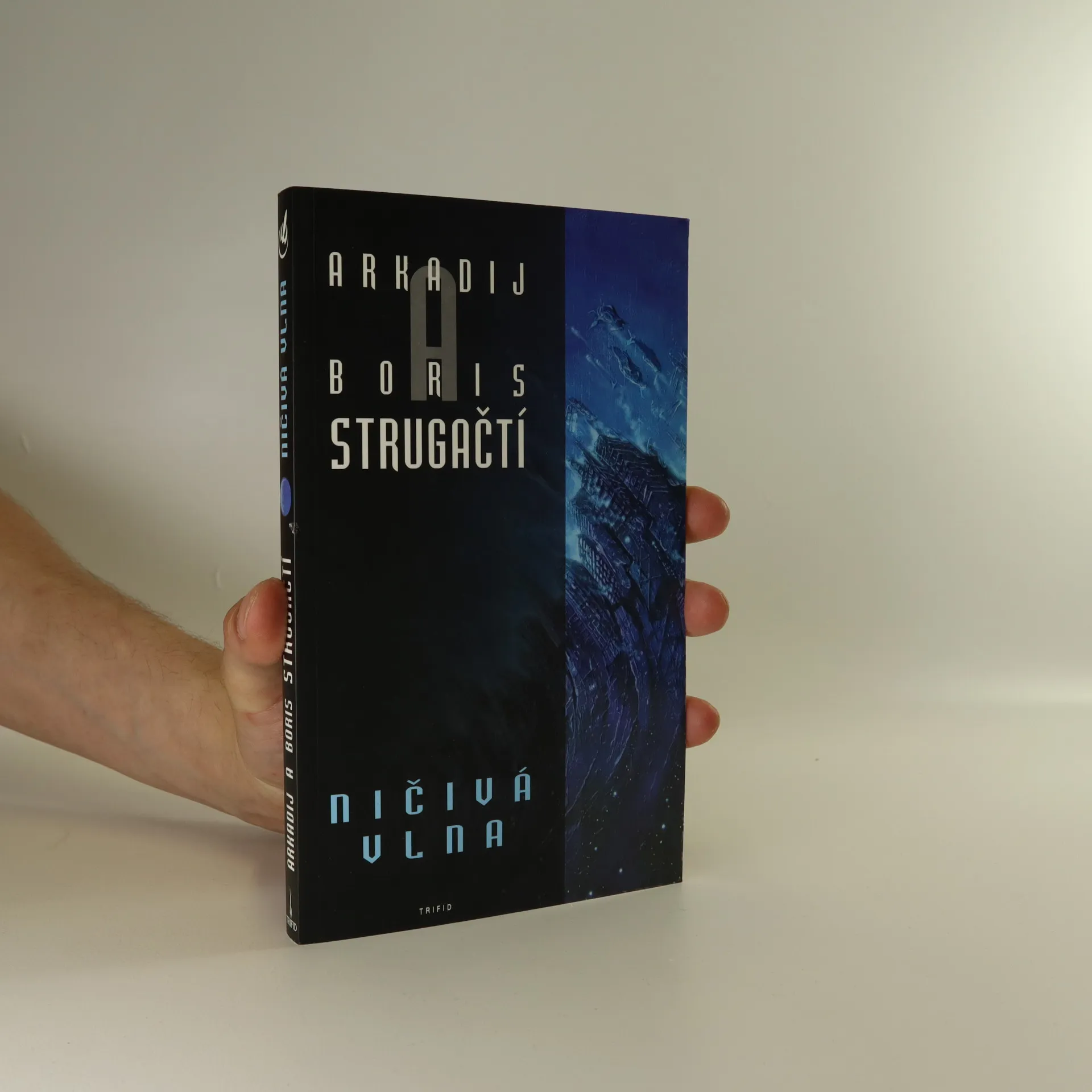
Ničivá vlna
- 152pagine
- 6 ore di lettura
Planeta Duha byla využita jako megalaboratoř pro fyzikální pokusy. Vědci si však ukousli větší sousto, než bylo únosné, a časoprostor planety Duha se zhroutil. Od obou pólů se směrem k rovníku blíží dvě Vlny a za sebou zanechávají jen trosky a poušť. Vlna je nezrušitelná, nezničitelná, nezastavitelná. Podél rovníku zůstává jen úzký pruh, kde se shromáždili zbylí obyvatelé planety. Zachránit se však může jen hrstka…
Die hässlichen Schwäne: Science Fiction-Roman
- 224pagine
- 8 ore di lettura
Kulhavý osud beschreibt das Schicksal des erfolgreichen Prosaikers und Drehbuchautors Felix Sorokin in einer Phase kreativer Krise. In die Erzählung, die sich um Sorokins Leben dreht, ist als Roman im Roman ein geheimnisvoller „Manuskript in blauen Mappen“ eingeflochten, das unpublizierte beste Werk Sorokins. Der Protagonist, der Schriftsteller Viktor Banev, eine Art Variante Sorokins, lebt in einem autokratischen, militärischen Staatsmechanismus, wo unter loyal und apathisch denkenden Bürgern Menschen mit freiem Denken auftauchen, die von autoritären ideologischen Praktiken befreit sind. Diese Vertreter neuen Denkens sind jedoch in einer Leprastation eingesperrt, zu der nur Kinder freien Zugang haben. Rund um dieses Ghetto für Leprakranke entfaltet sich auch eine spannende Handlung, die alle Figuren des provinziellen Städtchens betrifft. Kulhavý osud, das in der Tradition bulgakovscher Prosa fortgeführt wird, ist zweifellos ein herausragendes Werk der sozial-philosophischen Linie der Science-Fiction-Literatur.
The Time Wanderers
- 213pagine
- 8 ore di lettura
IN THE FAR FUTURE...Mankind knows contentment until the Earth is besieged by a wave of unexplained phenomena. First come the mass phobias. Then, the creatures. Finally, the transformations.Is this the work of the mysterious Wanderers? Could they be manipulating humanity - and to what end? When agent Toivo Glumov is sent to investigate, he's in for some superhuman surprises...
Ein durch eine Prototypphotonmaschine angetriebenes Raumschiff bereitet sich auf eine Reise zum Planeten Venus vor, welcher zu dieser Zeit ein rätselhafter und unerforschter Planet ist und durch Wolken bedeckt wird. Auf dem Planeten kommt die Mannschaft in immer gefährlichere Situationen, nachdem sie sich immer weiter in den unerforschten Planeten begibt.
Boris Strugatzki (1933–2012) zählt zusammen mit seinem Bruder Arkadi (1925–1991) zu den erfolgreichsten russischen Autoren der modernen Science-Fiction und Phantastik, ihre Bücher sind in über 30 Sprachen übersetzt. Viele ihrer Romane wurden verfilmt. Arkadi Strugatzki, geboren 1925, war ein sowjetischer Schriftsteller. Er wurde während seiner Armeezeit zum Japanisch-Dolmetscher ausgebildet und verbrachte so die Kriegsjahre im Osten Russlands. Später war er als Verlagslektor und Übersetzer in Moskau tätig. Arkadi Strugatzki verstarb 1991 in Sankt Petersburg (Russland)
Бессильные мира сего
- 349pagine
- 13 ore di lettura
The brothers Arkady (August 28, 1925 – October 12, 1991) and Boris (; born April 14, 1933) Strugatsky (Russian: Струга́цкий; alternate spellings: Strugatskiy, Strugatski, Strugatskii) are Soviet Russian science fiction authors who collaborated on their fiction.
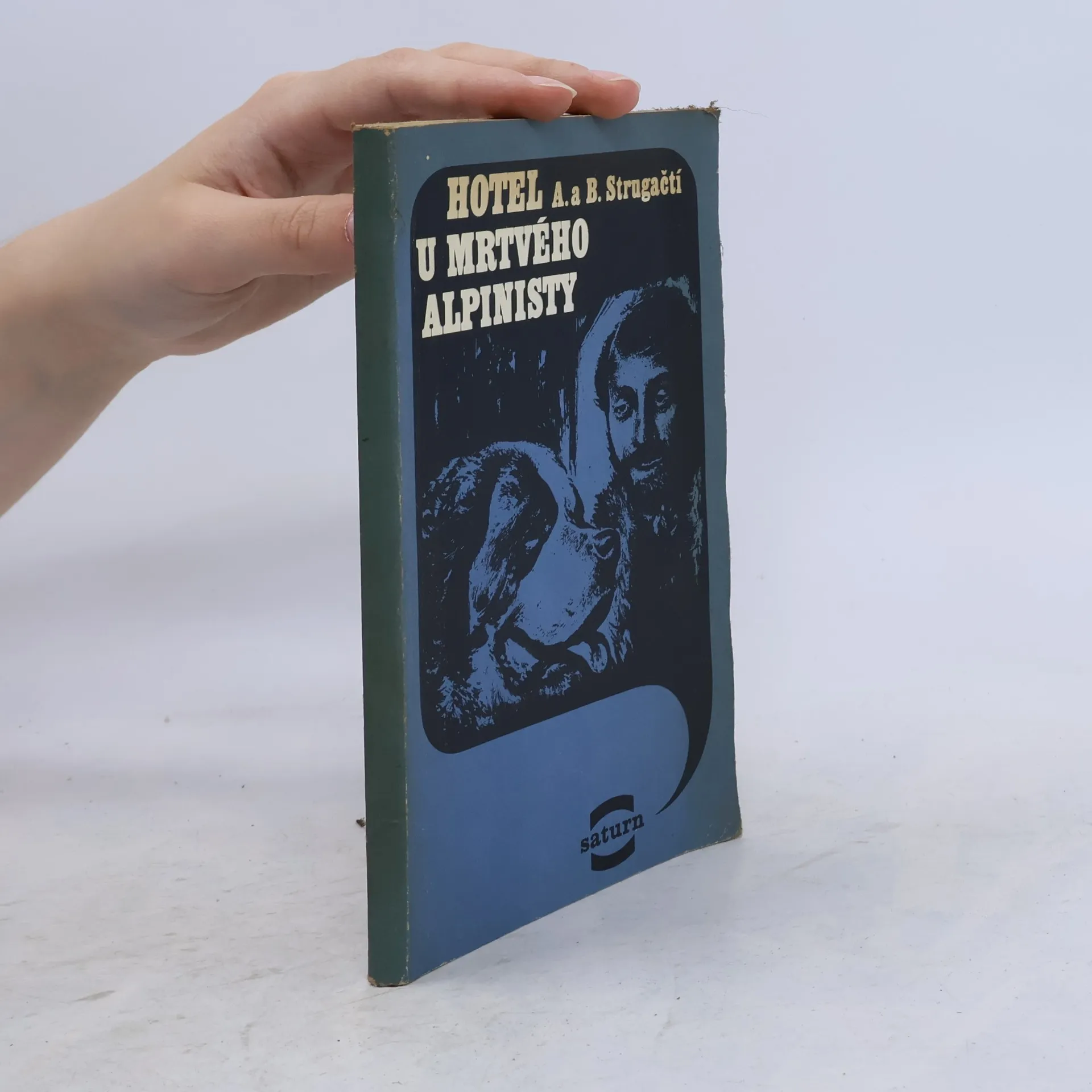
Sci-fi skoro detektivní příběh o příhodách v hotelu, kde straší. Vysokohorský hotel se stává dějištěm napínavého střetnutí obyvatel cizí planety s pozemšťany. V hotelu straší. Je Bruno chlapec nebo dívka? Odříznuti od světa. Smrt v zamčeném pokoji. Mimozemšťané nebo gangsteři? Přeložil Jaroslav Piskáček.
Antychrist, der erschienen ist, um das Jüngste Gericht vorzubereiten? Ein Kosmokrator, der plant, ein gigantisches Experiment an den Menschen durchzuführen? Der geheimnisvolle Schöpfer der Welt kehrt auf die Erde zurück, um sein unvollkommenes Werk zu reparieren. Vor seinem Angesicht erscheinen Individuen, die versuchen, ihre Ideen zu verwirklichen – weniger oder mehr verrückt...
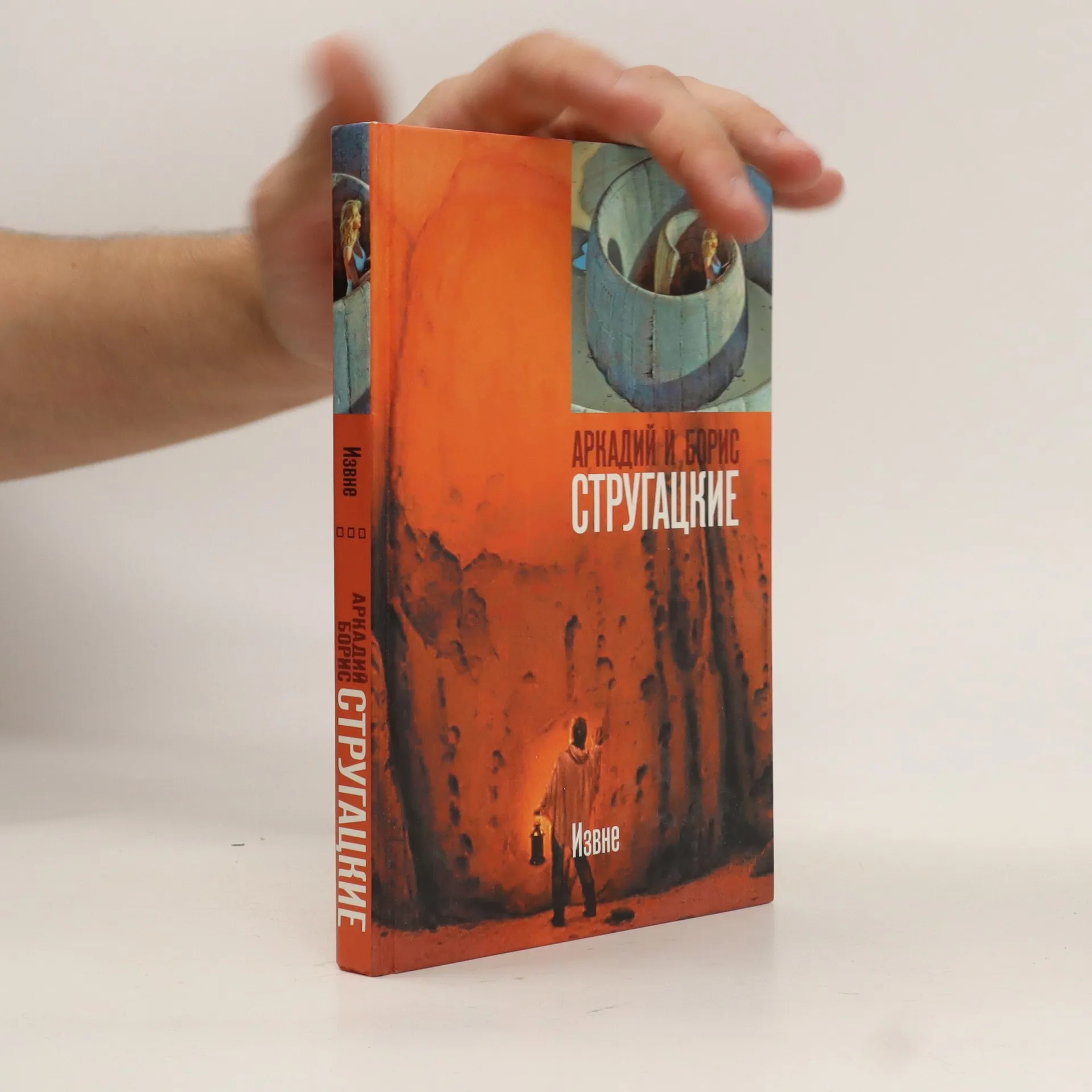
Содерж.: Извне : повесть в трех рассказах ; рассказы: Шесть спичек ; Забытый эксперимент ; Чрезвычайное происшествие ; Испытание "СКИБР" ; Бедные злые люди
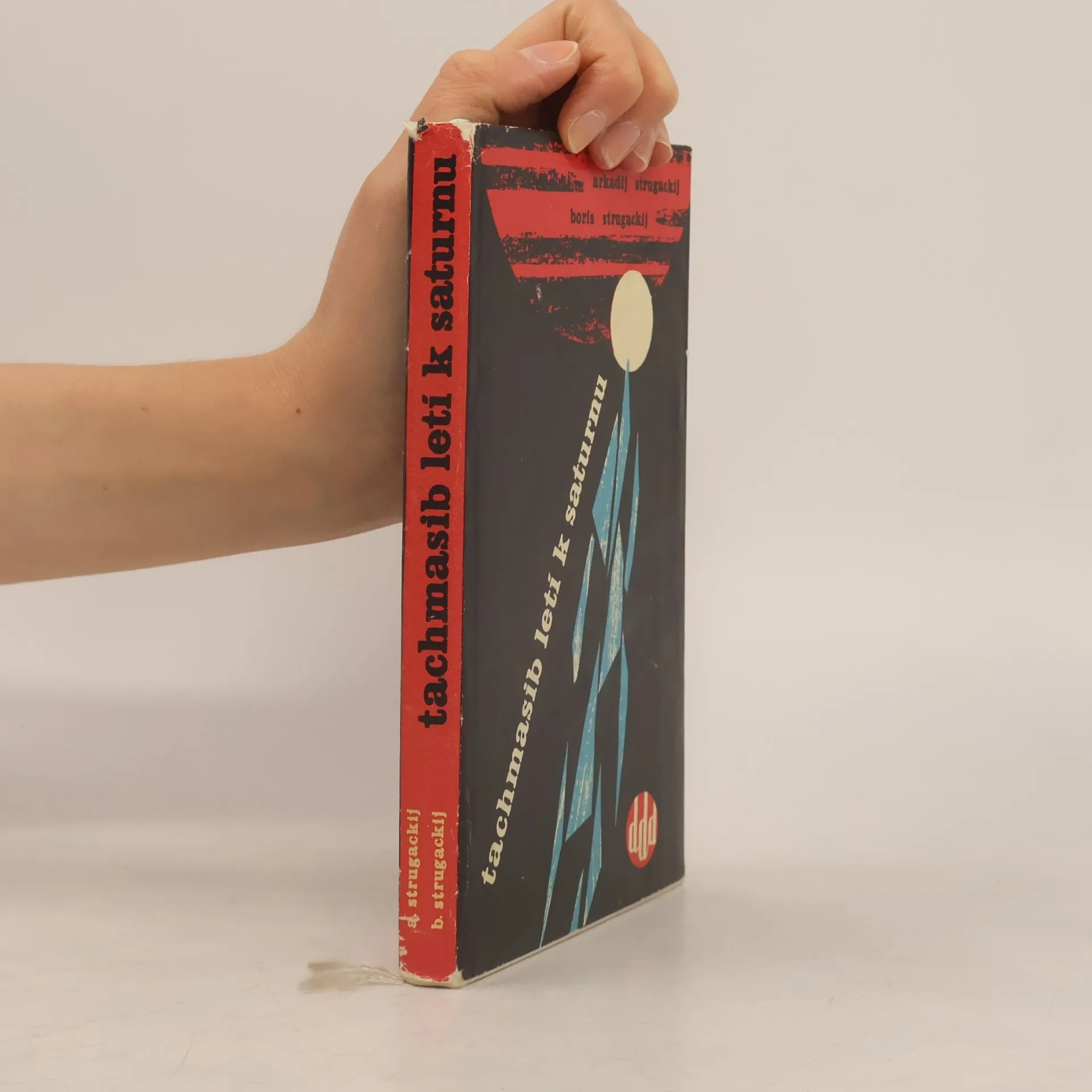
Vladimír Jurkovskij, postava, kterou už ze Strugackých známe, tvoří hlavního hrdinu Tachmasibu. Stárnoucí Jurkovskij letí na svou poslední výpravu, tentokrát jako generální inspektor ÚEŘK. Jeho úkolem je navštívit několik observatoří v oblasti Saturnu. Jurkovskij se stane skutečnou modlou mladého Jury, který dohání svou patru ze závodu na kovové konstrukce ve Vjazmě. Jak by také ne, vždyť Jurkovskij není jen na slovo vzatý vědec, a to vědec s nejodvážnějšími vědeckými hypotézami, ale také člověk šílené odvahy, který vyhledává právě ty nejnebezpečnější situace. A těch je i v 21. stolení ve vesmíru ažaž.
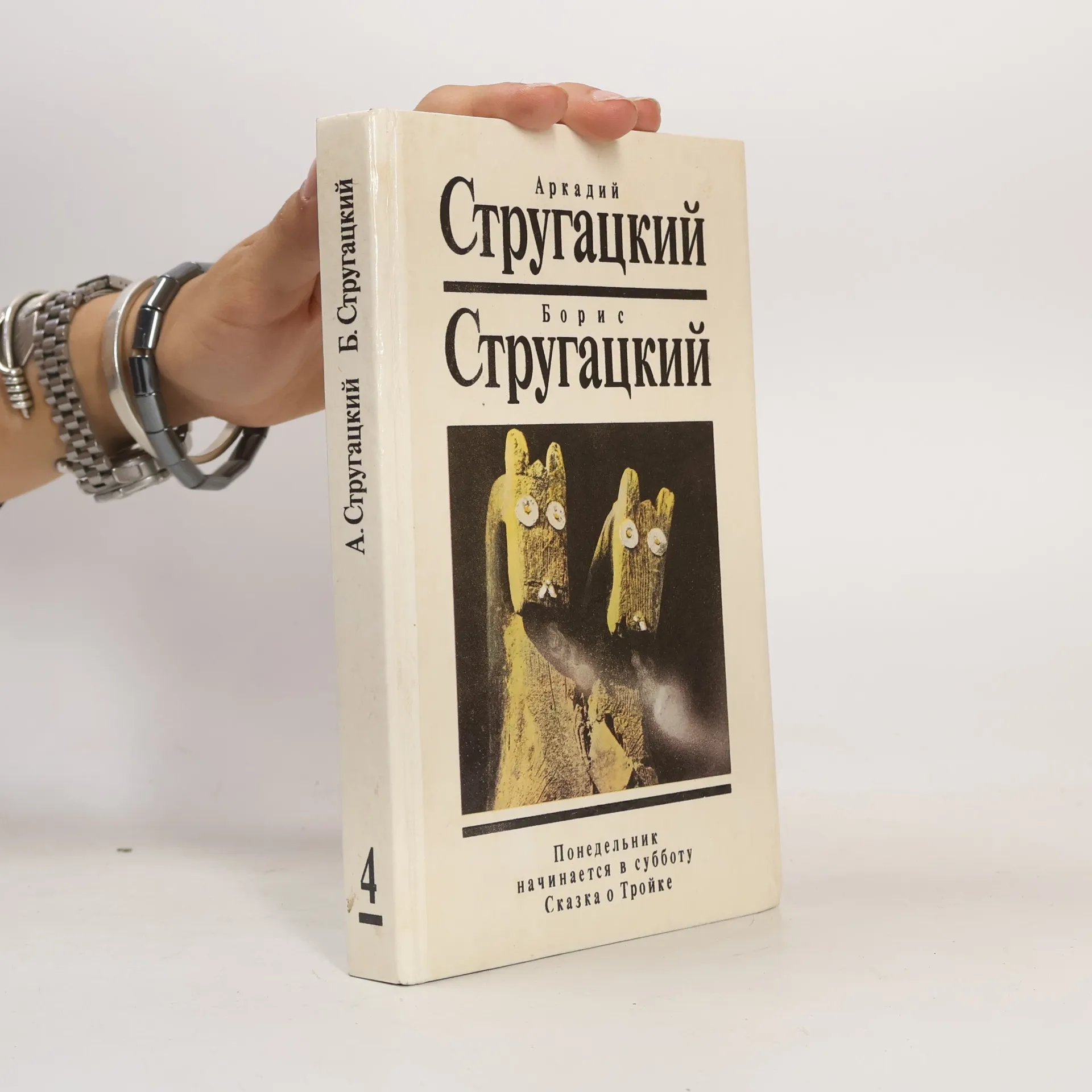
Содержание:Аркадий и Борис Стругацкие. Понедельник начинается в субботу (повесть-сказка для научных работников младшего возраста), с. 3-179Аркадий и Борис Стругацкие. Сказка о Тройке (повесть), с. 180-288Аркадий и Борис Стругацкие. Попытка к бегству (повесть), с. 289-379Аркадий и Борис Стругацкие. Трудно быть богом (повесть), с. 380-522Аркадий и Борис Стругацкие. От авторов (статья), с. 523-526
В четвертый том собрания сочинений включены произведения, написанные в период с 1964 по 1966: «Хищные вещи века», «Беспокойство», «Улитка на склоне», «Второе нашествие марсиан». Том дополняют комментарии Б. Стругацкого к данным произведениям и отрывки из критики того времени.
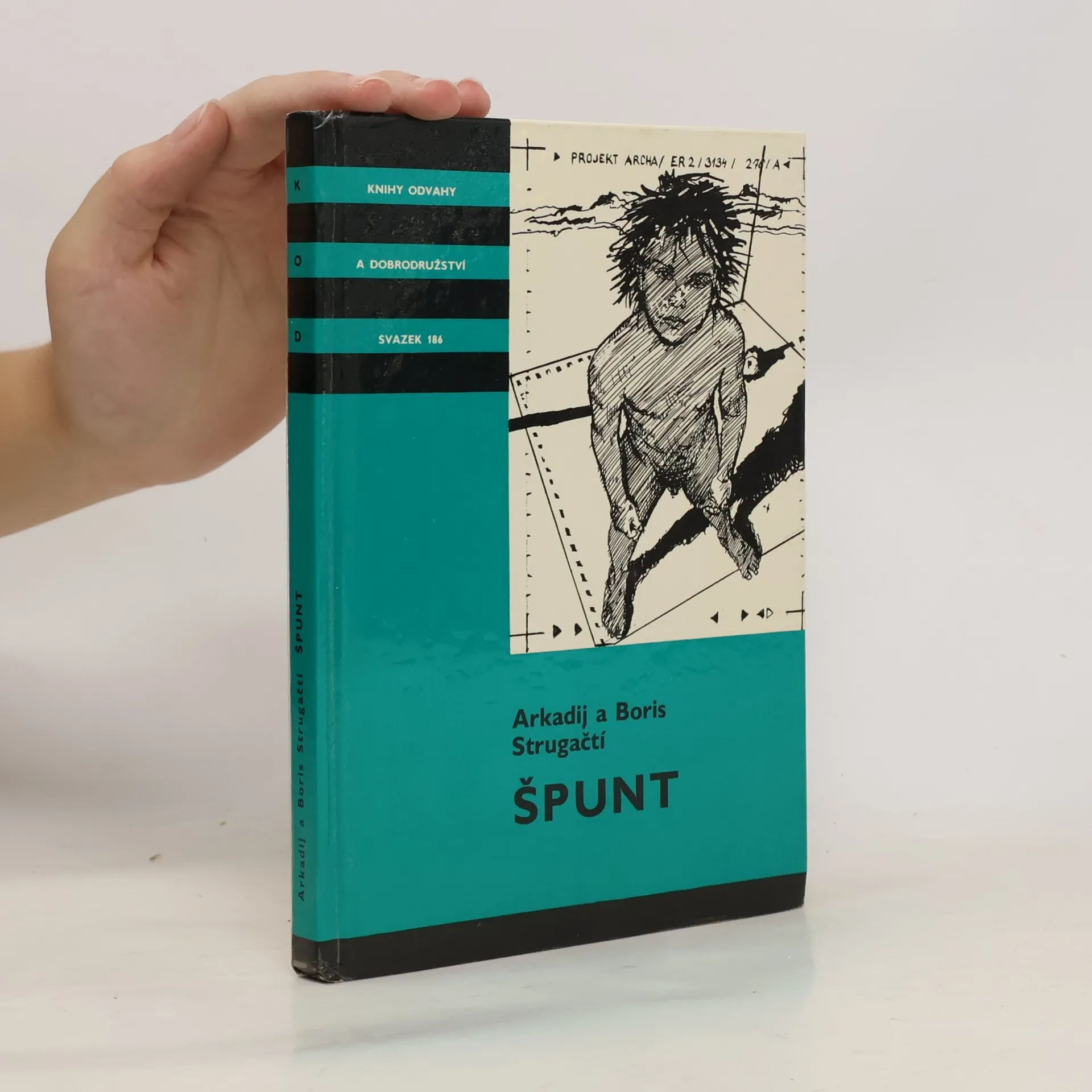
Na neznámou planetu přilétá pozemská expedice, aby připravila projekt Archa pro přestěhování obyvatel ohrožené planety Panta. Při průzkumu expedice narazí na zajímavé a zpočátku nevysvětlitelné jevy, které souvisejí se ztroskotáním starší kosmické lodi. Z této katastrofy přežilo pouze malé dítě, jemuž zachránila život neznámá, avšak rozumná civilizace. Cíl expedice se mění na snahu navázat kontakt s touto civilizací prostřednictvím chlapce, pojmenovaného Špunt. Situaci komplikuje fakt, že tajemná civilizace o kontakt evidentně nestojí. Chlapec, stojící na rozhraní dvou světů – jednoho, který mu zachránil život, a druhého, k němuž patřili jeho rodiče – je stále více přitahován světem lidí a touží se o něm dozvědět více. Právě on by mohl být budoucím prostředníkem, který zajistí trvalý kontakt mezi oběma civilizacemi. Bratři Arkadij a Boris Strugačtí patří k nejvýznamnějším autorům sovětské vědeckofantastické literatury a překračují hranice literární sci-fi, zaměřují se na postoje průměrného člověka k často složitému a problematickému světu.
Chrobák v mravenisku je román o Pozemšťanoch v ďalekej budúcnosti s takmer detektívnou zápletkou. Pátranie po hlavnom hrdinovi Abalkinovi, ktorý sa skrýva, objavuje a zas uniká, hľadanie odpovede na existenčné otázky, týkajúce sa sa bytia či nebytia ľudskej civilizácie za Zemi, tvorí rámec napínavého, dramatického deja. Tajomná postava Abalkina, jeho záhadný pôvod a čudné správanie vyvolávajú rad hypotéz a podozrení: kto je to a aké má poslanie na Zemi? Štvanec, čo celý život trpí za omyly podozrievavých ľudí, alebo "podhodenec", ktorý má uviesť do pohybu nepredstaviteľnú ničivú silu a ohroziť ľudstvo? Nesmierne pútavé čítanie poskytuje každú chvíľu tému na zamyslenie, je predchnuté hlbokými humanistickými myšlienkami.
Planeta Duha byla využita jako megalaboratoř pro fyzikální pokusy. Vědci si však ukousli větší sousto, než bylo únosné, a časoprostor planety Duha se zhroutil. Od obou pólů se směrem k rovníku blíží dvě Vlny a za sebou zanechávají jen trosky a poušť. Vlna je nezrušitelná, nezničitelná, nezastavitelná. Podél rovníku zůstává jen úzký pruh, kde se shromáždili zbylí obyvatelé planety. Zachránit se však může jen hrstka…
Prvotina bratrů Strugackých. Kniha je rozdělena do tří částí, které popisují přípravy letu na Venuši, kde lidstvo očekává nalezení mnohých nerostných pokladů, dále samotný let v novém kosmickém korábu Chius, jež používá fotonového pohonu, a konečně, průzkumem uranové Golkondy na Venuši a krutým bojem o přežití na nehostinné planetě. -- zdroj: legie.info --
Понедельник начинается в субботу. Сказка о Тройке
- 328pagine
- 12 ore di lettura