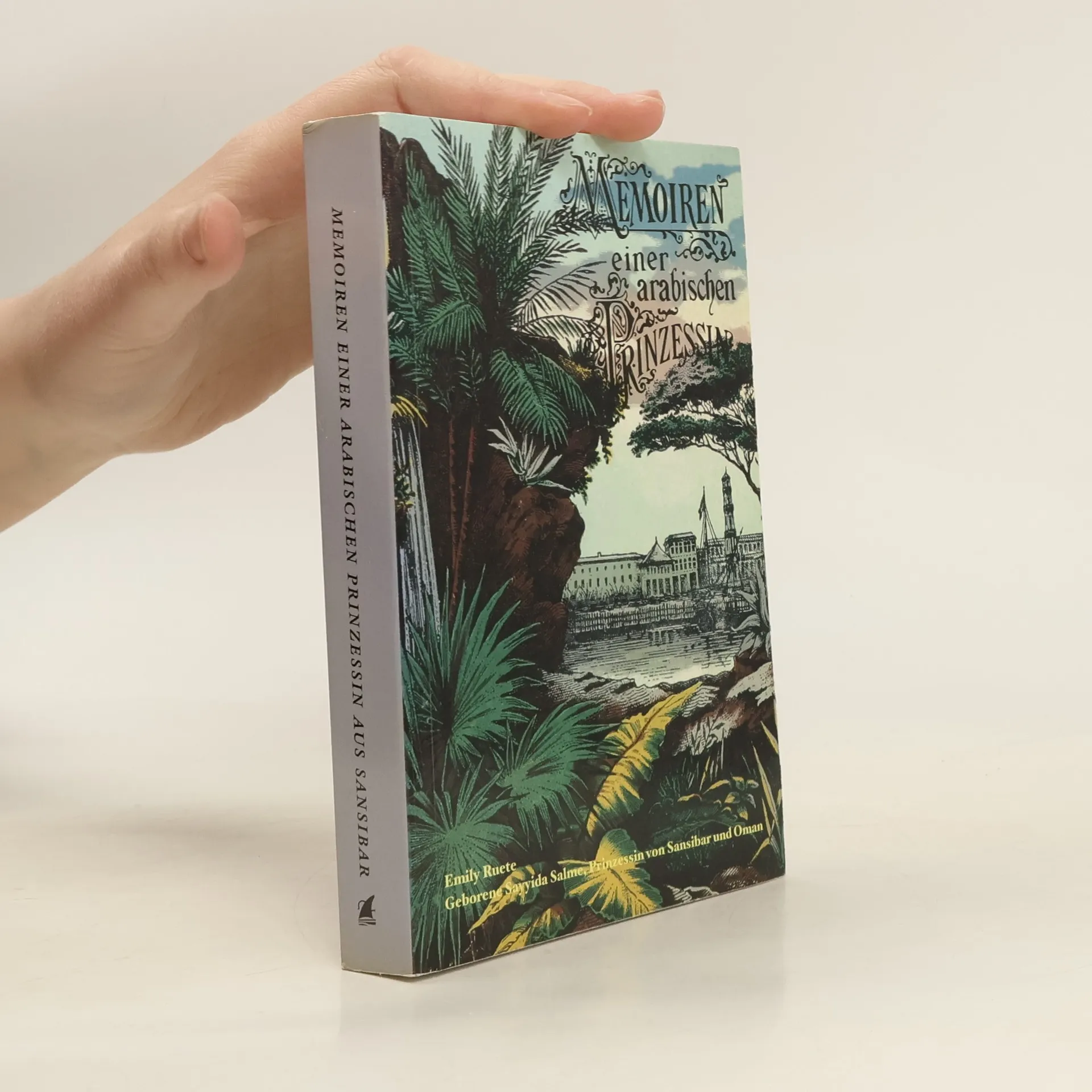
Salme, the daughter of the Sultan of Oman and Zanzibar and a Circassian slave, secretly left Zanzibar in 1866 to marry the Hamburg merchant Heinrich Ruete, following him to his homeland. When her memoirs were published in 1886, they attracted significant attention and were quickly translated into several languages. Salme recounts the exotic and turbulent daily life in the Sultan's palace and harem, detailing the intrigues within the palace and their implications for the Sultanate amid the aggressive colonial policies of Bismarck and England. No contemporary colonial archive or documentation could illuminate the conditions and events that Emily Ruete, born Salme, a princess of Oman and Zanzibar, reveals to the reader. Estranged from her family during her lifetime, Emily Ruete is now commemorated in a room dedicated to her at the Palace Museum in Zanzibar, while she rests in Ohlsdorf Cemetery in Hamburg. These poignant memoirs convey her enduring sense of rootlessness and longing for her homeland until her death.
Emily Ruete Libri
30 agosto 1844 – 29 febbraio 1924
Emily Ruete, nata Principessa Sayyida Salme di Zanzibar e Oman, è celebrata come un'autrice che ha esplorato le intersezioni culturali e la libertà personale. La sua scrittura offre una prospettiva acuta sulla collisione tra il mondo islamico tradizionale e un'Europa in via di modernizzazione. Attraverso le sue opere letterarie, offre uno sguardo unico sulla vita di una donna che osò trascendere le aspettative sociali della sua epoca. I suoi testi sono una preziosa testimonianza della ricerca di identità e indipendenza in un mondo complesso.