



Bookbot

Paul Halpern

    15 gennaio 1961

    Paul Halpern è uno scrittore scientifico e fisico acclamato il cui lavoro approfondisce i profondi misteri dello spazio, del tempo e della natura della realtà. Possiede un talento unico nel rendere la fisica complessa accessibile a un vasto pubblico, concentrandosi spesso su esperimenti mentali cruciali e sui dialoghi storici dei giganti della scienza. La sua scrittura esplora le forze fondamentali dell'universo e i limiti intrinseci della nostra comprensione del regno quantistico. Halpern si sforza di illuminare gli enigmi dell'universo, presentandoli ai lettori in modo accattivante e accessibile.

    Wurmlöcher im Kosmos
    Štruktúra vesmíru
    The Great Beyond
    Collider
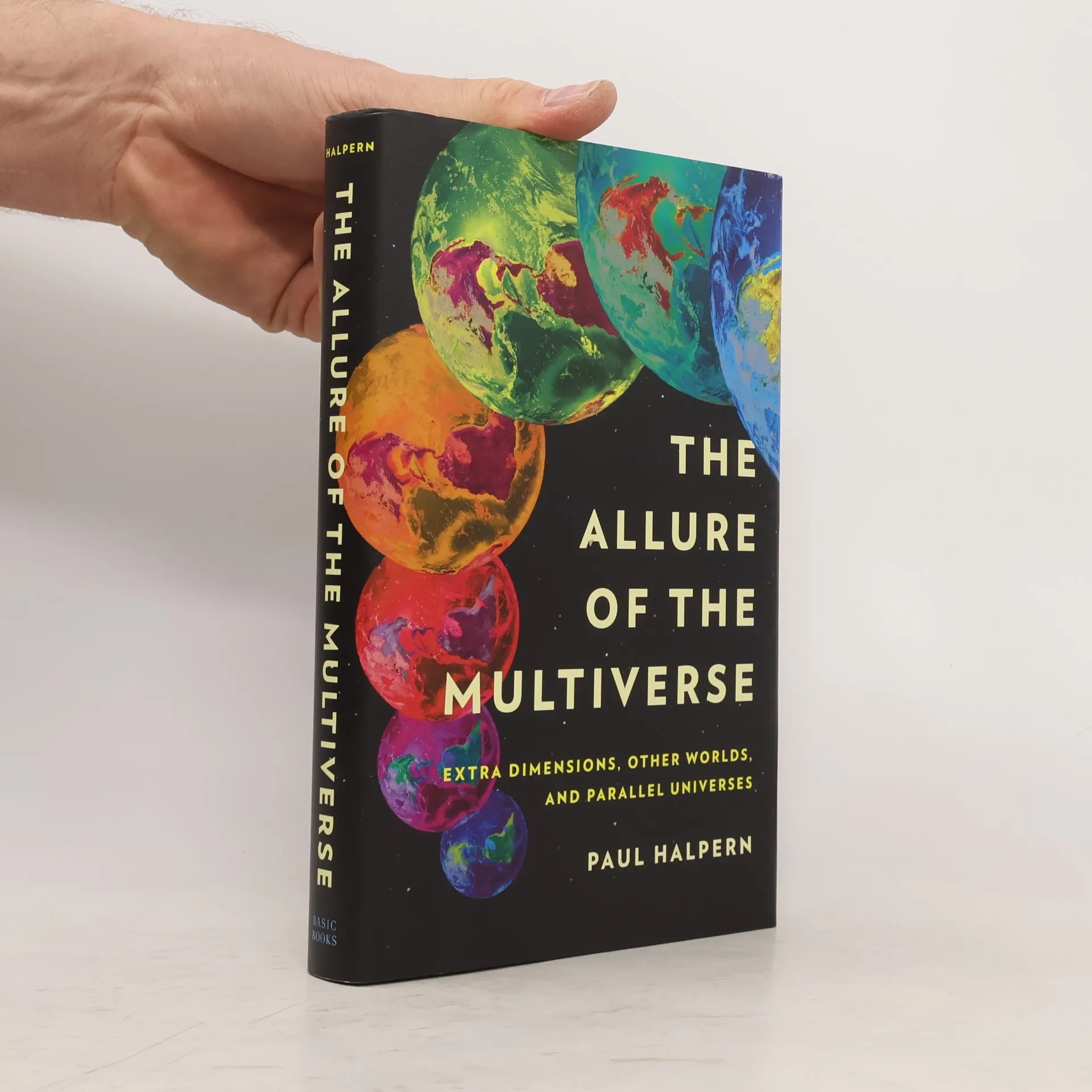
    The Allure of the Multiverse
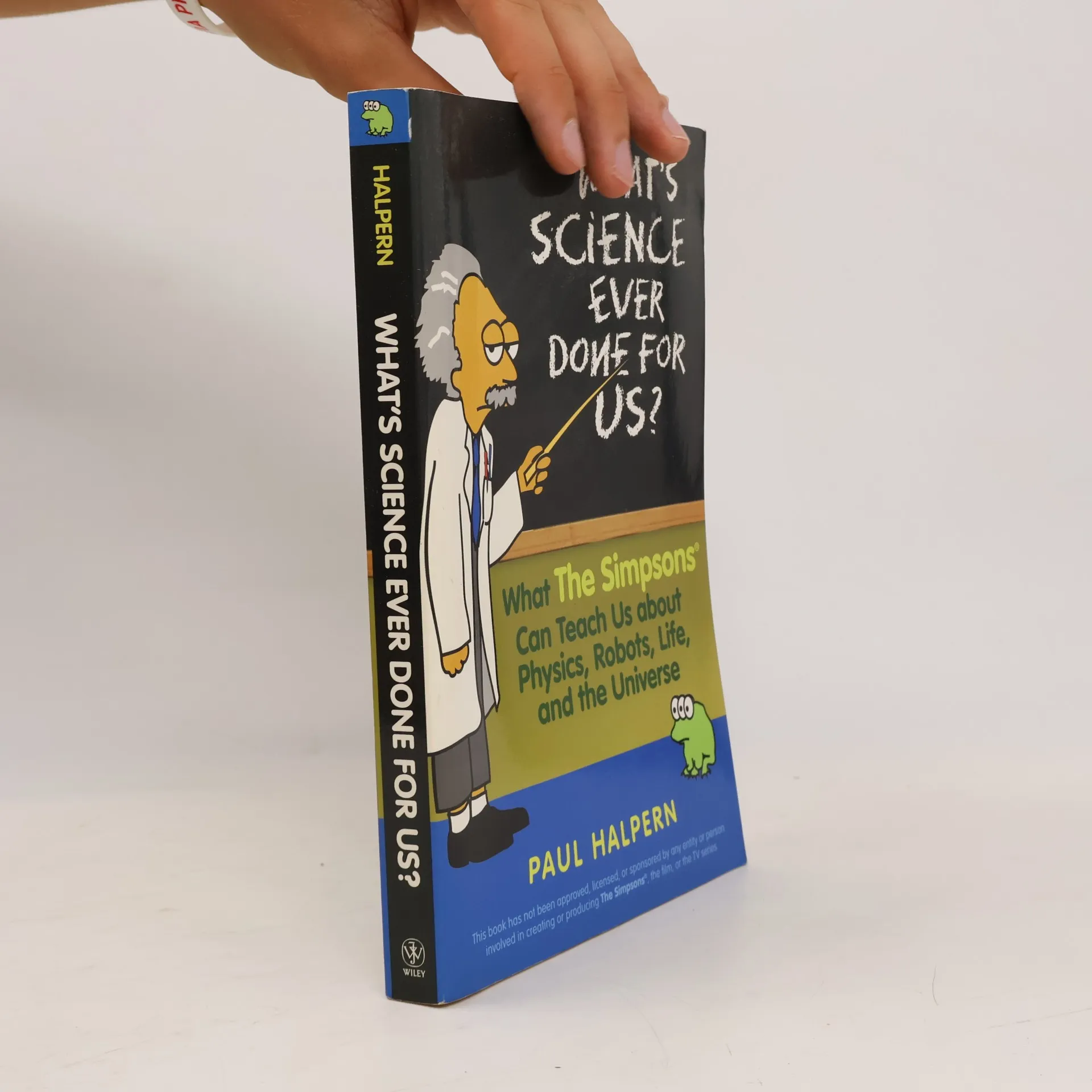
    What's Science Ever Done For Us?
    • What's Science Ever Done For Us?

      What the Simpsons Can Teach Us About Physics, Robots, Life, and the Universe

      • 272pagine
      • 10 ore di lettura

      This amusing book explores the intersection of science and the beloved animated series, The Simpsons. Over the years, the show has tackled topics like genetic mutation, time travel, artificial intelligence, and aliens. It delves into these themes through the lens of America's favorite cartoon, providing an entertaining yet informative guide for both fans and science enthusiasts. The book serves as a delightful companion to the upcoming Simpsons movie, presenting a roadmap of contemporary scientific issues. This unauthorized exploration examines classic episodes to spark engaging scientific discussions, blending intriguing speculative ideas with humor. It poses questions such as whether gravitational lensing can create optical illusions like Homer’s encounter with the invisible man, or if the Coriolis effect really makes toilets in the Southern Hemisphere flush clockwise, as Bart wondered. It also considers the logic of boarding a rocket to Mars in times of peril, as Marge, Lisa, and Maggie did. Additionally, it explores the theoretical implications of Einstein's theory of time dilation, as Bart and Milhouse dream of stopping time. Paul Halpern, PhD, a Professor of Physics and Mathematics at the University of the Sciences in Philadelphia, brings his expertise to this fun and engaging examination of science through the lens of a cultural icon.

      What's Science Ever Done For Us?
    • The Allure of the Multiverse

      Extra Dimensions, Other Worlds, and Parallel Universes

      • 320pagine
      • 12 ore di lettura

      The long history of one of physics' most enticing ideas: that the universe we know isn't the only one Our books, our movies--our imaginations--are obsessed with extra dimensions, alternate timelines, and the sense that all we see might not be all there is. In short, we can't stop thinking about the multiverse. As it turns out, physicists are similarly captivated. In The Allure of the Multiverse, physicist Paul Halpern tells the epic story of how science became besotted with the multiverse, and the controversies that ensued. The questions that brought scientists to this point are big and deep: Is reality such that anything can happen, must happen? How does quantum mechanics "choose" the outcomes of its apparently random processes? And why is the universe habitable? Each question quickly leads to the multiverse. Drawing on centuries of disputation and deep vision, from luminaries like Nietzsche, Einstein, and the creators of the Marvel Cinematic Universe, Halpern reveals the multiplicity of multiverses that scientists have imagined to make sense of our reality. Whether we live in one of many different possible universes, or simply the only one there is, might never be certain. But Halpern shows one thing for sure: how stimulating it can be to try to find out.

      The Allure of the Multiverse
    • Collider

      The Search for the World's Smallest Particles

      • 272pagine
      • 10 ore di lettura

      An accessible look at the hottest topic in physics and the experiments that will transform our understanding of the universe The biggest news in science today is the Large Hadron Collider, the world's largest and most powerful particle-smasher, and the anticipation of finally discovering the Higgs boson particle. But what is the Higgs boson and why is it often referred to as the God Particle? Why are the Higgs and the LHC so important? Getting a handle on the science behind the LHC can be difficult for anyone without an advanced degree in particle physics, but you don't need to go back to school to learn about it. In Collider , award-winning physicist Paul Halpern provides you with the tools you need to understand what the LHC is and what it hopes to discover.

      Collider
    • The Great Beyond

      Higher Dimensions, Parallel Universes and the Extraordinary Search for a Theory of Everything

      • 336pagine
      • 12 ore di lettura

      The concept of multiple unperceived dimensions in the universe is one of the hottest topics in contemporary physics. It is essential to current attempts to explain gravity and the underlying structure of the universe. The history of how such an unfathomable concept has risen to prominence takes centre stage in The Great Beyond. The story begins with Einstein's famous quarrel with Heisenberg and Bohr, whose theories of uncertainty threatened the order Einstein believed was essential to the universe, and it was his rejection of uncertainty that drove him to ponder the existence of a fifth dimension. Beginning with this famous disagreement and culminating with an explanation of the newest brane approach, author Paul Halpern shows how current debates about the nature of reality began as age-old controversies, and will address how the possibility of higher dimensions has influenced culture over the past one hundred years (visiting the work of H.G. Wells, Salvador Dali and others).

      The Great Beyond
    • Štruktúra vesmíru

      • 120pagine
      • 5 ore di lettura

      Žijeme v období, ktoré je z hľadiska výskumu stavby vesmíru naozaj vzrušujúce. Na jednej strane sme sa v posledných rokoch všeličo dozvedeli o hviezdach, galaxiách a iných astronomických objektoch, ale zdá sa, že Hubblov vesmírny teleskop takmer každých niekoľko týždňov prináša nové objavy. Na druhej strane aj sebaistí vedci sa bezradne škrabú po hlave nad takými problémami, ako je otázka veku kozmu, dilema tmavej hmoty, záhada veľkého atraktora či osud vesmíru...

      Štruktúra vesmíru
      3,0
    • Die Simpsons sind eine wahre Fundgrube verblüffender wissenschaftlicher Ideen. In zahlreichen Folgen finden sich Anspielungen und Verweise. Das reicht von Gastauftritten Stephen Hawkings und Albert Einsteins über Evolutionswitze bis hin zu mathematischen Beweisen. Dieses Buch nimmt alle Fans mit auf eine Entdeckungsreise in die Welt der Wissenschaft hinter der beliebtesten Fernsehserie des Universums.

      Schule ist was für Versager
      3,7