

Esaurito ma molto ricercato!


Maggiori informazioni sul libro
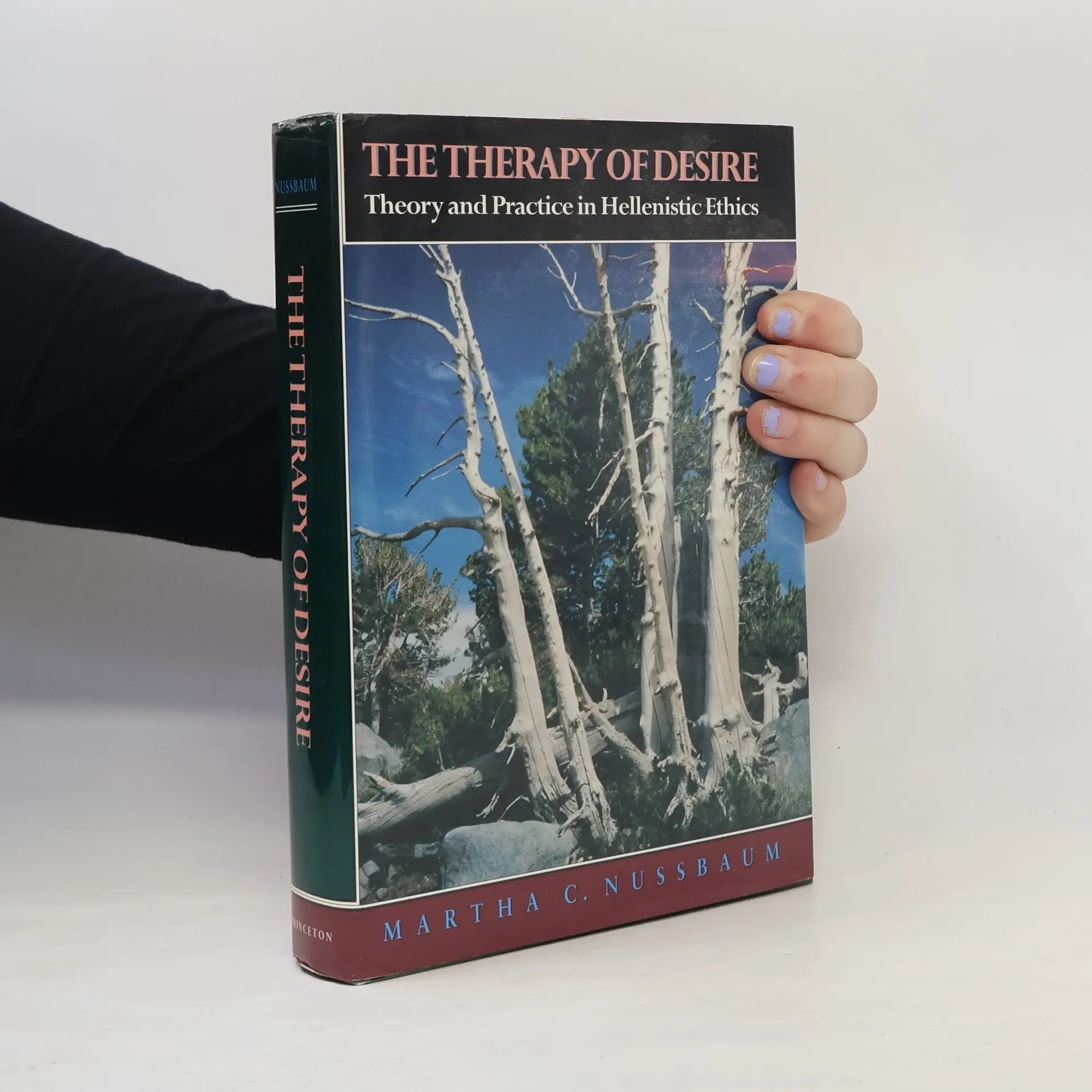
The Epicureans, Skeptics, and Stoics practiced philosophy not as a detached intellectual discipline, but as a worldly art of grappling with issues of daily and urgent human significance: the fear of death, love and sexuality, anger and aggression. Like medicine, philosophy to them was a rigorous science aimed both at understanding and at producing the flourishing of human life. In this engaging book, Martha Nussbaum examines texts of philosophers committed to a therapeutic paradigm--including Epicurus, Lucretius, Sextus Empiricus, Chrysippus, and Seneca--and recovers a valuable source for our moral and political thought of today.


Acquisto del libro
The Therapy of Desire, Martha Craven Nussbaum
- Lingua

- Pubblicato
- 1994
- Rilegatura
- (Copertina rigida)
Ti avviseremo via email non appena lo rintracceremo.
Metodi di pagamento
Qui potrebbe esserci la tua recensione.
- Titolo
- The Therapy of Desire
- Sottotitolo
- Theory and Practice in Hellenistic Ethics
- Lingua
- Inglese
- Autori
- Martha Craven Nussbaum
- Editore
- Princeton University Press
- Pubblicato
- 1994
- Formato
- Copertina rigida
- Pagine
- 558
- ISBN10
- 0691033420
- ISBN13
- 9780691033426
- Serie
- Tag
- Saggistica, Scienze sociali, Tema stórico, Storia, Scienze politiche & Politica, Temi psicologici, Tematica filosofica, Filosofia, Psicologia, Politica, Regali per il nonno, Sessualità e intimità, Grecia
- Valutazione
- 4,3 su 5
- Descrizione
- The Epicureans, Skeptics, and Stoics practiced philosophy not as a detached intellectual discipline, but as a worldly art of grappling with issues of daily and urgent human significance: the fear of death, love and sexuality, anger and aggression. Like medicine, philosophy to them was a rigorous science aimed both at understanding and at producing the flourishing of human life. In this engaging book, Martha Nussbaum examines texts of philosophers committed to a therapeutic paradigm--including Epicurus, Lucretius, Sextus Empiricus, Chrysippus, and Seneca--and recovers a valuable source for our moral and political thought of today.