




Parametri
- 230pagine
- 9 ore di lettura
Maggiori informazioni sul libro
Becoming an adult today can seem a grim prospect. As you grow up, you are told to renounce most of the dreams of your youth and resign yourself to an existence that is a pale dilution of the adventurous, important and enjoyable life you once expected. But who wants to do that? No wonder we live in a culture of rampant immaturity, argues renowned philosopher Susan Neiman. In Why Grow Up, the fourth in a series of short books of original thought, Neiman shows how philosophy can help us want to grow up. Travel, both literally and metaphorically, has been seen as a crucial step to coming of age by thinkers as diverse as Kant, Rousseau and Simone de Beauvoir. Neiman asks how this idea can help us build a new model of maturity. Refuting the widespread belief that the best time of your life is between sixteen and twenty-six, she argues that being grown-up is an ideal worth striving for.



Acquisto del libro
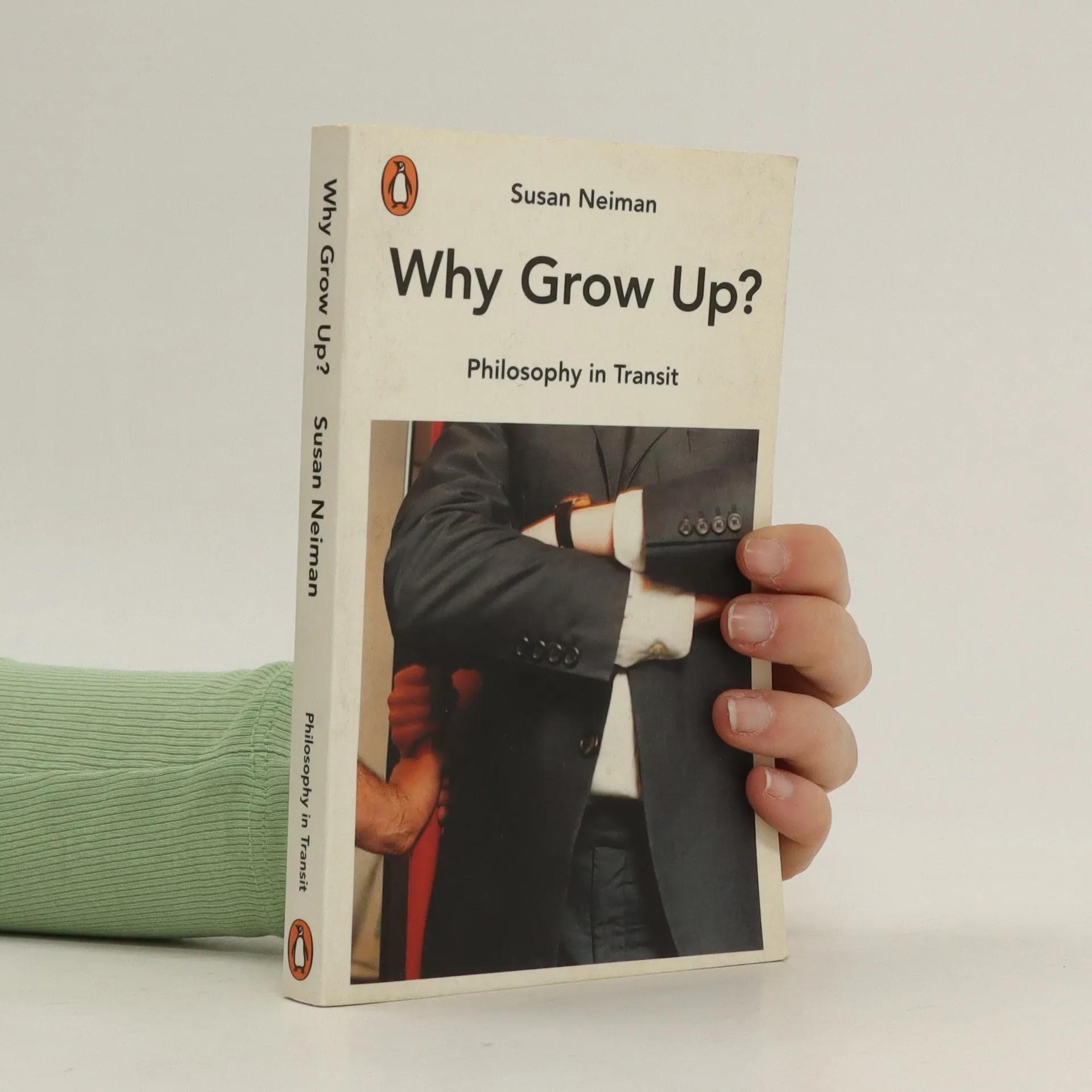
Why grow up?, Susan Neiman
- Lingua

- Pubblicato
- 2014
- product-detail.submit-box.info.binding
- (In brossura)
Metodi di pagamento
Qui potrebbe esserci la tua recensione.
- Titolo
- Why grow up?
- Lingua
- Inglese
- Autori
- Susan Neiman
- Editore
- Penguin Books
- Pubblicato
- 2014
- Formato
- In brossura
- Pagine
- 230
- ISBN10
- 0141977566
- ISBN13
- 9780141977560
- Serie
- Tag
- Saggistica, Scienze sociali, Auto-aiuto, Temi psicologici, Tematica filosofica, Filosofia, Maternità e Genitorialità, Cultura e Società, Genitorialità
- Valutazione
- 3,65 su 5
- Descrizione
- Becoming an adult today can seem a grim prospect. As you grow up, you are told to renounce most of the dreams of your youth and resign yourself to an existence that is a pale dilution of the adventurous, important and enjoyable life you once expected. But who wants to do that? No wonder we live in a culture of rampant immaturity, argues renowned philosopher Susan Neiman. In Why Grow Up, the fourth in a series of short books of original thought, Neiman shows how philosophy can help us want to grow up. Travel, both literally and metaphorically, has been seen as a crucial step to coming of age by thinkers as diverse as Kant, Rousseau and Simone de Beauvoir. Neiman asks how this idea can help us build a new model of maturity. Refuting the widespread belief that the best time of your life is between sixteen and twenty-six, she argues that being grown-up is an ideal worth striving for.