

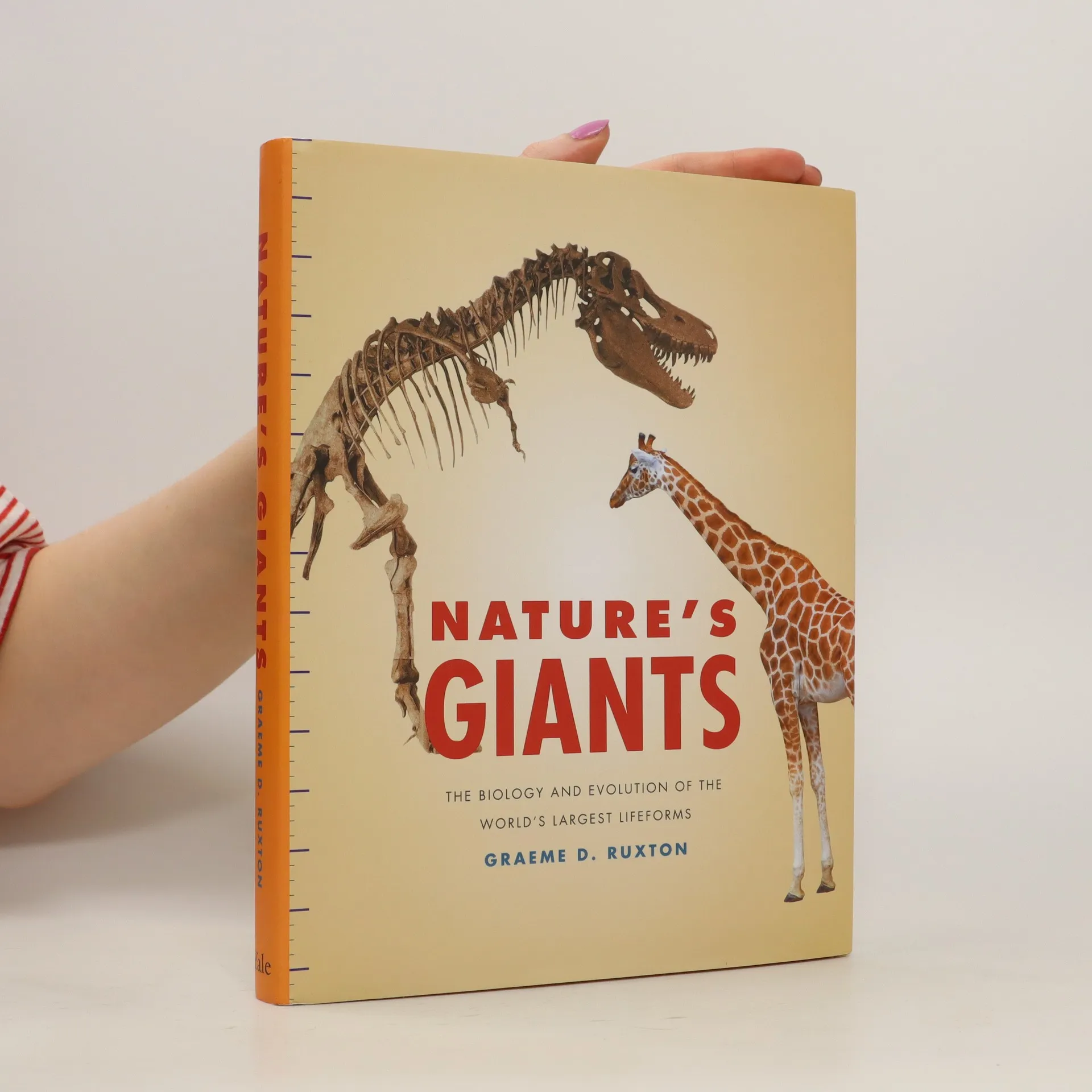


Nature's Giants. The Biology and Evolution of the World's Largest Lifeforms
Valutazione del libro
Maggiori informazioni sul libro
A beautifully illustrated exploration of the science behind the awe-inspiring giants of past and present The colossal plants and animals of our world--dinosaurs, whales, and even trees--are a source of unending fascination, and their sheer scale can be truly impressive. Size is integral to the way that organisms experience the world: a puddle that a human being would step over without thinking is an entire world to thousands of microscopic rotifers. But why are creatures the size that they are? Why aren't bugs the size of elephants, or whales the size of goldfish? In this lavishly illustrated new book, biologist Graeme Ruxton explains how and why nature's giants came to be so big--for example, how decreased oxygen levels limited the size of insects and how island isolation allowed small-bodied animals to evolve larger body sizes. Through a diverse array of examples, from huge butterflies to giant squid, Ruxton explores the physics, biology, and evolutionary drivers behind organism size, showing what it's like to live large.
Acquisto del libro
Nature's Giants. The Biology and Evolution of the World's Largest Lifeforms, Graeme D. Ruxton, R. Norman OwenSmith
- Lingua

- Pubblicato
- 2019
- Rilegatura
- (Copertina rigida)
Metodi di pagamento
Qui potrebbe esserci la tua recensione.
- Titolo
- Nature's Giants. The Biology and Evolution of the World's Largest Lifeforms
- Lingua
- Inglese
- Editore
- Yale University Press
- Pubblicato
- 2019
- Formato
- Copertina rigida
- Pagine
- 224
- ISBN10
- 0300239882
- ISBN13
- 9780300239881
- Serie
- Categoria
- Valutazione
- 4,1 su 5
- Descrizione
- A beautifully illustrated exploration of the science behind the awe-inspiring giants of past and present The colossal plants and animals of our world--dinosaurs, whales, and even trees--are a source of unending fascination, and their sheer scale can be truly impressive. Size is integral to the way that organisms experience the world: a puddle that a human being would step over without thinking is an entire world to thousands of microscopic rotifers. But why are creatures the size that they are? Why aren't bugs the size of elephants, or whales the size of goldfish? In this lavishly illustrated new book, biologist Graeme Ruxton explains how and why nature's giants came to be so big--for example, how decreased oxygen levels limited the size of insects and how island isolation allowed small-bodied animals to evolve larger body sizes. Through a diverse array of examples, from huge butterflies to giant squid, Ruxton explores the physics, biology, and evolutionary drivers behind organism size, showing what it's like to live large.