

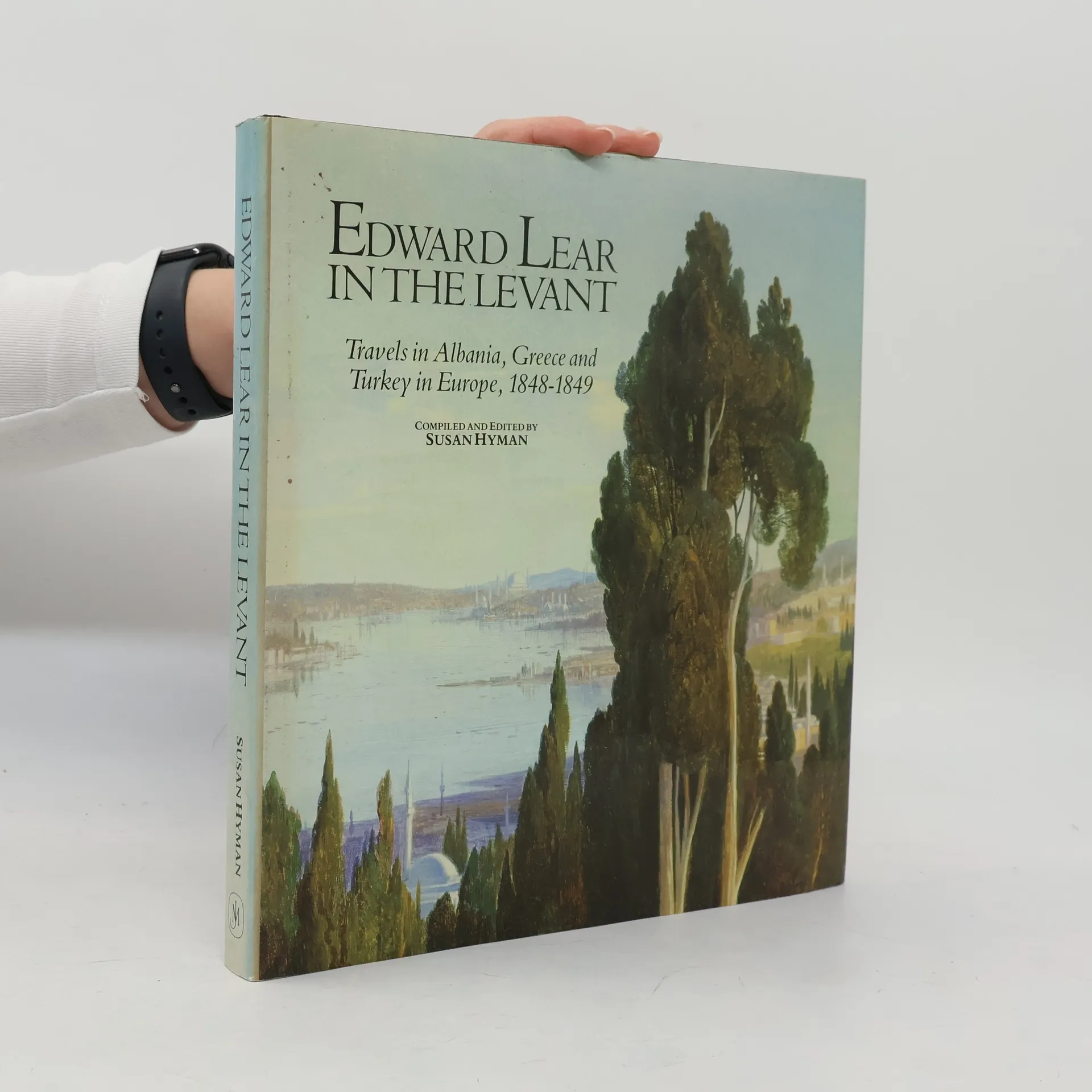
Edward Lear in the Levant
Travels in Albania, Greece, and Turkey in Europe, 1848-1849
Autori
Valutazione del libro
Maggiori informazioni sul libro
This book, published in the centenary year of Lear's death, is a compilation of paintings, sketches, letters and journals, many previously unpublished, of one of Lear's earliest and most remarkable journeys. Lear travelled constantly, across countries still dangerous and unknown to Western Europeans, usually alone or with one servant, often on foot. As he travelled he captured in word and illustration the sublimity of the landscape, the richness of costume and the character of the people he encountered. Victorian Europe was both appalled and fascinated by the Greece he portrayed, whilst through his bizarre cartoons he received recognition from the Surrealists as a forerunner of their movement.
Acquisto del libro
Edward Lear in the Levant, Susan Hyman
- Lingua

- Pubblicato
- 1988
- Rilegatura
- (Copertina rigida)
Metodi di pagamento
Qui potrebbe esserci la tua recensione.
- Titolo
- Edward Lear in the Levant
- Sottotitolo
- Travels in Albania, Greece, and Turkey in Europe, 1848-1849
- Lingua
- Inglese
- Autori
- Susan Hyman
- Editore
- J. Murray
- Pubblicato
- 1988
- Formato
- Copertina rigida
- Pagine
- 168
- ISBN10
- 0719546141
- ISBN13
- 9780719546143
- Serie
- Tag
- Viaggi, Illustrazioni, XIX Secolo, Diari, Artisti
- Valutazione
- 3,5 su 5
- Descrizione
- This book, published in the centenary year of Lear's death, is a compilation of paintings, sketches, letters and journals, many previously unpublished, of one of Lear's earliest and most remarkable journeys. Lear travelled constantly, across countries still dangerous and unknown to Western Europeans, usually alone or with one servant, often on foot. As he travelled he captured in word and illustration the sublimity of the landscape, the richness of costume and the character of the people he encountered. Victorian Europe was both appalled and fascinated by the Greece he portrayed, whilst through his bizarre cartoons he received recognition from the Surrealists as a forerunner of their movement.