

Parametri
- 253pagine
- 9 ore di lettura
Maggiori informazioni sul libro
The ultimate goal of cognitive sciences is to understand brain function—how it transforms "matter into imagination." Psychoanalyst Arnold Modell argues that any scientific explanation of mind/brain must include subjective human experience. He challenges the notion that mental functioning equates to computation, asserting that meaning construction differs from mere information processing. The complexities of human psychology, understood through introspection and empathy, must complement the third-person perspective of cognitive psychology and neuroscience. Modell posits that if other mammals are conscious and aware of their feelings, we should consider both evolutionary continuities and discontinuities in emotion. While the limbic system, or emotional brain, is ancient, only humans possess generative imagination, allowing us to interpret and transform our feelings through metaphor. To support his argument, Modell incorporates insights from various fields, including psychoanalysis, cognitive psychology, neurobiology, evolutionary biology, linguistics, and philosophy. He contends that integrating neuroscience's objectivity, the phenomenology of introspection, and psychoanalysis's intersubjectivity is essential for a comprehensive understanding of how the mind operates.
Acquisto del libro
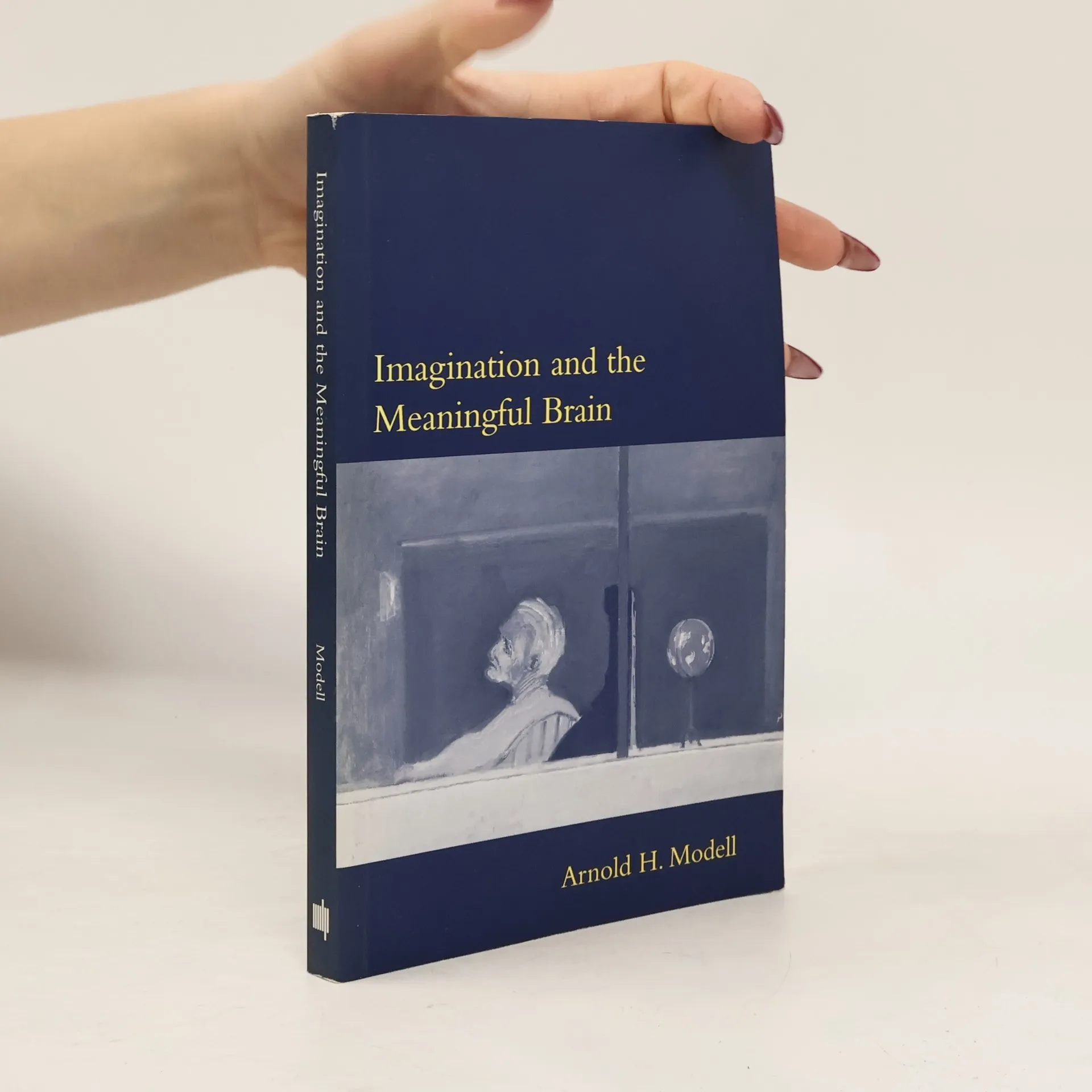
Philosophical Psychopathology: Imagination and the Meaningful Brain, Arnold H. Modell
- Lingua

- Pubblicato
- 2006
- Rilegatura
- (In brossura)
Metodi di pagamento
Qui potrebbe esserci la tua recensione.
- Titolo
- Philosophical Psychopathology: Imagination and the Meaningful Brain
- Lingua
- Inglese
- Autori
- Arnold H. Modell
- Editore
- MIT Press
- Pubblicato
- 2006
- Formato
- In brossura
- Pagine
- 253
- ISBN10
- 0262633434
- ISBN13
- 9780262633437
- Serie
- Tag
- Temi psicologici, Manuali e guide, Tematica filosofica, USA, Letteratura specialistica, Psychoanalisi, Neuropsicologia
- Valutazione
- 3 su 5
- Descrizione
- The ultimate goal of cognitive sciences is to understand brain function—how it transforms "matter into imagination." Psychoanalyst Arnold Modell argues that any scientific explanation of mind/brain must include subjective human experience. He challenges the notion that mental functioning equates to computation, asserting that meaning construction differs from mere information processing. The complexities of human psychology, understood through introspection and empathy, must complement the third-person perspective of cognitive psychology and neuroscience. Modell posits that if other mammals are conscious and aware of their feelings, we should consider both evolutionary continuities and discontinuities in emotion. While the limbic system, or emotional brain, is ancient, only humans possess generative imagination, allowing us to interpret and transform our feelings through metaphor. To support his argument, Modell incorporates insights from various fields, including psychoanalysis, cognitive psychology, neurobiology, evolutionary biology, linguistics, and philosophy. He contends that integrating neuroscience's objectivity, the phenomenology of introspection, and psychoanalysis's intersubjectivity is essential for a comprehensive understanding of how the mind operates.