

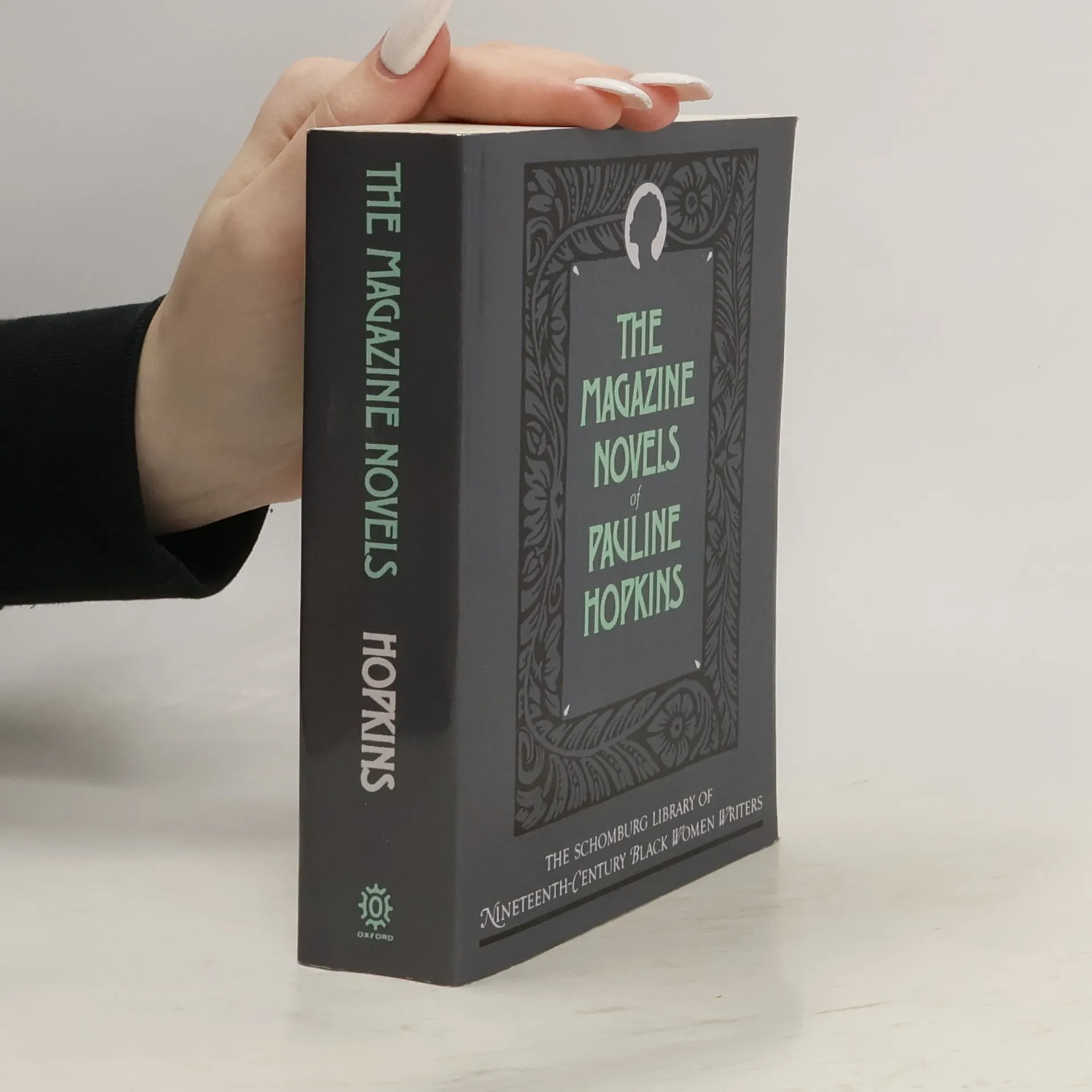
The Schomburg Library of Nineteenth-Century Black Women Writers: The Magazine Novels of Pauline Hopkins
(Including Hagar's Daughter, Winona, and Of One Blood)
Valutazione del libro
Parametri
- 672pagine
- 24 ore di lettura
Maggiori informazioni sul libro
First published in May 1900, the Colored American Magazine provided a pioneering forum for black literary talent previously stifled by lack of encouragement and opportunity. Not only a prolific writer for the journal, Pauline Hopkins also served as one of its powerful editorial forces. This volume of her magazine novels, which appeared serially in the journal between March 1901 and November 1903, reveals Hopkins' commitment to fiction as a vehicle for social change. She weaves important political themes into the narrative formulas of nineteenth-century dime-store novels and story papers, which emphasize suspense, action, complex plotting, multiple and false identities, and the use of disguise. Offering both instruction and entertainment, Hopkins' novels also expose the limitations of popular American narrative forms when telling the stories of black characters.
Acquisto del libro
The Schomburg Library of Nineteenth-Century Black Women Writers: The Magazine Novels of Pauline Hopkins, Pauline Elizabeth Hopkins
- Lingua

- Pubblicato
- 1988
- Rilegatura
- (In brossura)
Metodi di pagamento
Qui potrebbe esserci la tua recensione.
- Titolo
- The Schomburg Library of Nineteenth-Century Black Women Writers: The Magazine Novels of Pauline Hopkins
- Sottotitolo
- (Including Hagar's Daughter, Winona, and Of One Blood)
- Lingua
- Inglese
- Editore
- Oxford University Press
- Pubblicato
- 1988
- Formato
- In brossura
- Pagine
- 672
- ISBN10
- 0195063252
- ISBN13
- 9780195063257
- Serie
- Valutazione
- 3,8 su 5
- Descrizione
- First published in May 1900, the Colored American Magazine provided a pioneering forum for black literary talent previously stifled by lack of encouragement and opportunity. Not only a prolific writer for the journal, Pauline Hopkins also served as one of its powerful editorial forces. This volume of her magazine novels, which appeared serially in the journal between March 1901 and November 1903, reveals Hopkins' commitment to fiction as a vehicle for social change. She weaves important political themes into the narrative formulas of nineteenth-century dime-store novels and story papers, which emphasize suspense, action, complex plotting, multiple and false identities, and the use of disguise. Offering both instruction and entertainment, Hopkins' novels also expose the limitations of popular American narrative forms when telling the stories of black characters.