

Maggiori informazioni sul libro
The second edition features:a CD with all of the book's Amos, EQS, and LISREL programs and data sets; new chapters on importing data issues related to data editing and on how to report research; an updated introduction to matrix notation and programs that illustrate how to compute these calculations; many more computer program examples and chapter exercises; and increased coverage of factors that affect correlation, the 4-step approach to SEM and hypothesis testing, significance, power, and sample size issues.The new edition's expanded use of applications make this book ideal for advanced students and researchers in psychology, education, business, health care, political science, sociology, and biology. A basic understanding of correlation is assumed and an understanding of the matrices used in SEM models is encouraged.
Acquisto del libro
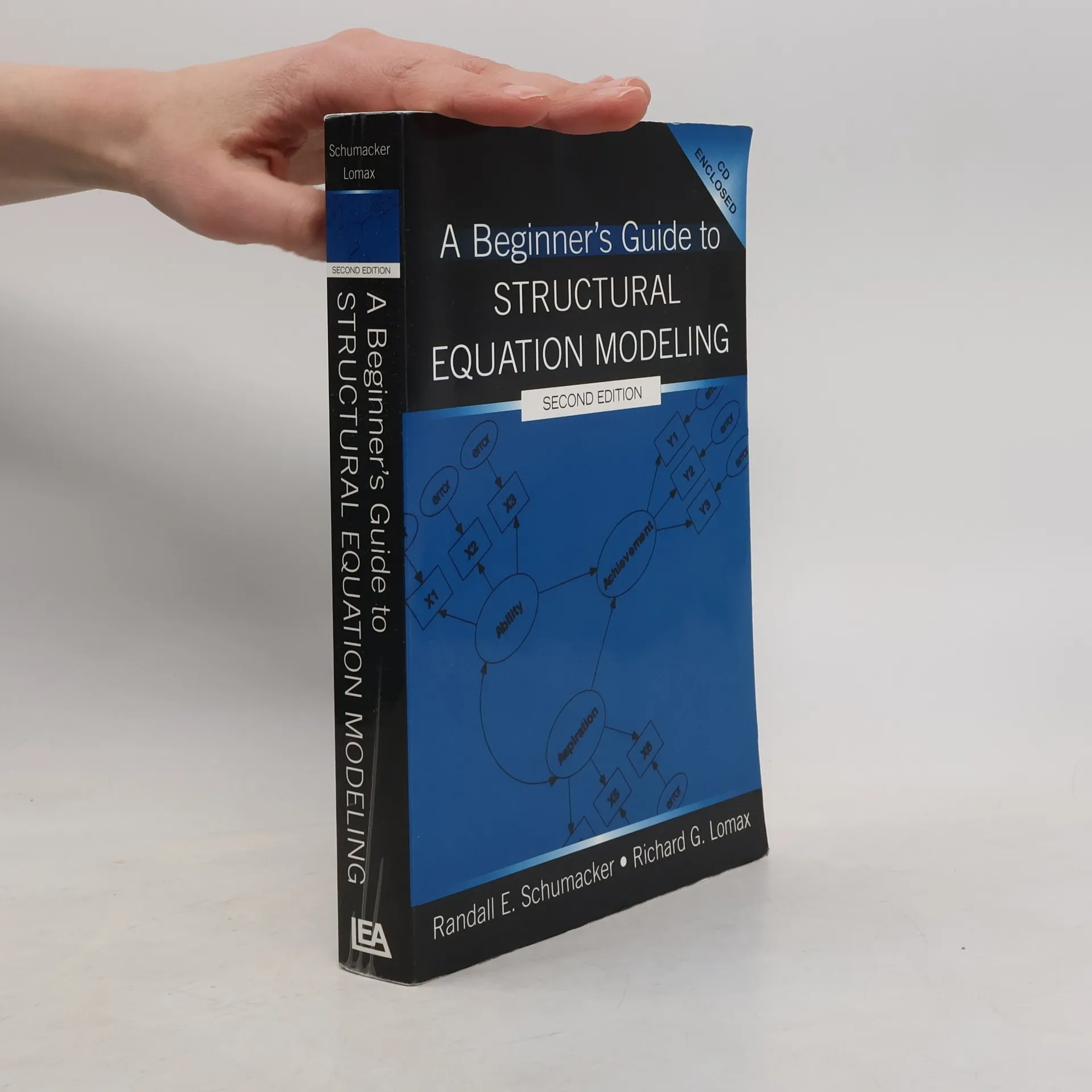
A Beginner's Guide to Structural Equation Modeling, Randall E. Schumacker, Richard G. Lomax
- Lingua

- Pubblicato
- 2004
- Rilegatura
- (In brossura)
Metodi di pagamento
Qui potrebbe esserci la tua recensione.
- Titolo
- A Beginner's Guide to Structural Equation Modeling
- Sottotitolo
- Second Edition
- Lingua
- Inglese
- Editore
- Psychology Press
- Pubblicato
- 2004
- Formato
- In brossura
- Pagine
- 498
- ISBN10
- 0805840184
- ISBN13
- 9780805840186
- Serie
- Valutazione
- 3,4 su 5
- Descrizione
- The second edition features:a CD with all of the book's Amos, EQS, and LISREL programs and data sets; new chapters on importing data issues related to data editing and on how to report research; an updated introduction to matrix notation and programs that illustrate how to compute these calculations; many more computer program examples and chapter exercises; and increased coverage of factors that affect correlation, the 4-step approach to SEM and hypothesis testing, significance, power, and sample size issues.The new edition's expanded use of applications make this book ideal for advanced students and researchers in psychology, education, business, health care, political science, sociology, and biology. A basic understanding of correlation is assumed and an understanding of the matrices used in SEM models is encouraged.