



Maggiori informazioni sul libro
Political leadership has regained prominence, having been extensively studied by various disciplines from the 1940s to the 1970s, including political science, sociology, psychology, and comparative studies. However, interest waned with the rise of structuralism and rational choice theories. Recently, scholars have shifted focus back to individual leaders and their impact on political outcomes, exploring topics like elections, conflict management, public policy, and governance networks. In today's media-driven environment, leaders are often portrayed as solutions to social issues, with citizens closely observing their rise and fall through mass media and the Internet. This Handbook addresses the current state of political leadership studies by organizing the multidisciplinary field and highlighting the unique contributions of various disciplines. It aims to take stock of the field's evolution, bringing together global scholars for a comparative perspective and offering comprehensive coverage of major disciplines, methods, and regions. It balances normative and empirical traditions, examining both formal office-based and informal emergent leadership in democratic and undemocratic contexts.
Acquisto del libro
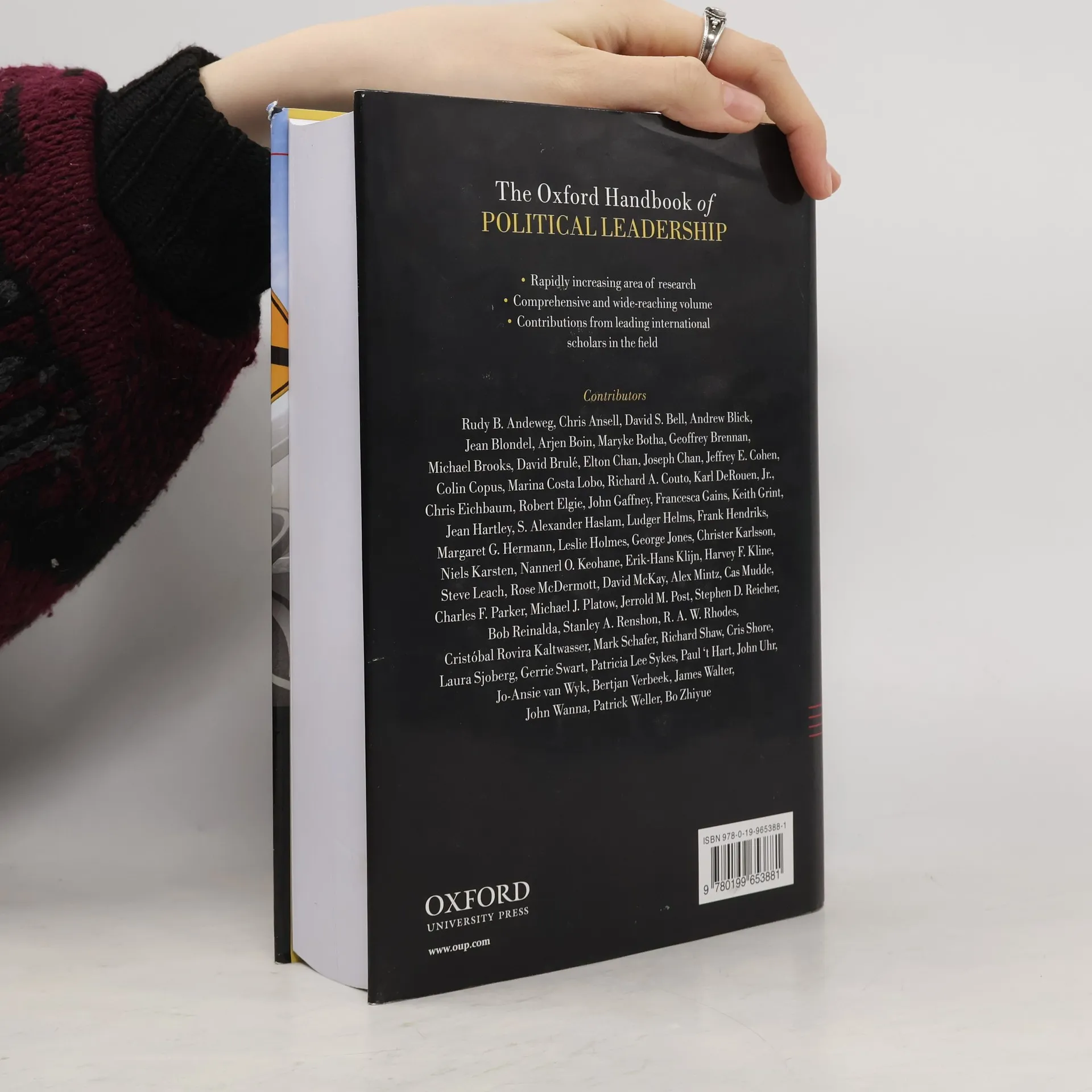
The Oxford Handbook of Political Leadership, R. A. W. Rhodes, Paul 't Hart, Rudy B. Andeweg, Christopher K. Ansell
- Lingua

- Pubblicato
- 2013
- Rilegatura
- (Copertina rigida)
Metodi di pagamento
Ancora nessuna valutazione.
- Titolo
- The Oxford Handbook of Political Leadership
- Lingua
- Inglese
- Editore
- Oxford University Press
- Pubblicato
- 2013
- Formato
- Copertina rigida
- Pagine
- 800
- ISBN10
- 0199653887
- ISBN13
- 9780199653881
- Serie
- Descrizione
- Political leadership has regained prominence, having been extensively studied by various disciplines from the 1940s to the 1970s, including political science, sociology, psychology, and comparative studies. However, interest waned with the rise of structuralism and rational choice theories. Recently, scholars have shifted focus back to individual leaders and their impact on political outcomes, exploring topics like elections, conflict management, public policy, and governance networks. In today's media-driven environment, leaders are often portrayed as solutions to social issues, with citizens closely observing their rise and fall through mass media and the Internet. This Handbook addresses the current state of political leadership studies by organizing the multidisciplinary field and highlighting the unique contributions of various disciplines. It aims to take stock of the field's evolution, bringing together global scholars for a comparative perspective and offering comprehensive coverage of major disciplines, methods, and regions. It balances normative and empirical traditions, examining both formal office-based and informal emergent leadership in democratic and undemocratic contexts.