

Maggiori informazioni sul libro
At a time when both modernism and Marxism face criticism, Eugene Lunn's detailed study of their creative interactions highlights the enduring energies of each. He serves as a reliable guide through the complex debates surrounding the quest for a viable Marxist aesthetics during the avant-garde era. The book focuses on four key figures—Lukacs, Brecht, Benjamin, and Adorno—who embody diverse orientations within Marxist cultural theory and practice. Their debates reveal various facets of the modernist movement and the evolution of Marxism in the twentieth century. Lunn’s account is insightful, imaginative, and thought-provoking, providing a valuable exploration of this compelling subject. Lunn constructs his analysis around two central debates: the Brecht-Lukacs and the Adorno-Benjamin exchanges. He effectively compares each figure, resulting in a nuanced discussion of their contrasts and similarities. This work is regarded as one of the best condensed treatments of the confrontation between Marxism and modernism available. The book offers intelligent and judicious accounts of the careers and theories of its subjects, situating them within their historical context. It also includes cogent surveys of Marx's fragmentary aesthetics and artistic modernism, making it a well-researched and accessible study of significant developments in Marxist aesthetics.
Acquisto del libro
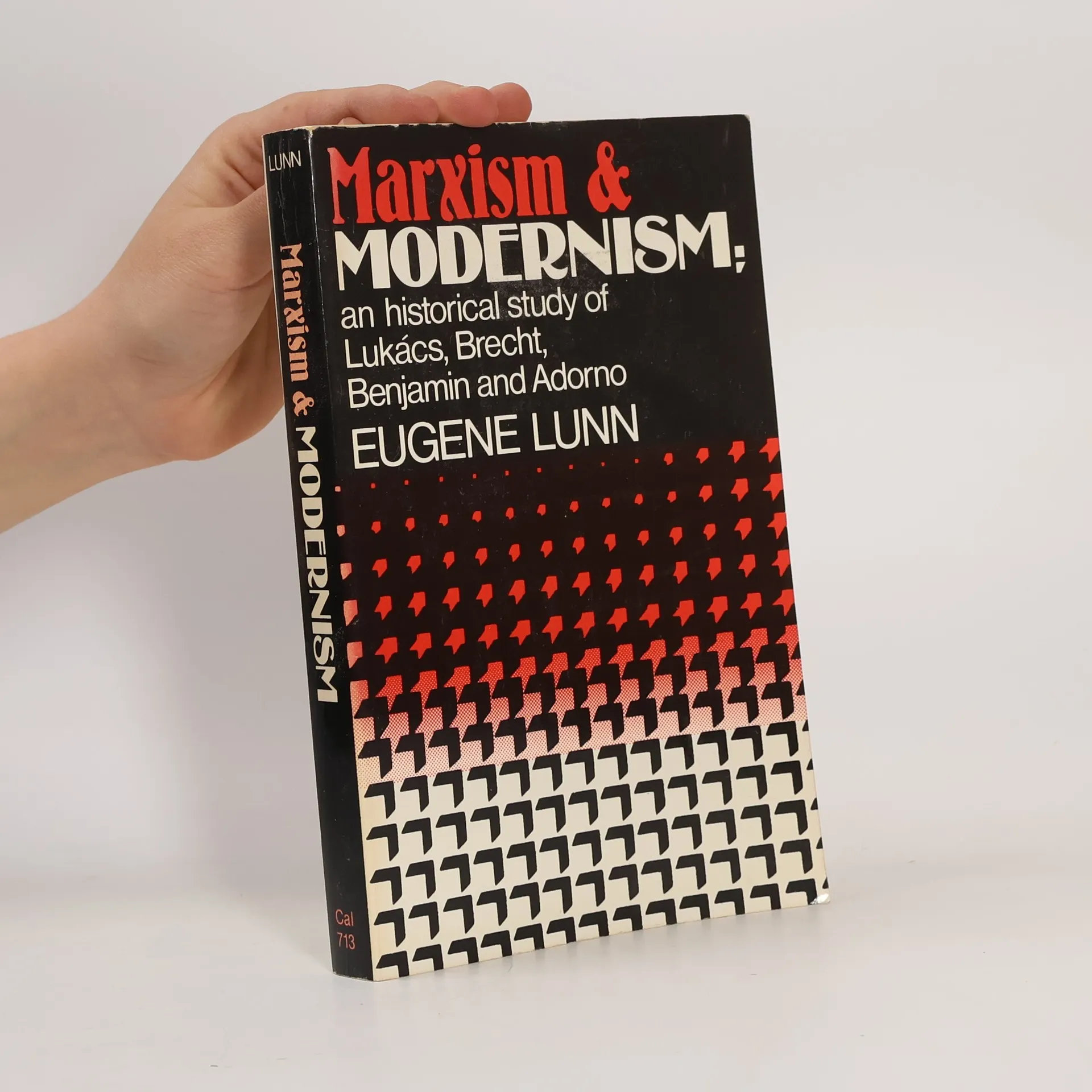
Marxism and Modernism, Eugene Lunn
- Lingua

- Pubblicato
- 1984
- Rilegatura
- (In brossura)
Metodi di pagamento
Ancora nessuna valutazione.
- Titolo
- Marxism and Modernism
- Sottotitolo
- An Historical Study of Lukács, Brecht, Benjamin, and Adorno
- Lingua
- Inglese
- Autori
- Eugene Lunn
- Pubblicato
- 1984
- Formato
- In brossura
- Pagine
- 344
- ISBN10
- 0520053303
- ISBN13
- 9780520053304
- Serie
- Categoria
- Descrizione
- At a time when both modernism and Marxism face criticism, Eugene Lunn's detailed study of their creative interactions highlights the enduring energies of each. He serves as a reliable guide through the complex debates surrounding the quest for a viable Marxist aesthetics during the avant-garde era. The book focuses on four key figures—Lukacs, Brecht, Benjamin, and Adorno—who embody diverse orientations within Marxist cultural theory and practice. Their debates reveal various facets of the modernist movement and the evolution of Marxism in the twentieth century. Lunn’s account is insightful, imaginative, and thought-provoking, providing a valuable exploration of this compelling subject. Lunn constructs his analysis around two central debates: the Brecht-Lukacs and the Adorno-Benjamin exchanges. He effectively compares each figure, resulting in a nuanced discussion of their contrasts and similarities. This work is regarded as one of the best condensed treatments of the confrontation between Marxism and modernism available. The book offers intelligent and judicious accounts of the careers and theories of its subjects, situating them within their historical context. It also includes cogent surveys of Marx's fragmentary aesthetics and artistic modernism, making it a well-researched and accessible study of significant developments in Marxist aesthetics.